What Is the Wastewater Heat Recovery Market in 2026?
The wastewater heat recovery market sits inside the broader USD 54.88B (2023) → USD 102.41B (2030) waste heat recovery system market tracked by Grand View Research, growing at roughly 7.1–9.3% CAGR. Petroleum and chemical refining alone is forecast to reach USD 23.10M by 2026 (7.81% CAGR from 2020), while Europe holds 29.9% of 2023 revenue. Industrial effluent typically carries 30–50% recoverable thermal energy, giving typical payback periods of 2–5 years depending on flow and temperature.
A waste heat recovery unit (WHRU) applied to the wastewater stream is a specific sub-segment: it targets low-grade heat, typically 25–60 °C, in industrial effluent before or after biological treatment. That distinction matters because the three most-cited 2026 figures cover very different scopes. Grand View Research's USD 102.41B trajectory covers all waste heat recovery systems globally, including flue gas, exhaust, refinery, and wastewater combined. Back-cast to 2026 along the implied ~9.3% CAGR, that puts the 2026 parent market at roughly USD 70B. Technavio's USD 22.56B figure is an incremental opportunity added between 2023 and 2028, not a total market value, growing at 7.1% CAGR. IndustryArc's USD 72.70M by 2026 figure is a narrow slice covering only petroleum and chemical WHR boilers at 7.6% CAGR over 2021–2026. The defensible 2026 wastewater-specific growth band sits at 6–9% CAGR, derived from these parent trajectories. For a board-level deck, cite the parent-market number with the CAGR; for an engineering spec or ESG report, cite the narrower subset that matches your actual stream.
Three 2026 Market Size Forecasts Side by Side
The three credible 2026 figures cannot be averaged or combined — they answer different questions. The table below gives the reader the right number to quote for their audience, with no re-Googling required.
| Source | 2023 Base | 2026 Figure | 2030 Figure | CAGR | Scope |
|---|---|---|---|---|---|
| Grand View Research | USD 54.88B | ~USD 70B (interpolated) | USD 102.41B | ~9.3% (2024–2030) | All WHR systems: flue gas, exhaust, refinery, wastewater |
| Technavio | — | — | — | 7.1% (2023–2028) | Incremental opportunity USD 22.56B over 2023–2028; includes heat exchangers and thermoelectric |
| IndustryArc | USD 14.86M (2020, petro+chem) | USD 72.70M | — | 7.6% (2021–2026) | Petroleum and chemical WHR boilers only |
The Technavio USD 22.56B is the most-misread number in the space — analysts often paste it as if it were a 2026 market value. It is the incremental added value forecast across the 2023–2028 window, not a stock figure. Grand View's USD 70B interpolation is the safer reference for a 2026 board presentation because it tracks total addressable spend. IndustryArc's USD 72.70M is roughly 1,000× smaller because it is scoped to WHR boilers in petroleum and chemical refining only, a narrow sub-niche of the parent WHR market. For wastewater-specific projects, none of the three numbers is direct — the wastewater stream is bundled inside the parent figures but not separately quantified, which is exactly the gap this article addresses.
Technology Breakdown: Which Heat Recovery System Fits Which Wastewater
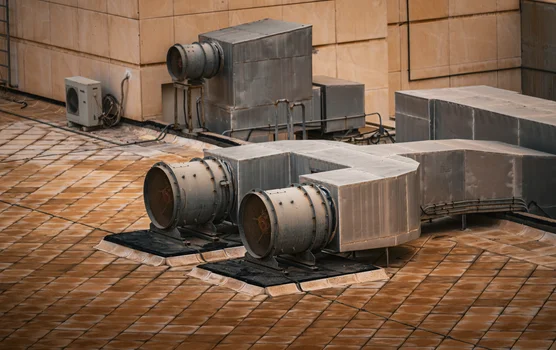
Choosing the right recovery technology depends on three wastewater parameters: temperature, flow rate, and fouling tendency. Matching the wrong technology to a fouling stream is the single most common reason a WHRU underperforms expectations.
| Technology | Best-Fit Stream | Operating Range | 2026 Market Position | Key Limitation |
|---|---|---|---|---|
| Liquid-phase shell-and-tube heat exchanger | Clean effluent, condensate | >40 °C, low TSS | 40.2% of 2023 WHR market (Grand View) | Fouling at high TSS |
| Plate heat exchanger | DAF subnatant, MBR permeate | TSS <30 mg/L, 25–45 °C | Growing share in food and pharma | Gasket life under thermal cycling |
| Wastewater source heat pump (WSHP) | Building-scale sewage, low-grade effluent | 10–25 °C lift to 50–80 °C | Dominant in EU building heat networks | Compressor electrical load |
| Mechanical vapor recompression (MVR) | Evaporator condensate, high-strength streams | >10 m³/h, >60 °C | Niche but OPEX-light at scale | High CAPEX, vapor-side complexity |
| Thermoelectric direct recovery | Point-of-use, low-flow hot waste | Any ΔT, <5% efficiency | <5% share in 2026, trending per Technavio | Low conversion efficiency |
Liquid-phase shell-and-tube exchangers remain the 2026 default where streams are clean, but fouling is the named primary challenge. Plate exchangers deliver higher heat-transfer area per m³ and suit DAF subnatant or MBR permeate with TSS below 30 mg/L. A wastewater source heat pump lifts 10–25 °C effluent to 50–80 °C usable hot water at COP 3.0–4.5, which is why it dominates EU building-scale sewage heat recovery. Mechanical vapor recompression wastewater systems are CAPEX-heavy but OPEX-light above 10 m³/h, and they handle evaporator condensate where standard exchangers would foul within days. Thermoelectric direct recovery sits below 5% market share in 2026 but is cited as a trend because the solid-state design eliminates fouling entirely. The pre-treatment stream feeding a DAF system is usually the best entry point for first-time installations because the float-removal step reduces TSS ahead of the exchanger.
Where to Tap the Stream: Integration Points in a Treatment Plant
Integration point selection matters more than equipment selection. The same plate exchanger can deliver 95% thermal recovery or 40% depending on where it sits in the process train. Five points in a typical treatment plant are worth evaluating.
Pre-treatment effluent (post-DAF, post-screening) typically runs 30–45 °C and is ideal for a WSHP feeding building hot water or boiler make-up preheat. The stream is dirty enough to need a strainer but clean enough that a plate exchanger will not foul for 60–90 days between cleanings. Post-MBR permeate is the cleanest stream in the plant at TSS <1 mg/L and 25–35 °C, which means plate exchangers deliver near-zero fouling and also protect downstream RO from temperature stress — a benefit that compounds when the same heat exchanger preheats the RO feed. Anaerobic digester effluent sits at 35–55 °C with high organic loading and suits combined heat-and-power (CHP) jacket preheat, with the recovered low-grade heat offsetting digester heating demand of roughly 30% of the digester's own thermal load. Concentrate and reverse osmosis reject runs 35–45 °C with elevated TDS and requires titanium or duplex heat exchangers because standard 316L stainless will pit within 12 months on most industrial reject streams. A multi-media filter upstream of the exchanger extends cleaning intervals significantly on TSS-bearing streams. Industrial effluent typically carries 30–50% of its thermal energy as recoverable low-grade heat, per IEA industrial waste heat reports cited throughout the WHRU literature.
Regional 2026 Outlook: Where the Money Is Flowing
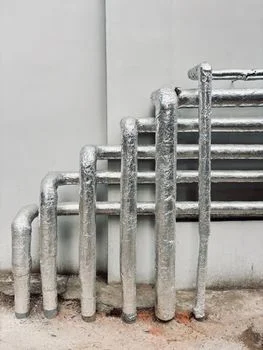
Regional growth bands for 2026 split into three distinct tiers, each driven by a different policy mechanism rather than organic industrial expansion. Europe held 29.9% of 2023 WHR revenue, the largest regional share, and the 2026 driver is the EU Industrial Emissions Directive 2024/2025 revisions tightening energy-recovery obligations on IED Annex IV installations — operators above the 50 TJ/year energy threshold will face enforceable heat-recovery requirements, not voluntary guidelines. North America's 2026 picture is dominated by the U.S. market growing at 9.3% CAGR from 2024 to 2030 (Grand View), with IRA Section 45X manufacturing credits and Section 48 investment tax credits stacking to bring effective heat-recovery CAPEX down by 30–50% for qualifying equipment. China's dual-carbon policy and the GB/T 39717-2020 wastewater heat recovery standard are pushing the chemical, steel, and pharma sectors above 10% CAGR, with provincial subsidy programs in Jiangsu and Guangdong covering 15–20% of installed cost. India, Southeast Asia, and MENAT form the fastest growth band at 9–12% CAGR, driven by new industrial parks in Vietnam, Saudi Arabia, and India with heat-recovery mandates written into the park EPC specifications rather than added later as retrofits.
ROI and Payback: What 2–5 Years Actually Looks Like
The payback math for wastewater heat recovery is straightforward because the thermal content of water is well-characterized. The rule of thumb is: Flow (m³/day) × ΔT (°C) × 1.16 = recoverable kW thermal.
| Scenario | Flow (m³/day) | ΔT (°C) | Recoverable kW | Annual Energy (MWh) | Annual Savings (USD) | Typical Payback |
|---|---|---|---|---|---|---|
| Small food processor | 50 | 15 | ~36 | ~318 | 25,400–38,200 | 3–5 years |
| Mid-size textile/chemical | 200 | 20 | ~193 | ~1,695 | 135,600–203,400 | 2–3 years |
| Large pharma/MBR plant | 500 | 25 | ~604 | ~5,290 | 423,200–634,800 | <2 years with 45X ITC |
A 100 m³/day stream at 20 °C ΔT delivers roughly 97 kW thermal, equivalent to about 850 MWh/year or 85,000 kWh/year. At industrial electricity tariffs of USD 0.08–0.12/kWh, that stream produces annual savings of USD 6,800–10,200 before any fuel-offset credit. WSHP CAPEX sits at USD 80,000–250,000 for 100–500 m³/day flows; plate exchanger skids run USD 30,000–90,000 for the same range. Payback lands at 2–5 years baseline, dropping below 2 years where the U.S. IRA Section 45X manufacturing credit or Section 48 ITC applies. The Alfa Laval El Salvador power-plant order in 2019, valued at SEK 95M (≈ USD 9M), remains a useful benchmark for power-plant scale installations, though most industrial wastewater heat recovery projects land one to two orders of magnitude below that scale. For broader market context, see the wastewater heat recovery forecast to 2030 technical breakdown.
Frequently Asked Questions
What is a wastewater heat recovery unit (WHRU)?
A WHRU is an energy-recovery heat exchanger that transfers low-grade thermal energy, typically 25–60 °C, from industrial effluent to another part of the process or to building heating, usually increasing overall site efficiency. Wastewater-specific WHRUs differ from flue-gas units in temperature range, fouling behavior, and the integration points they tap.
How big is the wastewater heat recovery market in 2026?
The parent waste heat recovery system market reaches roughly USD 70B in 2026 (interpolated from Grand View's USD 54.88B 2023 base and USD 102.41B 2030 forecast at ~9.3% CAGR). The wastewater-specific subset is not separately quantified by major analysts but tracks the parent trajectory at 6–9% CAGR.
What is the typical payback for a wastewater heat recovery installation?
Payback for industrial wastewater heat recovery typically lands at 2–5 years, dropping below 2 years for U.S. projects qualifying for IRA Section 45X or Section 48 tax credits. Food, textile, and pharma sites with 200+ m³/day effluent flows and ΔT above 20 °C see the fastest payback.
Which wastewater stream gives the best heat recovery ROI?
Post-MBR permeate delivers the best combination of clean effluent (TSS <1 mg/L) and usable temperature (25–35 °C) for plate exchangers, with near-zero fouling and downstream RO protection. Anaerobic digester effluent at 35–55 °C gives the highest ΔT but requires fouling-tolerant designs.
How do the EU IED 2024 revisions and China dual-carbon policy affect 2026 projects?
EU IED Annex IV installations above the 50 TJ/year threshold face enforceable 2024/2025 energy-recovery obligations, not voluntary guidelines. China GB/T 39717-2020 plus provincial subsidies in Jiangsu and Guangdong are pushing chemical, steel, and pharma sectors above 10% CAGR in 2026.
Related Equipment
- RO reject stream — specifications, capacity range, and technical data