Why Chip Fab Wastewater Is Unlike Any Other Industrial Effluent
Semiconductor fabrication plants, or fabs, generate wastewater with characteristics that significantly diverge from typical industrial or municipal effluents, posing unique treatment challenges. Fab wastewater frequently contains dissolved solids (TDS) ranging from 5,000 to 10,000 mg/L, a concentration far exceeding the 500–1,000 mg/L typically found in municipal wastewater, rendering conventional biological treatment processes ineffective without substantial pretreatment. This effluent often lacks the necessary nutrients, such as nitrogen and phosphorus, resulting in a BOD:N:P ratio that can be less than 100:5:1, which is insufficient to sustain the microbial populations required for biological degradation. The presence of heavy metals like copper, nickel, and chromium, introduced during electroplating and etching processes, necessitates specialized removal techniques such as chemical precipitation or ion exchange. The sheer complexity of semiconductor manufacturing, involving over 4,000 processing steps per wafer for advanced nodes, leads to rapid fluctuations in both the volume and composition of wastewater. For instance, a hypothetical scenario illustrates the consequences: a fab in Arizona faced a $2.1 million fine for exceeding copper discharge limits, a direct result of an inadequate pretreatment system failing to manage the metal load from its plating operations.
Global Chip Fab Wastewater Discharge Standards: 2025 Limits by Region
Compliance with increasingly stringent global discharge standards is paramount for semiconductor fabs. These regulations, while varying by jurisdiction, commonly target parameters like Total Suspended Solids (TSS), Chemical Oxygen Demand (COD), Biological Oxygen Demand (BOD), heavy metals, Total Dissolved Solids (TDS), and pH. The CHIPS Act in the United States influences domestic standards, with potential incentives for fabs achieving high levels of water reuse.
| Parameter | EPA (USA) | EU Industrial Emissions Directive (IED) | China (GB 21900-2008) | Taiwan EPA | South Korea MOE |
|---|---|---|---|---|---|
| TSS (mg/L) | < 30 | < 20 (New Fabs) | < 30 | < 30 | < 30 |
| COD (mg/L) | < 125 | < 100 (New Fabs) | < 150 | < 100 | < 100 |
| BOD (mg/L) | < 50 | < 30 (New Fabs) | < 30 | < 30 | < 30 |
| Copper (Cu) (mg/L) | < 0.5 | < 0.2 (New Fabs) | < 0.3 | < 0.5 | < 0.5 |
| Nickel (Ni) (mg/L) | < 0.5 | < 0.3 (New Fabs) | < 0.5 | < 0.5 | < 0.5 |
| Chromium (Cr) (mg/L) | < 1.0 | < 0.5 (New Fabs) | < 0.5 | < 1.0 | < 1.0 |
| Lead (Pb) (mg/L) | < 0.2 | < 0.1 (New Fabs) | < 0.1 | < 0.2 | < 0.2 |
| TDS (mg/L) | Varies (often < 500 for POTW) | Varies (ZLD often encouraged) | Varies | < 1,500 (Direct Discharge) | Varies (ZLD often encouraged) |
| pH | 6.0 – 9.0 | 6.0 – 9.0 | 6.0 – 9.0 | 6.0 – 9.0 | 6.0 – 9.0 |
The EPA, under 40 CFR Part 469, sets limits such as copper < 0.5 mg/L, nickel < 0.5 mg/L, and TSS < 30 mg/L, with a pH range of 6–9. The EU's Industrial Emissions Directive (IED) often imposes stricter limits for new facilities, potentially requiring TSS < 20 mg/L and COD < 100 mg/L. China's GB 21900-2008 standard includes limits for copper < 0.3 mg/L and nickel < 0.5 mg/L, alongside specific requirements for fluoride and ammonia. Taiwan's EPA typically mandates a TDS limit of < 1,500 mg/L for direct discharge and encourages or requires Zero Liquid Discharge (ZLD) for new fabs in water-scarce regions. The CHIPS Act's emphasis on domestic manufacturing may lead to future regulatory shifts.
Treatment Challenges: Why Conventional Systems Fail for Chip Fabs

The chip fab wastewater discharge standard presents significant hurdles for conventional treatment systems. Biological treatment methods, commonly used in municipal and some industrial applications, are often rendered ineffective due to the low biological oxygen demand (BOD) and the high TDS content. The high salinity can inhibit or kill the microbial consortia essential for biological processes, necessitating robust chemical pretreatment stages, such as coagulation and flocculation, before MBR or activated sludge systems can be considered. Heavy metal removal is another critical challenge; while chemical precipitation with pH adjustment is effective for metals like copper and nickel, achieving stringent limits often requires secondary polishing steps like ion exchange or electrocoagulation for mixed metal streams. The exceptionally high TDS levels (5,000–10,000 mg/L) in fab wastewater are a primary driver for the adoption of Reverse Osmosis (RO) or evaporative ZLD systems. However, these advanced systems are prone to scaling and fouling, which can drastically reduce efficiency and increase operational costs, making effective antiscalant dosing and regular membrane cleaning protocols indispensable. The inherent variability in wastewater volume, which can fluctuate by 20–50% daily due to process changes or retooling, demands equalization tanks and modular treatment designs capable of adapting to these flow variations. For instance, a fab in Singapore significantly reduced its TDS by 95% using a three-stage industrial RO system combined with precise antiscalant dosing, resulting in annual water cost savings of approximately $1.2 million.
Equipment Solutions for Chip Fab Wastewater: Cost, Efficiency, and Footprint Comparison
Selecting the appropriate wastewater treatment equipment for a semiconductor fab requires a thorough evaluation of various technologies. A range of solutions are tailored to these demanding applications.
| Technology | Primary Removal Efficiencies | Typical CAPEX ($/m³/day) | Typical OPEX ($/1,000 gallons) | Footprint | Scalability |
|---|---|---|---|---|---|
| Dissolved Air Flotation (DAF) | TSS: 95%+, FOG: 90%+ | 200–500 | 0.50–1.50 | Moderate | Good (Modular) |
| Membrane Bioreactor (MBR) | TSS: <10 mg/L, COD: <30 mg/L | 500–1,200 | 1.00–3.00 | Compact | Good (Modular) |
| Reverse Osmosis (RO) | TDS: 95–99%, Monovalent ions: 90%+ | 800–2,000 | 2.00–5.00 | Moderate | Good (Skid-mounted) |
| Zero Liquid Discharge (ZLD) | TDS: 99%+, Salts: 99%+ | 3,000–10,000 | 5.00–15.00 | Large | Challenging (Integrated) |
| Chemical Dosing | pH adjustment, Metal precipitation, Flocculation | 50–200 | 0.20–0.80 | Small | Excellent |
A high-efficiency DAF system is often the first line of defense, effectively removing over 95% of TSS and fats, oils, and grease (FOG), making it ideal for pretreatment before downstream biological processes. A compact MBR system can achieve effluent quality of less than 10 mg/L TSS and 30 mg/L COD. For tackling high TDS, industrial RO systems offer 95–99% TDS removal but necessitate robust pretreatment to prevent scaling. ZLD systems provide the ultimate solution for water recovery, achieving 95–99% water reuse. PLC-controlled chemical dosing systems offer precise chemical delivery for coagulation, flocculation, and precipitation.
Decision Framework: How to Choose the Right Wastewater System for Your Fab
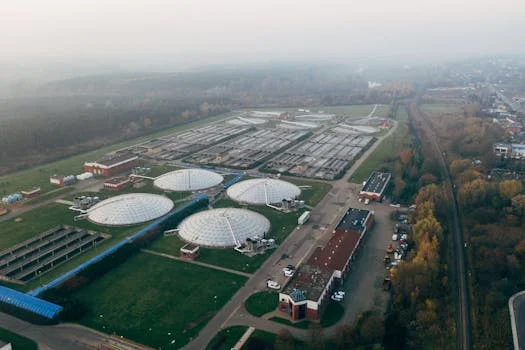
Selecting the optimal wastewater treatment system for a semiconductor fab involves understanding regulatory requirements, operational needs, and financial considerations. A structured framework guides the process:
- Assess Discharge Limits: Begin by understanding the specific effluent discharge standards applicable to your fab's location. If TDS levels are consistently below 1,500 mg/L, a system culminating in RO might be sufficient. For TDS concentrations exceeding 5,000 mg/L, a ZLD system is often the only viable option.
- Calculate Water Volume and Variability: Accurately estimate daily and peak wastewater volumes. Fabs experiencing significant diurnal fluctuations require robust equalization capabilities and modular treatment trains.
- Identify Key Contaminants: Characterize primary pollutants. High concentrations of heavy metals necessitate effective chemical precipitation. High TSS loads demand efficient physical separation methods.
- Evaluate CAPEX vs. OPEX: For smaller fabs, a DAF + MBR combination might offer manageable initial CAPEX. Larger facilities may find long-term benefits of ZLD justify higher initial investment and operational costs.
- Consider Water Reuse Goals: Define fab objectives for water reuse. ZLD systems enable highest recovery rates but are energy-intensive. A RO + MBR configuration can achieve 70–80% reuse.
Frequently Asked Questions
What are common violations for chip fab wastewater discharge? Heavy metals, particularly copper and nickel, along with TSS, are leading causes of violations, often stemming from inadequate pretreatment or equipment failures.
<