Chile’s 12-year mega-drought has made MBR (Membrane Bioreactor) wastewater treatment systems a critical solution for water reuse, with 301 WWTPs treating 1.216 billion m³ annually (2020 data). MBR systems deliver near-reuse-quality effluent (BOD <15 mg/L, TSS <10 mg/L) via submerged PVDF membranes (0.1–0.4 µm pore size) combined with activated sludge. In Chile, MBR projects face regulatory barriers, such as water rights downstream of discharge points, but offer 60% smaller footprints and 92–97% COD removal—ideal for industrial and municipal reuse in water-scarce regions like Santiago and Antofagasta.
Chile’s Water Crisis: Why MBR Systems Are the Reuse Solution
Chile’s mega-drought, persisting since 2010, has forced 70% of the population into water-scarce regions, specifically within the Santiago, Antofagasta, and Coquimbo administrative zones. The country possesses a significant wastewater treatment infrastructure, treating approximately 1.216 billion m³ per year, but 96% of this volume is currently discharged into inland surfaces or marine bodies with minimal recovery. Approximately 13% of this treated water is lost through submarine outfalls after only preliminary treatment, representing a massive lost opportunity for industrial and agricultural sectors.
Regulatory drivers are shifting the economic landscape for water. With Water Scarcity Zones declared in over 10 regions, the upcoming 2025 revisions to DS 90/2000, Chile’s primary wastewater discharge standard, are expected to tighten reuse requirements significantly. This regulatory pressure aligns with industrial demand; according to CORFO 2023 projections, the mining sector in Antofagasta and food processing hubs in Santiago must source 30–50% of their operational water from reuse by 2030 to remain viable.
MBR technology serves as the primary means to meet these targets. By integrating biological treatment and membrane filtration, it enables high-quality effluent suitable for non-potable reuse, such as irrigation, cooling towers, and process water, without the need for extensive tertiary treatment stages. This is particularly vital in the Maule region’s agricultural sector, where traditional water rights are increasingly contested.
MBR Technology for Chile: How It Works and Key Parameters
Submerged ultrafiltration membranes with pore sizes between 0.1 and 0.4 µm replace the secondary clarifiers used in conventional systems, allowing for significantly higher mixed liquor suspended solids (MLSS) concentrations. In Chilean applications, MBR systems for Chilean water reuse projects typically utilize PVDF (polyvinylidene fluoride) membranes due to their superior chemical resistance and mechanical strength. These membranes offer a 5–10 year operational lifespan and provide a 99.9% removal rate for bacteria and viruses, meeting WHO 2022 guidelines for safe water reuse.
Engineering specifications must be tailored to the specific Chilean sector. For municipal wastewater, design flux rates typically range from 15–30 LMH (liters/m²/hour). However, for industrial applications such as mining or food processing, flux rates are lowered to 10–20 LMH to account for higher fouling potential from complex organic loads. Energy consumption remains a critical factor; MBR systems in Chile average 0.6–1.2 kWh/m³. With 2024 CNE data indicating average industrial electricity costs of $0.12/kWh, energy-efficient aeration and automated air scouring protocols are essential for maintaining low O&M costs.
| Parameter | Municipal Standard (Chile) | Industrial Standard (Mining/Food) |
|---|---|---|
| Membrane Material | PVDF / PE | PVDF / PTFE |
| Pore Size (µm) | 0.1 – 0.4 | 0.03 – 0.1 |
| Design Flux (LMH) | 15 – 30 | 10 – 20 |
| Effluent BOD (mg/L) | < 15 | < 10 |
| Effluent TSS (mg/L) | < 5 | < 2 |
| MLSS Concentration (mg/L) | 8,000 – 12,000 | 10,000 – 15,000 |
Fouling mitigation is managed through a combination of physical and chemical strategies. Air scouring provides continuous vibration to the PVDF flat-sheet membranes for Chilean MBR applications, while automated Clean-In-Place (CIP) cycles using sodium hypochlorite or citric acid prevent the accumulation of bio-organic and inorganic scales.
MBR vs. Alternatives: Which System Fits Chile’s Reuse Needs?
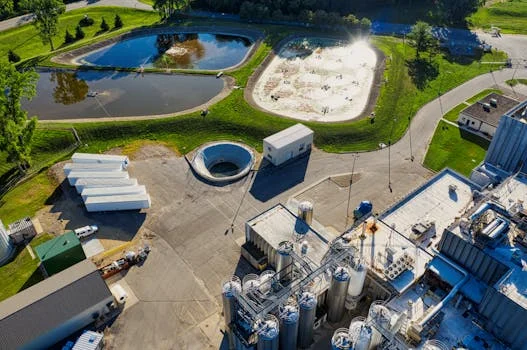
MBR systems achieve 99.9% virus removal and produce effluent that exceeds the requirements of DS 90/2000 Class 1, making them superior to conventional activated sludge for space-constrained sites. When compared to Conventional Activated Sludge (CAS) combined with tertiary filtration, MBR requires a 60% smaller footprint, which is a decisive factor for urban WWTPs in Santiago and Valparaíso where land costs are prohibitive.
However, MBR involves higher initial capital expenditure (CAPEX) compared to CAS. While CAS + Tertiary systems may cost between $1,200 and $2,000 per m³/day, they often struggle with inconsistent effluent quality, particularly TSS levels ranging from 10–30 mg/L. MBR systems, priced between $2,500 and $4,500 per m³/day, provide the reliability required for high-value reuse. For ultra-pure requirements, such as those found in PepsiCo’s Santiago plant, reverse osmosis (RO) systems are often used as a quaternary step following MBR. While RO provides even higher purity, it faces brine disposal challenges under DS 46/2003, which restricts discharge in coastal areas—making MBR a more balanced choice for many Chilean inland projects.
| Technology | Footprint | Effluent Quality (TSS) | Energy Use (kWh/m³) | Chilean Compliance |
|---|---|---|---|---|
| CAS + Sand Filter | Large | 10 – 20 mg/L | 0.3 – 0.6 | Basic Discharge |
| MBR | Compact | < 2 mg/L | 0.6 – 1.2 | Class 1 Reuse |
| MBR + RO | Moderate | < 0.5 mg/L | 1.5 – 2.5 | Process Water |
Cost Breakdown: MBR Systems in Chile (2025 Benchmarks)
Capital costs for Chilean MBR projects range from $2,500 to $4,500/m³/day for municipal applications, and can reach $6,000/m³/day for complex industrial wastewater requiring extensive DAF pre-treatment for industrial MBR systems in Chile. Operating costs (OPEX) typically fall between $0.30 and $0.60 per cubic meter treated. Energy consumption accounts for approximately 50% of these costs, followed by membrane replacement (20%), labor (15%), and chemical usage (15%).
The ROI for MBR in Chile is increasingly driven by the rising cost of potable water, which ranges from $0.50 to $2.00/m³ in industrial sectors. A 2023 project study for a food processing plant in Santiago with a 500 m³/day capacity showed a CAPEX of $1.8M and an OPEX of $0.45/m³. By replacing expensive municipal water with MBR-treated effluent, the plant achieved a 3.5-year payback period while avoiding potential fines related to DS 90/2000 non-compliance.
| Cost Component | Estimated Cost (USD) | Notes |
|---|---|---|
| CAPEX (Municipal) | $2,500 – $4,500 / m³/d | Turnkey installation |
| CAPEX (Industrial) | $3,000 – $6,000 / m³/d | Includes pre-treatment |
| Membrane Replacement | $50 – $100 / m² | PVDF flat-sheet (5-8 yr life) |
| OPEX (Total) | $0.30 – $0.60 / m³ | Includes power and chemicals |
Funding options, such as CORFO grants, can cover up to 50% of the costs for water reuse projects. Additionally, municipal subsidies and green bonds, such as the 2024 issuance by Aguas Andinas, are providing new avenues for financing large-scale MBR infrastructure.
Chile’s Regulatory Landscape: Permits, Water Rights, and Reuse Standards
Treated effluent discharge in Chile requires downstream water rights, a barrier affecting 87% of existing WWTPs according to SISS 2023 data. This legal complexity means that even if a facility treats water to high standards, the right to "reuse" that water instead of discharging it back to a river must be carefully negotiated. Projects exceeding 500 m³/day typically require a full Environmental Impact Assessment (EIA), a process that can take 6 to 18 months depending on the region.
The primary standards governing these systems are DS 90/2000 for discharge into surface waters and DS 46/2003 for groundwater and brine discharge. While DS 90/2000 Class 1 requires BOD and TSS levels below 30 mg/L for non-potable reuse, MBR systems consistently deliver effluent far below these limits (typically <15 mg/L), providing a safety buffer for industrial operators. Regional variances also exist; for instance, the Antofagasta and Atacama regions have implemented stricter amendments to DS 46/2003 regarding TDS and heavy metal concentrations in discharged brine.
Supplier Checklist: How to Evaluate MBR Vendors in Chile
Technical evaluation of MBR vendors must prioritize membrane warranties of at least 5 years and local service availability. Procurement teams should utilize a structured framework to compare international manufacturers with local integrators, ensuring that the technology is compatible with Andean region supplier evaluation frameworks used in neighboring markets like Peru.
- Technical Specifications: Verify that design flux rates are conservative (15–30 LMH) and that energy consumption is guaranteed below 1.0 kWh/m³ for municipal flows.
- Local Experience: Request at least three references for Chilean projects in similar sectors (e.g., mining in the North or food processing in the Central Valley).
- Service Support: Ensure the vendor provides 24/7 remote monitoring and has a local inventory of critical spare parts and membrane modules in Santiago or Antofagasta.
- Compliance Expertise: The supplier must demonstrate a deep understanding of SISS and SMA permitting requirements and DS 90/2000 standards.
- Red Flags: Be cautious of vendors offering vague membrane warranties,