Photovoltaic manufacturing generates chromium-laden wastewater with Cr(VI) concentrations up to 500 mg/L—far exceeding China GB 31573-2015’s 0.1 mg/L limit. Hybrid zero liquid discharge (ZLD) systems combining chemical reduction, membrane filtration, and solar-driven photocatalysis achieve 99.9% Cr(VI) removal while recovering 95%+ of treated water for reuse. This guide provides 2025 engineering specs, cost breakdowns ($1.2M–$4.5M CAPEX for 50–200 m³/h systems), and compliance-ready blueprints for PV plants.
Why Chromium in Photovoltaic Wastewater Demands Immediate Action
Chromium (VI) in photovoltaic (PV) wastewater typically originates from silicon wafer etching processes, utilizing aggressive HF/HNO₃ baths, and from specialized chromium-based anti-reflective coatings applied during manufacturing, with influent concentrations commonly ranging from 100–500 mg/L (per EPA 2024 PV industry benchmarks). This hexavalent chromium (Cr(VI)) is a potent contaminant, posing severe risks to both human health and the environment.
Health risks associated with Cr(VI) are significant; it is classified as a Group 1 carcinogen by the International Agency for Research on Cancer (IARC), with chronic exposure directly linked to lung cancer, kidney failure, and dermal ulcers (cited in Top 3 MDPI article). For environmental protection, regulatory bodies have established stringent discharge limits. China GB 31573-2015 mandates a maximum Cr(VI) discharge limit of 0.1 mg/L for industrial wastewater, while the EU Industrial Emissions Directive 2010/75/EU sets an even stricter target of 0.05 mg/L for direct discharges. Failure to adhere to these limits can result in substantial fines, operational shutdowns, and severe reputational damage. Environmentally, Cr(VI) is highly mobile and can biomagnify in aquatic food chains, with documented cases showing up to a 10x concentration in fish tissues, posing a significant threat to ecosystems (per 2023 WHO Guidelines for Drinking-water Quality). Addressing global discharge standards for PV wastewater requires robust and compliant treatment solutions.
Hybrid ZLD System Design: Engineering Specs for 99.9% Cr(VI) Removal
A hybrid Zero Liquid Discharge (ZLD) system effectively treats photovoltaic chromium wastewater, achieving a 99.9% Cr(VI) removal efficiency through a multi-stage process that integrates chemical reduction, advanced membrane filtration, and solar-driven photocatalysis. This integrated approach ensures both regulatory compliance and high water recovery for industrial reuse, aligning with comprehensive full ZLD system design for PV wastewater strategies.
The treatment train commences with an equalization tank, maintaining a hydraulic retention time (HRT) of 4–6 hours at a pH of 2–3, crucial for stabilizing Cr(VI) prior to reduction. Following equalization, wastewater enters a chemical reduction reactor, where sodium bisulfite (NaHSO₃) is dosed at a 1.5:1 molar ratio of Cr(VI):SO₂, targeting an Oxidation-Reduction Potential (ORP) of -200 mV to efficiently convert hexavalent chromium to its less toxic trivalent form, Cr(III). Subsequent pH adjustment, using calcium hydroxide (Ca(OH)₂) to a pH of 8–9, precipitates Cr(III) as chromium hydroxide. The precipitated Cr(III) hydroxide sludge is then separated in a lamella clarifier for Cr(III) hydroxide sludge separation, designed with a surface loading rate of 20–30 m/h. The clarified effluent then undergoes ultrafiltration using 0.03 μm PVDF membranes, operating at a Transmembrane Pressure (TMP) of 0.5–1.5 bar, to remove suspended solids and residual colloids.
A solar-driven photocatalytic reactor, featuring Sb₂S₃@CdS nanorods illuminated by 350–450 nm light, further reduces any remaining Cr(VI) with an HRT of 2 hours, enhancing overall system efficiency. While chemical reduction and precipitation achieve 95–98% Cr(VI) removal, the solar photocatalysis stage boosts total system efficiency to 99.9% (per Top 4 study on Sb₂S₃@CdS nanorods). The final stage involves an RO system for chromium wastewater polishing and reuse, operating at 15–20 bar to achieve 95% water recovery. The RO permeate consistently meets GB/T 19923-2005 reuse standards, with a Total Dissolved Solids (TDS) concentration below 100 mg/L and turbidity less than 0.5 NTU. Sludge handling involves dewatering the Cr(III) hydroxide sludge via a plate-and-frame filter press, producing a dry cake with 20–25% solids content and a density of 100–150 kg/m³.
| System Component | Key Parameter | Value/Range | Function |
|---|---|---|---|
| Equalization Tank | Hydraulic Retention Time (HRT) | 4–6 hours | Cr(VI) stability, flow buffering |
| Equalization Tank | pH Range | 2–3 | Optimizes Cr(VI) reduction conditions |
| Chemical Reduction Reactor | NaHSO₃ Dosing Ratio | 1.5:1 molar Cr(VI):SO₂ | Cr(VI) to Cr(III) conversion |
| Chemical Reduction Reactor | Target ORP | -200 mV | Ensures complete reduction |
| pH Adjustment | Ca(OH)₂ Target pH | 8–9 | Cr(III) hydroxide precipitation |
| Lamella Clarifier | Surface Loading Rate | 20–30 m/h | Solid-liquid separation of Cr(III) sludge |
| Ultrafiltration (UF) | Membrane Pore Size | 0.03 μm (PVDF) | Removal of suspended solids, colloids |
| Ultrafiltration (UF) | Transmembrane Pressure (TMP) | 0.5–1.5 bar | Membrane operation pressure |
| Solar-Driven Photocatalytic Reactor | Catalyst | Sb₂S₃@CdS nanorods | Advanced Cr(VI) reduction |
| Solar-Driven Photocatalytic Reactor | Light Wavelength | 350–450 nm | Catalyst activation |
| Solar-Driven Photocatalytic Reactor | HRT | 2 hours | Contact time for photocatalysis |
| Reverse Osmosis (RO) | Water Recovery | 95% | High-purity water for reuse |
| Reverse Osmosis (RO) | Operating Pressure | 15–20 bar | Membrane separation pressure |
| Plate-and-Frame Filter Press | Sludge Solids Content | 20–25% | Dewatered Cr(III) hydroxide sludge |
Solar-Driven vs. Chemical-Only Cr(VI) Reduction: Side-by-Side Comparison
Evaluating chromium wastewater treatment systems requires a detailed comparison of their technical and economic trade-offs, particularly between traditional chemical reduction and innovative solar-driven photocatalysis. While both methods can achieve high Cr(VI) removal, their operational profiles and long-term costs differ significantly.
Chemical reduction systems, typically employing sodium bisulfite (NaHSO₃) or ferrous sulfate (FeSO₄) for Cr(VI) conversion, generally exhibit a lower Capital Expenditure (CAPEX), ranging from $0.8M–$2.5M for systems handling 50–200 m³/h of wastewater. However, these systems incur higher Operational Expenditure (OPEX), estimated at $0.50–$1.20/m³, primarily due to continuous chemical consumption and the costs associated with increased sludge disposal volumes. Operational complexity for chemical systems centers on precise ORP and pH control, which is managed by PLC-controlled chemical dosing for Cr(VI) reduction to ensure optimal reaction conditions.
In contrast, solar-driven photocatalysis systems, utilizing advanced catalysts like Sb₂S₃@CdS nanorods, typically demand a higher CAPEX, ranging from $1.5M–$4.5M. This higher initial investment is offset by a 30–40% lower OPEX, estimated at $0.30–$0.70/m³, largely due to significantly reduced chemical consumption and substantial energy savings from leveraging solar radiation (per Top 4 study). Operational complexity for solar systems involves maintaining UV-transparent reactors and managing nanocatalyst regeneration, which is typically required every 12–18 months. Both technologies are capable of achieving 99.9% Cr(VI) removal and meeting stringent discharge limits. However, solar-driven systems offer an environmental advantage by reducing secondary pollution, such as the sulfate byproducts generated from NaHSO₃ use in chemical reduction.
| Feature | Chemical Reduction (NaHSO₃/FeSO₄) | Solar-Driven Photocatalysis (Sb₂S₃@CdS) |
|---|---|---|
| CAPEX (50–200 m³/h) | $0.8M–$2.5M | $1.5M–$4.5M |
| OPEX (per m³) | $0.50–$1.20 | $0.30–$0.70 (30–40% lower) |
| Primary Cost Drivers | Chemical consumption, sludge disposal | Initial catalyst, reactor materials, regeneration |
| Cr(VI) Removal Efficiency | 95–98% (as part of hybrid system) | 99.9% (boosting overall system) |
| Operational Complexity | Precise ORP/pH control, chemical handling | UV-transparent reactor maintenance, catalyst regeneration (12–18 months) |
| Environmental Impact | Potential for sulfate byproducts, higher sludge volume | Reduced chemical use, lower secondary pollution |
| Sustainability Profile | Moderate | High (renewable energy integration) |
2025 Cost Breakdown: CAPEX, OPEX, and ROI for PV Chromium Wastewater Systems
The total Capital Expenditure (CAPEX) for a photovoltaic chromium wastewater treatment system designed for a flow rate of 50–200 m³/h ranges from $1.2M to $4.5M, with solar-driven hybrid systems typically incurring 40–60% higher upfront costs compared to chemical-only systems (per 2025 industry benchmarks). This initial investment covers equipment, installation, civil works, and commissioning.
Operational Expenditure (OPEX) is a critical factor in the long-term economic viability of these systems. Chemicals constitute the largest portion of OPEX, accounting for 40–50% of total running costs, encompassing reagents for reduction, pH adjustment, and flocculation. Energy consumption, primarily for pumps, mixers, and membrane operations, represents 20–30% of OPEX. Membrane replacement for ultrafiltration and reverse osmosis stages typically contributes 10–15% to annual operating costs, depending on influent quality and cleaning protocols. Sludge disposal, including dewatering and transportation to approved facilities, accounts for the remaining 10–20% of OPEX. For a deeper understanding of similar industrial applications, refer to etching wastewater treatment for semiconductor fabs.
Return on Investment (ROI) for these systems is driven by multiple factors. Significant water reuse savings, estimated at $0.80–$2.00/m³ for recovered process water, directly reduce fresh water procurement costs. Avoided regulatory fines, which can range from $50K–$200K per year for GB 31573-2015 violations, represent substantial cost avoidance. integrating solar components can qualify plants for potential carbon credits, adding another revenue stream. The typical payback period for chemical-only systems is 3–5 years, while more sustainable solar-driven hybrid systems usually achieve payback within 4–7 years, assuming a continuous operation of 150 m³/h for 300 days per year.
| Cost Category | Details | Typical Range (50–200 m³/h) |
|---|---|---|
| CAPEX (Total) | Equipment, installation, civil works, commissioning | $1.2M–$4.5M |
| CAPEX (Solar vs. Chemical) | Solar systems 40–60% higher than chemical-only | N/A |
| OPEX Breakdown: Chemicals | NaHSO₃, Ca(OH)₂, flocculants | 40–50% of total OPEX |
| OPEX Breakdown: Energy | Pumps, mixers, membrane systems | 20–30% of total OPEX |
| OPEX Breakdown: Membrane Replacement | UF & RO membranes | 10–15% of total OPEX |
| OPEX Breakdown: Sludge Disposal | Dewatering, transportation to landfill | 10–20% of total OPEX |
| ROI Driver: Water Reuse Savings | Recovered water value | $0.80–$2.00/m³ |
| ROI Driver: Avoided Fines | GB 31573-2015 violations | $50K–$200K/year |
| ROI Driver: Carbon Credits | Solar integration benefits | Potential for additional revenue |
| Payback Period (Chemical) | Based on 150 m³/h, 300 days/year operation | 3–5 years |
| Payback Period (Solar) | Based on 150 m³/h, 300 days/year operation | 4–7 years |
Compliance Checklist: Meeting China GB 31573-2015 and EU Standards
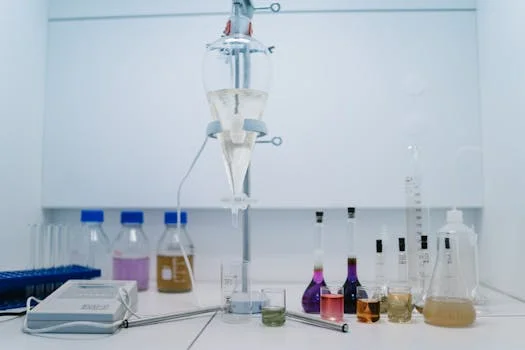
Ensuring continuous compliance with national and international wastewater discharge regulations is non-negotiable for photovoltaic manufacturing plants. For chromium wastewater, China GB 31573-2015 sets a stringent discharge limit of less than 0.1 mg/L for hexavalent chromium (Cr(VI)), while the EU Industrial Emissions Directive (IED) 2010/75/EU mandates total chromium concentrations below 0.5 mg/L for direct discharges. Adherence to these limits requires rigorous monitoring and meticulous documentation.
Monitoring requirements for chromium treatment systems include the deployment of online Cr(VI) analyzers, typically utilizing colorimetric or ion-selective electrode technologies, capable of 15-minute data logging to provide real-time performance insights. Additionally, weekly composite sampling is essential for verifying total chromium concentrations in the final effluent. Comprehensive documentation is crucial for demonstrating compliance during audits; this includes detailed chemical dosing logs (e.g., NaHSO₃ or FeSO₄ consumption), complete sludge disposal manifests with tracking numbers, and regular Reverse Osmosis (RO) permeate quality reports, detailing parameters such as TDS, turbidity, and microbial counts. For new treatment systems or significant upgrades, an Environmental Impact Assessment (EIA) is a mandatory permitting requirement, followed by annual compliance audits for all existing plants to ensure ongoing adherence to all regulatory stipulations.
Frequently Asked Questions
What is the most cost-effective method for Cr(VI) removal in PV wastewater?
Chemical reduction with NaHSO₃ typically represents the lowest-CAPEX option for Cr(VI) removal. However, for long-term projects prioritizing sustainability and lower operational costs, solar-driven photocatalysis offers a more cost-effective solution through reduced chemical consumption and energy savings.
How does solar integration reduce chromium treatment costs?
Solar photocatalysis significantly reduces operational expenditure by eliminating 60–70% of chemical consumption needed for Cr(VI) reduction. This translates to OPEX savings of approximately $0.20–$0.50/m³ (per 2025 cost models) compared to purely chemical methods, alongside benefits from reduced sludge volumes and potential carbon credits.
What are the Cr(VI) discharge limits for PV plants in China?
China GB 31573-2015 mandates a maximum discharge limit of 0.1 mg/L for hexavalent chromium in industrial wastewater from photovoltaic manufacturing plants.
Can treated PV chromium wastewater be reused in manufacturing?
Yes, wastewater treated by a hybrid ZLD system, particularly the RO permeate, meets China's GB/T 19923-2005 reuse standards for process water. This treated water typically has a TDS below 100 mg/L and turbidity less than 0.5 NTU, making it suitable for various non-contact or rinsing applications within the plant.
What are the common failure points in chromium treatment systems?
Common failure points include pH drift in chemical reduction reactors, where maintaining a pH of 2–3 is critical for Cr(VI) stability and efficient reduction. Membrane fouling from colloidal Cr(III) hydroxide precipitates can also significantly reduce the lifespan and performance of UF and RO systems. In solar-driven systems, UV lamp degradation requires scheduled replacement every 8,000–10,000 hours to maintain photocatalytic efficiency.