Why Solar Panel Manufacturers Need Photovoltaic Wastewater Zero Liquid Discharge
Photovoltaic wastewater zero liquid discharge (ZLD) systems achieve 99.8% recovery rates by combining membrane filtration, crystallization, and solar-powered evaporation, eliminating liquid discharge while recovering valuable metals like silver and silicon. A 2025 hybrid ZLD system for a 100 MW solar panel facility typically costs $2.8M CAPEX with $0.45/m³ OPEX, delivering full compliance with EPA 40 CFR Part 469 and China GB 31573-2015 standards for semiconductor and PV manufacturing effluent.
Photovoltaic manufacturing generates 3–5 m³ of wastewater per MW of panel capacity, containing heavy metals such as cadmium (Cd), lead (Pb), and silver (Ag), alongside high concentrations of silicon fines and organic solvents. According to the EPA 2024 effluent guidelines for semiconductor manufacturing (40 CFR Part 469), these contaminants are strictly regulated due to their persistence in the environment. Regulatory frameworks like China’s GB 31573-2015 and the EU Industrial Emissions Directive 2010/75/EU have shifted from "concentration-based" discharge to "mass-based" or absolute ZLD mandates for new facilities. Non-compliance is increasingly expensive; industrial data indicates fines for wastewater violations in major manufacturing hubs can reach $500,000 per year, excluding the risk of mandatory production halts.
A 2024 audit of a 200 MW solar cell production plant in Malaysia illustrates the financial risk of traditional discharge models. The facility incurred $1.2 million in annual penalties and surcharges due to repeated exceedances in silver and silicon levels. Beyond the fines, the facility faced groundwater contamination liability that threatened its "Green Label" certification—a critical requirement for exporting panels to the EU market. Implementing a ZLD retrofit not only eliminated these fines but allowed the facility to reuse 99% of its process water, insulating the plant against local water scarcity and rising municipal water tariffs.
The operational risks of non-ZLD systems extend beyond regulatory fines. Conventional treatment plants often struggle with the abrasive nature of silicon fines, which cause premature pump failure and pipe erosion. as global PV capacity expands, regions like Rajasthan (India) and Arizona (USA) are restricting water permits for new factories unless ZLD is implemented. For engineering managers, ZLD is no longer just a compliance checkbox; it is a strategic necessity for ensuring long-term operational continuity and securing the facility's "social license" to operate in water-stressed regions.
Photovoltaic Wastewater Contaminants: Engineering Specs and Treatment Challenges
Typical photovoltaic manufacturing effluent contains silicon fines at concentrations of 500–2,000 mg/L, creating a high Total Suspended Solids (TSS) load that rapidly fouls standard filtration media. Unlike generic desalination brine, PV wastewater is a complex chemical cocktail. It includes hydrofluoric acid (HF) from wafer etching, nitric acid, and various organic solvents used in cleaning and coating. The presence of silver (Ag) at 5–50 mg/L represents both a significant environmental hazard and a lost resource, as silver recovery can significantly offset ZLD operating costs.
Conventional ZLD systems designed for power plant cooling blowdown often fail when applied to solar manufacturing. The primary culprit is the silicon fines. If not removed in the pretreatment stage, these sub-micron particles embed themselves in Reverse Osmosis (RO) membrane spacers, leading to irreversible flux decline. metal hydroxides formed during pH neutralization can create hard scaling on thermal evaporator tubes, reducing heat transfer efficiency and increasing energy consumption. Effectively managing these challenges requires a specialized approach, often involving DAF systems for silicon fines removal in PV wastewater pretreatment to protect downstream membrane and thermal assets.
| Parameter | Raw PV Wastewater (Typical) | EPA 40 CFR 469 / GB 31573 Limits | ZLD Permeate Quality |
|---|---|---|---|
| pH | 2.0 – 12.0 | 6.0 – 9.0 | 6.5 – 8.5 |
| TSS (Silicon Fines) | 500 – 2,000 mg/L | < 20 mg/L | < 1 mg/L |
| COD (Solvents) | 800 – 3,000 mg/L | < 60 mg/L | < 10 mg/L |
| Silver (Ag) | 5 – 50 mg/L | < 0.5 mg/L | < 0.01 mg/L |
| Lead (Pb) | 1 – 10 mg/L | < 0.2 mg/L | < 0.01 mg/L |
| Fluoride (F-) | 10 – 100 mg/L | < 10 mg/L | < 1 mg/L |
Pretreatment is the most critical phase for PV-specific ZLD. Chemical precipitation using calcium salts is required to remove fluoride as CaF2, while specialized coagulants are used to aggregate silicon fines. This stage must be followed by robust solid-liquid separation. Engineering specifications for this phase emphasize high-rate clarification and multi-media filtration to ensure the Silt Density Index (SDI) of the water entering the membrane stage is consistently below 3.0. For more on handling complex manufacturing streams, engineers should consult silicon wastewater treatment solutions for solar panel manufacturers.
Hybrid ZLD System Design for Photovoltaic Wastewater: 2025 Engineering Blueprint
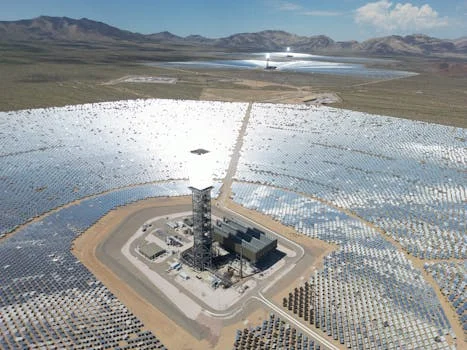
A three-stage hybrid ZLD system for solar manufacturing achieves 99.8% recovery by integrating chemical pretreatment, high-pressure RO, and thermal crystallization. This design prioritizes "load reduction" at each stage, ensuring that the most energy-intensive components (the evaporators) handle the smallest possible volume of water. The 2025 engineering blueprint utilizes high-rejection membranes and mechanical vapor recompression (MVR) to minimize the carbon footprint of the treatment process.
The first stage involves Dissolved Air Flotation (DAF) and chemical dosing. For a standard 100 MW plant generating 400 m³/day, a DAF system with a loading rate of 4–8 m³/m²/h is deployed. This stage removes over 95% of TSS and recovers silver through targeted precipitation. The second stage utilizes RO systems for concentrating PV wastewater in hybrid ZLD designs. These systems are configured for 75–85% recovery, producing a high-quality permeate for reuse in cooling towers or as deionized water makeup. The final stage uses MVR or solar-powered evaporation to reach the crystallization point, where solids are harvested using filter presses for dewatering crystallizer byproducts in ZLD systems.
| System Stage | Equipment Specification | Key Performance Metric | 2025 Tech Enhancement |
|---|---|---|---|
| Pretreatment | DAF + Coagulation Tank | TSS Removal > 98% | AI-driven polymer dosing |
| Membrane | High-Pressure RO (70-80 bar) | TDS Recovery 80% | Fouling-resistant spacers |
| Concentration | Vibratory Shear Enhanced RO | Brine TDS > 120,000 mg/L | Low-energy electro-dialysis |
| Crystallization | MVR Evaporator / Solar Still | 99.8% Total Recovery | Solar-thermal integration |
To calculate system sizing, engineering teams use the following baseline: For a 100 MW plant generating 400 m³/day of wastewater, the design requires a 20 m³/h DAF system, a 15 m³/h RO system, and a 10 m³/day crystallizer. Integrating solar PV to power the MVR compressors or the RO pumps can reduce grid dependency by 40–60%. This "Electrified ZLD" model is particularly effective in the solar industry, where the product being manufactured—photovoltaic panels—can be used to power the very system that cleans its production waste. For comparative designs in similar industries, see ZLD system designs for advanced semiconductor wastewater.
Photovoltaic ZLD System Cost Breakdown: CAPEX, OPEX, and ROI Calculator for 2025
Total CAPEX for a 100 MW solar facility ZLD system ranges from $2.8M to $4.3M depending on heavy metal concentrations and local labor costs. While the initial investment is higher than traditional physical-chemical treatment plants, the elimination of discharge fees and the recovery of high-purity water create a compelling financial case. In many jurisdictions, the cost of "not doing ZLD" includes not only fines but also the rising cost of industrial water procurement, which has increased by 15-20% annually in manufacturing hubs like Suzhou and Gujarat.
OPEX for a modern hybrid system is significantly lower than legacy thermal-only systems. By using membranes to perform the bulk of the dewatering, the energy cost is reduced from $2.50/m³ (thermal only) to approximately $0.45/m³ (hybrid). Energy remains the largest variable, accounting for roughly 50% of OPEX, followed by chemicals for pH adjustment and coagulation. However, silver recovery can act as a significant revenue stream. At silver prices of $25-$30/oz, a plant recovering 90% of its silver effluent can generate $150,000 to $250,000 in annual credits, effectively subsidizing the treatment of other contaminants.
| Cost Category | Estimated Cost (100 MW Plant) | % of Total Budget |
|---|---|---|
| CAPEX: Pretreatment (DAF/Chem) | $300,000 – $500,000 | 12% |
| CAPEX: Membrane Systems (UF/RO) | $800,000 – $1,200,000 | 28% |
| CAPEX: Crystallization & Evap | $1,200,000 – $1,800,000 | 42% |
| CAPEX: Controls & Installation | $500,000 – $800,000 | 18% |
| OPEX: Energy (Solar-Hybrid) | $0.15 – $0.30/m³ | — |
| OPEX: Chemicals & Consumables | $0.10 – $0.20/m³ | — |
The ROI calculation for a 100 MW plant is typically 3.5 to 5 years. For example, a facility saving $1.2 million per year in discharge fines and municipal water costs, while recovering $200,000 in silver, will offset a $4M CAPEX investment in less than three years. implementing ZLD provides a "future-proof" compliance status, protecting the facility from upcoming stricter regulations like the proposed updates to the EU Industrial Emissions Directive. For strategies on maximizing metal value, refer to heavy metal recovery strategies for semiconductor and PV wastewater.
Compliance and Permitting: Navigating ZLD Regulations for Solar Manufacturers
China’s GB 31573-2015 standard mandates that all new photovoltaic manufacturing facilities implement zero liquid discharge for hazardous process streams. This regulation served as a global bellwether, prompting similar movements in the EU and the United States. In the US, the EPA 40 CFR Part 469 guidelines provide the framework for semiconductor and PV effluent. While ZLD is not federally mandated for all existing plants, it is frequently the only viable pathway for new facilities to obtain an Environmental Impact Assessment (EIA) approval in water-stressed states like California or Arizona.
Permitting a ZLD system requires a multi-media approach. While liquid discharge is eliminated, regulators focus on the disposal of the "salt cake" (the solid byproduct of crystallization) and potential air emissions from thermal evaporators. If the salt cake contains high levels of lead or cadmium, it must be managed as hazardous waste unless a metal recovery process is integrated. Air permits are also required for crystallizers to ensure that volatile organic compounds (VOCs) from solvents are not released into the atmosphere. A comprehensive compliance roadmap includes five critical steps: (1) Baseline wastewater characterization, (2) Pilot-scale ZLD technology validation, (3) Submission of the EIA with a solid waste management plan, (4) Acquisition of air and water rights permits, and (5) Implementation of a continuous monitoring system (CMS) for permeate quality.
"The transition to ZLD is often driven more by the scarcity of water permits than by the cost of fines. In regions like Gujarat, India, a ZLD certificate is a prerequisite for grid connection for new PV manufacturing hubs." (HydropureWater Regulatory Analysis, 2025)
Finally, engineering teams must consider water rights. In many arid regions, "Zero Discharge" facilities are given priority for water allocations because they demonstrate maximum resource efficiency. This can be a decisive factor in site selection for new 500 MW+ "Giga-factories." By recycling 99.8% of water, manufacturers reduce their vulnerability to seasonal water rationing and local political pressure regarding industrial water use.
Frequently Asked Questions
What is the typical recovery rate for photovoltaic wastewater ZLD systems?
Modern hybrid ZLD systems designed for PV manufacturing achieve a 99.8% water recovery rate. The remaining 0.2% is typically bound as residual moisture within the solid salt cake byproduct, which is harvested via a filter press for disposal or further resource recovery.
How much does a PV ZLD system cost for a 100 MW solar panel plant?
For a 100 MW facility generating approximately 400 m³/day of effluent, the CAPEX ranges from $2.8M to $4.3M. OPEX typically falls between $0.30 and $0.60 per cubic meter of treated water, depending on the energy source and chemical dosing requirements.
Can solar panels power a ZLD system?
Yes. Integrating solar PV to power MVR compressors and high-pressure pumps can reduce grid energy consumption by 40–60%. This not only lowers OPEX but also helps manufacturers meet corporate sustainability goals and reduces the carbon intensity of the panels being produced.
What are the main contaminants in PV wastewater?
The primary contaminants include silicon fines (TSS), heavy metals such as silver, lead, and cadmium, hydrofluoric acid (fluoride ions), and organic solvents used in the cleaning and coating of solar cells. These require specialized pretreatment to prevent membrane fouling.
Is ZLD mandatory for solar panel manufacturers?
ZLD is mandatory for new PV facilities in China (under GB 31573-2015) and is increasingly required in the EU and India for plants located in water-stressed regions. In the US, while not always federally mandated, it is often a requirement for local environmental permitting.