Sludge dewatering equipment reduces wet sludge volume by 70-90% and typically cuts hauling and landfill costs by 40-60% for municipal and industrial plants in the USA (EPA 2024). Cake dryness commonly spans 18-40% depending on technology, with throughput from about 50-5,000 kg/hr dry solids (DS), polymer use of 3-10 g/kg DS, and energy use of 0.5-5 kWh/m³. EPA 40 CFR Part 503 and state biosolids or landfill solids rules govern how dry the cake must be and what reuse path is allowed.
How sludge dewatering equipment compares for US plants
Sludge dewatering equipment cuts wet sludge volume by 70-90% and typically reduces disposal costs by 40-60% for US wastewater plants. Screw presses reach about 30-40% cake dryness at 0.5-2 kWh/m³. Belt presses yield 18-25% cake at higher throughput, while centrifuges achieve 25-35% cake at 2-5 kWh/m³ under typical municipal feed conditions.
Why Volume Reduction Cuts Disposal Cost for US Plants
Disposal costs for untreated sludge range from $50-$150/ton, with dewatering reducing volumes by 70-90% (EPA 2023, ESMIL data). That volume cut lowers hauling trips, landfill fees, and on-site storage for municipal and industrial plants across the USA. A 10 MGD plant in Ohio cut annual sludge disposal costs from $1.2M to $450K by moving from conventional belt presses to modern screw presses (ALAR case study).
Regulatory drivers reinforce the same decision. EPA 40 CFR Part 503 governs biosolids land application, while many states set landfill acceptance solids floors. California guidance is often cited as a 15% solids landfill rule. Title 27 is more precise: primary sludge needs at least 20 percent solids by weight. Secondary sludge, primary/secondary mixtures, or water treatment sludge need at least 15 percent solids. Class III co-disposal also requires a minimum solids-to-liquid ratio of 5:1 by weight.
Higher cake dryness can open beneficial-use paths such as Class B or Class A biosolids after further treatment, instead of landfill only. Dewatering also reduces free liquid, methane risk from wet storage, and leachate load. Pairing mechanical dewatering with an automated polymer dosing systems for optimal sludge conditioning keeps floc quality stable when feed solids swing.
Screw Press, Belt Press, and Centrifuge Engineering Specs
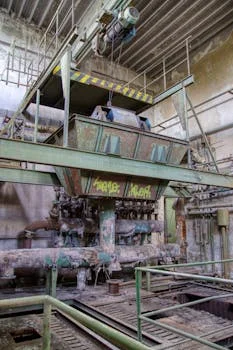
Selecting a unit starts with cake dryness target, feed solids, polymer budget, and energy cost per cubic meter of feed. Each machine class behaves differently on municipal digester cake versus oily or fibrous industrial sludge.
Screw presses compress sludge in a rotating screw against a screen or ring stack. Typical cake dryness is 30-40%, throughput about 50-1,500 kg/hr DS, polymer about 3-6 g/kg DS, and energy about 0.5-2 kWh/m³ (Alfa Laval specs). They suit continuous duty and modest footprints.
Belt presses use gravity drainage then roller compression between porous belts. Typical cake dryness is 18-25%, throughput about 200-5,000 kg/hr DS, polymer about 5-10 g/kg DS, and energy about 1-3 kWh/m³ (ALAR data). They fit high-volume, fibrous feeds when wash water and belt tracking are managed.
Centrifuges separate solids by high G-force in a rotating bowl with an internal scroll. Typical cake dryness is 25-35%, throughput about 300-3,000 kg/hr DS, polymer about 4-8 g/kg DS, and energy about 2-5 kWh/m³ (ESMIL benchmarks). They handle dilute feeds well but need skilled maintenance.
HydropureWater’s Plate and Frame Filter Press for Sludge Dewatering is a batch alternative when the plant needs very high cake dryness, often 35-50% or more, for landfill rejection risk or Class A drying trains.
| Parameter | Screw Press | Belt Press | Centrifuge |
|---|---|---|---|
| Cake Dryness (%) | 30-40% | 18-25% | 25-35% |
| Throughput (kg/hr DS) | 50-1,500 | 200-5,000 | 300-3,000 |
| Polymer Consumption (g/kg DS) | 3-6 | 5-10 | 4-8 |
| Energy Use (kWh/m³) | 0.5-2 | 1-3 | 2-5 |
| Footprint | Compact | Medium-Large | Medium |
| Maintenance Complexity | Low | Medium | High |
Which Technologies Dewater Digester Sludge Best?
Digester sludge at municipal plants is usually a primary/secondary blend at about 2-6% solids after digestion and thickening, and screw presses or plate-and-frame presses are often the first shortlist for high cake dryness. Centrifuges fit when feed solids stay below about 2% or when the plant needs one machine for several sludge types (Alfa Laval guidelines). Belt presses remain viable on fibrous digester blends if polymer dose and gravity zone length are tuned.
Polymer type and dose still dominate results. Cationic polymers are typical for negatively charged biosolids; dose commonly falls in 3-10 g/kg DS for stable floc before mechanical pressure (EPA 2024 benchmarks). Pilot testing on the actual digester drawdown confirms cake percent, capture, and centrate quality before CAPEX lock-in.
Matching Equipment to Municipal and Industrial Sludge
Municipal primary/secondary sludge at 2-6% solids often favors screw presses for continuous high cake dryness and lower polymer. Dilute secondary sludge below 2% solids usually needs a centrifuge or pre-thickening ahead of a screw press.
Industrial sludge from food, pulp/paper, and petrochemical plants can carry fiber, oil, or chemical residuals. Belt presses often excel on high-fiber pulp/paper sludge because of large filtration area. Centrifuges resist blinding on oily sludge better than open belts, though dissolved air flotation or chemical emulsion break is still common pretreatment (ALAR case studies).
Footprint and plant size matter. Screw presses suit many plants under 1 MGD with tight buildings. Centrifuges serve many plants above 10 MGD when capacity per square meter is the constraint. A frequent failure mode is feeding high-oil sludge to a belt press, which blinds belts; fix the oil upstream before changing rollers. When the end goal is Class A or Class B land application, cake dryness is only the first step—pathogen and vector attraction controls still follow Part 503.
| Sludge Type/Characteristic | Recommended Equipment | Key Considerations |
|---|---|---|
| Municipal Primary/Secondary (2-6% solids) | Screw Press, Plate and Frame Filter Press | High cake dryness, lower polymer, compact footprint. |
| Municipal Secondary (<2% solids) | Centrifuge, Screw Press (with pre-thickening) | Handles dilute sludge, high G-force separation. |
| Industrial (High Fiber - e.g., Pulp/Paper) | Belt Press, Plate and Frame Filter Press | Large filtration area, robust for fibrous material. |
| Industrial (Oily/Greasy) | Centrifuge (with pre-treatment) | High shear, resists blinding from oils, often requires DAF. |
| High Dryness Target (e.g., Class A, landfill) | Plate and Frame Filter Press, Screw Press | Achieves 35-50%+ cake solids, reduces disposal costs. |
| Limited Footprint | Screw Press, Centrifuge | Compact design, high capacity/area. |
How Does a Sludge Decanter Centrifuge Improve Biosludge?
A sludge decanter centrifuge improves biosludge dewatering when feed is dilute, space is limited, or one machine must cover several sludge grades without belt wash-water systems. At 25-35% cake dryness and about 300-3,000 kg/hr DS, centrifuges raise solids capture on secondary or mixed biosludge that would overload a gravity belt zone. Energy is higher at 2-5 kWh/m³, and scroll/bowl wear raises annual maintenance versus a screw press.
Improvement shows up as dryer cake only when polymer make-down, feed rate, and differential speed are tuned together. Plants that chase higher cake with more polymer often lose money in OPEX; a controlled trial with fixed feed solids is the cleaner path. For maximum solids when landfill or dryer feed is the constraint, compare the centrifuge against a plate and frame filter press on the same sludge sample.
2025 Cost Benchmarks: CAPEX, OPEX, and ROI
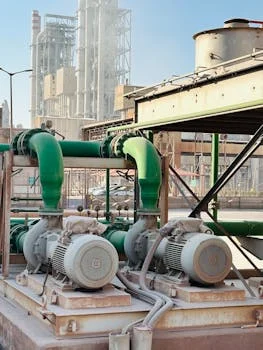
As of 2025 vendor quotes, screw presses typically range from $50K-$300K, belt presses from $100K-$500K, and centrifuges from $200K-$1M for the dewatering unit alone. Polymer dosing skids, pumps, and conveyors are often extra. Polymer cost commonly runs $0.10-$0.30/kg DS, energy about $0.05-$0.20/m³ of sludge processed, and routine maintenance about $5K-$20K per year, higher for centrifuges.
A worked example shows why cake dryness dominates ROI. A 5 MGD plant generating 5 tons/day of wet sludge at 2% solids can face about $365,000/year disposal at $100/ton. A $250K screw press reaching 30% cake dryness can cut wet mass by about 90%, dropping disposal to about $36,500/year. With about $40K/year OPEX, net savings near $288,500 imply payback under 1 year for that case. A $400K centrifuge for the same plant may pay back around 1.5 years when flexibility offsets higher energy and parts (ALAR ROI model, adjusted for 2025).
Hidden costs include residual disposal, operator training, and spare-parts stock. Financing paths include municipal bonds, commercial loans, and EPA WIFIA loans for eligible water infrastructure projects.
| Cost Category | Screw Press (Typical) | Belt Press (Typical) | Centrifuge (Typical) |
|---|---|---|---|
| CAPEX (Equipment Only) | $50,000 - $300,000 | $100,000 - $500,000 | $200,000 - $1,000,000 |
| Polymer Cost (per kg DS) | $0.10 - $0.25 | $0.15 - $0.30 | $0.12 - $0.28 |
| Energy Cost (per m³ sludge) | $0.05 - $0.10 | $0.08 - $0.15 | $0.15 - $0.20 |
| Maintenance (Annual) | $5,000 - $10,000 | $8,000 - $15,000 | $10,000 - $20,000 |
| Example ROI (5 MGD Plant) | < 1 year | 1.5 - 2.5 years | 1.5 - 2 years |
Compliance and Permitting Under EPA and State Rules
EPA 40 CFR Part 503 sets federal standards for sewage sludge use and disposal, including pathogen classes (Class A vs. Class B), vector attraction reduction, and pollutant limits. Earlier article text cited arsenic at 43 mg/kg for Class A biosolids. 40 CFR §503.13 Table 3 sets the monthly average arsenic concentration at 41 mg/kg dry weight. Table 1 sets a ceiling concentration of 75 mg/kg. Meeting Table 3 metals is necessary for unrestricted EQ-style land application pathways, but pathogen reduction usually needs composting, heat drying, or other processes beyond mechanical dewatering alone.
State rules stack on top of Part 503.Florida biosolids management plans (FDEP 2024) require tracking of generation, treatment, and disposal. Industrial sludge discharges may need NPDES coverage, and land-application permits often take 6-12 months.
Ongoing proof of compliance usually includes quarterly solids tests, annual pathogen checks for Class A or Class B status, and periodic metals analysis by EPA-approved methods. Metal exceedances often trace to industrial influent, so source control and pretreatment remain part of the dewatering decision, not only machine selection.
Supplier Decision Framework for US Projects
Technology choice and supplier support travel together. Typical warranty coverage is 1-3 years on major components, and lead times for new units in USA projects commonly run 8-16 weeks depending on customization.
- ESMIL: Multi-disk screw presses (MDQ series), often 30-40% cake dryness, modular layouts for small to medium plants.
- ALAR: Custom belt presses and rotary fan presses with industrial pilot testing support.
- Alfa Laval: High-capacity centrifuges (G2 series) targeting up to about 35% cake dryness for large plants.
- Fournier: Heavy-duty belt presses for high-fiber pulp/paper sludge, with 24/7 support options.
- HydropureWater: Plate and frame filter presses from about 1-500 m² filtration area, hydraulic/PLC options for 35-50%+ cake dryness on municipal and industrial sludge.
| Supplier | Primary Technology Focus | Key Differentiators | Typical Lead Time |
|---|---|---|---|
| ESMIL | Multi-disk Screw Presses | Modular design, compact footprint, good for small plants. | 8-12 weeks |
| ALAR | Belt Presses, Rotary Fan Presses | Custom-engineered, pilot testing services for industrial. | 10-14 weeks |
| Alfa Laval | Centrifuges | High-efficiency, low-energy designs, high throughput. | 12-16 weeks |
| Fournier | Heavy-Duty Belt Presses | Robust for high-fiber sludge, 24/7 support. | 10-14 weeks |
| HydropureWater | Plate and Frame Filter Presses | High cake dryness (35-50%+), hydraulic/PLC control, customizable. | 8-12 weeks |
Who This Is For and Selection Checklist
Who this is for: plant engineers, EPC designers, and procurement managers sizing mechanical dewatering for municipal digesters, industrial lagoons after thickening, or landfill solids compliance.
Who should look elsewhere: sites that only need gravity thickening, or facilities already locked into thermal drying without a mechanical cake step.
Selection checklist:
- Measure feed percent solids and volatile fraction on the real sludge, not a catalog average.
- Set the cake dryness target from landfill, incinerator, or dryer limits.
- Budget polymer in g/kg DS and energy in kWh/m³ under your local utility rates.
- Confirm Part 503 pathogen class and metals pathway before buying for land application.
- Match footprint and operator skill to screw, belt, centrifuge, or plate-and-frame duty.
- Run a pilot or rental trial before full-scale purchase.
- Price spare parts, wash water, and service response, not only CAPEX.
If you need a high-dryness batch option sized to your sludge, Request a free quote with flow rate, percent solids, and disposal limits.
Frequently Asked Questions
What cake dryness should US plants expect from each machine?
Expected cake dryness is about 30-40% for screw presses, 25-35% for centrifuges, and 18-25% for belt presses on typical biosolids. Plate and frame filter presses often reach 35-50% or higher on municipal and many industrial feeds. Actual results depend on feed solids, polymer dose in g/kg DS, and whether the sludge is digested, fibrous, or oily. Those percentages drive disposal cost and landfill acceptance.
How does polymer use change OPEX?
Polymer use usually falls between 3-10 g/kg DS and is one of the largest recurring OPEX lines. Belt presses often sit at the high end of that band, while screw presses often sit lower at about 3-6 g/kg DS. Overdosing raises chemical cost without always raising cake dryness. Stable make-down and automatic dosing keep dose near the minimum that holds floc through the machine.
What EPA biosolids rules still control dewatering projects?
EPA 40 CFR Part 503 remains the federal baseline for pathogen class, vector attraction reduction, and pollutant limits for sewage sludge. Mechanical dewatering alone does not create Class A pathogen status; further treatment is usually required. For arsenic, Part 503 Table 3 uses 41 mg/kg monthly average and Table 1 uses a 75 mg/kg ceiling on a dry-weight basis. State landfill solids rules can still force a higher cake target than Part 503 alone.
What throughput ranges fit municipal digester sludge?
Typical throughput bands are 50-1,500 kg/hr DS for screw presses, 200-5,000 kg/hr DS for belt presses, and 300-3,000 kg/hr DS for centrifuges. Digester sludge near 2-6% solids often lands in the screw-press or plate-press sweet spot after thickening. Dilute secondary sludge below about 2% solids more often needs a centrifuge or a thickener first. Size for peak weekly sludge production, not annual average only.
Why run sludge dewatering pilot testing before purchase?
Pilot testing shows cake dryness, polymer dose, and capture on your specific sludge before you buy full-scale hardware. It reduces the risk of buying a belt press for oily feed or an undersized screw for dilute secondary sludge. Vendors such as ALAR commonly support industrial pilots; municipal plants can use trailer units on digester drawdown. A short pilot is cheaper than a multi-year OPEX miss.