
Why Staff Sanitary Sewage Is a Distinct MBR Design Problem
Staff sanitary sewage is a black-water-plus-shower stream from dormitories, washhouses, and offices that runs 100–200 L per person per day at BOD 200–400 mg/L, COD 400–700 mg/L, ammonia 30–60 mg/L, and TSS 150–300 mg/L (HydropureWater field data, 2026). Two hydraulic features separate it from dilute municipal wastewater. First, a 2–3× peak shift-change spike: BOD and flow can surge 2–3× above the daily average at handover, so the bioreactor and equalization tank must be sized to peak hourly flow, not mean flow. Second, sanitary sewage runs warm — 25–35°C year-round in tropical and subtropical sites — which accelerates biological kinetics but also accelerates membrane fouling when aeration is undersized.
The fouling load is duty-specific: hair, lint, fibrous solids, and personal-care product residues that a municipal headworks would never see. A GX series rotary mechanical bar screen at 3–5 mm aperture is the first barrier; a hair catcher on the sanitary drain is the second, and skipping it typically fouls membrane bundles within weeks (HydropureWater field data, 2026). The influent also tends toward a low C:N:P ratio in nitrogen terms, which forces either supplemental carbon dosing or a staged anoxic/aerobic train to hit the ammonia limits that GB/T 18920 reuse and GB 8978 discharge both require.
Pretreatment Chain Before the MBR Tank
Three pieces of equipment stand between the staff block and the membrane tank, and each one has a quantified job. Step one is a 3–5 mm aperture bar screen — the GX series rotary mechanical bar screen handles fibrous solids from showers and laundry with an automatic rake cycle, removing 60–80% of visible solids before the drain enters the wet well. Step two is a hair and lint catcher on the sanitary line; without it, hair wraps membrane fibers and aerator diffusers within 30–60 days of operation.
Step three is an equalization (EQ) tank sized for 6–12 hours of mean flow to dampen the 2–3× shift-change peak. The EQ tank also acts as a primary settler and FOG (fats, oils, grease) capture chamber, removing 30–50% of TSS and 20–40% of FOG by gravity. Specify a submersible mixer at 4–6 W/m³ to prevent septic conditions, and a transfer pump with 2–3 mm clear passage to the bioreactor. For very small or trailer-mounted deployments — typically under 5 m³/h — a WSZ series packaged A/O sewage treatment plant integrates screening, A/O, sedimentation, and disinfection in a single buried tank and replaces this three-stage pretreatment chain. The WSZ trade-off is that it does not include an MF/UF membrane step, so reuse-tier effluent quality requires an add-on ultrafiltration stage.
Submerged MBR Configuration: The 2026 Default

The submerged anoxic + aerobic + membrane layout is the workhorse configuration for staff sanitary sewage at 5–200 m³/day. Design parameters cluster in a tight, defensible range:
| Parameter | Design Range (Submerged MBR, Sanitary Duty) |
|---|---|
| Total HRT | 8–12 h (anoxic 2–4 h, aerobic 4–6 h, membrane 1–2 h) |
| MLSS | 8–12 g/L (avoid sustained operation above 15 g/L) |
| Sustained flux | 0.1–0.2 m³/m²·d |
| Peak flux (shift change) | 0.25–0.3 m³/m²·d, derated for sanitary fouling load |
| Aeration scour | 8–12 m³ air/m² membrane area·h, continuous |
| Relax/backwash cycle | 90 s backwash every 8–12 min |
| Membrane pore / material | 0.1 μm nominal, PVDF |
| Per-module output (DF series) | 32–135 m³/day per module |
The 8–12 g/L MLSS band is higher than conventional activated sludge (3–5 g/L) because the membrane retains biomass that would otherwise wash out — this is what shrinks the tankage to roughly 60% of a CAS footprint for the same throughput. Above 15 g/L, fouling risk climbs steeply because of higher mixed-liquor viscosity and worse oxygen transfer efficiency. PVDF flat-sheet modules with an integrated aeration scour box are the workhorse choice; a DF series 0.1 μm PVDF flat-sheet membrane module in this duty outputs 32–135 m³/day per cassette, depending on size. Hollow-fiber PVDF modules are a viable alternative with similar effluent quality but slightly higher fouling sensitivity to the hair and lint that sanitary streams carry. The complete integrated MBR system with submerged PVDF membrane filtration packages the bioreactor, membrane cassette, blowers, backwash pumps, and PLC into a single skid, which shortens site installation to 2–4 weeks for typical staff-block flows.
Sidestream Tubular MBR: When It Earns Its Keep
Sidestream (cross-flow) tubular MBR uses a recirculation loop at 1–3 m/s cross-flow velocity to keep solids in suspension across 5–8 mm tubular channels, and the configuration handles TSS 10,000–30,000 mg/L — an order of magnitude above what submerged MBR can tolerate. The relevant trade-off is energy: sidestream tubular MBR consumes 2–5 kWh/m³ versus 0.2–0.5 kWh/m³ for a comparable submerged system, roughly a 10–20× penalty (HydropureWater field data, 2026; cross-checked against the hollow fiber vs flat sheet vs tubular MBR comparison). That penalty is only justifiable when the influent is genuinely out of submerged-MBR range.
The decision rule is straightforward: specify sidestream only when influent COD exceeds 2,000 mg/L or TSS exceeds 800 mg/L — conditions that occur when sanitary sewage is co-mingled with food-service waste, laundry greywater containing process chemicals, or light industrial effluent. For plain staff sanitary sewage, the submerged layout remains more cost-effective on both CAPEX and OPEX. The sidestream layout is a closed loop: bioreactor → circulation pump → tubular membrane vessel → permeate out → sludge recycle. Ceramic tubular membranes extend the operating envelope further, tolerating pH 1–13 and aggressive cleaning chemistries, but at 3–5× the membrane cost of a comparable submerged PVDF cassette.
Submerged vs Sidestream MBR: Configuration Scoring Matrix

Use this matrix to score a candidate configuration against six engineering criteria on a 1–5 scale (5 = best). The matrix is calibrated for staff sanitary sewage in the 5–200 m³/day band, China 2026 standards.
| Criterion | Submerged Flat-Sheet MBR | Submerged Hollow-Fiber MBR | Sidestream Tubular MBR | Packaged WSZ (no UF) |
|---|---|---|---|---|
| Footprint (smaller = better) | 5 | 4 | 2 | 5 |
| Energy use (lower = better) | 5 | 5 | 1 | 4 |
| CAPEX (lower = better) | 4 | 4 | 2 | 5 |
| OPEX (lower = better) | 5 | 4 | 1 | 4 |
| Influent tolerance (high TSS/COD) | 2 | 2 | 5 | 2 |
| Reuse suitability (GB/T 18920) | 5 | 5 | 5 | 1 |
Decision flow: flow under 5 m³/h with discharge compliance only → WSZ series packaged A/O sewage treatment plant. Flow 5–200 m³/day with reuse or strict discharge → submerged MBR using a DF series 0.1 μm PVDF flat-sheet membrane module. Flow above 200 m³/day, or co-mingled high-strength waste → sidestream tubular. For hospital staff blocks with stricter discharge and reuse rules, the hospital staff sewage engineering case study shows the same scoring pattern but with stronger disinfection and tighter pathogen control.
Reuse vs Discharge: Picking the Right Compliance Target
Effluent target depends on end use, and the two Chinese standards are not interchangeable. GB/T 18920-2020 (Class IA, urban miscellaneous water reuse) is the binding target for on-site reuse in toilet flushing and greening; GB 8978-1996 Class I is the binding target for municipal discharge to a receiving sewer or surface water.
| Parameter | GB/T 18920 Class IA (Reuse) | GB 8978 Class I (Discharge) |
|---|---|---|
| COD | ≤ 50 mg/L | ≤ 100 mg/L |
| BOD₅ | ≤ 10 mg/L | ≤ 20 mg/L |
| Ammonia (NH₃-N) | ≤ 5 mg/L | ≤ 15 mg/L |
| TSS | — (turbidity governs) | ≤ 70 mg/L |
| Turbidity | ≤ 5 NTU | — |
| Total coliforms | Not detectable per 100 mL | — |
Submerged MBR effluent meets GB 8978 Class I directly without polishing, and meets GB/T 18920 Class IA with a downstream disinfection step: UV at 40 mJ/cm² for non-potable reuse, or an on-site ClO₂ generator for reuse-tier disinfection at 1–2 mg/L residual for hospital and dormitory sanitary duty where biofilm control in the distribution loop matters. The medical wastewater treatment process flow guide covers the same reuse-tier logic in a stricter pathogen context and is a useful reference for dormitory projects in or near healthcare facilities.
O&M Reality Check: Membrane Cleaning and Sludge Handling
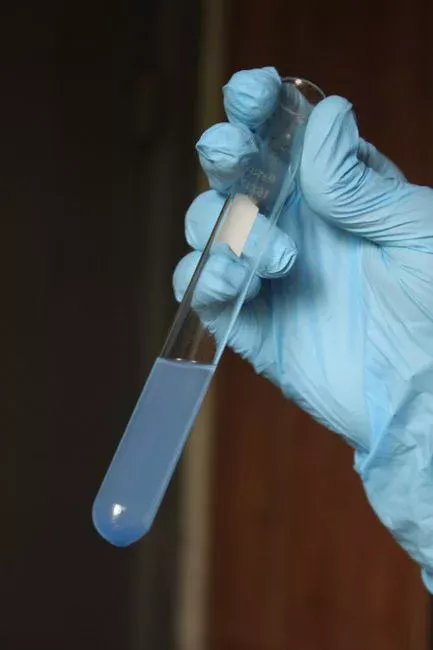
Submerged MBR O&M is dominated by two cadence items. Maintenance wash every 1–2 weeks: permeate backwash for 90 seconds plus continuous air scour — this is the routine that keeps transmembrane pressure (TMP) in the 5–20 kPa band. CIP (clean-in-place) every 3–6 months: 0.5–1% NaOCl soak for organic fouling, followed by 1–2% citric acid for inorganic scaling, when sustained TMP climbs above 30 kPa. Recovery cleaning (1–2% NaOCl + 0.5% EDTA at 30–35°C for 4–6 hours) restores 80–95% of clean-water flux when routine CIP is no longer enough (HydropureWater field data, 2026).
Sludge yield at 8–12 g/L MLSS runs 0.3–0.5 kg DS per kg BOD removed — significantly lower than conventional activated sludge because of the longer SRT and the endogenous decay that MBR operation encourages. The catch is that the sludge still has to be dewatered; a plate and frame filter press for waste activated sludge handles 1–5 m³/h of thickened MBR sludge to a 22–28% dry cake, which is the right match for small packaged plants. Rough OPEX for a submerged MBR treating staff sanitary sewage: 0.15–0.35 USD/m³, dominated by aeration blower energy (60–70% of OPEX) and periodic chemical CIP (10–15%). Sidestream MBR OPEX is 2–4× higher because of the circulation pump.
Frequently Asked Questions
Which MBR configuration suits staff sewage under 50 m³/day?
Submerged flat-sheet PVDF MBR at 0.1–0.2 m³/m²·d flux, 8–12 g/L MLSS, and 8–12 h total HRT is the most cost-effective option for 5–50 m³/day sanitary duty. The complete integrated MBR system with submerged PVDF membrane filtration packages the bioreactor, cassette, blowers, and PLC into a single skid that installs in 2–4 weeks.
How low can MBR effluent COD go on staff sanitary sewage?
Sustained submerged MBR effluent on staff sanitary sewage runs COD 20–50 mg/L and BOD₅ below 10 mg/L with proper A/O staging. That clears GB/T 18920 Class IA reuse limits for toilet flushing and greening, and clears GB 8978 Class I discharge limits without polishing (HydropureWater field data, 2026).
MBR vs SBR for staff sanitary duty — which wins?
MBR wins on footprint (60% smaller for the same throughput), effluent quality (BOD ≤10 mg/L vs SBR's 15–25 mg/L), and reuse compliance. SBR wins on CAPEX for very small flows under 5 m³/h and on operational simplicity where reuse is not required. For any project targeting reuse or strict GB 8978 Class I, MBR is the better fit.
What pretreatment is mandatory before the MBR tank?
Three stages are mandatory: 3–5 mm aperture bar screening, hair and lint catching on the sanitary drain, and 6–12 hour equalization. Skipping the hair catcher typically fouls membrane bundles within 30–60 days of operation, and undersizing the EQ tank lets the 2–3× shift-change peak push TMP above 30 kPa within the first month.
Reuse vs discharge — how do I branch the design?
Branch on end use. For on-site toilet flushing or greening, target GB/T 18920 Class IA (COD ≤50, BOD ≤10, NH₃-N ≤5, turbidity ≤5 NTU, coliforms ND/100 mL) and add UV at 40 mJ/cm² or an on-site ClO₂ generator for reuse-tier disinfection. For municipal discharge, target GB 8978 Class I (COD ≤100, BOD ≤20, NH₃-N ≤15, TSS ≤70 mg/L) and skip the polishing step.
What is realistic membrane lifetime for sanitary MBR duty?
PVDF flat-sheet and hollow-fiber modules on staff sanitary sewage typically last 5–8 years before replacement when CIP is performed on schedule. Ceramic tubular modules last 10–15 years but cost 3–5× more upfront, so the lifetime economics favor PVDF unless the influent is aggressive enough to require ceramic tolerance.