What Makes a Basra Effluent Treatment Plant Different?
An effluent treatment plant in Basra should be designed around the final discharge or reuse route, measured industrial influent, salinity, oil content, temperature, and current permit conditions—not around a generic “ETP package.” For industrial wastewater, the process commonly combines equalization and temperature control, oil and solids removal by DAF, biological treatment where appropriate, and membrane polishing when reuse quality is required. HydropureWater's Basra guidance cites Iraqi Law 25/1967 limits of BOD below 30 mg/L, TSS below 50 mg/L, and oil and grease below 10 mg/L, alongside typical industrial TDS of 5,000–20,000 mg/L. DAF, MBR, and UF should therefore be compared by role, footprint, corrosion resistance, fouling controls, sludge handling, and lifecycle cost before a supplier is selected.
Basra-specific design begins with the destination: sewer discharge, controlled industrial reuse, irrigation reuse, or another permitted route. The route determines whether polishing and disinfection are required and which contaminants must be monitored. A representative sampling program should cover flow, BOD, COD, TSS, oil and grease, TDS, chloride, temperature, pH, phenols, sulfides, and relevant metals. Oil-bearing streams, produced water, refinery wastewater, process wastewater, and hospital effluent cannot share one assumed design basis.
HydropureWater's commercial Basra guide reports typical industrial influent TDS of 5,000–20,000 mg/L and summer temperatures reaching 50°C, which may require equalization or cooling to protect biological activity. The same source notes that conventional wastewater treatment effluent and reclaimed effluent requiring additional membrane treatment are different design cases. For chlorinated saline service, request corrosion-resistant wetted materials and a defined cleaning strategy.
| Design input | Buyer evidence required | Engineering consequence |
|---|---|---|
| Discharge or reuse route | Permit, discharge agreement, reuse specification | Sets required polishing, disinfection, and monitoring |
| Influent characteristics | Representative sampling across operating conditions | Determines pretreatment, biological loading, and membrane duty |
| Hydraulic profile | Average, peak, surge, and batch-discharge data | Defines equalization, pumping, and treatment capacity |
| Site and utilities | Footprint, power, drainage, chemical storage, access | Constrains technology selection and installation |
Use the resulting data to prepare an automatic wastewater chemical dosing system specification only after pH, coagulation, antiscalant, or sludge-conditioning requirements are established.
The Treatment Train from Inlet to Permitted Effluent
A Basra wastewater treatment plant train should protect each downstream process from hydraulic surges, oil, suspended solids, temperature excursions, and salinity-related fouling. The sequence begins with headworks, flow measurement, screening where required, and equalization. Equalization smooths batch discharges and stabilizes temperature, suspended solids, pH, and chemical demand before treatment.
For streams containing free or emulsified oil, DAF normally precedes sensitive biological and membrane stages. HydropureWater's 2026 Basra guide reports 95–99% oil removal when influent temperature is stabilized below 50°C. That performance is conditional: scaling must be monitored when TDS exceeds 15,000 mg/L, and the industrial DAF system for Basra wastewater should be specified with the expected oil and solids load, not flow alone.
Biological treatment applies only where temperature, salinity, toxicity, and biodegradability support the selected microbial process. Its scope should explicitly include mixing, aeration, solids separation, return or wasting arrangements, and biological sludge handling. For constrained sites, an MBR wastewater treatment system combines biological treatment and membrane separation. HydropureWater describes filtration below 1 μm and a footprint 60% smaller than conventional activated sludge, while warning that salinity increases fouling and scaling risk.
UF is a polishing or pretreatment barrier for suspended solids, colloids, and microorganisms, particularly before RO or another sensitive process. The specified UF polishing system uses 0.03 μm PVDF membranes, accommodates 2,000–40,000 L/h, and includes automatic backwash with air scour. It does not remove oil that should be removed upstream.
Chemical dosing, disinfection, and sludge handling complete the train. Where pH adjustment, coagulation, antiscalant, or conditioning is needed, include an automatic wastewater chemical dosing system with storage, calibration, alarms, and controlled interlocks. The final discharge or reuse stage must follow the confirmed permit and reuse specification.
DAF, MBR, UF, and Package Treatment: Which Role Fits?
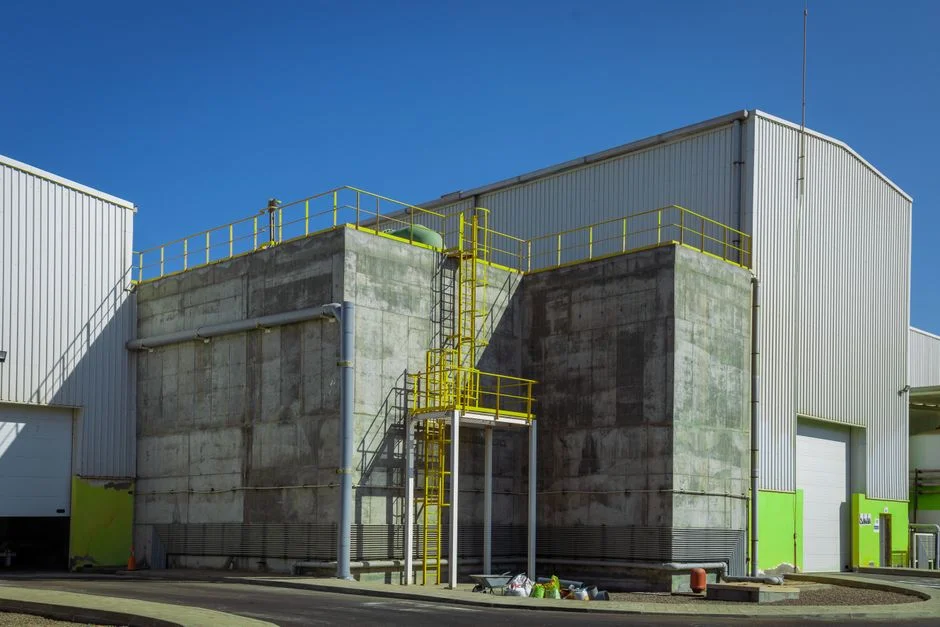
DAF, MBR, and UF solve different problems and should not be evaluated as interchangeable products. Assign each technology by contaminant, required effluent quality, site constraints, sludge route, and operating risk before comparing equipment.
| Technology | Primary role | Evidence or specification | Selection caution |
|---|---|---|---|
| DAF | Oil, FOG, solids, and colloid removal | HydropureWater's 2026 guide reports 95–99% removal of free and emulsified oils below 50°C | Monitor scaling when TDS exceeds 15,000 mg/L |
| MBR | Biological treatment with membrane solids separation | Systems listed from 10 to 2,000 m³/day; filtration below 1 μm; footprint reported as 60% smaller than conventional systems | Salinity increases membrane fouling and scaling risk |
| UF | Suspended-solids, colloid, and microorganism barrier | Specified catalog system uses 0.03 μm PVDF membranes, accepts turbidity up to 300 ppm, and provides automatic backwash with air scour | It is not a substitute for upstream oil removal |
| Package treatment | Integrated anoxic, aerobic, sedimentation, and disinfection treatment | HydropureWater lists sanitary sewage capacity from 1–80 m³/h | Applicability depends on wastewater composition; it is not automatically suitable for high-oil streams |
The WSZ underground integrated sewage treatment plant is relevant to residential, hotel, hospital, factory, and rural applications within its stated sanitary-sewage scope. High-oil industrial wastewater still requires a project-specific assessment of the anoxic and aerobic stages.
Use this decision sequence:
- Identify the contaminant and the discharge or reuse target.
- Measure hydraulic variability, temperature, salinity, and biodegradability.
- Confirm available footprint, utilities, access, and sludge-disposal route.
- Assign DAF, biological treatment, MBR, UF, and disinfection to their process roles.
- Calculate whole-life cost and operational risk, including membrane cleaning, chemicals, energy, labor, and waste disposal.
Where micropollutants or advanced reclamation are involved, Wageningen University and Research's September 2022 thesis supports investigating constructed wetlands, while the University of Twente's nanofiltration thesis supports membrane polishing as a reclamation research direction. Neither source establishes a Basra permit limit; site trials and a defined regulatory endpoint remain necessary.
Compliance Targets and the Evidence Buyers Must Request
Commercial compliance statements must be converted into measured permit conditions and contractual remedies. HydropureWater's 2026 Basra guide states that Iraqi Law 25/1967 sets BOD below 30 mg/L, TSS below 50 mg/L, and oil and grease below 10 mg/L. These are the commercial source's stated targets, not a substitute for checking the current project permit and the Iraqi authority's applicable conditions.
For refinery applications, the same guide lists phenols below 0.05 mg/L and sulfides below 2.0 mg/L. Buyers should confirm whether those values apply to the facility, process stream, discharge point, and receiving environment. The US EPA effluent guidelines presented in the research are national standards for specified industrial categories; they apply only where the relevant category and receiving jurisdiction make them relevant.
Require every supplier to state:
- Guaranteed inlet and outlet conditions, including flow, temperature, salinity, contaminant concentrations, and operating mode.
- Test methods, sampling points, sampling frequency, laboratory requirements, and calculation procedures.
- Corrective actions and contractual remedies if the performance test fails.
- Evidence for FAT, site acceptance, commissioning, and the final performance test.
HydropureWater cites a 2024 Basra Gas Company case with initial COD of 500 mg/L and 92–97% COD removal, while noting that higher-concentration streams need stronger pretreatment. Treat this as contextual evidence rather than a universal guarantee. The buyer should require a mass-balance calculation connecting measured COD, flow, pretreatment, biological loading, and the guaranteed outlet.
For advanced reuse, the 2022 Wageningen constructed-wetlands thesis and the University of Twente nanofiltration thesis identify potential polishing directions, but neither defines a Basra discharge limit. The current permit, receiving-water context, and reuse endpoint must define the acceptance criteria.
Budget, Footprint, and Delivery Time for a Basra Project
Equipment-only prices will not provide comparable capital estimates for a Basra project. HydropureWater's 2026 commercial guide gives indicative installed benchmarks of $1.2 million–$2 million for a 50 m³/h DAF system and $3 million–$6 million for a 100 m³/h MBR plant. These are commercial benchmarks, not quotations for the reader's site.
The same guide estimates civil works, concrete tanks, and site preparation at 10%–20% of the project budget. It also reports DAF manufacturing lead time of 8–12 weeks plus 4–6 weeks for shipping to Umm Qasr and advises planning around a six-month purchase-to-commissioning timeline. Port handling, customs, foundations, utilities, installation, commissioning, and permitting may affect that schedule.
| Cost or schedule item | Evidence or required scope |
|---|---|
| DAF capital benchmark | $1.2 million–$2 million for 50 m³/h, according to HydropureWater's 2026 guide |
| MBR capital benchmark | $3 million–$6 million for 100 m³/h, according to the same commercial guide |
| Civil works and preparation | 10%–20% of project budget in the commercial guide |
| DAF delivery | 8–12 weeks manufacturing plus 4–6 weeks shipping to Umm Qasr |
| Sludge handling | Mechanical dewatering, cake handling, transport, and permitted disposal must be included |
HydropureWater lists 13 DAF models spanning 4–300 m³/h. Capacity selection must still verify lift, hydraulic residence time, recovery performance, pretreatment, and operating envelope rather than match flow alone.
Compare operating costs by including aeration and pumping energy, coagulants, antiscalants, cleaning chemicals, membrane replacement, operator labor, recovered-oil handling, sludge dewatering, and disposal. The commercial guide identifies mechanical dewatering as necessary for cake with 20%–30% dry solids and disposal rules as a project constraint. Evaluate an industrial sludge dewatering filter press against the actual sludge rheology and disposal route.
Build the Supplier Brief Before Requesting a Proposal
A comparable proposal begins with a shared design basis, not a request for a generic package price. Provide representative influent and effluent data, average and peak flow, process diagrams, the intended reuse plan, receiving-water context, available footprint, utility limits, and the current permit or discharge agreement. Include operating records and laboratory data rather than only a one-day sample.
Ask each bidder to identify the duty point, process assumptions, materials of construction, pretreatment, sludge removal, controls, alarms, redundancy, utilities, commissioning boundaries, and exclusions. For saline service, request evidence covering chloride exposure, corrosion allowance or material grade, membrane scaling controls, chemical cleaning, antiscalant dosing, and membrane replacement.
Performance guarantees should state test methods and sampling conditions rather than only a removal percentage. Define FAT, site acceptance, commissioning, training, and performance-test deliverables, including acceptance criteria and remedies for non-compliance.
Request lifecycle costs over a stated period and identify which assumptions drive differences between offers: power, chemicals, waste disposal, oil recovery, operator labor, membrane replacement, and cleaning. Confirm local port charges, customs, installation, commissioning, training, spare parts, and after-sales support separately from the equipment price.
Supplier packages should also address solids handling. Require the mechanical bar screen basis to be consistent with the selected headworks and wastewater characteristics, and price the downstream sludge dewatering filter press as part of the complete treatment train.
Commissioning and Operation: Turning Installed Equipment into Permitted Performance
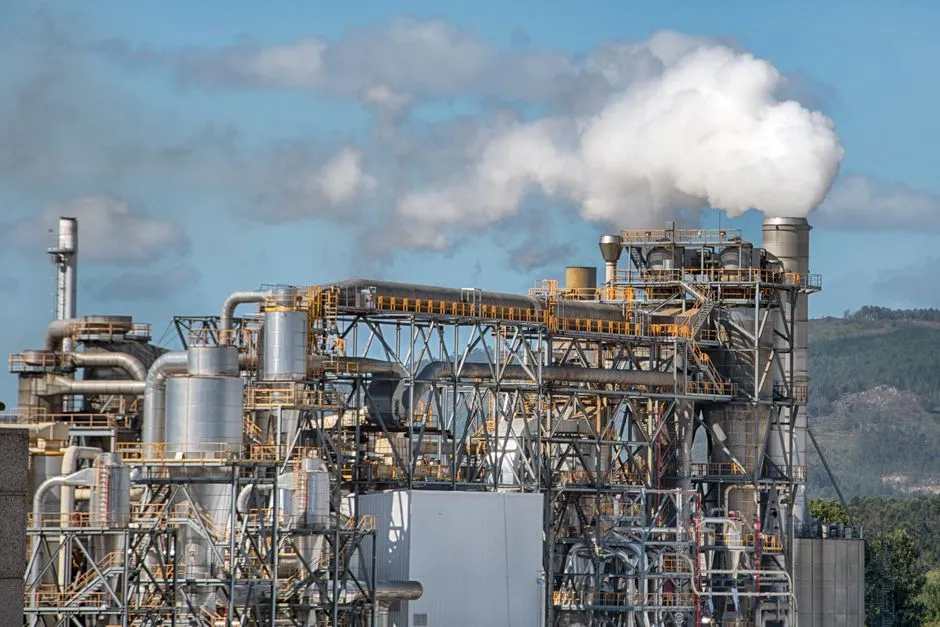
Commissioning must prove the integrated train, not merely demonstrate that individual machines start. Before the performance test, verify installation, power, chemical storage, flow calibration, control loops, safety interlocks, backwash or cleaning sequences, drains, access, and sampling points.
Run the complete train at design flow with representative wastewater. Confirm equalization behavior, oil skimming, biological stability or membrane flux, solids separation, disinfection, and sludge withdrawal. Use the commercial guide's stated Iraqi targets—BOD below 30 mg/L, TSS below 50 mg/L, and oil and grease below 10 mg/L—as provisional acceptance values only after the current permit has confirmed them.
Establish the operating monitoring schedule for flow, pH, temperature, TDS, BOD, COD, TSS, oil and grease, and stream-specific contaminants. Train operators to recognize membrane fouling, temperature excursions, high salt loading, oil carryover, chemical-dosing failure, and sludge-dewatering problems. Verify dosing calibration through the automatic wastewater chemical dosing system and test the complete sludge route through the industrial sludge dewatering filter press.
Frequently Asked Questions
What will an effluent treatment plant in Basra cost?
HydropureWater's 2026 commercial guide gives indicative benchmarks of $1.2 million–$2 million for a 50 m³/h DAF system and $3 million–$6 million for a 100 m³/h MBR plant. These are not site quotations. Request installed pricing that separately identifies equipment, shipping, customs, civil works, foundations, utilities, installation, commissioning, sludge handling, training, spares, and exclusions. The same guide estimates civil works and site preparation at 10%–20% of the project budget, which is why an equipment-only comparison is incomplete.
How should the treatment plant be sized?
Size from measured average and peak flow, contaminant loading, temperature, TDS, discharge or reuse targets, and available footprint—not flow alone. A supplier sizing a DAF system for Basra wastewater should demonstrate the duty point, hydraulic residence time, lift, recovery performance, and pretreatment assumptions. The MBR wastewater treatment system should show its biological loading and membrane-fouling controls, while a UF polishing system should be matched to the preceding process and required separation.
Which technology should a supplier be selected for?
Require a defined process basis, materials suitable for saline service, guarantees tied to named test methods, commissioning evidence, and transparent operating-cost assumptions. DAF primarily removes oil, FOG, and solids; MBR combines biological treatment with membrane separation; UF removes residual solids, colloids, and microorganisms. The correct unit follows from the treatment train, not from the product category.
What compliance evidence should be included in the supplier contract?
The research cites Iraqi Law 25/1967 targets of BOD below 30 mg/L, TSS below 50 mg/L, and oil and grease below 10 mg/L, but the current project permit must be verified before design or contractual acceptance. Require inlet and outlet guarantees, applicable test methods, sampling points and frequency, commissioning criteria, non-compliance remedies, and monitoring obligations. For refinery streams, confirm separately whether phenols below 0.05 mg/L and sulfides below 2.0 mg/L apply to the facility.
Related Equipment
- industrial DAF system for Basra wastewater — specifications, capacity range, and technical data