Why Basra’s Industrial Wastewater Treatment Needs a 2025 Upgrade
Basra’s industrial wastewater treatment sector faces unique challenges: high salinity (TDS > 10,000 mg/L), oil & grease contamination from refineries, and strict compliance with Iraqi Law 25/1967 (effluent limits: BOD < 30 mg/L, TSS < 50 mg/L). A 2024 assessment of Basra Gas Company’s plant revealed 92–97% COD removal efficiency, but capital costs for new systems range from $1.2M for a 50 m³/h DAF system to $15M+ for a 500 m³/h MBR plant. This guide provides engineering specs, cost benchmarks, and a compliance checklist for oil & gas, petrochemical, and manufacturing facilities.
Iraqi Law 25/1967 mandates strict industrial effluent limits, including a Biological Oxygen Demand (BOD) of less than 30 mg/L, Total Suspended Solids (TSS) under 50 mg/L, and Oil & Grease levels below 10 mg/L. The Basra Governorate’s 2024 enforcement crackdown has introduced aggressive monitoring, with reported fines ranging from $50,000 to $200,000 for non-compliant facilities. Beyond legal penalties, the environmental impact of untreated discharge is severe; contamination of the Shiw-a Sur Chay river and rising groundwater salinity (often exceeding 10,000 mg/L) have compromised local water security and visibility of oil sheens in local water bodies is now a primary trigger for regulatory audits.
The economic consequences of inadequate treatment extend to global market access. Basra refineries and petrochemical plants have increasingly faced barriers when attempting to enter EU supply chains, as international buyers demand adherence to stringent environmental social governance (ESG) standards. Operationally, failing to treat influent properly leads to a 30% increase in chemical costs for downstream processes due to scaling and fouling. Transitioning to modern systems is no longer an environmental choice but a financial necessity for maintaining operational continuity and market competitiveness in the region.
Basra’s Industrial Wastewater: Key Contaminants and Treatment Challenges
Industrial influent in the Basra Governorate typically exhibits Total Dissolved Solids (TDS) concentrations ranging from 5,000 mg/L to 20,000 mg/L, creating significant corrosion risks for standard carbon steel treatment infrastructure. These high salinity levels are often accompanied by heavy loads of Fats, Oils, and Grease (FOG), particularly in produced water from oil fields and refinery streams. Engineers must account for extreme temperature fluctuations, where influent can reach 50°C during summer months, potentially inhibiting biological activity in secondary treatment stages if cooling or equalization is not properly managed.
The following table outlines the typical influent parameters encountered across Basra’s primary industrial sectors, providing a baseline for system design and technology selection.
| Parameter | Oil & Gas (Produced Water) | Petrochemical / Refining | Textiles / Manufacturing | Food Processing |
|---|---|---|---|---|
| TSS (mg/L) | 500 – 1,200 | 800 – 2,500 | 1,000 – 3,000 | 500 – 1,500 |
| FOG / Oil (mg/L) | 200 – 1,500 | 150 – 800 | 50 – 200 | 100 – 600 |
| COD (mg/L) | 1,000 – 3,500 | 2,000 – 5,000 | 1,500 – 4,000 | 2,000 – 4,500 |
| TDS (mg/L) | 10,000 – 25,000 | 5,000 – 15,000 | 2,000 – 6,000 | 1,500 – 4,000 |
| Temperature (°C) | 35 – 55 | 30 – 50 | 25 – 45 | 20 – 40 |
Case data from the Basra Gas Company plant indicates that while 92–97% COD removal is achievable for streams with initial COD of 500 mg/L, higher-concentration streams require more robust pretreatment. Emulsified oils present a specific challenge in Basra; they do not readily separate through gravity alone and require advanced chemical coagulation or mechanical flotation to meet the < 10 mg/L discharge limit. the high chloride content in Basra’s water necessitates the use of high-grade stainless steel (316L or Duplex) or reinforced polymer coatings for all wetted parts to prevent rapid equipment failure.
Compliance Matrix: Iraqi and International Standards for Industrial Effluent in Basra
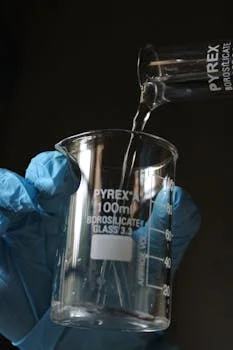
The Iraqi Ministry of Environment’s 2024 regulatory update introduced a tiered fine structure for industrial non-compliance, reinforcing the original Law 25/1967 with stricter localized decrees for the Basra Governorate. These amendments specifically target the reduction of heavy metals and phenolic compounds in refinery discharge. For facilities aiming for international export or ISO 14001:2015 certification, design parameters must align not only with local law but also with WHO guidelines and EPA standards for petroleum refining.
The permitting process in Basra typically spans 6 to 12 months and requires a comprehensive Environmental Impact Assessment (EIA) and a detailed influent/effluent monitoring plan. Administrative fees for these permits currently range from $10,000 to $50,000, depending on the plant’s discharge volume. Failure to secure these permits or repeated violations of the standards listed below can result in production halts and criminal liability for plant directors.
| Pollutant | Iraqi Law 25/1967 (Basra Limits) | WHO Guidelines (Industrial) | EPA 40 CFR Part 419 (Refining) |
|---|---|---|---|
| BOD5 (mg/L) | < 30 | < 30 | < 26 (avg) |
| TSS (mg/L) | < 50 | < 50 | < 21 (avg) |
| Oil & Grease (mg/L) | < 10 | < 10 | < 8 |
| pH | 6.0 – 9.0 | 6.5 – 8.5 | 6.0 – 9.0 |
| Phenols (mg/L) | < 0.05 | < 0.5 | < 0.15 |
| Total Chromium (mg/L) | < 0.1 | < 0.5 | < 0.2 |
Refineries must be particularly cautious with phenol and sulfide limits, which are often more stringent in Basra due to the proximity of agricultural zones. Adopting a design that meets the stricter of these standards ensures long-term compliance even as local regulations evolve toward international benchmarks. For a comparison of how other regions handle similar constraints, engineers can review Egypt’s MBR systems for high-salinity industrial effluent, which mirror many of the TDS challenges found in Southern Iraq.
Treatment Technologies for Basra’s Industrial Wastewater: A Comparison
Dissolved Air Flotation (DAF) technology achieves 95% to 99% removal efficiency for free and emulsified oils in refinery wastewater, provided the influent temperature is stabilized below 50°C. DAF systems for high-FOG wastewater in Basra utilize micro-bubble technology to lift suspended solids and oils to the surface for mechanical skimming. While highly effective for oil removal, DAF systems in Basra must be monitored for scaling when TDS exceeds 15,000 mg/L, as mineral precipitation can clog the saturation vessel and nozzles.
For facilities with limited land availability, Membrane Bioreactor (MBR) technology offers a footprint 60% smaller than conventional activated sludge systems. MBR systems for space-constrained sites in Basra provide near-reuse-quality effluent with TSS levels often below detection limits. However, the high salinity of Basra’s groundwater and industrial streams increases the risk of membrane fouling. Engineers must implement rigorous flux management and frequent chemically enhanced backwashes (CEB) to maintain permeability. For petrochemical applications, MBRs are often preceded by chemical dosing for pH adjustment and coagulation to protect the membranes from hydrocarbon shocks.
| Technology | Primary Target | Removal Efficiency | Relative CAPEX | Relative OPEX |
|---|---|---|---|---|
| DAF | Oil, Grease, TSS | 95–99% (FOG) | Moderate | Low (Chemical intensive) |
| MBR (DF Series) | BOD, COD, Bacteria | 98–99% (BOD) | High | Moderate (Energy intensive) |
| Chemical Dosing | pH, Coagulation | Variable | Low | High (Consumables) |
| Nutshell Filters | Fine Oil Polishing | > 99% (Oil) | Moderate | Low |
In the oil & gas sector, produced water treatment often requires specialized walnut shell or nutshell filters to reach the sub-5 mg/L oil concentration required for reinjection or discharge. Emerging technologies like electrocoagulation are also being piloted in Basra for heavy metal removal, though these currently remain more expensive than traditional chemical precipitation. To understand the global context of these choices, procurement managers can look at Taiwan’s DAF system requirements for petrochemical plants, which emphasize high-performance skimming for volatile organic compounds.
Cost Breakdown: Industrial Wastewater Treatment Systems in Basra (2025)
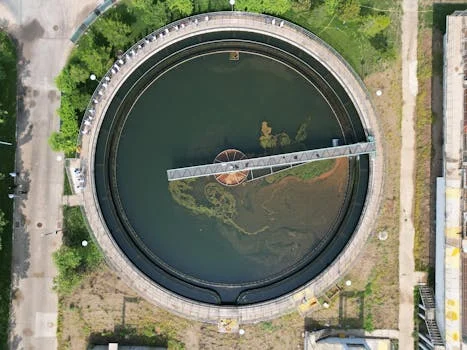
Capital expenditure for a 100 m³/h Membrane Bioreactor (MBR) plant in Basra currently ranges from $3 million to $6 million, depending on the complexity of the pretreatment stage and local civil works requirements. For smaller-scale operations or those focusing primarily on oil removal, a 50 m³/h DAF system can be installed for approximately $1.2M to $2M. These figures include the cost of equipment, international shipping to Umm Qasr port, and basic installation. Civil works, including concrete tanks and site preparation, typically add 10% to 20% to the total project budget.
Operating costs (OPEX) in Basra are heavily influenced by energy prices and the cost of imported specialty chemicals. Electricity for aeration and pumping ranges from $0.10 to $0.30 per cubic meter of treated water. Chemical costs for coagulants like PAC or ferric chloride average between $0.05 and $0.20 per cubic meter. Labor costs for skilled operators in the Basra region range from $50,000 to $200,000 annually per facility, depending on the level of automation and the number of shifts required.
| System Capacity | DAF CAPEX | MBR CAPEX | Annual OPEX (Est.) |
|---|---|---|---|
| 50 m³/h | $1.2M – $1.8M | $2.5M – $4.0M | $120K – $180K |
| 100 m³/h | $2.0M – $3.0M | $3.0M – $6.0M | $200K – $350K |
| 500 m³/h | $5.0M – $8.0M | $15M – $25M | $800K – $1.5M |
The Return on Investment (ROI) for these systems is typically realized within 3 to 7 years. This payback period is calculated based on the avoidance of government fines, the reduction in freshwater procurement costs—where treated effluent is reused for cooling tower makeup ($0.50/m³ savings)—and the prevention of production shutdowns. In some cases, the recovery of waste oil from DAF skimmings can provide an additional revenue stream, offsetting a portion of the system’s operating expenses.
Step-by-Step Equipment Checklist for Basra Facilities
Effective sludge management in Basra requires mechanical dewatering systems capable of producing a cake with 20% to 30% dry solids to comply with local landfill disposal regulations. Designing a system for Basra’s harsh environment requires a sequential approach to ensure each stage protects the next from the region's high solids and salinity loads.
- Pretreatment: Install GX Series mechanical bar screens with 1–5 mm spacing to remove large debris. Equalization tanks should provide 2–4 hours of hydraulic retention time (HRT) to buffer temperature and pH spikes.
- Primary Oil Separation: Utilize DAF units for high-FOG streams. Ensure skimmers are set to run every 2–4 hours to prevent the buildup of heavy oil mats that can become anaerobic.
- Secondary Biological Treatment: For high-quality discharge, deploy MBR systems for space-constrained sites in Basra. Maintain aeration rates of 0.5–1.0 kg O₂ per kg of BOD removed and schedule monthly Clean-In-Place (CIP) cycles using citric acid to combat mineral scaling.
- Tertiary Disinfection: Implement chlorine dioxide disinfection for industrial effluent to eliminate pathogens without producing the harmful disinfection byproducts associated with standard chlorine in high-organic waters.
- Sludge Dewatering: Use a plate and frame filter press to reduce sludge volume. This is critical for minimizing disposal fees, which are rising under new Iraqi waste management regulations.
- Monitoring and Control: Integrate online sensors for pH, TSS, and COD with a SCADA system. Calibration of pH probes should occur weekly due to the high mineral content of Basra’s water.
By following this checklist, plant operators can ensure their facility meets both Iraqi Law 25/1967 and international standards. For a perspective on how similar technical checklists are applied in other oil-rich regions, see how Ontario’s refineries handle high-TDS wastewater.
Frequently Asked Questions
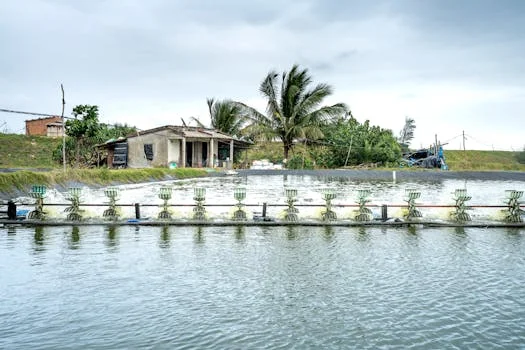
What are the specific effluent limits for Basra refineries under Law 25/1967?Refineries must ensure BOD is < 30 mg/L, TSS is < 50 mg/L, and Oil & Grease is < 10 mg/L. Additionally, phenols must be kept below 0.05 mg/L and sulfides below 2.0 mg/L. Recent 2024 amendments by the Basra Governorate have increased the frequency of unannounced inspections to verify these levels.
How does high salinity (TDS) affect MBR systems in Basra?High TDS (over 10,000 mg/L) increases osmotic pressure on membranes and can lead to rapid inorganic scaling. To mitigate this, systems must use salt-tolerant microbial consortia and high-frequency chemical cleaning. Pretreatment with specialized antiscalants via an automatic chemical dosing system is highly recommended.
What is the typical lead time for procuring a DAF system in Iraq?For a standard DAF, the manufacturing lead time is 8–12 weeks, with an additional 4–6 weeks for shipping to Umm Qasr. Including customs clearance and site installation, facilities should plan for a 6-month project timeline from purchase order to commissioning.
Can treated industrial wastewater be reused for irrigation in Basra?Reuse for irrigation is possible but requires tertiary treatment to meet WHO guidelines for unrestricted irrigation, specifically regarding heavy metals and pathogen counts. Most Basra facilities currently prioritize reuse for internal cooling towers or dust suppression to reduce freshwater costs.