What MBBR Can—and Cannot—Do for Pet Food Wastewater
MBBR for pet food wastewater serves as the biological core of a treatment train, rather than a substitute for FOG and solids pretreatment. A moving bed biofilm reactor treats soluble organic matter after suspended material is removed, while dissolved air flotation handles FOG, TSS, and non-soluble organics. The process can support nitrification and denitrification when the reactor is configured and loaded appropriately. Pet food plants must confirm the design with representative wastewater testing and, where justified, pilot work.
MBBR is a flow-through fixed-film biological process. Specially designed carrier media circulates through the aerated reactor, a protected biofilm grows on the media, and a screen retains the carriers while treated water exits. This arrangement retains biomass within the reactor rather than relying primarily on settling to maintain the active microbial population.
Pet food manufacturing wastewater can contain TSS, BOD/COD, ammonia-nitrogen, FOG, total nitrogen, and phosphorus, according to the 2026 Water Technology Online article “Advancing pet food manufacturing wastewater.” Those contaminants do not all belong to the same treatment step. DAF addresses FOG, TSS, and non-soluble organics; MBBR addresses soluble BOD and can support nitrification and denitrification.
A 2019 Tanjungpura University study on laundry wastewater provides supporting MBBR precedent, but not a guarantee for pet food applications. Its wastewater matrix included different contaminants from rendering, blending, baking, and equipment cleaning, so the reported removals cannot be transferred directly to a pet food effluent design basis.
The Recommended Treatment Train
Physical separation is required before biological treatment because FOG and suspended solids interfere with aeration, biomass activity, and downstream solids handling. The 2026 Water Technology Online article identifies physical separation as the first step, followed by biological treatment for soluble contaminants and additional chemical steps where phosphorus removal is required.
- Screen and equalize: remove gross material, balance hydraulic and organic surges, and establish the flow basis for equipment selection.
- Remove FOG and solids: use an industrial DAF system for pet food wastewater pretreatment. Pressurized air forms microbubbles in the flotation zone; FOG and non-soluble organics attach, rise, and are skimmed into a sludge hopper, while TSS and particulate BOD/COD are separated with the floated material.
- Apply biological treatment: pass clarified wastewater to the MBBR for soluble BOD reduction and, where the treatment objective and reactor configuration require it, nitrification and denitrification.
- Separate biological solids: provide clarification or filtration because soluble material is converted into biomass that must be removed before discharge.
- Add nutrient controls conditionally: where phosphorus limits apply, precipitate it with ferric chloride or polyaluminum chloride and remove the resulting solids in DAF, as described by the 2026 Water Technology Online article.
The dissolved air flotation equipment range covers 4–300 m³/h across 13 standard models. Chemical addition is not automatic: jar testing and the permit or sewer agreement should establish whether an PLC-controlled chemical dosing system is warranted for coagulants, flocculants, pH adjustment, or specialty chemicals.
| Process stage | Primary function | Design issue to resolve |
|---|---|---|
| Screening and equalization | Remove gross material and balance flow and load variation | Production and cleaning cycles; hydraulic surges |
| DAF pretreatment | Remove FOG, TSS, and non-soluble organics | FOG load, solids capture, chemical demand, sludge route |
| MBBR | Reduce soluble BOD; support nitrogen removal where configured | Organic and hydraulic load, aeration, media, zoning |
| Clarification or filtration | Remove biomass generated in the MBBR | Solids separation and residual solids handling |
| Optional phosphorus removal | Precipitate phosphorus with ferric chloride or PAC | Effluent obligation, chemical recovery, solids disposal |
Wastewater Parameters to Establish Before Sizing
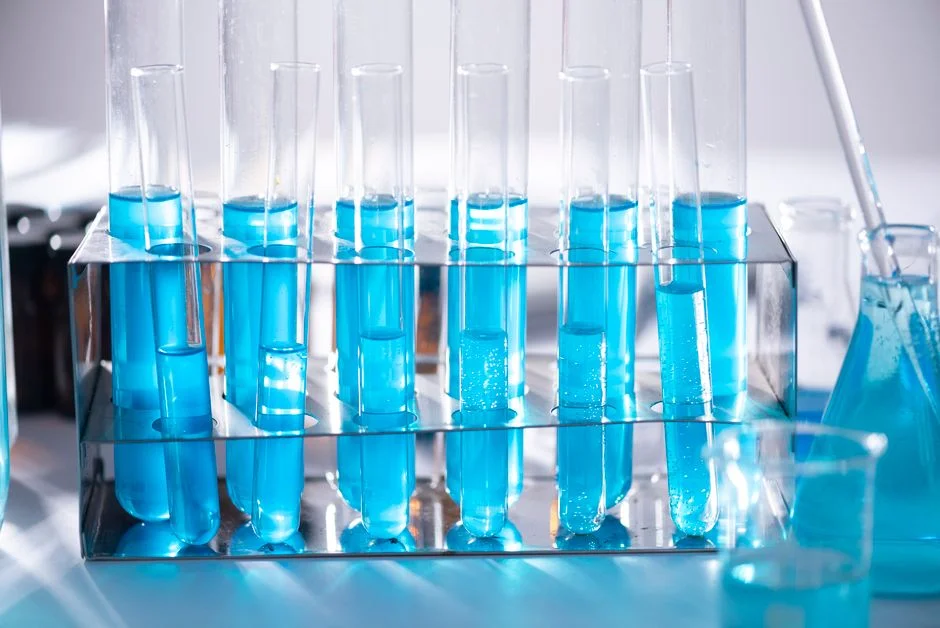
Representative characterization is the starting point for MBBR sizing because research does not establish universal loading rates, reactor volumes, fill fractions, or guaranteed pet food wastewater effluent values. Sampling must cover production, product changeover, and cleaning periods rather than relying on one grab sample.
| Parameter | Why it affects the treatment train |
|---|---|
| Flow | Sets hydraulic loading, equalization, reactor volume, and downstream solids-handling requirements |
| BOD | Defines biodegradable organic load and carbon demand for biological treatment |
| COD | Indicates total organic oxidation demand, including material that may not be readily biodegradable |
| TSS | Determines solids separation needs and potential impact on the biological reactor |
| FOG | Defines the pretreatment requirement and risk of interfering with aeration and biomass activity |
| Ammonia nitrogen | Establishes the oxygen and alkalinity demand associated with nitrification |
| Total nitrogen | Supports assessment of nitrification and denitrification requirements |
| Phosphorus | Determines whether chemical precipitation and additional solids removal are needed |
| pH | Influences biological activity, chemical use, and process control |
| Temperature | Influences biological reaction rates and oxygen transfer |
The data request should also cover toxicity or inhibition screening, hydraulic surges, seasonal production variation, clean-in-place discharge, and the expected operating envelope. Consistent with the 2026 Water Technology Online article, the treatment sequence follows DAF for FOG, TSS, and non-soluble organics, then MBBR for soluble BOD reduction and potentially nitrification and denitrification.
Do not convert the laundry study’s 20% media fill or 10-day treatment duration into universal design rules. Those were specific conditions applied to laundry wastewater. Pet food applications require the supplier to derive reactor configuration from confirmed hydraulic and contaminant loads and to validate the proposal with site-specific testing and, where the stakes justify it, a pilot trial.
MBBR Design Parameters and Evidence
The supplier must resolve hydraulic load, organic load, aeration demand, carrier-media type, fill strategy, reactor zoning, screen retention, hydraulic residence time, and downstream solids handling. These variables determine whether the reactor can sustain biomass and meet the confirmed treatment objective; media type alone does not establish capacity.
The 2019 Tanjungpura University laundry study used Kaldnes K1 media at 20% fill, a 15-day seeding period, and treatment durations of 6, 8, and 10 days. At 10 days, it reported BOD reduction from 441 mg/L to 39.67 mg/L, with 91% effectiveness; COD reduction from 910 mg/L to 56.3 mg/L, with 93.81% effectiveness; phosphate reduction from 38.24 mg/L to 5.31 mg/L, with 86.10% effectiveness; and surfactant reduction from 47.8 mg/L to 5.62 mg/L, with 88.22% effectiveness.
| Laundry-study parameter | Reported 10-day result |
|---|---|
| BOD | 441 mg/L to 39.67 mg/L; 91% effectiveness |
| COD | 910 mg/L to 56.3 mg/L; 93.81% effectiveness |
| Phosphate | 38.24 mg/L to 5.31 mg/L; 86.10% effectiveness |
| Surfactant | 47.8 mg/L to 5.62 mg/L; 88.22% effectiveness |
These laundry wastewater results are not representative of pet food wastewater performance or applicable discharge limits. The authors specifically recommended further research into fill-media volume, longer treatment times, and media types, reinforcing the need for application-specific optimization rather than direct transfer of the tested configuration.
A separate 2019 Environmental Science: Water Research & Technology study monitored an anoxic sulfur-oxidizing MBBR for 306 days using synthetic wastewater under nitrate-limited conditions. That duration demonstrates the value of long-term evaluation for a specialized biological objective, but the study supplies no conventional pet food MBBR design value.
Choosing MBBR, Activated Sludge, or a Hybrid

MBBR is the stronger candidate when compact biological treatment, BOD reduction, and potential nitrification or denitrification are priorities and reliable pretreatment and aeration are available. Activated sludge remains credible where suitable aeration tanks, secondary clarifiers, return-sludge systems, and experienced biomass-control operators already exist.
The 2026 Water Technology Online article describes MBBR as a flow-through fixed-film system with high effective media surface area, reduced equipment footprint, and lower operator attention than conventional activated sludge. Activated sludge suspends microorganisms in an aeration tank and relies on secondary clarification to separate biomass. A hybrid should be screened when variable production, stringent solids separation, or water-reuse objectives justify evaluating an MBR membrane bioreactor for industrial process-water treatment.
| Decision point | MBBR | Activated sludge | Hybrid or MBR evaluation |
|---|---|---|---|
| Primary fit | Compact fixed-film BOD treatment and potential nutrient removal | Existing aeration, clarification, and return-sludge infrastructure | Water reuse or stringent solids-separation objectives |
| Biomass control | Retained on carrier media; less dependence on clarification for retention | Depends on aeration and secondary settling | Combines biological treatment with membrane solids separation |
| Major design risk | Media retention, biofilm stability, aeration, and downstream solids handling | Biomass control, sludge handling, and clarifier performance | Higher process complexity and membrane-related operating requirements |
| Key prerequisite | Reliable FOG and solids pretreatment | Suitable existing tanks and clarifiers | Defined water-reuse or solids-quality requirement |
Use a fixed sequence for the decision: establish the effluent or sewer-agreement obligation, characterize feed variability, confirm pretreatment needs, assess footprint, verify aeration capability, evaluate solids separation and sludge handling, check operator capability, and reserve space for expansion. There is no universal winner without representative wastewater data and applicable discharge or pretreatment requirements. For another food-processing application, see the MBBR design guide for another food-processing wastewater.
From Design Brief to Commissioning
A procurement-ready brief must include the design flow, wastewater characterization, applicable discharge or sewer limits, site footprint, available utilities, controls requirements, sludge-handling route, and future expansion plans. It should also distinguish required performance from unconfirmed treatment objectives.
Require each bidder to define the media type, reactor zoning, fill strategy, aeration approach, retention screens, freeboard, and downstream solids separation. The proposal should show how those features respond to the confirmed organic and hydraulic loads rather than present a generic reactor arrangement. Chemical dosing should remain part of the train only where testing, the permit, or the sewer agreement supports it; the coagulant dosing design criteria provide a separate basis for that decision.
Biological startup must be planned as acclimation and biofilm colonization, not an automatic transition to full load. The 2019 Tanjungpura University laundry study used a 15-day seeding period, which documents the importance of a startup phase but does not establish a universal pet food commissioning duration.
Define acceptance testing around the permit or sewer-agreement parameters and the client’s confirmed treatment objectives. Document measurement points, sampling conditions, operating states, and the pretreatment and solids-handling conditions during the test. This prevents acceptance from depending on unrepresentative wastewater.
Resolve media carryover, biofilm loss, aeration variability, excessive FOG loading, pH changes, and downstream solids accumulation before purchase. If solids separation requires an alternative to conventional clarification, the DAF versus clarifier comparison illustrates why the choice must follow feed and effluent requirements rather than equipment labels.
Frequently Asked Questions
How much does an MBBR system for pet food wastewater cost?
No supported price range is available in the research. A responsible quotation requires design flow, wastewater characterization, treatment objectives, pretreatment scope, aeration utilities, controls requirements, downstream solids handling, and installation conditions. Request itemized pricing for the reactor, media, screens, aeration equipment, controls
Frequently Asked Questions
How much does an MBBR system for pet food wastewater cost?
Capital costs for an MBBR system typically range from $1.50 to $3.50 per gallon of daily treatment capacity, depending on the influent organic load and required discharge limits. For a mid-sized facility processing 50,000 gallons per day, initial equipment investments generally fall between $75,000 and $175,000, excluding civil works, installation, and auxiliary sludge handling equipment.
Operational costs are driven primarily by aeration energy consumption and media longevity. Facilities should budget for a specific power consumption of 0.5 to 1.2 kWh per kilogram of BOD removed. Ongoing maintenance costs, including periodic media inspection and blower servicing, typically add 5% to 10% of the initial capital expenditure annually.
Should pet food manufacturers use DAF alone or DAF followed by MBBR?
Pet food wastewater is characterized by high concentrations of fats, oils, and grease (FOG) and suspended solids, which can inhibit biological processes. A Dissolved Air Flotation (DAF) unit alone is insufficient for meeting stringent municipal discharge limits for BOD and COD, as it only removes physical constituents and emulsified fats; it provides little to no reduction in dissolved organic matter.
Integrating an MBBR after a DAF unit is the industry standard for meeting pretreatment requirements. The DAF acts as a critical primary clarifier, reducing FOG to below 100 mg/L to prevent media clogging and biofilm suffocation in the MBBR. This two-stage approach ensures the biological process remains stable, allowing the facility to achieve 85% to 95% BOD removal efficiency.
How do you size an MBBR for pet food wastewater?
Sizing is determined by the volumetric organic loading rate (VOLR), typically expressed in grams of BOD per cubic meter of reactor volume per day (g BOD/m³·d). For pet food applications, design loads usually range from 15 to 40 g BOD/m³·d to account for high-strength pulses. The total reactor volume is calculated by dividing the total daily organic mass load by the target loading rate, then adjusting for a media fill fraction, which generally ranges from 40% to 65% of the total tank volume.
Engineers must also calculate the required surface area for biofilm growth based on the specific media type, typically ranging from 300 to 800 m²/m³ of protected surface area. Factoring in a safety margin of 20% is recommended to handle seasonal spikes in production volume or fluctuations in byproduct concentrations common in pet food manufacturing.
Can MBBR replace activated sludge at an existing pet food plant?
Yes, an MBBR can replace or augment an existing activated sludge system, often providing a footprint reduction of 30% to 50% due to higher biomass concentrations. Because the biomass is attached to carriers rather than suspended in the liquid, the system is less prone to biomass washout during high-flow events and does not require a secondary clarifier for sludge recycling.
Transitioning to MBBR is particularly effective for plants facing capacity constraints, as existing aeration tanks can be retrofitted with media and screens. This eliminates the need for complex sludge age management and return activated sludge (RAS) pumping, significantly simplifying process control while maintaining high effluent quality.
What should I ask an MBBR wastewater equipment supplier?
Inquire specifically about the media's effective protected surface area and the material's durability against the high-temperature, high-grease environment of pet food processing. Request a pilot study or reference data demonstrating performance on wastewater with similar FOG and protein content to ensure the media will not undergo excessive biofilm sloughing or structural degradation.
Additionally, ask for detailed specifications regarding the aeration grid design and the retention screen assembly. Ask how the system prevents media accumulation at the outlet, what the head loss expectations are during peak flow, and whether the supplier provides automated dissolved oxygen (DO) control systems to optimize energy usage based on real-time organic loading.