What Decides DAF vs. Clarifier for Semiconductor Wastewater
In 2026, semiconductor factories should generally choose DAF when the wastewater contains floatable oils, surfactants, colloids, or floc-prone solids and the plant needs rapid solids capture in a compact footprint. Choose a conventional clarifier when the stream is predominantly settleable solids, gravity settling is reliable, and lower mechanical complexity is the priority. Neither device removes dissolved semiconductor chemicals by itself: the supplied LCD research found that biological treatment of DMSO, MEA, and TMAH requires carefully controlled redox conditions, so wastewater characterization, jar testing, and pilot work should precede final equipment selection.
The selection should be made from four inputs: flow and batch variability; the floatable-to-settleable solids ratio; dissolved-organic, oil, and surfactant loading; and the required treatment endpoint before biological treatment, membranes, discharge, or reuse. Analog fabrication wastewater and DLP fabrication wastewater are variable factory effluents, not standard products. Their drain composition, temperature, pH, chemical inventory, and batch timing must therefore be characterized by stream rather than inferred from one bulk sample or from LCD manufacturing data.
Dissolved air flotation and gravity clarification are solids-separation technologies. TMAH, DMSO, MEA, and chelating agents may require biological, membrane, or other advanced treatment after solids removal. The scale of that issue is illustrated by Science.gov’s 2008 LCD wastewater research: organic solvents accounted for more than 33% of total TFT-LCD wastewater, with major constituents including DMSO, MEA, TMAH, and chelating agents. That evidence is optoelectronic rather than a semiconductor guarantee, but it shows why a solids-only equipment decision is inadequate. The broader selection logic is covered in this DAF versus clarifier guide for chemical wastewater.
How Semiconductor Wastewater Changes the Clarifier Decision
Wastewater chemistry, not generic nameplate capacity, determines whether a clarifier can perform reliably. A conventional gravity unit depends on particle density, settling velocity, and floc development. Dissolved air flotation is more useful when air-bubble attachment can capture low-density particles, oils, surfactants, or conditioned colloids. Neither mechanism provides a design basis without measured stream properties.
Science.gov’s LCD wastewater research, published in 2008 and 2010, identifies DMSO, MEA, TMAH, and chelating agents as important TFT-LCD organic-solvent components and characterizes them as non- or slow-biodegradable in the cited research context. The same research reported more than 99% biological removal of DMSO, MEA, and TMAH in an A/O SBR at influent concentrations of 430, 800, and 190 mg/L, respectively. That is a biological result under defined reactor conditions; it cannot be attributed to DAF or a clarifier.
| Parameter to characterize | Why it affects equipment selection | Information needed from representative samples |
|---|---|---|
| Suspended solids and particle fractions | Determines whether gravity settling is credible and whether conditioning is needed. | Total suspended solids, settleable fraction, floatable fraction, colloid behavior, and representative particle distribution. |
| Oils, grease, and surfactants | Changes flotation demand, foam risk, and downstream biological compatibility. | Oil and grease concentrations, surfactant species and behavior, foaming observations, and emulsion characteristics. |
| Dissolved process chemicals | Separates pretreatment requirements from biological or membrane treatment requirements. | TMAH, DMSO, MEA, chelating agents, and other stream-specific compounds, with concentrations across operating and batch conditions. |
| Bulk and temporal conditions | Affects chemical demand, corrosion, materials, hydraulic loading, and treatment control. | Flow, batch duration, pH, temperature, conductivity, and sampling across representative production states. |
For each selected stream, request compatibility information covering caustics, solvents, surfactants, cleaning chemicals, and temperature changes. Suppliers should address seals, piping, float-collection equipment, coagulants, and flocculants. Further context on discharge and treatment requirements is available in this overview of chemical wastewater discharge standards and treatment.
DAF Performance in Semiconductor Treatment
A DAF unit separates conditioned solids by attaching them to microbubbles, floating the resulting bubble-floc matrix, and skimming it from the clarified water. The normal flow is equalization, chemical conditioning where required, saturation or air induction, bubble-particle contact, flotation, skimming, and transfer of clarified water to the next treatment stage.
Reynolds & Bauhm’s commercial research page reports that microbubble flotation can separate at rates up to five times faster than gravity settling. It also gives bubble-floc rise rates of 4–12 gpm/ft² and standard forward-flow air saturation of 15%–30%. These are design references from that source, not universal semiconductor performance guarantees. The selected loading must be based on the actual wastewater, equipment geometry, and pilot results.
Critical design inputs include forward flow, solids loading, recycle rate, bubble size, particle surface properties, coagulant and flocculant dose, sludge loading, and variability between batches. For example, surfactants can alter bubble-particle attachment; the same source reports a typically optimized contact angle of 40–80 degrees, but the applicable range for a semiconductor stream must be established through chemistry review and testing.
DAF also has a lifecycle cost that nameplate capacity does not show. Reynolds & Bauhm states that recycle pumps and compressors require continuous energy in exchange for a compact footprint. The operator must also manage float removal, chemical dosing, recycle saturation, and foaming or carryover. A supplier offering an industrial dissolved air flotation system should identify the recycle and compressed-air assumptions used in its guarantee.
DAF is often most valuable as pretreatment before biological treatment, UF, or RO when floatables, oil, surfactants, or colloids could foul or interfere with the next process. It does not make the dissolved-organic problem disappear. The separation duty and the downstream treatment duty should be specified as separate performance obligations.
Clarifier Performance and the Case for Gravity Separation
A conventional clarifier is often the lower-complexity choice when the principal contaminant load consists of dense, reliably settleable solids. The process normally includes equalization, coagulation and flocculation where needed, settling, sludge collection, and clarified-water withdrawal. Its performance depends on hydraulic stability, solids loading, sludge withdrawal, and the physical behavior of the particles.
The relevant variables for procurement are settleable-solids loading, the selected sludge-removal method, basin footprint, clarification criteria, and downstream polishing requirements. A lamella clarifier adds inclined settling surfaces, which can increase clarification area within a defined footprint, but the same hydraulic and sludge-loading limits still apply.
HydropureWater’s manufacturer information for a high-efficiency lamella clarifier states surface-loading rates of 20–40 m/h and chemical-consumption reduction of up to 30%. These figures belong to the manufacturer’s stated equipment scope; they do not automatically apply to semiconductor wastewater, and the chemical benefit requires a valid flocculation and operating basis.
Gravity clarification does not remove dissolved organics or dissolved metals. low turbidity can conceal a chemical-conditioning requirement. Chemically destabilized colloids, emulsions, or precipitated contaminants can create substantial sludge even when the raw sample appears relatively clear. A clarifier may therefore require more coagulant, more controlled sludge removal, or additional polishing than its appearance suggests.
The case for gravity separation is strongest where flow is comparatively stable, settleability has been demonstrated, site space is available, and avoiding compressed-air and recycle-pump systems is operationally valuable. The case weakens when oils and surfactants dominate, solids are buoyant, or the footprint available is insufficient for the required clarification area.
Side-by-Side Equipment and Operating Comparison
DAF and a conventional clarifier should be compared by system duty, not by the number of tanks quoted. A supplier offering only a separator does not, by itself, provide a complete industrial wastewater pretreatment solution. Chemical dosing, sludge handling, biological treatment, UF, RO, ozone, controls, and utilities may all sit outside the quoted equipment scope.
| Evaluation item | Dissolved air flotation | Conventional or lamella clarification |
|---|---|---|
| Separation mechanism | Air-bubble attachment followed by flotation and skimming. | Particle settling, enhanced by inclined plates in a lamella design. |
| Best-fit contaminant profile | Floatable oils, surfactants, conditioned colloids, and suitable floc-prone solids. | Reliably settleable solids, especially where flow is stable. |
| Footprint | Generally compact because separation rates are higher, subject to equipment design. | Generally requires more clarification area and basin space. |
| Chemical use | Coagulation and flocculation may be needed to improve attachment and sludge concentration. | Coagulation and flocculation may be needed where particles do not settle naturally. |
| Powered utilities | Continuous recycle-pump and compressor energy, as noted by Reynolds & Bauhm. | Fewer powered separation components; sludge withdrawal and any chemical pumps remain. |
| Hydraulic behavior | Requires stable bubble generation, recycle, contact zone, and skimming control. | Requires stable settling, distribution, and sludge withdrawal. |
| Sludge | Produces a float that may contain oils, surfactants, and conditioned solids. | Produces settled sludge whose density and water content depend on the solids and conditioning. |
| Maintenance and instrumentation | Additional inspection points for pumps, compressor, saturation system, nozzles, and float mechanism. | Additional attention to scrapers, sludge collection, settling zone, and basin condition. |
| Downstream compatibility | Useful before biological treatment, UF, or RO where floatables could interfere. | Useful before biological treatment or membranes where settleable solids are the main burden. |
| Principal selection risk | Foaming, fragile floc, recycle or air-system limitations, and false expectations of dissolved-solids removal. | Poor settling, hydraulic overload, insufficient footprint, and chemical or sludge-handling costs. |
Do not assign universal removal, energy, or cost figures. Obtain project-specific comparisons for chemical consumption, utilities, sludge volume, operator labour, and downstream impacts. The PLC-controlled chemical dosing system should be scoped with the separator because dosing quality can determine whether flotation or settling succeeds.
Sludge also needs separate characterization. Float and settled sludge can have different solids concentrations, free oil, surfactants, and dewatering behaviour. Neither is automatically the easiest sludge for a plate-and-frame filter press. Require representative sludge testing before fixing the dewatering train.
How to Choose Through Characterization and Pilot Testing
Generic semiconductor wastewater assumptions are the main procurement risk because factory drains differ in composition and release timing. A defensible selection proceeds from stream mapping to representative testing, then to pilot validation and full-train evaluation.
- Map and segregate the drains. Record composition, temperature, pH, flow, batch timing, and chemical inventories. Do not combine incompatible streams merely to simplify the balance.
- Characterize each relevant stream. Measure suspended solids, settleable and floatable fractions, oils and greases, surfactants, colloids, conductivity, pH, and relevant dissolved compounds such as TMAH, DMSO, MEA, and chelating agents.
- Run comparative jar tests. Compare chemical conditioning, solids capture, float or settle behavior, sludge generation, and downstream effects. WesTech states that coagulants or flocculants are often recommended to improve float separation or sludge concentration, but selection must be stream-specific.
- Resolve uncertainty in a representative pilot. Pilot testing is warranted when batch variability, foaming, toxicity, or scaling remains unresolved. Use actual wastewater and representative operating swings rather than a single synthetic sample.
- Compare the complete treatment train. Select the separator that protects the next biological or membrane process, produces manageable sludge, and can meet the permitted discharge or reuse endpoint.
| Stage | Required output | Decision supported |
|---|---|---|
| Drain mapping | Source, composition, pH, temperature, flow, and batch profile. | Whether streams should be segregated and which streams require separate treatment. |
| Wastewater characterization | Solids, floatables, oils, surfactants, colloids, conductivity, and dissolved-process-chemical data. | Whether flotation, gravity separation, or both are technically credible. |
| Jar testing | Conditioning results, solids capture, settle or float behavior, sludge observations, and downstream impacts. | Chemical demand and preliminary process selection. |
| Pilot testing | Representative removal behavior, hydraulic response, control response, foaming, scaling, and sludge data. | Design basis and remaining risks. |
| Supplier qualification | Guarantees, monitoring points, control strategy, materials, utilities, startup, operator intervention, and spare-parts support. | Procurement scope, acceptance criteria, and commercial exposure. |
Require the supplier to state the design flow, solids-loading basis, chemical assumptions, utility requirements, performance guarantees, and limitations. If biological treatment is planned, evaluate the separator in combination with an MBR wastewater treatment system rather than judging the separator only by solids removal.
Where DAF and Clarifiers Fit in the Full Treatment Train
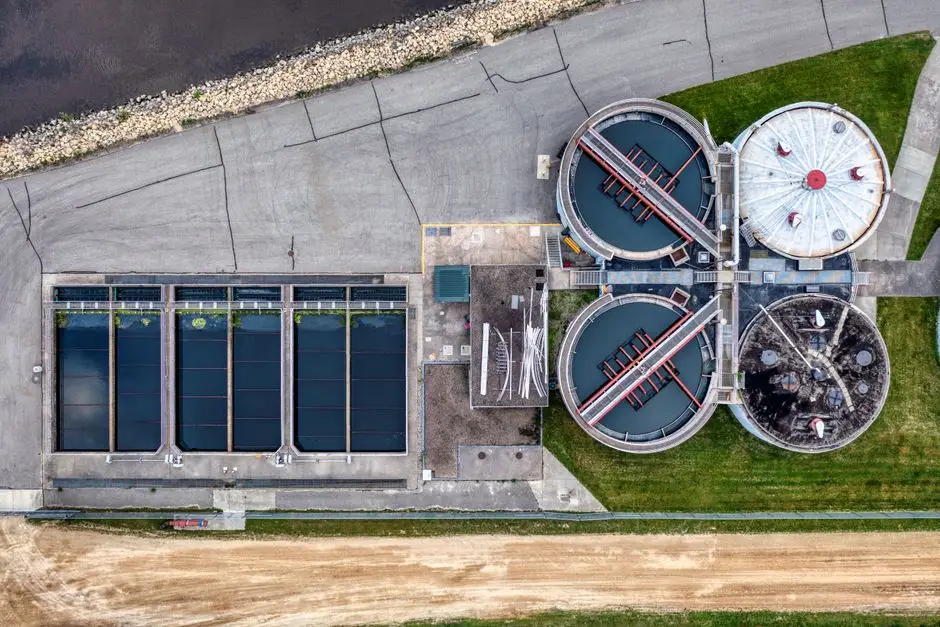
The selected separator is a front-end protection stage, not the final destination for dissolved contaminants. A defensible train normally starts with equalization and segregation, followed by the selected solids-separation stage, biological treatment where appropriate, membrane or polishing treatment as required, and discharge or reuse.
The LCD literature demonstrates why this distinction matters. In the Science.gov summary of MBR/RO research, the MBR achieved average COD removal above 97.3%, TOC removal of 97.8%, and BOD5 removal of 99.4%. The MBR effluent had no suspended solids and an SDI below 3. After RO, COD was below 5 mg/L, TOC below 2.5 mg/L, and conductivity below 150 micros/cm in that study. These are TFT-LCD results, not semiconductor guarantees.
A separate Science.gov summary of MBR/RO/ozone research reports average COD removal above 98.5% and TOC removal of 97.4%. After ozone, COD was below 5 mg/L and TOC below 0.852 mg/L. Again, these results belong to the cited study and must not be transferred to another factory without matching wastewater and operating conditions.
DAF can precede an MBR or RO system when floatables, oil, surfactants, or colloids could interfere with biological treatment or membrane operation. A clarifier is appropriate when settleable solids are the main front-end burden and gravity separation has been demonstrated. An ultrafiltration system can provide colloid and suspended-solids control before RO, but it is not a substitute for biological removal of dissolved semiconductor compounds. An industrial RO water treatment system should be evaluated for the required reuse endpoint, concentrate handling, pretreatment, and operating controls—not selected from permeate values alone.
Frequently Asked Questions
Is DAF better than a clarifier for semiconductor wastewater?
DAF is generally preferred for floatable oils, surfactants, conditioned colloids, and compact high-rate separation. A conventional clarifier is generally preferred for reliably settleable solids when available space and operating simplicity dominate. The final choice should follow representative characterization, jar tests, and pilot validation against the required downstream endpoint.
What affects the cost of DAF versus a clarifier?
Request a lifecycle comparison covering tank and footprint scope, coagulation and flocculation, recycle pumps and compressed air versus gravity equipment, sludge handling, materials, controls, maintenance, operator labour, and downstream treatment. The supplied research does not support a universal cost figure, so a defensible budget requires a stream-specific design, utility tariffs, chemical quotations, and a defined sludge-disposal route.
Can a DAF system remove TMAH, DMSO, or MEA?
No removal guarantee should be assumed from flotation alone. The supplied A/O SBR study reported more than 99% removal of these compounds at influent concentrations of 430, 800, and 190 mg/L, respectively, but that performance came from biological treatment under defined redox conditions. Dissolved-contaminant treatment requires a separately designed and tested stage.
How should a factory size and qualify a DAF or clarifier system?
Use representative drain sampling, flow and mass-loading data, jar tests, and pilot trials. Require the supplier to state the design flow, solids loading, chemical assumptions, available utilities, performance basis, control strategy, and treatment guarantees. This selection discipline is also relevant in the broader industrial ETP versus DAF selection guide.
Related Equipment
- industrial dissolved air flotation system — specifications, capacity range, and technical data
- MBR wastewater treatment system — specifications, capacity range, and technical data