Which package sewage treatment plant fits an Abidjan housing development?
For an Abidjan housing development, select a modular A/O package sewage treatment plant when the objective is compliant domestic-sewage treatment at the lowest practical capital cost; select MBR when tighter effluent quality, a smaller footprint or non-potable reuse is required. HydropureWater’s 2025 Ivory Coast guide reports typical package capacities of 1–200 m³/day, A/O energy use of 0.3–0.6 kWh/m³ and MBR energy use of 0.8–1.2 kWh/m³. A 50 m³/day A/O unit typically costs $20,000–$80,000. Final selection must reflect occupancy, peak flow, discharge route, available land and the applicable Ivorian permit.
That is a conditional decision, not a universal product recommendation. The WSZ underground A/O package sewage treatment plant is the logical first option for conventional domestic sewage where land and capital cost dominate. An integrated MBR wastewater treatment system becomes more defensible when the permit, receiving water or reuse specification demands better solids separation, or when surface space is constrained.
Abidjan projects also cannot be separated from their sewer and pumping arrangements. QGMI’s work for six affordable-housing projects in the Abidjan Autonomous District includes wastewater treatment plants and a sewage pumping station, demonstrating that treatment capacity alone does not establish a feasible drainage solution.
Distinguish a permanent decentralized system from temporary pretreatment. In the BMS Arklow case, a modular plant treated sewage on a housing site until municipal infrastructure was upgraded; the units could later be removed and redeployed. That arrangement answers an interim connection constraint, not the long-term governance, land and operating requirements of a permanent Abidjan treatment asset. The decision method is consistent with the approach to packaged sewage treatment plant selection for housing developments, but the discharge route and permit must be established locally.
Abidjan housing-project conditions that determine the plant
The site survey must establish the treatment duty, available footprint and legal discharge route before the supplier is asked to nominate equipment. A technically adequate package can become non-compliant or uneconomic if it is sized from average occupancy alone, placed on unsuitable ground or connected to a discharge route that the project cannot obtain approval to use.
- Build the occupancy and phasing schedule. Record completed and planned homes, expected occupancy, the date each phase becomes occupied and any non-residential or commercial loads. Keep average wastewater flow separate from short-term peak flow and wet-weather inflow.
- Map the receiving route. Identify whether effluent will enter a municipal sewer, surface-water outfall, infiltration area or planned reuse point. The route determines the applicable approval process and whether the plant must meet ordinary discharge conditions or a tighter reuse specification.
- Survey the installation area. Record available land, access for delivery and maintenance, groundwater level, flood exposure, power availability and the space required around the unit. Underground installation can preserve surface area, but excavation, dewatering and access still need to be priced.
- Confirm current requirements. Request the current site-specific permit conditions, applicable discharge limits and authority consultation record from the developer’s Ivorian environmental adviser. Generic guidance cannot establish that a particular outfall or reuse point is permitted.
Domestic sewage still needs a defensible inlet arrangement. Confirm whether the incoming sewer requires screening, grit management or maceration, and obtain influent data rather than assuming a package unit can accept grit, rags or grease. A rotary mechanical bar screen may form part of that duty, while a plate-frame filter press can be considered if the sludge-handling strategy requires dewatering. Neither should be added without a design need.
QGMI’s Abidjan scope reinforces the need to coordinate treatment and pumping within housing projects. The developer should therefore issue one integrated site brief covering the sewer network, pumping, treatment train, sludge route, power and discharge point. This avoids selecting a process that cannot be hydraulically connected or maintained on the available land.
Size the package plant from occupancy and development phases

Population equivalent provides a useful intermediate design basis, but it must be converted into project flow and then checked against peak and effluent-quality conditions. The BMS housing-estate case uses 1 PE = 200 L/day, together with 60 g BOD/PE/day, 60 g SS/PE/day and 180 g COD/PE/day. These are case-study design values, not Ivorian regulatory defaults.
The sequence in that case is worth adapting because it separates initial load from later expansion. Phase one served 136 PE, calculated as 27,200 L/day. Phase two added 104 PE, calculated as 20,800 L/day, bringing the total to 240 PE and 48,000 L/day. The final phase added 548 PE, calculated as 109,600 L/day, producing a total of 788 PE.
| BMS Arklow case phase | Homes | Population equivalent | Calculated flow | Package arrangement |
|---|---|---|---|---|
| Phase 1 | 76 | 136 PE | 27,200 L/day | 1 × BL2000 |
| Phase 2 | 60 | 240 PE | 48,000 L/day | 2 × BL2000 in parallel |
| Phase 3 | 197 | 788 PE | 109,600 L/day | 4 × BL2000 in parallel |
Source: Butler Manufacturing Services, “Temporary Sewage Treatment System for Housing Estate,” published case study.
The transferable design principle is identical parallel modules with equal-flow splitting by gravity. In the BMS case, the inlet works were designed to split flow equally among four units, allowing capacity to be added as occupancy increased without introducing the upfront and operating cost of extra pumping. For an Abidjan development, pre-installing the split arrangement and future unit slabs can reduce later disruption, provided the final hydraulic profile, excavation and structural design confirm the concept.
- Calculate average flow from the occupancy and wastewater contribution for each occupied phase.
- Apply the applicable peak and wet-weather criteria to check inlet, pumping, treatment and storage capacity.
- Check biological loading, solids storage and hydraulic profile for every phase, including the transition between modules.
- Confirm that each module can operate when the others are offline and that the flow splitter can be commissioned safely.
Do not use the 1–200 m³/day market range as a design calculation. It is a market-coverage statement in HydropureWater’s 2025 Ivory Coast guide, not a substitute for occupancy-based flow calculations. Similarly, the BMS values explain a proven phasing method; they do not replace Abidjan influent testing, site-specific peak criteria or the current permit.
Compare A/O and MBR for domestic sewage
A/O contact oxidation is the lower-complexity option for ordinary domestic sewage, while MBR provides a higher-quality separation and smaller footprint at greater capital and energy cost. Both can be modular, so the meaningful comparison is the duty assigned to each process, not simply the number of treatment stages.
| Criterion | A/O contact oxidation | MBR |
|---|---|---|
| Process | Anoxic zone, aerobic contact oxidation, integrated sedimentation and disinfection | Biological treatment with submerged membranes for solids separation |
| Reported treatment performance | 90–95% BOD removal for influent BOD of 100–300 mg/L; 40–60% total-nitrogen reduction through the anoxic zone | Effluent TSS below 1 mg/L and turbidity below 0.5 NTU |
| Target values reported for A/O | BOD below 20 mg/L, TSS below 30 mg/L and NH₃-N below 5 mg/L under Ministry of Environment Decree No. 2022-145 (2022) | Performance depends on membrane design and operating control; supplier must demonstrate compliance with the project permit |
| Energy use | 0.3–0.6 kWh/m³ | 0.8–1.2 kWh/m³ |
| Capital and space | Lower capital requirement; larger footprint relative to MBR | Reported 60% smaller footprint and typically 30% higher CAPEX than conventional A/O |
| Best procurement fit | Cost-sensitive domestic sewage with an available gravity route and adequate land | Tighter discharge quality, constrained footprint or specified non-potable reuse |
Source: HydropureWater, “Package Wastewater Treatment Plant in Ivory Coast: Specs, Costs and Suppliers,” 2025.
For a standard A/O train, the anoxic compartment supports denitrification while the aerobic zone removes organic matter; sedimentation then separates biological solids before disinfection. The reported TSS below 1 mg/L and turbidity below 0.5 NTU make MBR attractive where a reuse claim depends on solids carryover, but “non-potable reuse” still needs a defined application, water-quality specification and permit. The DF MBR membrane bioreactor module should therefore be selected against the agreed duty and influent characteristics.
Do not make dissolved air flotation the default for ordinary domestic sewage. The 2025 guide recommends DAF for industrial wastewater with high fats, oils and grease or suspended solids; for example, it identifies influent above 300 mg/L FOG as a reason to consider DAF pretreatment. Domestic housing sewage does not automatically meet that condition.
Both technologies still require inlet protection, reliable sludge withdrawal, disinfection where required and a controlled operating regime. Membrane cleaning, replacement provisions and more demanding power and maintenance management must be included in the MBR offer rather than treated as optional aftersales items.
Build an installed-cost and operating-cost comparison
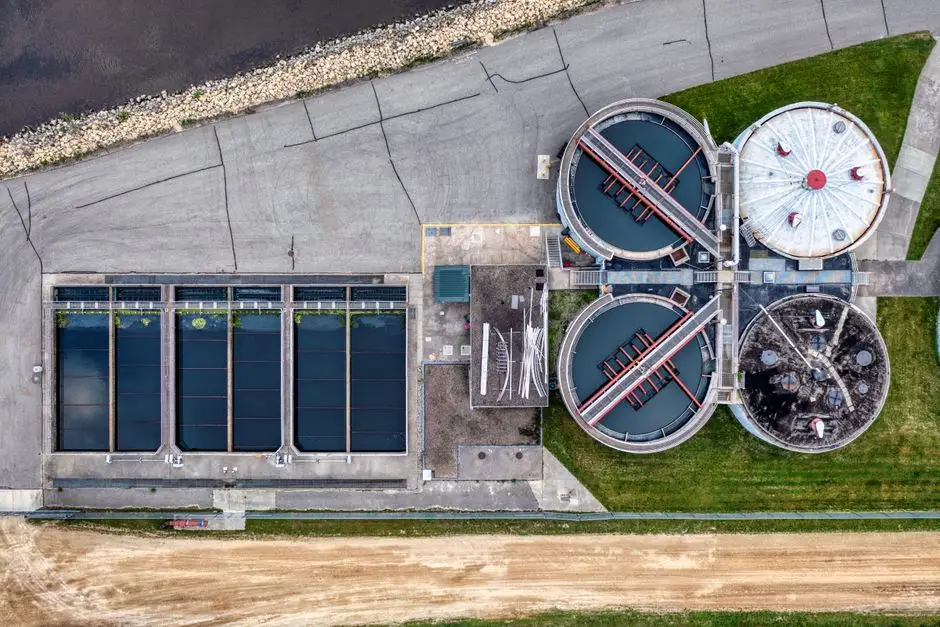
An equipment quotation is not an installed-project budget. HydropureWater’s 2025 Ivory Coast guide gives an indicative $20,000–$150,000 range for typical package systems handling 1–200 m³/day and identifies a typical CAPEX range of $20,000–$80,000 for a 50 m³/day A/O unit. These are equipment-oriented benchmarks, not turnkey installed prices for Abidjan.
The guide also reports average FOB endpoints of $20,000 for a 5 m³/day unit and $150,000 for a 200 m³/day system. FOB excludes civil works, local taxes and installation. They are not quotations, and they should not be placed in the same budget row as a fully installed, commissioned and performance-tested plant.
| Budget layer | Items to confirm in the supplier’s offer | Buyer control |
|---|---|---|
| Equipment supply | Treatment modules, blowers, pumps, controls and specified accessories | Confirm capacity, process guarantee, exclusions, warranty and FOB basis |
| Import and logistics | Sea freight, customs, port handling, inland transport, duties and local taxes | Obtain landed cost separately for each delivery option |
| Site works | Excavation, slab, backfill, roads, drainage, access, lifting and pipework | Develop a local civil-works bill of quantities |
| Process integration | Screening, pumping, electrical supply, controls, instrumentation and reuse pipework | Define interfaces and who holds each design responsibility |
| Commissioning and handover | Testing, training, documentation, critical spares and performance demonstration | Make handover conditional on agreed tests and records |
| Operating commitments | Power, chemicals, sludge removal, maintenance, monitoring and eventual replacement | Price each item over the development operating period |
For operating-cost comparison, the same 2025 guide reports package-plant OPEX of $0.40–$0.70/m³, including power, chemicals where used and routine maintenance, with variation by technology, electricity price and sludge handling. A/O and MBR should therefore be compared on the same treated-volume basis. MBR’s reported energy demand of 0.8–1.2 kWh/m³, compared with 0.3–0.6 kWh/m³ for A/O, must be priced using the expected local tariff and duty profile.
Obtain quotations on a common commercial basis: FOB price, freight, customs and tax, civil works, electrical supply, installation, commissioning, training, performance test, warranty, spares, sludge removal and exclusions. An automatic chemical dosing system should be included only if the disinfection and chemical-control design requires it. Similarly, a plate-frame filter press belongs in the budget only if the approved sludge route requires dewatering.
Plan delivery, installation and commissioning for Abidjan
The delivery programme should separate imported equipment from local civil works because neither can start on the same assumption. HydropureWater’s 2025 guide reports 28–35 days for sea freight from China to Abidjan Port and a further 7–10 days for customs clearance when documentation is complete. It reports 10–15 days for installation and commissioning only after local civil works are complete.
| Stage | Published planning basis | Procurement action |
|---|---|---|
| Sea freight | 28–35 days from China to Abidjan Port | Confirm the actual manufacturing origin, carrier routing and shipment allocation |
| Customs | 7–10 additional days with complete documentation | Pre-agree import permits, certificate of origin, commercial invoice and customs-broker responsibilities |
| Installation and commissioning | 10–15 days, assuming prior civil-work completion | Do not release site installation until foundations, pipework, power and access are verified ready |
Source: HydropureWater, “Package Wastewater Treatment Plant in Ivory Coast: Specs, Costs and Suppliers,” 2025.
The BMS Arklow case provides a useful layout check rather than an Abidjan specification. Its BL2000 units were 7.6 m long, 2.3 m wide and 2.25 m high to deck level. The published design used a 3.0 m-wide, 0.15 m-deep reinforced-concrete slab, with units buried to deck level and flow split evenly by gravity. The case also shows the value of laying all future slabs during initial construction so later modules can be installed rapidly.
For the Abidjan project, the civil package should include the confirmed foundation, excavation and dewatering, incoming and outgoing pipework, access, electrical supply, controls integration and any reuse connection. Pre-installing equal-flow splitting can support modular expansion, but all hydraulic and electrical details must remain subject to the final design and manufacturer’s approval.
The supply contract should also define remote monitoring, critical spares, operator training, testing, commissioning records, maintenance responsibility and the local sludge-disposal plan. The broader sequencing and handover lessons are consistent with the domestic sewage treatment buyer’s guide for West Africa.
Verify compliance and performance before handover
Acceptance should test the complete installed system, not merely the factory performance of a treatment module. HydropureWater’s 2025 guide identifies target values of BOD below 20 mg/L, TSS below 30 mg/L and NH₃-N below 5 mg/L under Ministry of Environment Decree No. 2022-145 (2022). These targets must be checked against the project’s current permit before contract signature and again before final acceptance.
The BMS Arklow project used outlet acceptance values of BOD 20 mg/L, SS 30 mg/L and COD 125 mg/L. Those are case-specific values and do not replace the Abidjan permit. Any disinfection requirement must also be matched to the authorized route and reuse plan; the available chlorine dioxide generator and UV sterilizer options should be assessed against the complete process, safety requirements and operating control.
| Acceptance check | Evidence required | Hold point |
|---|---|---|
| Permit compliance | Current permit, applicable limits and approved sampling route | Before final process selection and before handover |
| Hydraulic performance | Test at the agreed design-flow condition, with inlet, outlet, pumping and split-flow operation recorded | Before mechanical completion |
| Water quality | Representative laboratory results for the parameters listed in the permit | Before acceptance certificate |
| Automatic controls | Demonstration of interlocks, alarms, power-loss response, communication and remote monitoring | Before operator handover |
| Maintenance access | Verified access to aeration, membranes or separation equipment, sludge storage and drains | Before site possession |
| O&M handover | Manuals, training records, asset register, spares list, maintenance schedule and approved sludge route | Final handover |
The contract should state who samples, which laboratory performs the analysis, how the design flow is established, what constitutes a failed test and how corrective work is accepted. It should also assign maintenance responsibility, require local availability of critical spares, preserve remote diagnostic access and define the sludge-removal cycle. Without these records, a compliant-looking plant can still create operational and approval risk after handover.
Frequently Asked Questions
What is the cheapest practical package sewage treatment plant for a housing development in Abidjan?
A modular A/O unit is usually the lowest-capital candidate for ordinary domestic sewage, provided the site can accommodate it and gravity flow is practical. HydropureWater’s 2025 guide reports $20,000–$80,000 for a typical 50 m³/day A/O unit, but this is an equipment-oriented CAPEX range rather than an installed Abidjan price. Request a landed and installed quotation showing exclusions for civil works, taxes, freight, electrical work, commissioning and performance testing.
Should the project choose A/O or MBR if non-potable irrigation reuse is required?
MBR is the stronger starting point because HydropureWater’s 2025 guide reports effluent TSS below 1 mg/L and turbidity below 0.5 NTU, compared with the stated A/O targets of BOD below 20 mg/L, TSS below 30 mg/L and NH₃-N below 5 mg/L. However, reuse suitability must be demonstrated against the actual irrigation or process specification and approved by the relevant authority. Ask the supplier for pilot or reference effluent data and a defined disinfection and water-quality monitoring plan.
How much does a packaged sewage treatment plant cost before civil works and installation?
For equipment supply, HydropureWater’s 2025 guide gives an indicative $20,000–$150,000 range for typical Ivory Coast package systems handling 1–200 m³/day. It identifies average FOB endpoints of $20,000 for a 5 m³/day unit and $150,000 for a 200 m³/day system. These are benchmarks, not fixed quotations, and exclude civil works, local taxes and installation. Require each bidder to state the precise treatment duty, inclusions, Incoterm, payment milestones and validity period.
What should a supplier include in an Abidjan proposal and performance test?
The proposal should include the design flow and occupancy basis, process flow, treatment and reuse targets, module dimensions, civil-interface drawings, power demand, control philosophy, installation sequence, commissioning method, warranty, spares, operator training and O&M costs. The test should verify representative effluent, automatic controls, alarms, flow measurement, sludge access and the current permit conditions. For a permanently buried A/O option, request the WSZ underground A/O package sewage treatment plant layout and installation obligations; for MBR, require an integrated MBR wastewater treatment system proposal with membrane-cleaning and replacement terms.
How long does it take to deliver, install and commission a package plant in Abidjan?
Use the published planning ranges, then add project-specific time for civil works, approvals and port delays. HydropureWater’s 2025 guide reports 28–35 days for sea freight from China to Abidjan Port, 7–10 days for customs clearance with complete documentation, and 10–15 days for installation and commissioning after civil works are complete. Require the supplier to name the actual manufacturing origin and provide a delivery schedule linked to drawings approval, payment, manufacturing release, shipping documents and site readiness.