Start with the connection decision, not the treatment model
The best packaged sewage treatment plant for a Dublin housing development is selected from total population equivalent, peak and low-flow conditions, development phasing, site levels, soil and groundwater conditions, and the approved discharge route—not simply the number of homes. A public Uisce Éireann connection should be investigated first. If an off-mains route is required, the WSZ underground integrated sewage treatment plant handles 1–80 m³/h for residential communities, while the MBR membrane bioreactor system is available from 10 to 2,000 m³/day and provides filtration below 1 μm. Final selection must be confirmed through Irish consent, wastewater characterisation and project-specific design.
A housing development should not enter procurement as an enlarged septic-tank exercise. It is a shared wastewater project whose treatment, pumping, discharge and ownership arrangements may change as homes are occupied. The first decision is whether Uisce Éireann can provide a public connection at the required stage.
Tricel’s Ireland housing-development guidance identifies two stages: a Pre-Connection Enquiry or a Connection Application, depending on the planning and feasibility status. The initial information should include the site location, layout and relevant planning information. This establishes whether the public network is feasible before expenditure is committed to treatment equipment.
Uisce Éireann’s Greater Dublin Drainage Project is intended to support up to 185,000 new homes and provide capacity equivalent to 500,000 people. Uisce Éireann states that preliminary construction is expected before the end of 2026, with delivery targeted by 2031. That regional programme does not establish a connection entitlement for an individual development: the project’s connection stage and the site-specific network assessment remain the controlling evidence.
If the public sewer is unavailable, cannot serve the development at the required stage or requires further technical review, assess an on-site or developer-led route. Further information on packaged sewage treatment plant sizing for housing developments can then be used to structure that assessment, but it should not replace a Dublin connection enquiry.
Build the wastewater design basis around PE and occupancy
Population equivalent, rather than dwelling count alone, provides the defensible starting point for a shared development design. Tricel states that the wastewater system should be sized around the full residential load, project phasing, expected PE, discharge route and site conditions. Its guidance also requires the load to include all houses, apartments, communal facilities and future phases.
The hydraulic review must cover more than an annual average. Morning, late-afternoon and evening demand can be materially higher than the average, while overnight low flow can affect biological treatment. Early occupation may also create a load profile very different from final full occupancy. The design therefore needs separate cases for first occupation, partial occupation and the completed scheme. Where treatment stability must be maintained through substantial flow changes, assess an equalisation or buffer function.
Do not treat the regulatory domestic route as a substitute for development design. The EPA’s 2021 Code of Practice for Domestic Waste Water Treatment Systems applies to domestic systems with 10 PE or fewer and addresses site characterisation, design, operation and maintenance. A shared development should be assessed separately where its infrastructure, discharge route or PE moves it outside that domestic route.
| Design input | Information to establish | Why it affects selection |
|---|---|---|
| Development load | All homes, apartments, communal facilities and future phases | Defines total PE and prevents omission of shared or later loads |
| Occupancy | Expected residents and unit mix | Connects housing stock with the wastewater contribution being designed |
| Phasing | First occupation, partial occupation and final full load | Tests biological stability, hydraulic capacity and staged commissioning |
| Flow pattern | Morning, late-afternoon, evening and overnight conditions | Exposes peak capacity and low-flow treatment risks |
| Discharge and site | Proposed route, levels, soil, groundwater and sensitive receptors | Determines treatment, pumping and discharge requirements |
Before comparing quoted package capacities, request the unit mix, expected occupancy, occupancy assumptions and phased completion plan. A supplier should show how its selected duty relates to the calculated PE and the reviewed flow cases; a model number alone is not a design submission.
Match the treatment process to the discharge and site

The WSZ and MBR packages serve different process and site requirements, so the discharge route and installation constraints must be resolved before selecting either. Product performance does not establish consent for a particular discharge, and the final treatment train must be matched to the regulatory route and approved receiving point.
The WSZ underground integrated sewage treatment plant combines anoxic and aerobic biological contact oxidation with sedimentation and disinfection in one buried unit. HydropureWater states that it handles 1–80 m³/h and is intended for residential communities and other off-mains applications. It is therefore a candidate where gravity collection is possible, a buried treatment train is appropriate and the reviewed flow lies within that stated range.
The MBR membrane bioreactor system combines activated sludge treatment with submerged PVDF membrane filtration. HydropureWater states that it provides filtration below 1 μm, uses a 60% smaller footprint than conventional systems and has a capacity range of 10–2,000 m³/day. Those published characteristics make it a starting candidate where tighter solids separation, reuse-oriented treatment or a constrained footprint is important, subject to the hydraulic design and discharge consent.
| Selection issue | WSZ starting position | MBR starting position |
|---|---|---|
| Treatment train | Anoxic and aerobic contact oxidation, sedimentation and disinfection in a buried unit | Activated sludge with submerged PVDF membrane filtration |
| Published capacity | 1–80 m³/h | 10–2,000 m³/day |
| Physical consideration | Buried package; check excavation, access and service arrangements | Stated 60% smaller footprint than conventional systems |
| Key condition | Reviewed load and treatment route fit the process and design range | Reviewed load and site constraints fit the process and design range |
Site levels determine whether gravity flow is possible or a pumping station is required. The layout must permit installation, safe access, maintenance, desludging and future servicing. Soil type, groundwater level, percolation results and sensitive receptors affect the treatment and discharge arrangement. A ground discharge cannot be assumed acceptable merely because a package can treat the wastewater; the receiving ground and proposed percolation route still require assessment.
Check the Irish consent route before fixing the equipment
A Dublin housing-development package must fit a defined Irish consent and ownership route, not merely an effluent specification. The applicable route depends on PE, the scale of the discharge, the receiving route, whether infrastructure will be transferred to Uisce Éireann and the extent of shared development.
The EPA’s 2021 domestic Code of Practice applies to domestic systems with 10 PE or fewer. A shared development, a discharge route or a PE outside the domestic route requires a development-specific assessment. The General Binding Rules registration route applies to small-scale discharges up to 150 PE, described by Tricel as about 40 residential units. This is an eligibility threshold for the streamlined registration route, not a limit on the feasibility of developer-led infrastructure.
The Developer-Led Wastewater Services Infrastructure initiative was approved in November 2025 and moved to implementation in March 2026 under Circular Letter NSP 01/2026. Tricel states that qualifying developers may finance and construct infrastructure to Uisce Éireann standards, after which it is transferred, owned and operated by Uisce Éireann. Larger developments remain eligible for the initiative but follow the standard EPA environmental authorisation process.
| Development condition | Route to investigate | Decision control |
|---|---|---|
| Domestic system at 10 PE or fewer | EPA 2021 domestic Code of Practice | Confirm domestic scope, site characterisation and operating requirements |
| Small-scale discharge up to 150 PE | General Binding Rules registration | Confirm eligibility and the applicable treatment and discharge conditions |
| Qualifying developer-led infrastructure | Developer-Led Wastewater Services Infrastructure route | Confirm design, construction, transfer, ownership and operational requirements |
| Larger development | Standard EPA environmental authorisation process | Resolve the discharge and consent conditions before equipment selection |
Confirm the precise consent, design, commissioning and ownership requirements with the relevant authority before placing a non-returnable order. Where a developer-led route is considered, obtain written confirmation of what must be constructed to Uisce Éireann standards and what assets will be accepted. The equipment supplier’s warranty or performance statement does not replace that agreement.
Compare WSZ and MBR with a scenario-based decision framework
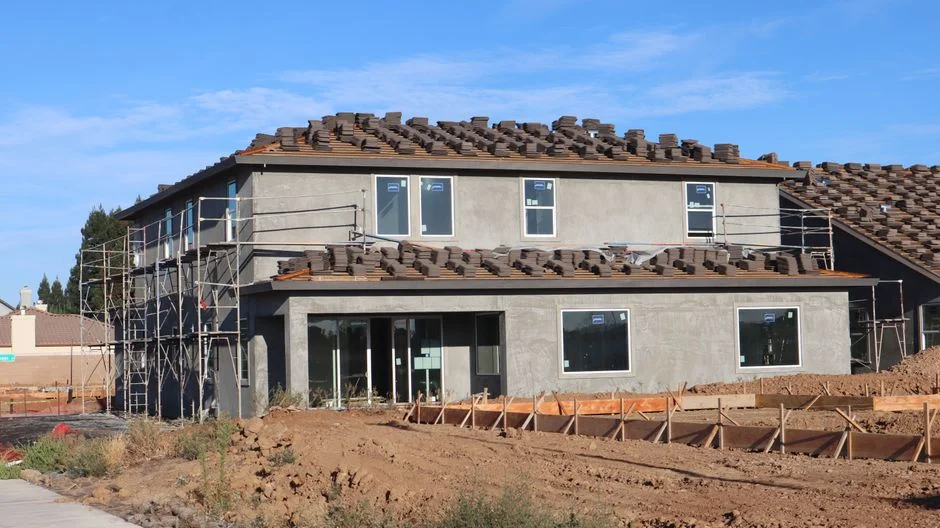
Use WSZ as the starting candidate where a single buried package, anoxic and aerobic contact oxidation, sedimentation and disinfection fit the treatment route, and the reviewed load falls within the stated 1–80 m³/h range. Use MBR as the starting candidate where tighter solids separation, reuse-oriented treatment or a constrained footprint is important, and the reviewed load falls within the stated 10–2,000 m³/day range.
These published capacities are product-selection boundaries, not substitutes for the development’s PE calculation, peak-flow review, discharge-quality assessment or site constraints. A package that technically falls within a capacity range may still be unsuitable if the hydraulic basis, treatment train, installation arrangement or consent conditions do not match the project.
| Project scenario | First equipment concept | Checks before selection |
|---|---|---|
| Buried package with gravity drainage and compatible treatment route | WSZ | Reviewed flow within 1–80 m³/h; site levels, access and discharge route confirmed |
| Constrained footprint or tighter solids separation required | MBR | Reviewed flow within 10–2,000 m³/day; treatment objective and effluent conditions confirmed |
| Early occupation precedes later phases | Either, subject to review | Operation at partial and final load; assess buffer capacity, modules or staged commissioning |
For a phased scheme, require the supplier to explain how the plant operates at both early and final occupancy. Identify whether additional modules, buffer capacity or staged commissioning are necessary, and ensure the biological process is not selected solely from a peak-flow calculation.
Each quotation should state its sizing assumptions, hydraulic basis, performance guarantees, compliance scope, installation boundaries, commissioning requirements and long-term service arrangements. More context on WSZ versus MBR for housing wastewater and domestic, package and MBR sewage treatment options can support that comparison, but Irish consent and site evidence must remain decisive.
Issue a procurement-ready site and design brief
A comparable quotation starts with a common site and design brief, not a request for a package price. Include the jurisdiction, site address, proposed units or population, unit mix, expected occupancy, phasing plan, planning status and all authority correspondence. State whether a public sewer has been tested, whether developer-led infrastructure is being considered, and whether discharge is proposed to ground, a watercourse or another approved location.
Provide topographic levels, available footprint, access constraints, soil and groundwater information, percolation results and nearby sensitive receptors. These inputs determine whether gravity drainage is practical, whether pumping and discharge works are required and which consent conditions must be addressed.
| Submission package | Minimum information for quotation | Supplier response required |
|---|---|---|
| Development basis | PE calculation, unit mix, occupancy and phasing | Duty cases for partial and full occupancy |
| Hydraulics and site | Flow basis, levels, footprint, access, soil, groundwater and discharge route | Process selection, pumping concept and installation boundaries |
| Effluent and consent | Proposed receiving point and authority correspondence | Effluent parameters and compliance deliverables |
| Operations | Maintenance, sludge handling, power and service access requirements | Commissioning plan, controls, maintenance plan and long-term service arrangements |
Ask each supplier to provide a design PE calculation, hydraulic basis, process description, effluent parameters, automation and power requirements, installation and commissioning scope, maintenance plan and compliance deliverables. Do not compare quotations by package price alone. Compare the complete scope, including balance-of-plant, pumping, discharge works, controls, commissioning, sludge management and service access.
Frequently Asked Questions
What packaged sewage treatment plant fits a housing development in Dublin, Ireland?
No universal model fits. Screen the WSZ against the reviewed hydraulic load, buried installation, gravity-flow potential and treatment route; screen the MBR against the load, footprint, solids-separation objective and discharge requirements. Confirm the final choice through project-specific design and Irish consent.
Can a Dublin housing development use a domestic wastewater treatment system?
Only where the proposal genuinely falls within the domestic route. The EPA’s 2021 Code of Practice applies to domestic systems with 10 PE or fewer. Shared infrastructure, a development-scale PE or a relevant discharge route requires a development-specific assessment.
What is the cost of a packaged sewage treatment plant for a Dublin housing development?
The supplied research contains no Dublin-specific package price. Request a quotation that separately identifies the treatment package, balance-of-plant, pumping, discharge works, controls, commissioning, sludge management and long-term servicing. Ask the supplier to state its sizing and hydraulic assumptions so the prices cover the same scope.
When should the General Binding Rules or EPA environmental authorisation route be used?
The General Binding Rules registration route is described as applying to small-scale discharges up to 150 PE, or about 40 residential units according to Tricel. Larger developments remain eligible for developer-led infrastructure but follow the standard EPA environmental authorisation process. Obtain authority confirmation for the project’s precise route before ordering.
How should a supplier be selected for a phased off-mains housing wastewater system?
Require a supplier to demonstrate operation at partial and full occupancy, explain any buffer, modules or staged commissioning, and state performance guarantees, compliance scope, installation boundaries, commissioning requirements and long-term service arrangements. Check that the quoted capacity covers the reviewed load and that the proposed treatment train matches the approved discharge conditions.