
How to Choose a Packaged Sewage Treatment Plant in Surat
A Surat housing development should normally shortlist an automated, below-grade WSZ package plant when the objective is residential sewage treatment, limited above-ground land use and discharge to a municipal sewer. A membrane bioreactor becomes more relevant where the project requires finer solids separation, reuse potential or a smaller installed footprint. Neither choice is defensible until the developer reconciles average and peak flows, confirms the receiving route, maps the site and establishes the applicable Gujarat Pollution Control Board requirements. This decision sequence is more reliable than comparing equipment prices before the hydraulic and compliance basis is fixed.
Start with a verified wastewater-generation estimate, then obtain agreement on the following five inputs before requesting technical proposals:
- Average daily wastewater flow, morning and evening peak rates, and any commercial or institutional discharge entering the same network.
- The receiving route: public sewer, water body, land application or on-site reuse.
- Available land, groundwater conditions, installation depth, tanker access, landscaping and buffer requirements.
- The effluent specification and any reuse-quality parameters.
- The civil, commissioning, performance-testing and long-term O&M boundaries included by the supplier.
Compare the WSZ underground integrated sewage treatment plant with the integrated MBR wastewater treatment system only after the bidders use a common flow basis. The packaged sewage treatment selection for Delhi housing provides a useful cross-market procurement framework, but Surat’s discharge route and local approval conditions must govern the actual award.
| Selection input | Evidence to obtain | Why it affects selection |
|---|---|---|
| Hydraulic basis | Average flow, residential peaks, contributing wastewater streams, infiltration basis and phasing plan | Determines process capacity, equalisation, redundancy and module arrangement |
| Discharge and reuse | Authority-approved route, applicable effluent specification, reuse parameters and seasonal discharge conditions | Determines required treatment, disinfection, storage and pumping scope |
| Site and civil works | Land survey, groundwater information, access, depth, excavation and landscaping constraints | Determines whether a buried, above-ground or containerised arrangement is practical |
| Supplier deliverables | Process flow, hydraulic calculation, controls, civil interface, commissioning plan, O&M scope and warranty | Creates comparable bids and exposes excluded costs and interfaces |
What Makes the Surat Case Different
The Department of Atomic Energy handed over a 150 KL/day sewage treatment facility to the Surat Municipal Corporation on August 22, 2024, using hgSBR biomass-formulation technology developed by BARC. The handover was reported by the Department of Atomic Energy on its Facebook page on August 25, 2024, with the Heavy Water Board, DAE and SMC collaborating on the project.
The DAE report describes the facility as compact, requiring less land than traditional methods, with lower operating costs attributed to recovering valuable resources from wastewater. It also states that the plant meets Gujarat Pollution Control Board standards. These points make the project a relevant local reference for compact design, resource recovery, maintainability and compliance planning.
They do not make it an automatic capacity recommendation for a housing estate. The reported 150 KL/day treatment capacity belongs to a public-sector facility with a defined catchment and operating arrangement; a private development must establish its own flow, process and receiving conditions. In particular, approval of that facility does not transfer to a private package plant. The developer must obtain the applicable requirements for its own discharge route, reuse proposal and site from the relevant authorities.
For a housing development, the practical lesson is to assess compactness, maintainability, resource recovery and local regulatory acceptance together. Capacity alone is not evidence of suitability.
Size the Plant from Peak Residential Demand
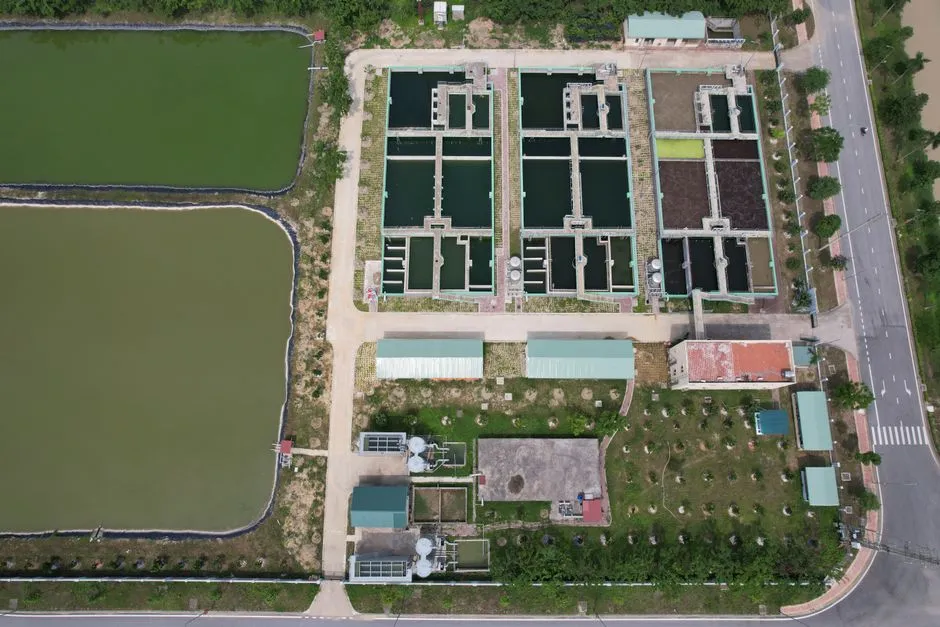
Residential treatment must handle the interaction of concentrated peak periods and dilute low-flow periods, rather than size every unit from average daily flow alone. Biocell Water states that residential wastewater flow varies substantially through a weekday, with peak rates typically occurring in the mornings, late afternoon and evenings as residents leave for or return from work and school.
The same source notes that residential ammonia and COD can be high because of increased use of disinfectants and cleaning products and because some houses lack grease traps. The supplier should therefore document the assumed per-capita wastewater contribution, occupancy schedule, average daily flow, peak factor, infiltration allowance, storm-water exclusion and redundancy requirement. Any kitchen wastewater, septic-tank emptying or external drainage entering the network must be identified because it changes both hydraulic and solids loading.
Published capacities are not directly interchangeable. The WSZ series is stated to cover 1–80 m³/h, while the MBR system is stated to cover 10–2,000 m³/day. These figures can be compared only after the project flows are converted into the same units and the supplier confirms the duty point, treatment objectives and operating mode.
For a phased development, require confirmation that the first module can meet the required flow, effluent and reliability conditions during startup and subsequent expansion. Biocell Water identifies phased modular installation as an advantage for growing developments, but the module arrangement still needs to be checked against occupied and peak-flow stages.
| Sizing item | Information the bidder must state | Buyer check |
|---|---|---|
| Flow basis | Average daily flow and residential peak rates | Do the values reconcile with occupancy and contributing non-residential users? |
| Loading basis | Expected COD, ammonia and grease characteristics; treatment assumptions | Are characteristic residential loads and local sewer conditions addressed? |
| Infiltration and storm water | Allowance, drainage separation and storm-water exclusion | Has surface runoff been excluded from the sewage design flow? |
| Redundancy | Duty allocation, standby strategy and bypass provisions | Does the arrangement maintain treatment during maintenance or partial failure? |
| Phasing | Installed and future module capacity, expansion sequence and performance at each stage | Can initial modules meet the first-stage peak and effluent obligations? |
| Solids protection | Screening, grease management and sludge-removal route | Are rags, plastics, fibres and grease removed before the biological process? |
If screening is required to protect downstream biological equipment, evaluate a rotary mechanical bar screen as a defined inlet-work item. It is an pretreatment measure, not a substitute for biological treatment or disinfection.
Compare WSZ, MBR and Other Packaged Processes
The WSZ process combines anoxic/aerobic A/O biological contact oxidation, sedimentation and disinfection in one buried package. The manufacturer states that it is fully automated, requires no resident operator and handles 1–80 m³/h. The unit can be installed below grade with landscaping above it, or mounted on a trailer for mobile deployment, making it relevant where surface land is constrained or temporary treatment is required.
The MBR alternative combines activated-sludge treatment with submerged PVDF membrane filtration. The manufacturer states that filtration is below 1 μm, the capacity range is 10–2,000 m³/day and the footprint is 60% smaller than conventional systems. The footprint statement is a manufacturer claim, not a project-specific guarantee; the buyer must verify the proposed arrangement against site constraints.
Biocell Water identifies MBBR or SBR as typical process choices for below-ground residential systems, while fixed-bed biological reactor, MBBR and MBR may be used in containerised arrangements. It states that technology is selected according to the required effluent standard, site restriction and available budget.
| Decision criterion | WSZ package plant | MBR system | Other packaged process |
|---|---|---|---|
| Process architecture | A/O biological contact oxidation, sedimentation and disinfection in one buried package | Activated sludge with submerged PVDF membrane filtration | MBBR, SBR or fixed-bed biological process, depending on supplier design |
| Stated capacity | 1–80 m³/h | 10–2,000 m³/day | Must be stated in the project proposal |
| Installation | Below grade with landscaping above, or trailer-mounted for mobile deployment | Configuration depends on the manufacturer’s proposed package | Below-ground concrete tank or containerised module |
| Separation and reuse | Conventional treatment followed by the specified separation and disinfection stages | Manufacturer states filtration below 1 μm | Must be matched to the reuse-quality specification |
| Primary selection condition | Automated residential duty, constrained surface land and conventional discharge or sewer route | Fine separation, reuse potential or a verified footprint advantage | Site restrictions, effluent requirements and budget |
WSZ is therefore the stronger default for a conventional residential duty where automation and compact buried installation dominate. MBR is the stronger candidate when the project requires a high-grade separation step, reuse or a demonstrably smaller footprint. Do not treat the filtration claim as proof of reuse suitability: request the required water-quality parameters and check whether disinfection, reuse plumbing, public-health controls, storage and testing are included. The broader domestic sewage treatment buyer’s guide provides useful context for matching packaged treatment to discharge obligations.
Plan the Site, Effluent Route and Reuse Application
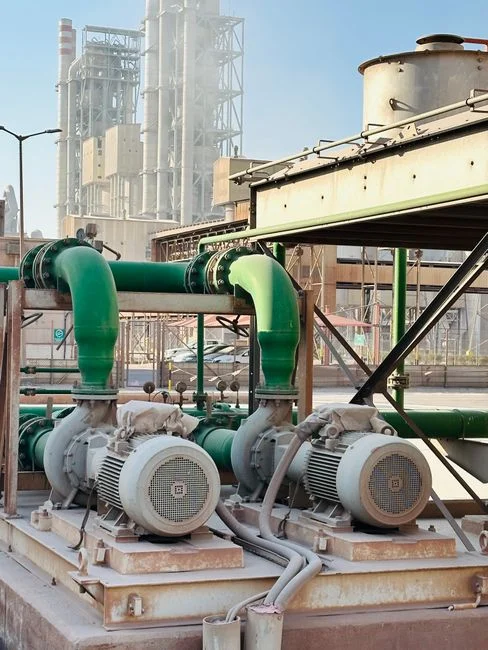
A technically adequate process can become impractical if the site design is incomplete. Require the proposal to identify inlet works, equalisation, biological treatment, solids separation, disinfection, pumping, sludge handling, odour control and final discharge or reuse connections. It should also define tank access, lifting arrangements, power distribution, controls, drainage and the boundary between the supplier and the developer’s civil contractor.
Survey the proposed underground installation before selecting it. The design review should address groundwater, excavation stability, waterproofing, buoyancy, access for tanker emptying, inspection routes and the effect of later landscaping. Above-ground or containerised alternatives should be assessed where deep excavation, groundwater or restricted access makes a buried tank impractical.
Where grease or septic-tank emptying can enter the network, define the grease-management and solids-removal strategy. Biocell Water identifies grease treatment as an add-on requirement in some residential installations, which supports treating it as a project-specific process requirement rather than assuming that all incoming material will remain manageable inside the biological package.
For irrigation, toilet flushing or landscape reuse, request the applicable reuse-quality parameters and an engineered disinfection and storage section. Depending on the water route and treatment objective, disinfection may be addressed with a UV sterilizer or an ozone generator. These devices remain part of a complete train; they do not replace biological treatment, solids separation or a verified reuse design.
Land application and water-body discharge require site-specific review of receiving conditions, seasonal availability, groundwater level and public access. Confirm the route with the relevant authority before the supplier fixes the process train. A mechanical screen protects downstream equipment from gross solids but does not establish the biological, disinfection or reuse treatment required.
Build a Supplier RFQ That Prevents Design Surprises
A comparable RFQ should contain the verified flow data, land constraints, groundwater information, receiving route, reuse objectives and applicable authority requirements. If these inputs remain unresolved, invite budgetary and technical options but clearly mark sizing, effluent compliance and final price as conditional. A firm price built on an assumed development flow or discharge route is not an apples-to-apples comparison.
Ask every bidder to submit:
- The selected process flow, hydraulic calculation, duty allocation and redundancy.
- Controls, power, chemicals, alarms and remote-notification requirements.
- Civil works, installation sequence, interfaces, access and temporary arrangements.
- Commissioning tests, performance guarantees, training, spares, warranty and O&M deliverables.
- Evidence of applicable Gujarat Pollution Control Board compliance and the proposed route for authority acceptance.
Do not infer private-project compliance from the public-sector Surat facility. Biocell Water notes that accessible maintenance, alarms, maintenance without emptying or entering tanks and optional SCADA monitoring can help reduce downtime, so specify the features that matter when local operator availability is limited.
| RFQ deliverable | Required detail | Commercial risk if omitted |
|---|---|---|
| Design basis | Flow, loading, peaks, redundancy, phasing and receiving route | Capacity or compliance uncertainty |
| Technical offer | Process flow, calculations, equipment duty, controls, power and chemicals | Unverified performance and operating-cost differences |
| Civil and installation scope | Excavation, tank works, access, cabling, drainage, lifting and interfaces | Excluded site works appear as change orders |
| Commissioning | Tests, acceptance criteria, training and performance demonstration | Disputed handover |
| Lifecycle O&M | Media or membrane replacement, sludge removal, disinfection, access, spares, alarms and service response | Underestimated operating burden |
| Commercial alignment | Same civil boundary, commissioning scope, warranty period, exclusions and O&M period | Quotations are not directly comparable |
Where a supplier has proposed a plate-based solids-dewatering arrangement, the scope for a plate-frame filter press should state the expected sludge characteristics, operating cycle and operator access rather than leaving it as an unqualified accessory.
Frequently Asked Questions
How much wastewater does a Surat housing development need to size a package STP?
Use the development’s verified average and peak residential flows rather than a generic per-person assumption. Biocell Water reports that residential peaks typically occur in the mornings, late afternoon and evenings, while ammonia and COD can be high because of disinfectants, cleaning products and absent grease traps. Ask bidders to reconcile occupancy, contributing non-residential flows, infiltration, storm-water exclusion and the duty point before comparing capacity.
Is a WSZ package plant or an MBR system better for a housing development?
Choose the WSZ when the duty fits 1–80 m³/h and the priorities are automated treatment, limited surface-land use and a conventional discharge or sewer route. Consider the MBR when below-1 μm filtration, reuse potential or a verified footprint advantage justifies the additional process complexity. These are selection starting points, not substitutes for the hydraulic calculation, effluent specification and site review.
How much land does a packaged sewage treatment plant need in Surat?
The requirement depends on the selected process, installation form, civil works, access, buffer and local rules; no universal plot area can be inferred from the reported 150 KL/day DAE-SMC benchmark. The DAE report describes that Surat facility as compact, but a developer should request a scaled layout showing tanks, access, pump and tanker movements, controls, sludge handling, drainage and landscaping for its own site.
What should a housing developer verify before approving a supplier?
Check the hydraulic basis, treatment train, discharge route, authority requirements, civil interface, controls, commissioning tests, O&M plan, critical spares and performance warranty. Also ask for the operating scope of biological media or membrane replacement, sludge removal, disinfection, inspections and alarm response. A bid should be accepted only after all bidders use the same civil-work boundary, commissioning scope, warranty and O&M period.
Can a packaged plant be installed in phases as occupancy grows?
Yes, if the selected architecture supports modular expansion and the supplier demonstrates that the initial installation meets the required peak-flow, effluent and reliability conditions during startup. Biocell Water identifies phased modular installation as an advantage for growing developments. Require a phase-by-phase capacity and compliance schedule, including the treatment effect of subsequent modules on the units already operating.