A package wastewater treatment plant in Ivory Coast typically handles 1–200 m³/day, using A/O or MBR technology to meet local discharge standards. These modular systems cost $20,000–$150,000, with 90–95% BOD and TSS removal, and are ideal for industrial sites, residential clusters, and remote communities where centralized infrastructure is limited.
Why Ivory Coast Needs Modular Wastewater Solutions
Only 35% of urban wastewater is treated in Ivory Coast, according to a World Bank 2023 estimate, highlighting a significant gap in sanitation infrastructure beyond major urban centers. While national projects, such as Fluence’s 150,000 m³/d Aghien lagoon plant, serve large metropolitan areas like Abidjan, they leave industrial zones, smaller municipalities, and remote sites largely underserved. This disparity creates a pressing demand for scalable, decentralized wastewater treatment solutions.
Many industrial zones, particularly in growing regional hubs like Bouaké, Daloa, and San-Pédro, operate without access to centralized piped sewer networks. For these areas, a compact sewage treatment plant in Ivory Coast is not just an option but often the only viable method for managing industrial or domestic effluent. Businesses, residential clusters, hotels, and off-grid communities require systems that can be deployed quickly, operate efficiently, and meet local environmental regulations without relying on extensive municipal infrastructure that may not exist or be planned for decades.
The economic growth and urbanization in Ivory Coast further exacerbate this need. As new industries emerge and populations shift, the demand for effective wastewater management outstrips the pace of large-scale infrastructure development. Modular wastewater systems offer a flexible and cost-effective alternative, allowing for phased expansion and tailored solutions that can adapt to specific site conditions and effluent volumes, making them essential for sustainable development across the country.
How Package Wastewater Treatment Plants Work
Package wastewater treatment plants primarily utilize advanced biological processes within a compact, integrated unit. The WSZ series, a common type of compact underground package wastewater treatment plant, employs an Anoxic/Oxic (A/O) biological contact oxidation process. This system effectively removes pollutants through distinct treatment zones: an initial anoxic zone targets nitrogen removal, achieving 40–60% Total Nitrogen (TN) reduction by promoting denitrification. Following this, an aerobic zone provides optimal conditions for microorganisms to degrade organic matter, yielding 90–95% Biological Oxygen Demand (BOD) removal from influent streams typically ranging 100–300 mg/L.
The treated water then undergoes integrated sedimentation, where suspended solids settle out, followed by a final disinfection stage, often using chlorine dioxide. This combination ensures effluent TSS (Total Suspended Solids) levels are below 20 mg/L and fecal coliform counts are reduced to less than 1,000 CFU/100mL, meeting stringent discharge standards. The typical process flow within these modular units involves:
- Inlet: Raw wastewater enters the system.
- Mechanical Screening: Coarse solids and debris are removed to protect downstream equipment.
- Equalization Tank (Optional): Balances flow and pollutant load for consistent treatment.
- Anoxic Tank: Denitrification occurs, converting nitrates to nitrogen gas.
- Aerobic Tank: Organic matter (BOD/COD) is degraded by aerobic bacteria, often using submerged biological contact media.
- Secondary Settling Tank or Membrane Module: Solids are separated from the treated water. MBR systems use membranes for superior separation.
- Disinfection: Pathogens are eliminated using chlorine, UV, or ozone.
- Discharge: Treated effluent is released or reused.
This integrated design minimizes footprint and simplifies operation, making it ideal for decentralized treatment unit Côte d'Ivoire applications.
Key Technical Specifications for Ivory Coast Deployments
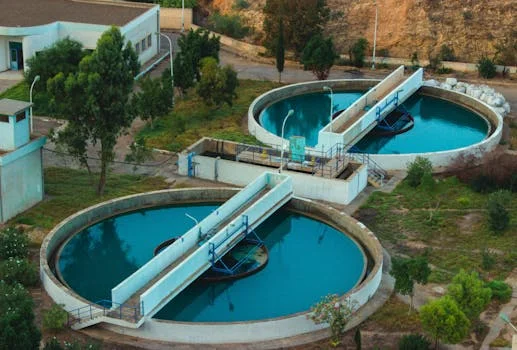
Selecting a package wastewater treatment plant for deployment in Ivory Coast requires careful consideration of technical specifications to ensure compliance and operational efficiency under local conditions. Flow capacities for the WSZ series, designed for diverse applications, typically range from 1 to 80 m³/h, translating to 3–1,920 m³/day. High-efficiency MBR systems, which offer superior effluent quality, support capacities from 10–2,000 m³/day, catering to larger industrial or municipal requirements.
Footprint is a critical factor, especially for urban or industrial zones with limited space. A typical 20 m³/day A/O unit requires an approximate surface footprint of 5m x 2m. For sites where surface area is at a premium, underground installation can reduce surface use by 100%, allowing for landscaping or additional infrastructure above the treatment unit. Power consumption for A/O systems is generally efficient, ranging from 0.3–0.6 kWh/m³, while MBR systems, due to the energy demands of membrane aeration and filtration, typically consume 0.8–1.2 kWh/m³.
Effluent quality is paramount for compliance with Ivorian environmental regulations. Systems are designed to meet or exceed the urban discharge standards set by the Ministry of Environment in 2022 (Decree No. 2022-145). Target effluent parameters include BOD <20 mg/L, TSS <30 mg/L, and NH₃-N <5 mg/L, ensuring minimal environmental impact. These specifications are crucial for industrial wastewater package plant deployments and off-grid sewage solution projects across the region.
| Parameter | A/O System (WSZ Series) | MBR System (DF Series) | Ivorian Discharge Limit (Urban, 2022) |
|---|---|---|---|
| Flow Capacity | 3–1,920 m³/day | 10–2,000 m³/day | N/A |
| Footprint (20 m³/day unit) | ~10 m² (surface) | ~6 m² (surface) | N/A |
| Power Consumption | 0.3–0.6 kWh/m³ | 0.8–1.2 kWh/m³ | N/A |
| BOD Removal | >90% | >95% | <20 mg/L |
| TSS Removal | >90% | >98% | <30 mg/L |
| NH₃-N Removal | >70% | >90% | <5 mg/L |
| Fecal Coliform | <1,000 CFU/100mL | <100 CFU/100mL | <1,000 CFU/100mL |
Top Technologies Compared: A/O vs MBR vs DAF Integration
Choosing the appropriate package wastewater treatment technology hinges on the specific characteristics of the wastewater, desired effluent quality, and budget constraints. Aerobic/Anoxic (A/O) systems, like those found in the WSZ series, are highly effective for treating domestic sewage and low-to-medium strength industrial wastewater. They offer a robust and cost-efficient solution, with Capital Expenditure (CAPEX) for a 50 m³/day unit typically ranging from $20,000–$80,000. These systems are known for their reliable BOD and TSS removal, making them a popular choice for general applications and as a compact underground package wastewater treatment plant.
Membrane Bioreactor (MBR) technology, exemplified by DF series membranes, provides a significantly higher level of treatment. MBR systems deliver reuse-quality effluent, characterized by extremely low TSS (<1 mg/L) and turbidity (<0.5 NTU), suitable for non-potable reuse applications such as irrigation or industrial process water. While offering a 60% smaller footprint compared to conventional A/O systems due to the efficient separation capabilities of the membranes, MBR systems typically incur a 30% higher CAPEX. This makes an high-efficiency MBR system for reuse-quality effluent ideal for sites with strict discharge limits or water scarcity, as seen in some decentralized treatment unit Côte d'Ivoire projects.
For industrial effluent containing high concentrations of Fats, Oils, and Grease (FOG), such as from food processing plants or textile dyeing facilities (e.g., >300 mg/L FOG), Dissolved Air Flotation (DAF) pre-treatment is highly recommended. Integrating a DAF unit upstream of a biological system boosts overall system efficiency by up to 25% by removing a significant portion of suspended solids and FOG, preventing issues like biological system overloading and membrane fouling. This ensures the downstream A/O or MBR system operates optimally, enhancing the cost-effectiveness and longevity of the entire industrial wastewater package plant.
| Technology | Best For | Key Advantages | Typical CAPEX (50 m³/day) | Effluent Quality |
|---|---|---|---|---|
| A/O (WSZ Series) | Domestic sewage, low-medium strength industrial | Cost-effective, robust, easy operation | $20,000–$80,000 | BOD <20 mg/L, TSS <30 mg/L |
| MBR (DF Series) | High-quality effluent, water reuse, limited space | Reuse-quality, small footprint, high removal rates | $70,000–$120,000 | TSS <1 mg/L, Turbidity <0.5 NTU |
| DAF Pre-treatment | Wastewater with high FOG, suspended solids | Protects downstream, improves overall efficiency | $15,000–$40,000 (for pre-treatment) | Reduces FOG, TSS by >80% |
Cost, Delivery, and Installation in Ivory Coast
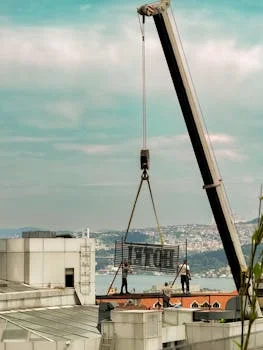
The average FOB (Free On Board) price for a fully automated package wastewater treatment plant in Ivory Coast ranges from $20,000 for a 5 m³/day unit to $150,000 for a 200 m³/day system. These prices typically include the main treatment modules, control system, blowers, and pumps, but exclude civil works, local taxes, and installation services. Buyers should factor in these additional costs for a comprehensive project budget. For a comparable case study in another developing market, refer to a package wastewater treatment plant in Nepal.
Shipping from manufacturing hubs in China to Abidjan Port typically takes 28–35 days via sea freight. Upon arrival, customs clearance in Ivory Coast usually requires an additional 7–10 days, provided all documentation, including import permits, certificates of origin, and commercial invoices, is accurate and complete. Engaging a local customs broker is highly recommended to expedite this process and avoid delays. For an MBR system deployment in another developing region, further insights can be found in our article on MBR wastewater treatment system in Uzbekistan.
Installation and commissioning of a modular wastewater system in Ivory Coast generally take 10–15 days, assuming local civil works (e.g., concrete foundation, piping) are completed prior to equipment arrival. HydropureWater provides detailed installation manuals and offers remote PLC monitoring for ongoing operational support and troubleshooting. Operational Expenditure (OPEX) for these systems typically falls between $0.40–$0.70/m³, varying based on the chosen technology (A/O vs. MBR), local electricity costs, and the method of sludge handling and disposal. This OPEX includes power consumption, chemical usage (if any), and routine maintenance.
| Cost/Timeline Factor | Estimate | Notes |
|---|---|---|
| FOB Price (5 m³/day unit) | $20,000 | Fully automated package plant |
| FOB Price (200 m³/day unit) | $150,000 | Fully automated package plant |
| Shipping (China to Abidjan) | 28–35 days | Sea freight, port-to-port |
| Customs Clearance (Abidjan) | 7–10 days | Requires proper documentation |
| Installation & Commissioning | 10–15 days | Assumes prior civil works completion |
| OPEX | $0.40–$0.70/m³ | Varies by technology, electricity, sludge handling |
Frequently Asked Questions
A package wastewater treatment plant in tropical climates like Ivory Coast typically has a lifespan of 15–20 years when constructed with stainless steel and subjected to scheduled maintenance.
Can these systems handle high organic loads from food processing plants? Yes, with DAF pre-treatment and MBR post-treatment, COD removal reaches 95–98%, effectively managing high organic loads.
Are spare parts and technical support available in West Africa? HydropureWater offers remote diagnostics and 48-hour response for critical issues; essential spare kits are shipped with each unit to minimize downtime.
Do package plants meet Ivorian environmental regulations? Yes, these systems are designed to meet or exceed the Ministry of Environment Decree No. 2022-145 on urban wastewater discharge limits.
Can the system be expanded later? The modular design allows for capacity doubling by adding parallel treatment units or upgrading MBR modules, providing flexibility for future growth.
Related Equipment
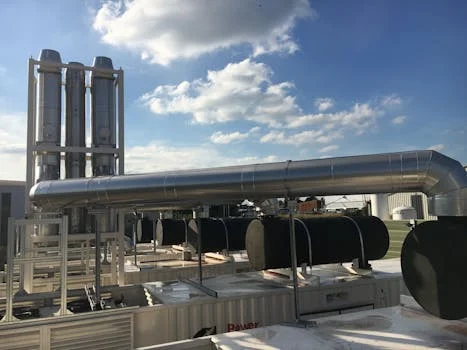
The following HydropureWater products are engineered for the wastewater challenges discussed above:
- compact underground package wastewater treatment plant — view specifications, capacity range, and technical data
- high-efficiency MBR system for reuse-quality effluent — view specifications, capacity range, and technical data
Need a customized solution? Request a free quote with your specific flow rate and pollutant parameters.