A ceramic membrane IC wastewater ZLD system recovers 99.8% of NaCl and 95% of Na₂SO₄ using DAF pre-treatment, nanofiltration, MBR polishing, and MVR crystallization. CAPEX runs $1.2M–$4.5M for 50–200 m³/h trains, with payback in 2–4 years from salt reuse and avoided disposal.
Those figures come from operating hybrid trains at silicon fabs, and they frame the choice every fab owner faces: keep paying $5–$15/m³ for disposal, or convert the waste stream into salt revenue and recycled water. The underlying process design is covered in our page on IC wastewater treatment design specs for 2026, and wide-bandgap lines are handled in ZLD systems for third-generation semiconductors (GaN/SiC). This page focuses on recovery performance and the money.
How Does a Ceramic Membrane IC Wastewater ZLD System Work?
Hybrid DAF-NF-MBR-crystallization trains convert rinse-water salts into crystallizer feed and return 75–90% of the water for reuse. A 100 m³/h plant costs about $2.5M and returns roughly $1.1M per year, paying back in 2.3–2.5 years. Fluoride above 500 mg/L must drop below 10 mg/L before membranes.
The train runs in a fixed order: DAF clarification strips suspended solids, nanofiltration splits monovalent from divalent salts, the MBR polishes organics, and the crystallizer yields saleable salt. Where streams carry abrasives, solvents, or hot alkaline clean-in-place dumps, ceramic elements take the front line because they survive conditions that destroy polymer spirals within weeks. Feed typically enters at 5–20 g/L NaCl and leaves as crystal product plus reuse water. Nothing in the sequence is optional; skip a stage and the next one absorbs its load at far higher cost.
Water balance drives the economics as much as salt balance. Every cubic meter recycled displaces purchased freshwater and sewer discharge at the same time, so the reuse percentage compounds directly into the payback calculation. That is why the crystallizer, the smallest stage by flow, usually decides whether the project clears the investment committee.
Element placement follows feed aggressiveness. Ceramic ultrafiltration or tight ceramic nanofiltration sits where CMP fines or hot caustic dumps appear; polymer spiral elements handle the clean, cool brine downstream. Splitting duties this way keeps total membrane spend near a polymer-only design while removing the single biggest failure mode.
Why Resource Recovery Is a $1.5B Opportunity for Semiconductor Plants
Semiconductor fabs face disposal costs of $5–$15/m³ by 2026, driven by regulatory scrutiny and sheer effluent volume. A fab typically generates 2–10 m³ of wastewater per wafer, so a large site moves thousands of cubic meters every day. Non-compliance with China's GB 31570-2015 or the EU Industrial Emissions Directive 2010/75/EU adds fines of $50,000 to $200,000 per year, particularly for exceeding fluoride and total dissolved solids (TDS) limits.
A Wetsus 2025 study tracked a Shanghai IC plant that cut wastewater disposal costs by 75% and added $800,000 per year in salt reuse revenue after commissioning a hybrid ZLD system. Recovered NaCl sells into chlor-alkali production; Na₂SO₄ moves into soda ash, detergents, and glass. Effluent stops being a liability and becomes a priced input. Comparable economics for wide-bandgap lines are laid out in our analysis of ceramic membrane for water treatment applied to SiC effluent.
Regulatory direction only tightens from here. Fluoride and TDS limits trigger most fab permit revisions, and both parameters are exactly what a recovery train removes. Plants that wait for the permit letter end up buying on compressed schedules; plants that profile their effluent early negotiate equipment lead times from a position of calm.
Salt offtake is regional, and that shapes project geography. Chlor-alkali and soda-ash buyers cluster around chemical parks, so fabs near those clusters see the strongest byproduct pricing and the shortest qualification cycles. Plants in remote locations lean harder on the water-recovery side of the business case and discount salt revenue accordingly. Both models clear payback in the 2–4 year band with feed near 10 g/L salts.
IC Wastewater Composition: What Is Recoverable and What Is Toxic
IC wastewater carries 5–20 g/L NaCl and 3–15 g/L Na₂SO₄ in rinse streams, copper at 100–500 mg/L from chemical mechanical planarization (CMP), and organic acids such as acetic acid from lithography. Those concentrations make recovery viable for chlor-alkali, soda ash, and electronics buyers. The mix also decides the flowsheet: salt-rich rinse water feeds the recovery train, while toxic sidestreams need dedicated pre-treatment first.
Segregation does most of the heavy lifting in recovery economics. Lithography waste carries COD but little inorganic salt; etch waste carries fluoride and ammonium; rinse water carries the saleable sodium salts. Mixing them dilutes the salt stream and contaminates it, so most projects start with a segregation survey of the fab's collection pits.
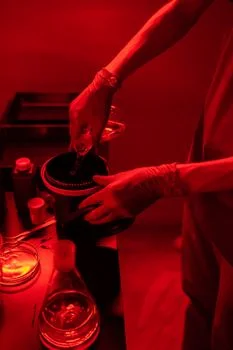
Hazardous contaminants set the pre-treatment duty. Fluoride runs 200–1,000 mg/L, ammonia 50–300 mg/L, and heavy metals such as arsenic and lead appear in etch and cleaning waste. High fluoride causes severe scaling and flux decline on NF and RO membranes, so calcium chloride (CaCl₂) precipitation cuts the concentration before the membrane stages. CMP copper usually needs targeted ion exchange or electrochemical extraction, and for those sidestreams ceramic membrane wastewater ultrafiltration is a proven route with high silica recovery.
| IC Wastewater Contaminant Profile by Process Step | Concentration Range (Typical) | Recovery Potential | Notes |
|---|---|---|---|
| Lithography | Organic acids (500–1,500 mg/L), Photoresist residues | Low (organic acids for energy) | High COD, low inorganic salts |
| Etching | Fluoride (200–1,000 mg/L), Ammonium (50–300 mg/L), Sulfates (3–15 g/L) | Medium (50% for fluoride as CaF₂, 90% for Na₂SO₄) | Requires robust fluoride pre-treatment |
| CMP (Chemical Mechanical Planarization) | Copper (100–500 mg/L), Suspended Solids (500–1,500 mg/L), Surfactants | High (85% for copper) | High TSS, requires effective pre-treatment like DAF |
| Cleaning/Rinse | NaCl (5–20 g/L), Na₂SO₄ (3–15 g/L), Trace metals | High (99.8% for NaCl, 95% for Na₂SO₄) | Primary source for salt recovery |
Effective pre-treatment, often using DAF systems for IC wastewater pre-treatment, removes suspended solids and foulants before they reach the membranes. That protection keeps downstream membrane integrity and recovery efficiency at design level through CMP slugs and cleaning dumps.
Hybrid ZLD System for Semiconductor Wastewater: DAF-NF-MBR-Crystallization Design
A hybrid ZLD system for semiconductor wastewater strings four stages in series — DAF, nanofiltration, MBR, crystallization — so each stage sees only the load it was sized for. The modular layout lets you tune any stage against a variable fab effluent without redesigning the rest. Most trains we size for mixed fab waste run the DAF at the lower end of its hydraulic range, leaving headroom for CMP upset loads.
Dissolved Air Flotation (DAF) handles the high-TSS feed, especially from CMP. DAF systems remove 90–95% of suspended solids, oils, and greases, cutting TSS from about 500 mg/L to below 50 mg/L (HydropureWater product catalog specs). This step protects the membranes and sets the ceiling on downstream recovery. HydropureWater's DAF systems for IC wastewater pre-treatment deliver rapid separation and sludge thickening in one package.
Nanofiltration Ceramic Membrane for Salt Recovery: Element Selection
Salt separation happens at the nanofiltration bank, which splits monovalent NaCl from divalent Na₂SO₄. According to Wikipedia's nanofiltration overview, nanofiltration membranes have pore sizes of about 1–10 nanometers, and multivalent solutes like sulfate (valence of 2) experience very high rejection while monovalent salts pass more freely. DuPont Fortilife NF1000 HP elements operating at 10–15 bar achieve 70–85% concentrate conversion and feed a purer brine to the crystallizer (DuPont technical data). The same overview lists 4.5–7.5 bar as typical NF duty; brine concentration runs harder, and that is where polymer elements age fastest.
The same overview notes that nanofiltration membranes are mostly polymer thin films or metal oxides such as alumina. Ceramic NF elements cost more per square meter and pay the difference back through tolerance of hot caustic CIP, abrasive silica, and pH swings — the same tradeoff that makes ceramic membrane water recovery standard on dicing and grinding lines. On salt-recovery duty, the choice follows sulfate load and feed cleanliness: polymer NF for clean brine, ceramic when CMP solids or CIP chemicals share the train.
The MBR stage handles biological treatment and final solids control. DF series PVDF flat-sheet MBR membranes for IC wastewater polishing, with 0.1 μm pores, cut COD from about 500 mg/L to below 50 mg/L and TSS to under 5 mg/L. The permeate suits non-potable reuse inside the fab — cooling tower make-up and utility water. Skipping biological polishing risks organics carryover into the crystallizer, where it discolors salt and destroys its resale value.
Crystallization closes the loop. Forced-circulation or Mechanical Vapor Recompression (MVR) units recover 99.8% of NaCl and 95% of Na₂SO₄ at purity above 99% (Wetsus 2025 study), and the salts leave as chlor-alkali and detergent feedstock. A Wikipedia ZLD overview notes that for forward osmosis and membrane distillation variants, 90% of the thermal energy needed can be acquired by waste heat if it's available. Fabs with waste heat or cheap steam should price both drive options before specifying electric MVR alone.
Instrumentation holds the train on spec. Conductivity and density meters on the NF concentrate decide when the crystallizer feed is rich enough; fluoride analyzers guard the pre-treatment stage; turbidity on MBR permeate catches membrane breaches early. Most recovery shortfalls we audit trace back to a skipped analyzer, not to a mis-sized membrane.
| Hybrid ZLD System Performance Parameters (Typical) | Stage | Key Parameter | Value/Range | Recovery/Reduction |
|---|---|---|---|---|
| Pre-treatment | DAF | TSS Reduction | >90% | Influent TSS: 500 mg/L → Effluent TSS: <50 mg/L |
| Salt Separation | Nanofiltration (DuPont NF1000 HP) | Operating Pressure | 10-15 bar | 70-85% concentrate conversion |
| Divalent Salt Rejection | >98% (e.g., Na₂SO₄) | Monovalent Salt Rejection: 30-60% (e.g., NaCl) | ||
| Organic Removal & Polishing | MBR (DF Series) | COD Reduction | >90% | Influent COD: 500 mg/L → Effluent COD: <50 mg/L |
| TSS Reduction | >99% | Effluent TSS: <5 mg/L | ||
| Salt Recovery | Crystallization (MVR/Forced Circulation) | NaCl Recovery | 99.8% | Purity >99% |
| Na₂SO₄ Recovery | 95% | Purity >99% | ||
| Water Reuse | Overall System | Water Recycling Rate | 75-90% | Suitable for non-potable reuse |
IC Wastewater Resource Recovery CAPEX Breakdown by Capacity
A hybrid DAF-NF-MBR-crystallization ZLD system carries about $1.2 million CAPEX at 50 m³/h and $4.5 million at 200 m³/h (HydropureWater field data, 2025). Membranes account for roughly 30% of total CAPEX, specialized crystallization equipment around 25%, and automation and control systems about 20%. Civil works, pumps, and installation labor make up the balance and are usually quoted by local contractors.
OPEX runs from $0.80/m³ for smaller systems to $1.50/m³ for larger, more complex installations. Energy takes up to 40% of OPEX — mostly the MVR crystallizers — membrane replacement about 30% over the system's lifespan, and chemical dosing near 15%. Tight chemical management with PLC-controlled chemical dosing for fluoride pre-treatment holds OPEX down and keeps effluent quality steady between maintenance windows.
| IC Wastewater ZLD System Costs by Capacity | Capacity (m³/h) | CAPEX (Approx.) | OPEX (Approx. $/m³) | Payback Period (Years) |
|---|---|---|---|---|
| Small Scale | 50 | $1.2M | $0.80 | 2.5 |
| Medium Scale | 100 | $2.5M | $1.00 | 3 |
| Large Scale | 200 | $4.5M | $1.50 | 4 |
Five drivers move the quote: feed TDS and fluoride load, membrane material selection, crystallizer type, automation depth, and site utilities. Contingency belongs in the membrane line, because element replacement is a scheduled cost rather than an accident. Quote CaF₂ sludge handling as its own package — it is the item most low bids leave out.
ROI pencils out fastest at medium scale. A 100 m³/h system with $2.5 million CAPEX and $1.00/m³ OPEX generates an estimated $800,000 per year in salt reuse revenue plus $300,000 per year in avoided disposal. That $1.1 million combined annual benefit pays back the plant in roughly 2.3 years, before counting water-purchase savings.
Recovery Rates by Salt Type: What Is Worth Extracting?
Salt economics follow volume and unit price, not recovery percentage alone. NaCl recovers at 99.8% but sells near $50 per ton; copper sulfate recovers at only 85% yet commands $1,200 per ton. Rank extraction by revenue per cubic meter treated, then by compliance risk removed.
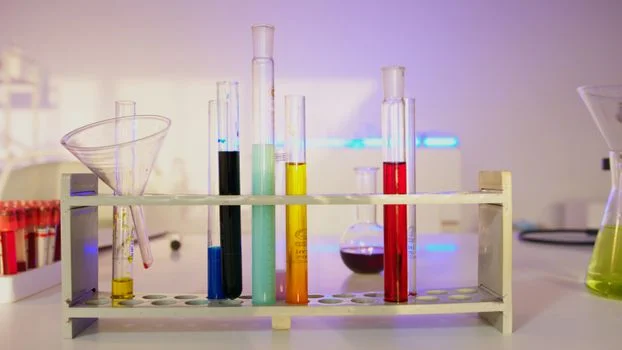
Sodium chloride usually dominates the mass balance. At approximately $50 per ton and 99.8% recovery, sheer volume makes NaCl extraction attractive for chlor-alkali reuse. Sodium sulfate follows at about 95% recovery and $120 per ton, feeding soda ash, detergent, and glass manufacturers.
Copper sulfate from CMP wastewater is the value play. At $1,200 per ton with roughly 85% recovery after pre-treatment losses, CuSO₄ outranks every other stream per kilogram extracted. Fluoride recovered as calcium fluoride (CaF₂) returns about 70% at $300 per ton into cement additives and ceramics, offsetting its own treatment cost against strict fluoride limits. Organic acids such as acetic acid reach up to 80% recovery by solvent extraction and sell at $500–$1,000 per ton into chemicals and energy uses.
Treat all of these as planning numbers, not contract numbers. Salt byproduct values swing with regional demand, and buyers discount heavily when purity certification is missing. Lock in an offtake letter before the investment committee meeting, not after commissioning.
| Salt Recovery Rates and Market Value (Typical) | Recovery Rate | Market Price (approx.) | Reuse Industry | Notes |
|---|---|---|---|---|
| NaCl (Sodium Chloride) | 99.8% | $50/ton | Chlor-alkali, chemical manufacturing | Highest volume, lowest value, high purity achievable |
| Na₂SO₄ (Sodium Sulfate) | 95% | $120/ton | Soda ash, detergents, glass | Moderate volume, good value, high purity achievable |
| CuSO₄ (Copper Sulfate) | 85% | $1,200/ton | Electronics, agriculture, pigments | Lower volume, highest value, priority for CMP wastewater |
| CaF₂ (Calcium Fluoride) | 70% | $300/ton | Construction (cement), ceramics | Lower recovery due to pre-treatment, offsets disposal costs |
| Organic Acids (e.g., Acetic Acid) | Variable (up to 80%) | $500-$1,000/ton | Chemicals, energy (biogas) | Requires specific separation (e.g., solvent extraction) |
Ceramic Membrane Zero Liquid Discharge Semiconductor Fab: Shanghai Case Study
A 12-inch wafer fabrication plant in Shanghai commissioned a hybrid DAF-NF-MBR-crystallization ZLD system for 100 m³/h of complex IC wastewater. Feed carried 15 g/L NaCl and 8 g/L Na₂SO₄ alongside typical fluoride and heavy-metal contamination. The flowsheet paired DAF pre-treatment, DuPont NF1000 HP nanofiltration for selective salt separation, a DF series MBR for biological treatment, and a multi-effect evaporator with MVR for final crystallization.
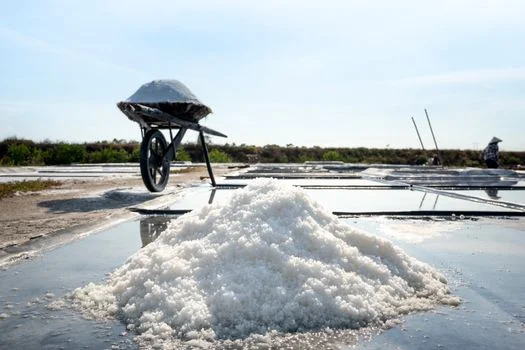
Performance exceeded expectations. The train hit 99.8% NaCl recovery yielding roughly 1.2 tons of high-purity salt per day, plus 95% Na₂SO₄ recovery totaling 0.6 tons per day, both suitable for industrial reuse. Water recycling reached 80%, with permeate reused for cooling tower make-up and utility duties, cutting freshwater demand accordingly. CAPEX came in at $2.1 million with OPEX at $0.90/m³.
Salt sales generated $800,000 per year in new revenue, coupled with $300,000 per year in avoided wastewater disposal costs, for a payback of 2.5 years. Final effluent consistently met — and often surpassed — China's GB 31570-2015 limits, with fluoride below 10 mg/L and copper below 0.5 mg/L, eliminating discharge penalties. Sites carrying heavier CMP solids or hot clean-in-place chemistry specify the same train with ceramic front-end elements, trading higher element cost for longer life under abrasion and caustic exposure.
Commissioning tells the rest of the story. The recovery train started on segregated rinse water first, then progressively opened to harder sidestreams as operators built confidence in the analyzers. Staged startups like this keep the crystallizer on spec from week one instead of cycling through off-spec salt with no buyer.
How to Choose the Right ZLD System for Your IC Plant
Selection starts with a full wastewater profile — TDS, fluoride, copper, and organics — because pre-treatment follows directly from the assay. Fluoride above 500 mg/L demands robust CaCl₂ pre-treatment to protect the membranes. Match the membrane to the goal: NF for bulk NaCl recovery and initial concentration, RO when high-purity water for process lines or cooling towers is the target. RO systems for post-MBR water reuse in IC plants push water recovery rates to their ceiling.
Ceramic Membrane Fluoride Removal Semiconductor Effluent: Pre-Treatment Design
Ceramic membrane fluoride removal on semiconductor effluent pairs CaCl₂ precipitation with chemically robust filtration, because both the precipitate and the caustic cleans shorten polymer life. Dosing calcium chloride forms calcium fluoride, which Wikipedia's chemistry entry describes as sparingly soluble and a principal industrial source of hydrogen fluoride; the front-end solids stage captures the CaF₂ along with CMP fines. Fluoride entering the membranes above roughly 500 mg/L scales NF and RO surfaces within days. The CaF₂ sludge needs its own dewatering and disposal route, and it is the line item first-time ZLD projects most often miss.
Four checks keep the specification honest. First, run a 14-day composite assay of every collection pit, not a single grab sample; second, build a salt mass balance, because revenue scales with tons per day rather than concentration. Third, review energy tariffs before choosing MVR over forced circulation; fourth, obtain a disposal-cost letter from the current waste contractor so the ROI uses real avoided costs.
After pre-treatment decisions, compare crystallization methods on energy price, salt purity target, and concentrate volume. MVR carries higher CAPEX but superior energy efficiency at large scale, while forced circulation suits smaller or intermittent batches. Automation level comes last: fully PLC-controlled trains cut labor but add integration cost. A compact decision tree reads: fluoride above 500 mg/L, add CaCl₂ pre-treatment; NaCl above 10 g/L, specify NF1000 HP; water reuse priority, add RO post-MBR.
Next Step: Specifying Your Recovery Train
ZLD fits fabs above roughly 30 m³/h continuous flow with salt loads near 10 g/L and disposal costs above $5/m³. Below that threshold, batch crystallization or outsourced concentrate treatment usually wins on cost. If your profile matches, send the effluent assay and target recovery rate, and we will size the DAF-NF-MBR-crystallization train with a CAPEX and OPEX model on our request-a-quote page.
Frequently Asked Questions
What is the minimum wastewater flow rate for a ZLD system to be cost-effective?
A ZLD system for IC wastewater typically becomes cost-effective at a minimum flow rate of 30 m³/h. Below that threshold, batch crystallization or outsourcing concentrate treatment to a central facility is generally more economical (Wetsus 2025). Smaller fabs can also stage the investment: membrane pre-concentration first, crystallization once salt volumes justify it. Have average and peak flows audited before committing, because turndown below design flow degrades crystallizer stability.
Can NF membranes recover copper from IC wastewater?
Yes, but only with dedicated pre-treatment. Nanofiltration retains a significant portion of copper ions, yet high-purity copper recovery from CMP wastewater typically needs ion exchange or chemical precipitation upstream to avoid membrane fouling. With that pre-treatment, copper sulfate recovery reaches about 85%. Raw NF alone leaves copper bound with surfactants and silica, which fouls the elements. Treat copper removal as a sidestream project, not a mainstream NF duty.
What is the biggest challenge in IC wastewater resource recovery?
Fluoride scaling on membranes is the single biggest challenge. Concentrations near 500 mg/L rapidly foul NF and RO membranes, reducing flux and increasing cleaning frequency. Pre-treatment with calcium chloride drives fluoride below 10 mg/L, but it generates calcium fluoride sludge that requires careful dewatering and disposal. Budget that sludge line explicitly, because it is the cost most first-time ZLD projects miss.
How does ZLD compare to traditional treatment for IC wastewater?
ZLD reduces disposal costs by 60–80% and generates revenue from salt and water reuse, while traditional physical-chemical or biological treatment only buys compliance. The tradeoff is upfront: ZLD CAPEX typically runs 2–3 times higher than a conventional plant. Payback lands in 2–4 years where salt sales and avoided disposal both count. Sites facing tightened discharge permits often find ZLD cheaper than the fine schedule.
Are there any subsidies for IC wastewater resource recovery in China?
Yes, the Chinese government through the Ministry of Industry and Information Technology (MIIT) offers incentives. Subsidies can reach up to 30% of CAPEX for ZLD systems meeting specific environmental performance criteria, such as compliance with GB 31570-2015 discharge standards. Application windows and rates vary by province and year, so confirm current terms with local branches during budgeting. Utility-side rebates for water reuse sometimes stack on top.
When should we specify ceramic rather than polymer nanofiltration elements?
Specify ceramic elements when the feed carries CMP abrasives, hot caustic CIP chemicals, or pH swings beyond polymer limits. Their higher cost per square meter pays back through longer life and fouling resistance in those duties. For clean, cool, consistent brine, polymer spiral elements like NF1000 HP remain the economical default. Hybrid trains often split the duties: ceramic up front, polymer on the polished concentrate.