A PCB wastewater treatment ZLD system design pairs DAF, MBR and RO to reach zero liquid discharge with 99.8% copper recovery. CAPEX spans $200K to $10M by scale; compliance targets 0.5 mg/L copper. Here is the full engineering breakdown.
PCB Wastewater Treatment ZLD System Design: 2026 Baseline
A compliant PCB plant combines DAF pretreatment (92–97% TSS removal), MBR biological polishing (COD below 50 mg/L), and RO desalination (95–98% conductivity reduction) to reach ZLD. Copper recovery reaches 99.8%, offsetting 30–50% of OPEX at flows of 50 m³/h or more. CAPEX runs $200K for small DAF units to $10M for full ZLD trains.
Discharge targets anchor the design: EPA's 0.5 mg/L copper limit and China's GB 31573-2015 standard drive train selection. According to Wikipedia, ZLD processes begin with pre-treatment and evaporation of an industrial effluent until dissolved solids precipitate. Membrane-centric trains absorb much of that evaporation duty, which is why hybrid DAF-RO-MBR systems dominate new PCB scopes. Day-to-day OPEX is driven by membrane replacement ($0.10–$0.30/m³) and chemical dosing ($0.05–$0.20/m³).
Why PCB Treatment Systems Fail: The Cost of Non-Compliance
EPA fines for Clean Water Act section 309 violations can reach $37,500 per day per violation, and the statute itself authorizes civil penalties up to $25,000 per day for each violation (33 U.S.C. 1319(d)). Penalty exposure escalates for facilities showing "compliance drift" during high-volume production cycles. Fluctuating copper spikes from rinse water variability or chemical carryover often push managers toward off-site hauling instead. Hauling non-compliant wastewater runs $0.50 to $1.20 per gallon, which can exceed the annual OPEX of an on-site ZLD system within 18 months of operation.
Lost raw material compounds the penalty exposure. PCB etching wastewater typically contains 10–50 g/L of copper, and at an LME 2025 copper price of $8,000 per ton, a plant discharging 50 m³/h of untreated rinse water loses $80 to $400 per cubic meter of effluent. For a mid-sized plant, that is hundreds of thousands of dollars in recoverable value poured down the drain each year. Integrated recovery changes that arithmetic entirely.
| Facility Scale (Flow Rate) | Annual Hauling Costs ($1.00/gal) | Annual ZLD OPEX (Estimated) | Potential Copper Recovery Value ($) |
|---|---|---|---|
| Small (10 m³/h) | $2,300,000 | $180,000 - $250,000 | $150,000 - $190,000 |
| Medium (50 m³/h) | $11,500,000 | $750,000 - $950,000 | $750,000 - $950,000 |
| Large (200 m³/h) | $46,000,000 | $2,800,000 - $3,500,000 | $3,000,000 - $3,800,000 |
The financial implications of non-compliance are substantial, and they drive most facilities to reconsider on-site treatment strategies rather than keep paying haulers.
Seven PCB Wastewater Streams and Their Treatment Challenges
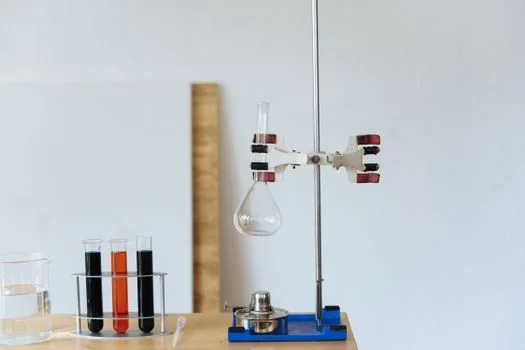
PCB wastewater splits into seven distinct streams — complexed, organic, general, acidic, alkaline, cyanide-containing, and nickel-containing — and each needs isolated pretreatment to prevent stable chelates from forming. The hardest problem is copper complexed by EDTA and ammonia. Those complexes resist traditional hydroxide precipitation and usually require advanced oxidation or specialized PLC-controlled chemical dosing for PCB wastewater pH adjustment to break the bonds before metal recovery can occur.
Organic loads from photoresist residues and solder masks push Chemical Oxygen Demand (COD) to 500–2,000 mg/L. Left undegraded, these organics foul reverse osmosis membranes rapidly and often irreversibly. pH swings are equally punishing: acidic etching streams arrive at pH 1–2 and alkaline cleaners at pH 10–12, so equalization and neutralization must shield downstream biology and membranes. Operating outside a tight 6.5–7.5 window invites scaling or sudden metal precipitation inside RO modules.
| Wastewater Stream | Key Contaminants | Treatment Difficulty | Primary Treatment Mechanism |
|---|---|---|---|
| Complexed Copper | Cu-EDTA, Cu-Ammonia | High | Complex breaking + Precipitation |
| Organic (Ink/Resist) | COD, BOD, SS | Medium-High | Coagulation + MBR |
| Acid/Alkali Rinse | H+, OH-, Dilute Metals | Low | Equalization + pH Adjustment |
| Cyanide Waste | CN-, Au, Ag | High | Alkaline Chlorination |
| Electroless Nickel | Ni, Hypophosphite | High | Oxidation + Ion Exchange |
DAF-RO-MBR Treatment Steps for PCB Wastewater: Stage by Stage
A modern PCB ZLD train follows a modular, multi-stage methodology that maximizes water reuse and metal purity. Pretreatment opens with GX Series bar screens removing coarse solids, followed by equalization tanks holding 1–2 hours HRT to dampen production spikes. That equalized feed enters DAF systems for PCB wastewater pretreatment, where micro-bubbles deliver 92–97% TSS removal plus significant FOG reduction.
Readers comparing the sequence against conventional plants can review our primer on wastewater treatment process steps, since PCB trains follow the same logic with tighter chemistry. Biology comes next: for high-COD streams, submerged MBR systems for organic degradation in PCB wastewater outperform traditional activated sludge. MBRs run Mixed Liquor Suspended Solids (MLSS) at 8,000–12,000 mg/L, cutting footprint while producing filtrate with COD below 50 mg/L and turbidity below 0.1 NTU.
That high-quality filtrate feeds high-recovery RO systems for PCB wastewater ZLD, with antiscalant dosing and pH held between 5.5 and 6.5 to prevent scaling. According to Wikipedia's ZLD overview, pre-concentration stages of such systems recover up to 60–80% of the water before evaporation. The final stage is a high-pressure plate and frame filter press dewatering copper-rich sludge to a 25–35% dry cake, ready for smelting or refining.
| Stage | Equipment Type | Design Parameter | Expected Performance |
|---|---|---|---|
| Pretreatment | DAF-50 | Surface Load: 5-8 m/h | 95% TSS Removal |
| Organic Removal | Integrated MBR | Flux: 15-25 LMH | COD < 50 mg/L |
| Desalination | Industrial RO | Recovery: 75-85% | 98% Salt Rejection |
| Sludge Handling | Plate & Frame Press | Pressure: 0.6-1.0 MPa | 30% Cake Dryness |
Zero Liquid Discharge System for PCB Manufacturing: DAF-RO-MBR vs Chemical Precipitation-IX
Configuration choice for a zero liquid discharge system for PCB manufacturing hinges on daily flow rate and the copper recovery mandate. The DAF-RO-MBR hybrid suits facilities above 100 m³/h or regions with strict ZLD mandates: CAPEX runs 25–40% higher than traditional chemical precipitation, but long-term OPEX falls on 99.8% copper recovery and reduced sludge volumes. Its permeate suits process rinsing directly, and hybrid systems for high-COD industrial wastewater can polish it to ultrapure standards.
Chemical precipitation coupled with ion exchange (IX) suits smaller batch operations under 50 m³/h. It carries lower initial investment but leans on heavy dosing — typically 200–500 mg/L of lime or sodium sulfide — and generates large volumes of hazardous sludge with lower-purity recovered metals. Hybrid MBR-RO approaches reach ROI in 3 to 5 years versus 5 to 7 years for chemical-heavy systems. The same membrane-centric shift appears in IC wastewater treatment design specs for semiconductor facilities and in Third-Generation Semiconductor Wastewater Treatment Design.
| Metric | DAF-RO-MBR (50 m³/h) | Chem-Precip + IX (50 m³/h) |
|---|---|---|
| CAPEX | $1.8M - $2.5M | $0.9M - $1.4M |
| OPEX (per m³) | $0.85 - $1.10 | $1.20 - $1.60 |
| Copper Recovery Rate | 99.8% | 92.0% - 95.0% |
| Water Reuse Rate | 85% - 95% | 40% - 60% |
| Payback Period | 3.5 - 4.5 Years | 5.5 - 7.0 Years |
Case Study: A 50 m³/h PCB Plant Pushed Toward ZLD
A 2024 case from Shenzhen, China shows the trigger pattern. A major PCB manufacturer there faced mounting pressure from local environmental bureaus to cut copper discharge below 0.5 mg/L. Its existing batch system was failing to handle complexed copper from a new electroless plating line, and the plant implemented a hybrid DAF-RO-MBR system in response. At 50 m³/h, the configuration economics above put such builds at $1.8M–$2.5M CAPEX with a 3.5–4.5 year payback.
If your facility is mapping a PCB wastewater treatment ZLD system design or retrofit, send your flow diagram and copper analysis for a scoped proposal. Buyers under 50 m³/h should weigh chemical precipitation-IX first; buyers at or above it should model the hybrid train.
Frequently Asked Questions
How does a PCB copper recovery wastewater treatment process work?
Copper recovery runs through complex breaking, precipitation, and membrane concentration. DAF first strips 92–97% of suspended solids; EDTA and ammonia complexes are broken by advanced oxidation or specialized pH-adjustment dosing; MBR filtrate and RO concentrate then carry dissolved copper to a plate-frame press yielding a 25–35% dry cake. Recovered sludge grades well enough for smelting, returning value that offsets 30–50% of OPEX.
What are the DAF RO MBR PCB wastewater treatment steps in order?
The order is screening, equalization, DAF, MBR, RO, and sludge pressing. Bar screens and 1–2 hours of equalization dampen production spikes; DAF removes 92–97% of TSS; MBR takes COD below 50 mg/L; RO rejects 95–98% of conductivity; the filter press dewaters copper sludge to a 25–35% dry cake. Each stage protects the membrane stage that follows it.
How do you meet PCB etching wastewater copper compliance under EPA rules?
Etching rinse compliance hinges on breaking copper complexes before discharge. EPA's 0.5 mg/L copper target — alongside China's GB 31573-2015 — calls for complex-breaking chemistry, PLC-controlled pH dosing, and membrane polishing rather than simple hydroxide precipitation. Statutory civil penalties reach $25,000 per day for each violation (33 U.S.C. 1319(d)), so continuous copper monitoring pays for itself quickly.
What does a zero liquid discharge system for PCB manufacturing include?
A ZLD system for PCB manufacturing includes equalization, DAF pretreatment, MBR biological treatment, RO desalination, and sludge dewatering through a plate-frame press. Wikipedia's ZLD overview notes such processes begin with pre-treatment and end with evaporation until dissolved solids precipitate; pre-concentration stages recover up to 60–80% of the water. Full trains run $200K for DAF-only scopes to $10M for complete ZLD.
What drives the printed circuit board wastewater treatment CAPEX breakdown?
Flow rate, recovery mandate, and sludge strategy drive PCB treatment CAPEX. At 50 m³/h, DAF-RO-MBR costs $1.8M–$2.5M against $0.9M–$1.4M for chemical precipitation-IX, while copper recovery of 99.8% versus 92–95% shortens payback from 5.5–7.0 years to 3.5–4.5 years. Hauling avoidance alone can justify the premium within 18 months.