Why Solar Cell Copper Wastewater Treatment Demands Specialized Engineering
Solar cell manufacturing wastewater contains copper concentrations up to 50–200 mg/L (per EPA 2024 benchmarks), exceeding global discharge limits (China GB: 0.5 mg/L, EU: 0.2 mg/L). This extreme concentration, 100–400 times higher than typical municipal discharge limits, presents significant technical challenges for conventional treatment methods. Processes like copper chemical mechanical planarization (CuCMP) and other metallization steps, common in photovoltaic manufacturing, introduce copper ions alongside chelating agents (e.g., EDTA, citric acid) and high concentrations of slurry solids. These chelators effectively stabilize copper in solution, preventing its removal through simple pH adjustment and precipitation, thereby necessitating advanced pretreatment like dissolved air flotation (DAF) or chemical oxidation. The financial and regulatory pressures for effective heavy metal removal from solar cell wastewater are substantial; for instance, a 5GWp solar cell factory in Jiangsu faced $1.2 million in fines in 2023 for copper discharge violations, highlighting strict enforcement under standards such as China GB 8978-1996, EU Industrial Emissions Directive (2010/75/EU), and U.S. EPA 40 CFR Part 469. Beyond regulatory penalties, untreated copper discharge incurs significant environmental and operational costs, including severe aquatic toxicity (LC50 for Daphnia magna: 0.04 mg/L), rapid membrane fouling in downstream water reuse systems, and the loss of potential revenue from valuable metal recovery.Solar Cell Wastewater Composition: Influent Quality & Treatment Challenges
Typical solar cell manufacturing wastewater presents a complex influent profile, with copper concentrations ranging from 50–200 mg/L, requiring robust treatment strategies. Understanding this variability is crucial for designing an effective photovoltaic wastewater engineering solution. The composition is highly dependent on specific process stages, including wafer cleaning, etching, chemical mechanical planarization (CMP), and subsequent rinsing steps. For example, texturing and etching contribute to fluoride and acid content, while metallization and CMP introduce copper, other heavy metals, and high levels of suspended solids.Table 1: Typical Solar Cell Wastewater Influent Composition
| Parameter | Concentration Range | Units | Source Process Contribution |
|---|---|---|---|
| Copper (Cu) | 50–200 | mg/L | Metallization, CuCMP, rinsing (per Ultra Pure Water, Top 2 page) |
| Fluoride (F⁻) | 10–50 | mg/L | Etching (e.g., HF-based processes) |
| Total Suspended Solids (TSS) | 200–1,000 | mg/L | Slurry solids from CMP, particulate matter |
| pH | 2–12 | - | Acid/alkaline cleaning, etching solutions |
| Chemical Oxygen Demand (COD) | 300–1,500 | mg/L | Organic additives, chelators, surfactants |
Step-by-Step Engineering Blueprint for Copper Removal in Solar Cell Wastewater
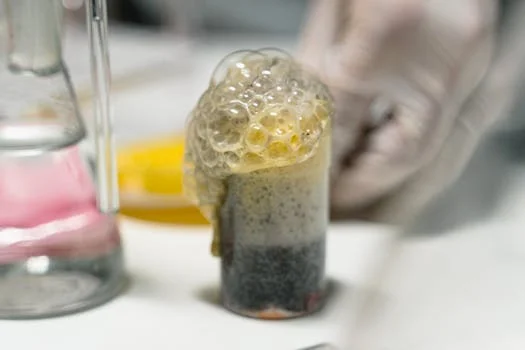
Process Flow Diagram Description:
The treatment train begins with Stage 1: Equalization, which receives raw wastewater. The pre-conditioned wastewater then flows into Stage 2: Pretreatment for bulk solids and chelator removal. The effluent from pretreatment proceeds to Stage 3: Primary Treatment, where the majority of copper is removed. Finally, Stage 4: Polishing/Reuse further purifies the water for recycling or achieves zero liquid discharge (ZLD).Table 2: Influent and Effluent Quality Benchmarks at Each Treatment Stage
| Parameter | Raw Wastewater (Influent) | After Equalization (Stage 1) | After Pretreatment (Stage 2) | After Primary Treatment (Stage 3) | After Polishing/Reuse (Stage 4) |
|---|---|---|---|---|---|
| Copper (Cu) (mg/L) | 50–200 | 50–200 | 30–150 | 0.5–2.0 | <0.1 (for reuse/ZLD) |
| TSS (mg/L) | 200–1,000 | 200–1,000 | <50 | <10 | <1 (for reuse/ZLD) |
| COD (mg/L) | 300–1,500 | 300–1,500 | 100–500 | <100 | <50 (for reuse/ZLD) |
| pH | 2–12 | 6.5–8.5 | 6.5–8.5 | 7.0–8.0 | 6.5–7.5 (for reuse/ZLD) |
Stage 1: Equalization
This initial stage involves collecting and homogenizing the incoming wastewater to buffer variations in flow rate and contaminant concentration. Tank sizing typically ranges from 2–4 hours Hydraulic Retention Time (HRT). pH adjustment to a range of 6.5–8.5 is critical here, often managed by PLC-controlled chemical dosing for copper precipitation and pH adjustment, to optimize subsequent treatment steps and prevent the formation of copper sulfide precipitates, which can foul membranes. Aeration may also be introduced to prevent anaerobic conditions and sulfide generation.Stage 2: Pretreatment
Pretreatment focuses on removing bulk suspended solids (TSS), oil and grease (FOG), and breaking down chelating agents.- DAF vs. Lamella Clarifiers: DAF systems are highly effective for removing fine suspended solids, colloids, and FOG, achieving 92–97% TSS removal at typical loading rates of 4–6 m³/m²/h. Lamella clarifiers, while more compact than conventional clarifiers, achieve 85–90% TSS removal at higher loading rates of 20–40 m³/m²/h, making them suitable for coarser solids. For solar cell wastewater, DAF is often preferred due to its superior performance in handling colloidal copper and slurry solids. Chemical dosing, usually involving 50–100 mg/L polyaluminum chloride (PAC) as a coagulant and 1–3 mg/L anionic polymer as a flocculant, enhances separation efficiency.
Stage 3: Primary Treatment for Copper Removal
After pretreatment, the primary objective is to reduce copper concentrations to meet discharge or reuse standards. Three main technologies are considered:- a. Chemical Precipitation: This conventional method involves raising the pH to 9–10 using alkaline reagents like 100–200 mg/L Ca(OH)₂ or NaOH. Sodium sulfide (5–10 mg/L) can be added to enhance copper sulfide precipitation, achieving 90–95% copper removal. However, this process generates significant volumes of hazardous sludge (e.g., copper hydroxide), with disposal costs ranging from $300–$500 per ton.
- b. Selective Ion Exchange (IX): For high-purity copper removal and potential recovery, selective ion exchange resins (e.g., Lewatit TP 207, Purolite S930) are highly efficient. These resins can achieve 95–99% copper removal, reducing concentrations to below 0.5 mg/L. IX systems allow for efficient regeneration (typically 90% resin regeneration efficiency) and concentrated copper recovery, making them attractive for metal recovery ROI. Careful monitoring of breakthrough curves and bed volumes is essential for optimal performance. Copper ion exchange resins are crucial for this stage.
- c. Membrane Bioreactors (MBR): MBR systems combine biological treatment with membrane filtration, offering robust removal of organics and some heavy metals. MBR systems with submerged PVDF membranes (0.1 μm pore size) can achieve excellent effluent quality, often reducing copper to <0.1 mg/L and COD to <50 mg/L. MBR systems for near-reuse-quality effluent in copper-laden wastewater are known for their compact footprint and high-quality permeate, though they require 0.5–1.0 kWh/m³ energy for aeration and membrane scouring.
Stage 4: Polishing and Zero Liquid Discharge (ZLD) / Water Reuse
For achieving high-quality water for reuse or ZLD, advanced polishing steps are necessary.- Reverse Osmosis (RO) / Nanofiltration (NF): These membrane technologies are employed for high-purity water recovery, typically achieving 70–90% water recovery and 95%+ salt rejection. The concentrate from RO/NF contains elevated levels of remaining contaminants.
- Solar-Powered Evaporation for ZLD: To achieve true zero liquid discharge for solar PV, the RO/NF concentrate can be further treated by evaporation. Solar-powered evaporation systems utilize renewable energy to vaporize water, leaving behind a solid waste stream. These systems require approximately 0.2–0.4 kWh/kg of water evaporated, and solar integration can significantly reduce the operational energy footprint.
ZLD vs. Conventional Treatment: Cost Breakdown & ROI for Solar Cell Factories
Implementing Zero Liquid Discharge (ZLD) systems in solar cell manufacturing can yield significant long-term cost savings and environmental benefits compared to conventional wastewater treatment methods. While ZLD systems often require a higher initial capital investment (CAPEX), their operational advantages, including reduced water consumption, minimized discharge costs, and potential for metal recovery, lead to a compelling return on investment (ROI) over time.Table 3: 5-Year Total Cost of Ownership (TCO) Comparison for a 5GWp Solar Cell Factory (1,000 m³/day wastewater)
| System | CAPEX ($M) | OPEX ($M/yr) | Copper Recovery ($/yr) | Water Savings ($/yr) | Net Annual Savings ($M/yr) | Payback (yrs) |
|---|---|---|---|---|---|---|
| Conventional (DAF + Precipitation) | 2.5 | 0.8 | 0 | 0.1 | -0.7 | N/A |
| Hybrid ZLD (DAF + IX + Solar Evap) | 4.2 | 0.5 | 0.3 | 0.4 | 0.2 | 3.5 |
| Full ZLD (DAF + MBR + RO + Evap) | 6.8 | 0.7 | 0.4 | 0.5 | 0.2 | 4.2 |
CAPEX Drivers:
The capital expenditure for wastewater treatment CAPEX/OPEX is primarily driven by the complexity and scale of equipment. For ZLD systems, this includes DAF units, MBR systems for near-reuse-quality effluent, RO/NF membrane systems, and evaporators (e.g., mechanical vapor recompression or multi-effect distillers). Civil works for equalization tanks, sumps, and building infrastructure also contribute significantly. Solar integration, involving photovoltaic (PV) panels and inverters to power parts of the ZLD process, adds to the initial investment but yields substantial long-term energy savings.OPEX Drivers:
Operational expenditure is dominated by energy consumption, chemicals, and sludge disposal. MBR systems typically consume 0.5–1.0 kWh/m³ for aeration and membrane operation, while evaporation can require 0.2–0.4 kWh/kg of water evaporated. Chemical costs include coagulants (PAC), flocculants (polymers), pH adjusters (NaOH, H₂SO₄), and antiscalants for RO membranes. Sludge disposal, particularly for hazardous copper hydroxide precipitates, is a major cost factor, ranging from $300–$500 per ton. However, metal recovery revenue, especially from copper resale (valued at $8,000–$10,000 per ton of recovered copper), can significantly offset 20–30% of the OPEX in ZLD systems utilizing selective ion exchange or crystallization.ROI and Case Study:
The payback period for hybrid and full ZLD systems, as shown in Table 3, demonstrates their long-term financial viability. A 5GWp solar cell factory in Jiangsu, for example, successfully implemented a hybrid ZLD system, reducing fresh water consumption by 79% and wastewater discharge volume by 84% (per Top 5 page research). This resulted in estimated annual savings of $1.5 million in water costs alone and helped the factory avoid an additional $1.2 million in potential fines for discharge violations. Such solar-powered ZLD systems for heavy metal removal in photovoltaic manufacturing not only ensure compliance but also transform wastewater from a liability into a resource. For further insights, explore hybrid ZLD systems for water reuse in solar cell manufacturing.Global Compliance Standards for Copper in Solar Cell Wastewater
Table 4: Global Copper Discharge Limits for Industrial Wastewater (mg/L)
| Region | Standard/Directive | Copper Limit (mg/L) | Enforcement Agency |
|---|---|---|---|
| China | GB 8978-1996 (Integrated Wastewater Discharge Standard) | 0.5 | Ministry of Ecology and Environment (MEE) |
| EU | Industrial Emissions Directive (2010/75/EU) - BAT Conclusions | 0.2 | European Chemicals Agency (ECHA) / National Agencies |
| U.S. | EPA 40 CFR Part 469 (Electrical and Electronic Components Point Source Category) | 1.0 | Environmental Protection Agency (EPA) |
| India | CPCB Guidelines for Electronics Industry | 1.0 | Central Pollution Control Board (CPCB) |
| Vietnam | QCVN 40:2011/BTNMT (Industrial Wastewater National Technical Regulation) | 0.5 | Ministry of Natural Resources and Environment (MONRE) |
Frequently Asked Questions
Understanding the nuances of solar cell copper wastewater treatment is crucial for optimizing system performance, compliance, and cost-efficiency. Here are answers to common questions from process engineers and procurement teams.Q: What is the most cost-effective treatment technology for copper removal in solar cell wastewater?
A: For factories with wastewater flows less than 500 m³/day, selective ion exchange (e.g., using resins like Lewatit TP 207) often offers the lowest operational expenditure (OPEX) at $0.30–$0.50/m³ and can achieve over 95% copper recovery. For larger facilities or those aiming for water reuse, hybrid ZLD systems combining dissolved air flotation (DAF), membrane bioreactors (MBR), and solar-powered evaporation provide a comprehensive solution, achieving 99.9% copper removal with a typical payback period of 3–5 years through significant water savings and metal credits.Q: How does solar power integrate with ZLD systems for solar cell wastewater?
A: Solar photovoltaic (PV) panels, typically sized at 200–500 kWp for a mid-sized facility, can effectively offset 30–50% of the energy costs associated with evaporative processes (which consume 0.2–0.4 kWh/kg water evaporated). A 5GWp solar cell factory in Jiangsu, for example, successfully integrated a 1 MWp solar array, reducing its grid energy consumption by 40% and cutting annual OPEX by an estimated $200,000 (per Top 5 page research). This integration enhances the sustainability and cost-efficiency of zero liquid discharge for solar PV.Q: What are the sludge disposal requirements for copper hydroxide precipitates?
A: Copper hydroxide sludge generated from chemical precipitation is classified as hazardous waste (e.g., EPA D002 in the U.S., or HW17 in China) due to its heavy metal content. Disposal costs for this hazardous waste typically range from $300–$500 per ton. However, in ZLD systems incorporating selective ion exchange, the recovered copper can be refined and resold, generating $8,000–$10,000 per ton in resale value. This metal recovery revenue can offset 20–30% of the system's overall OPEX, transforming a disposal cost into a revenue stream.Q: Can MBR systems handle the high TSS in solar cell wastewater?
A: MBR systems are robust but require adequate pretreatment for solar cell wastewater with high TSS. Pretreatment, such as DAF or lamella clarifiers, is essential to reduce TSS levels to below 200 mg/L before entering the MBR. Submerged PVDF membranes with a 0.1 μm pore size are commonly used in MBR systems for near-reuse-quality effluent, achieving copper concentrations below 0.1 mg/L and COD below 50 mg/L. These systems typically consume 10–20 times less energy than external cross-flow membrane systems.Q: What are the key parameters to monitor in a solar cell copper wastewater treatment system?
A: Critical parameters for continuous monitoring include copper concentration (using ICP-MS with a 0.1 mg/L detection limit), pH (maintaining 6.5–8.5 for optimal precipitation and ion exchange), Total Suspended Solids (TSS) (ensuring DAF effluent is <50 mg/L for downstream protection), and Chemical Oxygen Demand (COD) (targeting MBR effluent <50 mg/L for water reuse). Online sensors, such as Hach Cu-5100sc for copper and multiparameter probes for pH/TSS, enable real-time compliance monitoring and process optimization.Related Equipment
The following HydropureWater products are engineered for the wastewater challenges discussed above:
- DAF systems for TSS and colloidal copper removal in solar cell wastewater — view specifications, capacity range, and technical data
- MBR systems for near-reuse-quality effluent in copper-laden wastewater — view specifications, capacity range, and technical data
- PLC-controlled chemical dosing for copper precipitation and pH adjustment — view specifications, capacity range, and technical data
Need a customized solution? Request a free quote with your specific flow rate and pollutant parameters.