Brazil’s package wastewater treatment plants offer a compact, compliant solution for industrial and municipal sites with limited space or temporary needs. In 2025, these prefabricated systems—ranging from $50K (10 m³/day) to $2M (500 m³/day)—achieve 90–98% BOD removal and comply with CONAMA 430’s effluent standards (e.g., pH 5–9, TSS < 100 mg/L). Key advantages over centralized plants include 60% faster deployment, 30% lower capital costs, and mobility for remote or seasonal operations (e.g., mining camps, food processing plants). This guide provides technical specs, cost benchmarks, and ROI calculations to help Brazilian buyers select the optimal system for their wastewater load and regulatory requirements.
Why Brazilian Factories and Municipalities Are Switching to Package Wastewater Treatment Plants
Environmental compliance in Brazil has become a high-stakes financial imperative, as demonstrated by a São Paulo textile factory that recently faced a R$500K fine for discharging untreated dye-laden effluent into local water bodies. According to IADB 2024 data, approximately 40% of Brazil’s sewage remains untreated, a gap that results in R$1.2B per year in environmental penalties (per IBGE 2023). For industrial operators and small municipalities, building centralized, civil-intensive treatment plants is often non-viable due to a 12–24 month permitting and construction timeline. Package plants can be deployed in 8–12 weeks; for instance, a Minas Gerais mining site successfully commissioned a 100 m³/day MBR system in just 10 weeks to meet urgent expansion needs.
Space constraints represent the second major driver for package plant adoption. Conventional activated sludge systems typically require 5–10 m² of land per m³/day of capacity. Modern prefabricated systems, such as the WSZ Series A/O package plants for municipal and industrial sewage (1–80 m³/h), reduce this footprint to 0.5–2 m² per m³/day. This 80% reduction in land use allows factories to install treatment facilities within existing parking lots or utility basements rather than purchasing adjacent land. The mobility of trailer-mounted systems enables treatment at remote sites, including Amazon logging camps and offshore oil platforms, where permanent infrastructure is impossible.
Regulatory requirements are also accelerating this shift. CONAMA Resolution 430/2011 mandates strict secondary treatment for all discharges, requiring a minimum of 60% BOD removal or specific effluent limits. Package plants consistently exceed these mandates, achieving 90–98% BOD removal. By integrating biological treatment, sedimentation, and disinfection into a single modular unit, these systems provide a "plug-and-play" compliance shield against the escalating oversight of state environmental agencies like CETESB (São Paulo) or INEA (Rio de Janeiro).
Package Wastewater Treatment Plant Technologies: How They Work and Which Fits Your Brazilian Site
Selecting the right technology for a Brazilian site requires balancing influent characteristics—such as the high organic loads found in food processing—with the operational realities of a tropical climate. The three primary technologies utilized in package plants are Membrane Bioreactors (MBR), Dissolved Air Flotation (DAF), and Anoxic/Oxic (A/O) biological systems. Each offers distinct advantages in terms of footprint, effluent quality, and tolerance to temperature fluctuations.
Membrane Bioreactors (MBR) utilize submerged PVDF membranes with a 0.1 μm pore size to replace the secondary clarifier found in traditional plants. This results in 99% TSS removal and an effluent quality suitable for non-potable reuse in irrigation or cooling towers. In tropical regions, MBR systems require careful temperature management to keep the biological process between 20–35°C, as excessive heat can impact membrane fouling rates. MBR systems for near-reuse-quality effluent (<1 μm filtration, 10–2,000 m³/day) typically consume 0.8–1.2 kWh/m³ of energy (per EPA 2023 benchmarks).
Dissolved Air Flotation (DAF) is the gold standard for industrial streams high in Fats, Oils, and Grease (FOG). By injecting micro-bubbles into the wastewater, the DAF systems for high-FOG industrial wastewater (4–300 m³/h) can remove up to 95% of FOG and 85% of TSS. Unlike biological systems, DAF is a physical-chemical process that is highly resilient to the 10–40°C temperature ranges common in Brazilian industrial zones. It is the preferred technology for pulp and paper, petrochemical, and food processing facilities.
Anoxic/Oxic (A/O) Systems are the most cost-effective solution for standard municipal sewage and biodegradable industrial waste. These systems utilize biological contact oxidation followed by sedimentation. While they have a larger footprint than MBR, they are simpler to operate and maintain. You can find a detailed comparison of MBR and A/O systems for Brazilian wastewater loads to help determine which biological approach suits your specific BOD profile.
| Parameter | MBR (Membrane Bioreactor) | DAF (Dissolved Air Flotation) | A/O (Anoxic/Oxic) |
|---|---|---|---|
| BOD Removal | 95–99% | 40–60% (Pre-treatment) | 90–95% |
| TSS Removal | >99% | 85–95% | 85–92% |
| Footprint | 0.5 m²/m³/day | 1.0 m²/m³/day | 2.0 m²/m³/day |
| Energy Use | 0.8–1.2 kWh/m³ | 0.4–0.6 kWh/m³ | 0.3–0.5 kWh/m³ |
| Best Use Case | Water reuse, High-BOD | Food/FOG, Pulp & Paper | Municipal, Small Villages |
CONAMA 430 Compliance: Effluent Standards and How Package Plants Meet Them
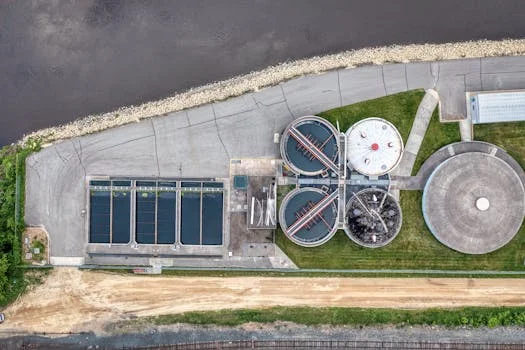
CONAMA Resolution 430/2011 is the primary regulatory framework governing wastewater discharge in Brazil. It sets strict limits on pH, biochemical oxygen demand (BOD), total suspended solids (TSS), and oils/grease. For instance, the general standard for discharge into water bodies requires a pH between 5 and 9, a maximum BOD of 120 mg/L (or 60% removal efficiency), and TSS below 100 mg/L. Package plants are engineered to meet or exceed these standards consistently, even when influent concentrations are high. Field data from a Paraná dairy plant showed that an MBR system successfully reduced influent BOD from 1,200 mg/L to just 30 mg/L, comfortably meeting the most stringent local requirements.
Package plants integrate several critical sub-systems to ensure total compliance. Disinfection is often achieved through ClO₂ generators, which meet fecal coliform limits (< 1,000 MPN/100 mL) without producing the harmful disinfection byproducts (DBPs) associated with traditional chlorination. An automatic chemical dosing system ensures that coagulants and pH adjusters are added precisely, reducing the risk of non-compliance events by up to 90% in textile and chemical applications (HydropureWater field data, 2025).
Sludge management is another critical component of compliance under ABNT NBR 10004 standards. Package plants often include a plate-and-frame filter press to dewater waste sludge, reducing its volume by up to 70%. This significantly lowers the cost of landfill disposal and ensures the facility does not violate environmental laws regarding hazardous or liquid waste transport. When evaluating these systems, it is useful to consider how Australia’s package plant regulations compare to Brazil’s CONAMA 430 standards to understand global best practices in modular treatment.
Cost Breakdown: Package Wastewater Treatment Plants in Brazil (2025)
The total investment for a package wastewater treatment plant in Brazil is divided into Capital Expenditure (CAPEX) and Operating Expenditure (OPEX). In 2025, CAPEX for these systems ranges from $50,000 for a basic 10 m³/day A/O system to $2,000,000 for a high-capacity 500 m³/day MBR plant. While the initial cost may seem significant, it is substantially lower than the $22.2M typically cited for large-scale industrial plants. For a perspective on global pricing, you can see how Brazil’s package plant costs compare to other emerging markets.
OPEX typically ranges from $0.15 to $0.40 per cubic meter of treated water. This includes electricity, chemical reagents, and periodic maintenance. MBR systems usually sit at the higher end of this range due to the energy required for membrane scouring, while A/O and DAF systems are more economical. Installation costs—covering civil works, piping, and electrical integration—usually add $10,000 to $50,000 to the project, though trailer-mounted or containerized units can reduce these costs by 40% because they require minimal onsite foundation work.
| System Capacity | Technology | Estimated CAPEX (USD) | Estimated OPEX (USD/m³) | Typical ROI (Years) |
|---|---|---|---|---|
| 10 m³/day | A/O (WSZ Series) | $50,000 – $75,000 | $0.15 – $0.20 | 2.5 – 4.0 |
| 100 m³/day | DAF | $180,000 – $260,000 | $0.22 – $0.28 | 3.0 – 4.5 |
| 500 m³/day | MBR (Integrated) | $1,200,000 – $2,000,000 | $0.32 – $0.40 | 3.5 – 5.0 |
The Return on Investment (ROI) for Brazilian facilities is driven by three primary factors: the avoidance of environmental fines (which can exceed R$500,000 per year), the savings from water reuse (with municipal water rates in São Paulo ranging from R$5 to R$15/m³), and tax incentives. Equipment like package plants often qualifies for BNDES Finame financing, which can cover up to 80% of the equipment cost at subsidized rates. A food processing plant in Bahia recently reported recouping its CAPEX in just 3.2 years through a combination of fine avoidance and using treated effluent for facility wash-downs.
Step-by-Step Procurement Checklist for Brazilian Buyers
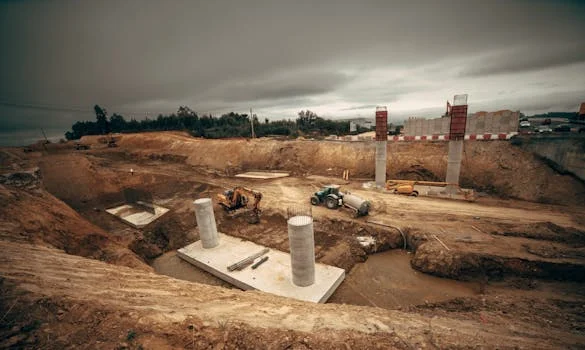
Procuring a package plant requires a systematic approach to ensure the technology matches the wastewater profile and meets local legal requirements. Follow these seven steps for a successful deployment:
- Characterize Influent: Conduct a 30-day composite sampling of your wastewater to determine average and peak levels of BOD, TSS, FOG, and pH, following ABNT NBR 9898 standards.
- Match Technology