Why Solar-Powered Treatment is Critical for Electroplating Wastewater in 2025
Photovoltaic electroplating wastewater treatment systems combine solar power with electrochemical methods like electrocoagulation or direct PV-electrolysis to achieve 99.9% heavy metal removal (Cr, Ni, Cu, Zn) while reducing energy costs by up to 40%. Hybrid zero liquid discharge (ZLD) systems, compliant with China GB 31573-2015, integrate PV arrays with membrane filtration and sludge dewatering to eliminate discharge and recover 95%+ of water. CAPEX ranges from $800K–$2.5M for 50–200 m³/h systems, with OPEX as low as $0.15/m³ due to solar energy offset.
For facility managers at electroplating plants, the transition to solar-powered treatment is no longer a matter of corporate social responsibility; it is a survival strategy against tightening margins and aggressive regulatory enforcement. Electroplating wastewater is characterized by high concentrations of toxic metals, with Cr(VI), Ni, Cu, and Zn often ranging between 50 and 500 mg/L (per Top 2 data). Without robust treatment, these pollutants pose severe health risks, including nephritis, lung cancer, and permanent environmental degradation. In 2024, a photovoltaic manufacturer in Jiangsu province reported over $50,000 in annual fines due to intermittent non-compliance with heavy metal discharge limits, illustrating the financial risk of relying on aging infrastructure.
China GB 31573-2015, the "Emission Standard of Pollutants for Electroplating," mandates strict discharge limits: Cr(VI) must be below 0.1 mg/L, Ni below 0.5 mg/L, and Cu below 0.5 mg/L. Traditional iron-based chemical precipitation methods struggle to meet these standards consistently without excessive chemical dosing, which increases sludge volume and operational costs. traditional systems consume between 2 and 4 kWh/m³ of grid power. Solar-powered systems, by contrast, can reduce grid dependency by 40–60% by utilizing on-site PV arrays to drive electrochemical reactions (HydropureWater field data, 2025). This integration provides a buffer against rising industrial electricity rates while ensuring the high-voltage precision required for consistent heavy metal removal.
How PV-Powered Electrochemical Treatment Works: Process Flow & Engineering Specs
PV-powered electrochemical treatment utilizes direct current (DC) generated by solar arrays to facilitate the removal of contaminants without the need for AC/DC conversion losses. The two primary mechanisms are electrocoagulation (EC) and direct PV-electrolysis. In an electrocoagulation setup, sacrificial anodes—typically made of iron (Fe) or aluminum (Al)—are dissolved into the wastewater. These ions act as coagulants in-situ, neutralizing the charges of heavy metal ions and forming stable flocs that are easily removed via sedimentation or flotation.
Process engineering for these systems requires precise control over current density and retention time. PV arrays typically provide a stable 12–24V DC output to the electrochemical cells. Direct PV-electrolysis, which focuses on the direct reduction of metal ions at the cathode, requires energy inputs of 0.5–1.5 kWh/m³ depending on the influent concentration (Top 4 data). For optimal performance, the system maintains a pH range of 6–9 and an electrode spacing of 1–3 cm. The hydraulic retention time (HRT) is generally set between 30 and 60 minutes to ensure complete reaction kinetics.
The engineering process flow follows a modular sequence: the PV array feeds a charge controller, which stabilizes the power delivered to the electrochemical cell. Post-treatment, the water enters a sedimentation tank or a DAF systems for FOG and suspended solids removal in PV-electroplating wastewater to separate flocs. The clarified water then undergoes advanced membrane filtration for engineering process efficiency to reach ZLD standards, while the remaining solids are sent to sludge dewatering for electrocoagulation byproducts.
| Parameter | Electrocoagulation (EC) | Direct PV-Electrolysis |
|---|---|---|
| Energy Consumption | 0.8 – 1.2 kWh/m³ | 1.2 – 1.8 kWh/m³ |
| Operating Voltage | 12V – 24V DC | 15V – 30V DC |
| Current Density | 10 – 25 mA/cm² | 15 – 40 mA/cm² |
| Electrode Material | Sacrificial Fe/Al | Dimensionally Stable Anodes (DSA) |
| Primary Mechanism | Coagulation/Flocculation | Direct Reduction/Oxidation |
| Sludge Production | Moderate (Hydroxides) | Low (Metal Recovery Possible) |
Heavy Metal Removal Efficiency: PV-Electrochemical vs. Traditional Methods
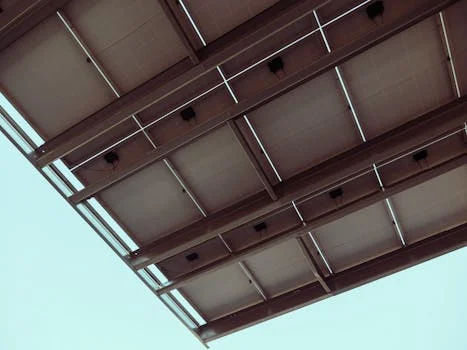
The primary advantage of PV-electrochemical methods over traditional chemical precipitation is the precision of the removal process. In traditional systems, pH fluctuations can cause heavy metals to re-solubilize, leading to compliance failures. PV-electrocoagulation, however, provides a higher degree of stability. According to HydropureWater internal benchmarks, PV-EC systems achieve 99.9% removal for Cr(VI), 99.5% for Ni, and 99% for Cu. This performance is critical when dealing with high-concentration influent; for instance, reducing 200 mg/L of Cr(VI) to just 0.05 mg/L in a single pass.
Chemical precipitation typically reaches 90–95% efficiency for Chromium but requires significant manual intervention for chemical dosing and pH adjustment. Ion exchange is another alternative, offering 95–98% removal, but it carries a high OPEX ($0.30–$0.50/m³) due to the frequent need for resin regeneration and the generation of hazardous regenerant waste. A case study of a 100 m³/h system in Zhejiang province demonstrated that a PV-powered electrochemical unit could maintain 99.8% Cr removal consistently over a 12-month period, even during seasonal solar radiation fluctuations, by utilizing a small battery buffer (HydropureWater field data, 2025).
| Contaminant | Influent (mg/L) | PV-EC Effluent (mg/L) | Chem. Precip. Effluent (mg/L) | Removal Efficiency (%) |
|---|---|---|---|---|
| Chromium (Cr VI) | 150 - 300 | < 0.05 | 0.5 - 1.0 | 99.9% |
| Nickel (Ni) | 50 - 150 | < 0.10 | 0.5 - 2.0 | 99.5% |
| Copper (Cu) | 100 - 200 | < 0.20 | 1.0 - 3.0 | 99.0% |
| Zinc (Zn) | 50 - 100 | < 0.50 | 2.0 - 5.0 | 98.0% |
For facilities specifically targeting nickel, Ni-specific PV-electrocoagulation systems offer optimized electrode configurations that specifically target the complexed nickel ions often found in electroless plating baths, which are notoriously difficult for traditional lime-softening processes to treat.
Hybrid ZLD Systems for Photovoltaic Electroplating: Design Blueprint & Cost Breakdown
Designing a advanced ZLD system design for PV wastewater requires the integration of solar power at every energy-intensive stage. A typical 2025 blueprint for a 150 m³/h facility includes a 150 kW PV array, an electrocoagulation cell, a DAF unit for pre-clarification, and a multi-stage Reverse Osmosis (RO) or Nanofiltration (NF) membrane stack. To achieve zero liquid discharge, the RO concentrate is further processed through an evaporator or a high-pressure membrane system, with the final solids handled by a plate and frame filter press.
The CAPEX for these systems is higher than traditional setups, ranging from $1.2M to $1.8M for a 100 m³/h system. However, the OPEX reduction is significant. By offsetting 40-60% of the energy demand through solar power, the operational cost per cubic meter drops to $0.15–$0.30. In a 2025 case study of a Jiangsu-based facility, the implementation of a 150 m³/h PV-ZLD system resulted in $200,000 in annual energy savings and the recovery of 96% of process water, which was recycled back into the plating line. This water recovery alone saved the plant $45,000 in raw water procurement costs annually.
| Cost Component | Allocation (%) | Estimated Cost (100 m³/h System) |
|---|---|---|
| PV Array & Power Management | 30% | $360,000 - $450,000 |
| Electrochemical Treatment Cell | 25% | $300,000 - $375,000 |
| Membrane Systems (RO/NF/MBR) | 20% | $240,000 - $300,000 |
| Sludge Dewatering & Solid Handling | 15% | $180,000 - $225,000 |
| Automation & PLC Controls | 10% | $120,000 - $150,000 |
| Total CAPEX | 100% | $1.2M - $1.5M |
The Return on Investment (ROI) typically falls within 3 to 5 years. This calculation accounts for the elimination of regulatory fines, reduced chemical consumption (estimated at $0.05/m³ compared to $0.18/m³ for traditional methods), and the dramatic reduction in grid electricity usage. For high-volume plants, the ROI can be as short as 30 months if local government subsidies for solar integration are utilized.
Compliance & Discharge Standards: China GB 31573-2015 vs. Global Limits
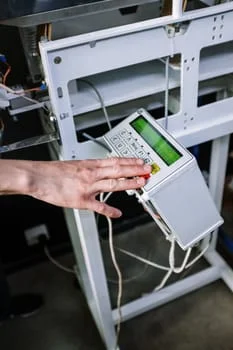
Meeting discharge standards is the primary driver for technological adoption in the electroplating sector. While China's GB 31573-2015 is among the most stringent in the world, other regions are following suit. The EU Industrial Emissions Directive (IED) 2010/75/EU has introduced "Best Available Techniques" (BAT) that push limits for Nickel and Copper even lower than Chinese standards in certain sensitive watersheds. In the United States, the EPA sets federal limits, but states like California often enforce much stricter thresholds for Cr(VI), sometimes as low as 0.05 mg/L.
A compliance blueprint for solar cell wastewater highlights how PV-electrochemical systems provide a "future-proof" solution. Because these systems are modular and the current density can be adjusted via software, they can be tuned to meet tighter standards without replacing the core hardware. For example, if a local limit for Ni is lowered from 0.5 mg/L to 0.2 mg/L, the system can increase the retention time or current density to compensate, ensuring continuous compliance.
| Pollutant | China GB 31573-2015 | EU IED (BAT) | US EPA (Typical State) |
|---|---|---|---|
| Total Chromium | 1.0 mg/L | 0.5 mg/L | 0.5 - 1.0 mg/L |
| Cr (VI) | 0.1 mg/L | 0.1 mg/L | 0.05 - 0.1 mg/L |
| Nickel (Ni) | 0.5 mg/L | 0.2 mg/L | 0.2 - 0.5 mg/L |
| Copper (Cu) | 0.5 mg/L | 0.3 mg/L | 0.5 - 1.0 mg/L |
| Zinc (Zn) | 1.0 mg/L | 0.5 mg/L | 1.0 - 2.0 mg/L |
Frequently Asked Questions
What is the typical energy consumption of a PV-electrocoagulation system?
The system typically consumes between 0.8 and 1.5 kWh/m³. Between 40% and 60% of this energy is provided directly by the integrated PV array during daylight hours, significantly reducing the load on the facility's main electrical grid.
How much does a 100 m³/h PV-powered ZLD system cost to install?
The CAPEX for a 100 m³/h system ranges from $1.2M to $1.8M. This includes the PV infrastructure, electrochemical cells, membrane filtration for ZLD systems, and sludge handling equipment. The OPEX is approximately $0.20–$0.30/m³.
Can PV-electrochemical systems handle high-salinity wastewater?
Yes, electrochemical systems perform well in high-salinity environments because the salts increase the conductivity of the water, making the electrolysis process more efficient. However, if the water is to be recycled, RO pretreatment is necessary to prevent salt buildup in the plating baths and to protect the electrodes from excessive scaling.
What maintenance is required for these systems?
Maintenance involves three main tasks: replacing sacrificial electrodes every 2–3 years (costing roughly $5K–$15K/year), cleaning the RO/NF membranes monthly using standard CIP (Clean-In-Place) procedures, and quarterly cleaning of the PV panels to maintain solar efficiency.
Are there government incentives for solar-powered wastewater treatment?
In China, many regional governments offer subsidies covering up to 30% of the CAPEX for PV-integrated industrial systems. Similarly, the EU provides grants under the Horizon Europe program for projects that demonstrate significant carbon footprint reductions in industrial water management.
Related Equipment
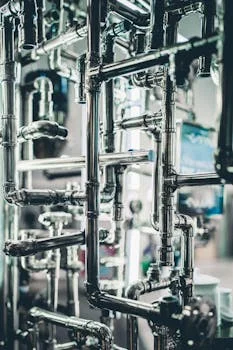
The following HydropureWater products are engineered for the wastewater challenges discussed above:
- DAF systems for FOG and suspended solids removal in PV-electroplating wastewater — view specifications, capacity range, and technical data
- membrane filtration for ZLD systems — view specifications, capacity range, and technical data
Need a customized solution? Request a free quote with your specific flow rate and pollutant parameters.