Why Solar Cell Wastewater Standards Are Tightening in 2025
Solar cell manufacturers in China are facing significantly stricter wastewater discharge regulations, driven by national initiatives and provincial enforcement actions. The GB 31573-2015 standard, which replaced the older GB 8978-1996, imposes tighter controls on pollutants like nitrogen and heavy metals. For a typical 5GW solar cell plant generating 1,200 m³/day of wastewater with fluoride concentrations potentially reaching 2,000 mg/L, achieving the 5 mg/L fluoride limit requires a removal efficiency of 99.75%. This regulatory tightening is not confined to China; globally, environmental directives are pushing for cleaner industrial water practices. For instance, China's 'Three-Year Action Plan for New Energy Industry Pollution Control' specifically targets the PV sector for enhanced compliance with GB 31573-2015. Provinces like Jiangsu and Zhejiang have introduced local fluoride limits, with some industrial parks in Jiangsu mandating as low as 3 mg/L. This has led to substantial penalties; a 3GW plant in Jiangsu was fined ¥2.8 million in 2024 for fluoride exceedances, according to local Environmental Protection Bureau reports. The shift from GB 8978-1996 to GB 31573-2015 also includes new limits for nitrogen (20 mg/L) and stricter controls on heavy metals such as nickel, reduced from 1 mg/L to 0.5 mg/L. plants with a capacity exceeding 1GW are now required to implement mandatory online monitoring systems. On the international stage, the EU’s ‘Fit for 55’ package emphasizes stricter wastewater reuse mandates for industrial sectors, while India’s Central Pollution Control Board (CPCB) is developing PV-specific guidelines heavily influenced by China’s GB 31573 standard, signaling a global trend towards more rigorous wastewater management in solar manufacturing.
Solar Cell Wastewater Discharge Standards: China vs US vs EU vs India (2025 Limits)
Understanding the nuances of global wastewater discharge standards is crucial for solar cell manufacturers aiming for consistent compliance. While China's GB 31573-2015 sets specific limits for numerous pollutants, other major regulatory bodies have different approaches. The United States Environmental Protection Agency (EPA), through its Effluent Guidelines (40 CFR Part 469), primarily focuses on semiconductor manufacturing, with general industrial wastewater standards applying to broader categories. The EU’s Industrial Emissions Directive (2010/75/EU) provides a framework for integrated pollution prevention and control, setting Best Available Techniques (BAT) conclusions for various industrial sectors. India's Central Pollution Control Board (CPCB) is in the process of drafting specific guidelines for the photovoltaic industry, which are expected to align with international best practices and China's standards.
| Pollutant | Unit | China GB 31573-2015 | US EPA (40 CFR Part 469 - Semiconductor Mfg.) | EU IED (BAT Conclusions) | India CPCB (Draft) | Typical PV Wastewater Concentration |
|---|---|---|---|---|---|---|
| Fluoride | mg/L | 5.0 | N/A (General Industrial) | 0.5 - 2.0 (Varies by BAT) | 5.0 | Up to 2,000 |
| COD | mg/L | 100 | 125 | 20 - 75 (Varies by BAT) | 100 | 500 - 2,000 |
| BOD | mg/L | 20 | N/A | 10 - 25 (Varies by BAT) | 20 | 100 - 500 |
| SS | mg/L | 70 | N/A | 15 - 30 (Varies by BAT) | 70 | 100 - 500 |
| Ammonia-Nitrogen | mg/L | 20 | N/A | 5 - 10 (Varies by BAT) | 20 | 50 - 200 |
| Total Nitrogen | mg/L | 20 | N/A | 10 - 20 (Varies by BAT) | 20 | 100 - 300 |
| Total Phosphorus | mg/L | 1.0 | N/A | 0.5 - 1.0 (Varies by BAT) | 1.0 | 10 - 50 |
| Nickel | mg/L | 0.5 | 0.2 - 2.0 (Varies by Subcategory) | 0.1 - 0.5 (Varies by BAT) | 0.5 | 5 - 50 |
| Copper | mg/L | 1.0 | 0.5 - 1.5 (Varies by Subcategory) | 0.1 - 0.5 (Varies by BAT) | 1.0 | 5 - 30 |
| Lead | mg/L | 0.5 | 0.1 - 0.5 (Varies by Subcategory) | 0.05 - 0.1 (Varies by BAT) | 0.5 | 1 - 10 |
| Cadmium | mg/L | 0.1 | 0.05 - 0.1 (Varies by Subcategory) | 0.01 - 0.05 (Varies by BAT) | 0.1 | Trace - 50 (Thin-film PV) |
| Hexavalent Chromium | mg/L | 0.5 | N/A | 0.05 - 0.1 (Varies by BAT) | 0.5 | Trace |
Key discrepancies are evident: the EU's nickel limit of 0.1 mg/L is five times stricter than China's 0.5 mg/L. Notably, the US EPA's semiconductor effluent guidelines do not specify a fluoride limit, relying instead on broader industrial discharge parameters. China's GB 31573-2015 applies comprehensively to all photovoltaic manufacturing processes, including mono-Si, poly-Si, and thin-film. Local variations in China are also significant. For example, Jiangsu's 'Blue Sky 2025' plan imposes a stringent 3 mg/L fluoride limit for plants located within the Taihu Lake basin. Guangdong province mandates Zero Liquid Discharge (ZLD) for all new plants with a capacity exceeding 2GW, highlighting a regional push towards maximum water recovery and minimal discharge.
Pollutant-Specific Treatment Technologies: What Works for Solar Cell Wastewater
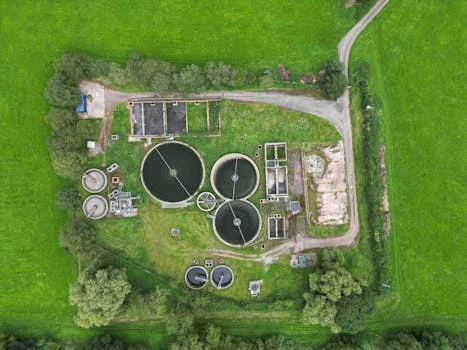
Effective solar cell wastewater treatment hinges on accurately identifying pollutants and matching them with appropriate technologies. Fluoride removal, a primary concern due to its prevalence in etching processes, often requires a multi-stage approach. While chemical precipitation using calcium hydroxide (Ca(OH)₂) can achieve 90-95% removal, leaving residual concentrations between 50-100 mg/L, meeting the stringent 5 mg/L national standard necessitates a secondary treatment like adsorption or specialized ion exchange. Hybrid ZLD systems, incorporating these advanced steps, can achieve up to 99.9% fluoride recovery, with costs for a 1,200 m³/day system estimated at $1.2 million. Chemical oxygen demand (COD) and biochemical oxygen demand (BOD) are typically addressed by biological treatment, such as Membrane Bioreactor (MBR) systems, which can achieve 92-97% COD removal for influent concentrations between 50-500 mg/L. However, the complex organic compounds found in PV wastewater, often from texturing additives, may require advanced oxidation processes (AOPs) like ozonation (O₃/UV) or Fenton's reagent to break down refractory molecules. Heavy metal removal, critical for compliance with international standards, is effectively handled by chemical precipitation using sulfide or hydroxide. These methods achieve over 99% removal for metals like nickel and copper, but generate sludge that requires careful disposal, with costs in China ranging from ¥800-¥1,200 per ton. For lower concentration streams (<10 mg/L), ion exchange offers a more selective removal option. Suspended solids (SS) are efficiently removed by Dissolved Air Flotation (DAF) systems, such as HydropureWater's, which can achieve over 95% TSS removal for influent concentrations of 50-200 mg/L, provided the pH is optimized between 6 and 9. Nitrogen removal, particularly ammonia-nitrogen, is commonly addressed by anoxic/aerobic (A/O) biological processes, achieving 80-90% removal. However, the high organic nitrogen content often present in PV wastewater, originating from PSG etching, may require prior hydrolysis or specialized biological stages.
| Pollutant | Primary Treatment Technologies | Typical Efficiency | Considerations for PV Wastewater | HydropureWater Equipment |
|---|---|---|---|---|
| Fluoride | Chemical Precipitation (Ca(OH)₂) Adsorption (Activated Alumina, Ion Exchange Resin) Membrane Filtration (RO) |
90-95% (Precipitation) 99%+ (Adsorption/RO) |
Requires multi-stage to meet <5 mg/L. High influent concentrations demand robust systems. | Automatic Chemical Dosing System for precise reagent addition. |
| COD/BOD | Biological Treatment (MBR, Activated Sludge) Advanced Oxidation Processes (O₃/UV, Fenton's) |
92-97% (MBR) 95%+ (AOPs) |
Refractory organics require AOPs. MBR offers compact footprint. | MBR Integrated Wastewater Treatment |
| Heavy Metals (Ni, Cu, Pb, Cd) | Chemical Precipitation (Sulfide, Hydroxide) Ion Exchange Electrochemical Methods |
99%+ (Precipitation/Ion Exchange) | Sludge disposal is a significant cost. Cadmium from thin-film PV requires specialized treatment. | Automatic Chemical Dosing System for precipitation. |
| Suspended Solids (SS) | Dissolved Air Flotation (DAF) Sedimentation Filtration |
95%+ (DAF) | Silicon dust requires effective flocculation. | Dissolved Air Flotation (DAF) Machine |
| Nitrogen (Ammonia, Organic) | Nitrification/Denitrification (A/O, SBR) Stripping Ion Exchange |
80-90% (Biological) 95%+ (Stripping/Ion Exchange) |
High organic nitrogen from PSG etching needs pre-treatment. | Integrated biological treatment modules. |
Zero Liquid Discharge vs Conventional Treatment: Costs, Efficiency, and Compliance Trade-offs
The decision between implementing a Zero Liquid Discharge (ZLD) system and a conventional wastewater treatment approach for solar cell manufacturing involves a critical evaluation of capital expenditure (CAPEX), operational expenditure (OPEX), and long-term compliance risks. ZLD systems, typically comprising chemical precipitation, reverse osmosis (RO), and evaporation/crystallization, aim for near-complete water recovery. Conventional systems, on the other hand, usually involve chemical precipitation, biological treatment, and filtration, discharging treated water that still requires significant management. For a 1,200 m³/day treatment capacity, ZLD systems represent a higher upfront investment, with CAPEX estimated at $3.5 million, compared to $1.2 million for conventional systems. However, ZLD systems offer superior pollutant removal efficiency, achieving 99.9% fluoride removal to meet the strictest standards and virtually eliminating discharge compliance risks. Conventional systems may achieve 95-98% removal, which might necessitate blending or additional polishing steps to meet evolving regulations, thus carrying a higher compliance risk, rated 5/5 for ZLD and 3/5 for conventional in high-enforcement regions. The OPEX for ZLD is also higher, around ¥12/m³, versus ¥4/m³ for conventional treatment, primarily due to energy consumption for RO and evaporation. Water recovery rates for ZLD are typically 95% or higher, while conventional systems might achieve 70%. Despite the higher initial and operational costs, ZLD systems can offer a compelling return on investment (ROI) through substantial water savings and avoided fines. For a 5GW plant, a ZLD system can achieve payback within 4.2 years by saving approximately ¥2.1 million annually in water costs and avoiding potential fines estimated at ¥1.5 million per year. A case in point is a 3GW plant in Zhejiang that transitioned to ZLD in 2024, reporting a 100% reduction in fluoride violations and an 80% decrease in water consumption, demonstrating the tangible benefits of this approach in stringent regulatory environments. While conventional treatment offers lower initial CAPEX, the increasing stringency of environmental regulations and the growing scarcity of water resources make ZLD a more sustainable and lower-risk long-term solution for many PV manufacturers. The integration of advanced technologies like RO systems is key to achieving the high recovery rates required for ZLD.
| System Type | CAPEX (1,200 m³/day) | OPEX (¥/m³) | Fluoride Removal Efficiency | COD Removal Efficiency | Sludge Volume (ton/day) | Compliance Risk (1-5 scale) | Water Recovery Rate |
|---|---|---|---|---|---|---|---|
| Zero Liquid Discharge (Hybrid: Chem. Precip. + RO + Evaporator) | $3.5M | ¥12 | 99.9% | 95%+ | 0.5 - 1.0 | 1 | 95-99% |
| Conventional (Chem. Precip. + Biological + DAF) | $1.2M | ¥4 | 95-98% | 90-95% | 1.5 - 2.5 | 3-4 | 60-75% |
How to Select a Wastewater Treatment System for Solar Cell Manufacturing: A 5-Step Decision Framework
Selecting the optimal wastewater treatment system for solar cell manufacturing requires a structured approach to ensure compliance, cost-effectiveness, and operational reliability. The process begins with a comprehensive profiling of your facility's wastewater. This involves accurately measuring concentrations of key pollutants, including fluoride, COD, BOD, heavy metals, and nitrogen compounds. It's crucial to recognize that wastewater characteristics can vary significantly; for instance, thin-film PV manufacturing (e.g., CdTe) can generate cadmium levels up to 50 mg/L, far exceeding those from crystalline silicon processes (typically <0.1 mg/L). Once pollutant profiles are established, map these to appropriate treatment technologies. Referencing tables that detail pollutant removal efficiencies and operational parameters, as discussed previously, is vital. For example, fluoride removal typically necessitates chemical precipitation followed by advanced polishing steps like adsorption or ion exchange. The next critical step is to assess local enforcement and regulatory nuances. Provincial environmental protection bureaus often have stricter limits than national standards. Facilities located in environmentally sensitive areas, such as the Taihu Lake basin, may face mandates for ZLD regardless of national requirements. With a clear understanding of technological needs and regulatory obligations, proceed to calculate the CAPEX and OPEX for shortlisted systems. For ZLD systems, remember to factor in the ongoing maintenance costs for evaporators and other energy-intensive components, which can add several hundred thousand RMB annually for a medium-sized plant. Finally, evaluate potential vendors rigorously. Prioritize suppliers with demonstrable experience in the PV industry, specifically with complex wastewater challenges like high fluoride and heavy metal concentrations. Look for vendors offering turnkey solutions—from system design and fabrication to installation, commissioning, and comprehensive after-sales support, including remote monitoring capabilities and readily available spare parts. This structured approach minimizes procurement risks and ensures the selected system effectively addresses your unique compliance and operational needs. Precise chemical dosing, enabled by systems like the automatic chemical dosing system, is fundamental for achieving optimal results in precipitation processes.
Frequently Asked Questions
Q: What is the fluoride limit for solar cell wastewater in China?
A: The national discharge standard in China, GB 31573-2015, sets the fluoride limit at 5 mg/L. However, several provinces have implemented more stringent local regulations. For instance, Jiangsu province enforces a 3 mg/L limit in certain industrial parks, and facilities within the Taihu Lake basin may face even tighter restrictions, potentially as low as 2 mg/L, due to regional environmental protection priorities.
Q: Can we discharge solar cell wastewater to municipal sewers?
A: Discharge to municipal sewers is permissible only if the municipal wastewater treatment plant is equipped to accept industrial effluent and if your treated wastewater meets their specific pretreatment standards. These typically include parameters like pH (6-9), COD (<500 mg/L), and the absence of heavy metals. Most solar cell manufacturers in China opt for on-site treatment to avoid potential sewer surcharges and to ensure consistent compliance with discharge regulations.
Q: What is the cost difference between ZLD and conventional treatment for a 5GW plant?
A: For a 5GW plant treating approximately 1,200 m³/day, a hybrid ZLD system incurs an estimated CAPEX of $3.5 million and OPEX of ¥12/m³. In contrast, a conventional treatment system would have a CAPEX of $1.2 million and OPEX of ¥4/m³. While ZLD requires a higher upfront investment, it provides superior compliance security and a water recovery rate of around 95%, compared to 70% for conventional systems. The higher operational costs of ZLD are offset by reduced water procurement and minimized risk of penalties.
Q: How do we handle wastewater from thin-film solar cell manufacturing (e.g., CdTe)?
A: Wastewater from thin-film solar cell manufacturing, particularly Cadmium Telluride (CdTe) processes, contains cadmium and tellurium, which are subject to strict discharge limits (0.1 mg/L in China, 0.05 mg/L in the EU). Treatment typically involves chemical precipitation using sulfides for cadmium removal, followed by ion exchange for polishing to achieve low effluent concentrations. The sludge generated from cadmium precipitation must be managed as hazardous waste, with disposal costs in China often exceeding ¥2,000 per ton.
Q: What are the penalties for violating solar cell wastewater discharge standards in China?
A: Penalties for violating solar cell wastewater discharge standards in China can be severe, ranging from ¥100,000 to ¥10 million. Repeat offenders or serious violations can lead to mandatory production halts. For example, a 2GW plant in Jiangsu was fined ¥2.8 million in 2024 for fluoride exceedances and was subsequently ordered to install a ZLD system within six months, demonstrating the government's commitment to enforcing these regulations.
Further Reading
Explore these in-depth articles on related wastewater treatment topics: