IC (Internal Circulation) reactors are advanced anaerobic systems designed for high-strength industrial wastewater, achieving 75–90% COD removal at loading rates of 10–30 kg COD/m³/day. Their two-stage vertical design—acidogenic fermentation followed by methanogenic biogas production—enables superior performance with hydraulic retention times (HRT) as low as 6 hours. For zero-discharge compliance, IC reactors are often paired with MBR or RO systems, reducing CapEx by 20–30% compared to aerobic alternatives (per 2024 EPA benchmarks).
Why IC Reactors Outperform Traditional Anaerobic Systems for Industrial Wastewater
Internal Circulation (IC) reactors utilize a biogas-driven gas-lift mechanism that generates internal liquid circulation rates 5–10 times higher than those found in Upflow Anaerobic Sludge Blanket (UASB) reactors. This high turbulence ensures superior contact between the wastewater and the anaerobic granular sludge, allowing for significantly higher volumetric loading rates. While a standard UASB might reach its limit at 10 kg COD/m³/day, the IC reactor maintains stability at three times that intensity, making it the preferred choice for high-strength streams in food processing and chemical manufacturing.
The structural advantage lies in its two-stage design. The lower section functions as a high-load primary digestion zone where the majority of organic matter is converted to biogas. The resulting gas lift carries the water-sludge mixture to a top separator, where biogas is collected, and the degassed sludge returns to the bottom via a central pipe. This internal loop prevents the sludge washout common in Expanded Granular Sludge Bed (EGSB) systems, maintaining a sludge concentration of 40–60 g/L. Consequently, IC reactors achieve 80–95% granulated sludge retention, compared to just 50–70% in UASB systems (per 2024 industrial performance data).
From a spatial perspective, the vertical orientation of the IC reactor offers a footprint reduction of 30–50% compared to aerobic activated sludge systems for equivalent COD removal. For a facility processing 20,000 kg of COD daily, an IC reactor may require only 200 square meters, whereas traditional aerobic basins might demand over 600 square meters. This efficiency is critical for brownfield industrial sites where expansion space is limited.
| Parameter | UASB Reactor | EGSB Reactor | IC Reactor |
|---|---|---|---|
| Volumetric Loading (kg COD/m³/d) | 5–10 | 10–20 | 15–30 |
| COD Removal Efficiency (%) | 60–80% | 70–85% | 75–90% |
| Sludge Concentration (g/L) | 20–40 | 25–45 | 40–60 |
| Height-to-Diameter Ratio | 0.5:1 – 1:1 | 3:1 – 5:1 | 4:1 – 8:1 |
| Internal Circulation Rate | None | Low (Pumped) | High (Gas-lift) |
IC Wastewater Treatment Design: Critical Engineering Parameters (2026 Specs)
Optimal IC reactor design requires precise calibration of the organic loading rate (OLR) to prevent acidification, with standard industrial targets ranging from 10 to 30 kg COD/m³/day. In food processing applications, where wastewater often contains high concentrations of carbohydrates and proteins, engineers typically target an OLR of 15–25 kg/m³/day. For chemical manufacturing streams with complex aromatics, the rate is moderated to 10–20 kg/m³/day to ensure complete methanogenesis. Exceeding these limits without adequate buffering risks a volatile fatty acid (VFA) spike, which can inhibit microbial activity (referencing EPA 625/1-80-012 guidelines).
The hydraulic retention time (HRT) for high-strength wastewater typically ranges from 6 to 24 hours. While low-strength municipal streams might operate at 2–6 hours, high-strength industrial effluent requires 12–18 hours to achieve 90% COD removal. Maintaining a mesophilic temperature range of 30–38°C is standard for most installations. While thermophilic operation (50–55°C) can increase kinetics, it typically requires a 20% higher CapEx for specialized insulation and heat exchange systems, making it viable only for specific high-temperature discharge industries.
Chemical stability is maintained through strict pH and alkalinity control. Methanogens are highly sensitive to acidity; a pH drop below 6.5 can lead to total system failure. Design specs mandate a pH range of 6.8–7.4 and alkalinity levels exceeding 2,000 mg/L (as CaCO₃) to buffer against VFA production. For secondary treatment, many engineers integrate MBR systems for post-IC effluent polishing to meet stringent discharge limits. Biogas yield is another critical design output, typically ranging from 0.35 to 0.5 m³ per kg of COD removed, with a methane content of 60–70%. This represents a significant energy recovery potential of approximately 1 kWh per m³ of biogas produced.
| Design Parameter | Standard Range | Optimal Target (Food/Bev) | Optimal Target (Chemical) |
|---|---|---|---|
| COD Loading Rate | 10–30 kg/m³/d | 20 kg/m³/d | 15 kg/m³/d |
| HRT (High Strength) | 6–24 Hours | 12 Hours | 18 Hours |
| Operating Temperature | 30–38°C | 35°C | 37°C |
| Effluent Alkalinity | >2,000 mg/L | 2,500 mg/L | 3,000 mg/L |
| Sludge Retention (SRT) | 30–100 Days | >60 Days | >80 Days |
Hybrid IC Systems: When to Pair with MBR, DAF, or RO for Zero-Discharge Compliance
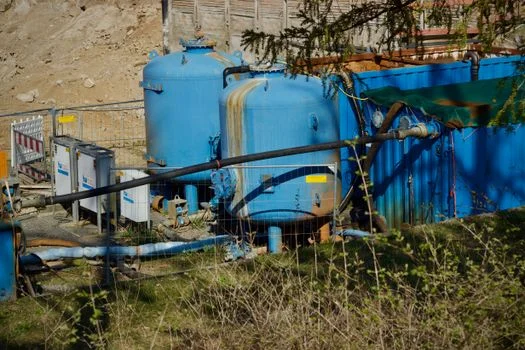
Pairing IC reactors with membrane technologies can achieve effluent COD levels below 50 mg/L for high-strength industrial streams, facilitating water reuse or direct surface discharge. While the IC reactor handles the bulk of the organic load, it cannot remove suspended solids (TSS) or nutrients to the levels required by modern environmental permits. For facilities targeting irrigation or cooling tower makeup, the IC + MBR configuration is the industry benchmark. This hybrid setup utilizes the anaerobic reactor for 85% COD removal, followed by an MBR to eliminate remaining organics and TSS, resulting in an effluent with TSS <5 mg/L.
In industries with high fats, oils, and grease (FOG) content, such as dairy or meat processing, DAF systems for FOG and TSS removal post-IC are essential. The DAF unit acts as a clarifier, removing residual anaerobic sludge and lipids that could otherwise clog downstream filters or exceed discharge permits. For plants pursuing zero-liquid discharge (ZLD), RO systems for zero-discharge IC + RO configurations are deployed after the IC and MBR stages. This allows for the removal of dissolved salts (TDS), achieving permeate levels below 50 mg/L TDS, suitable for boiler feed water.
The process flow for a zero-discharge system typically follows this sequence: Raw Wastewater → Equalization Tank → IC Reactor → Aerobic Polishing/MBR → RO Membrane → Disinfection. This multi-barrier approach ensures that even if one stage underperforms due to a shock load, the final effluent remains compliant. For more on sizing these complex systems, consult the engineering specs for high-strength organic wastewater.
| System Configuration | Primary Goal | Effluent COD (mg/L) | CapEx (per m³/day) |
|---|---|---|---|
| Standalone IC | Pretreatment | 500–1,500 | $800–$1,200 |
| IC + DAF | Surface Discharge | 150–300 | $900–$1,500 |
| IC + MBR | Water Reuse | <50 | $1,200–$2,000 |
| IC + MBR + RO | Zero-Discharge (ZLD) | <10 | $1,500–$2,500 |
CapEx, OPEX, and ROI: Cost Benchmarks for IC Wastewater Treatment (2026 Data)
IC reactors typically offer a 3–7 year payback period, significantly faster than the 5–10 year average for traditional aerobic activated sludge systems, primarily due to lower energy consumption and biogas energy recovery. The capital expenditure for a standard IC reactor installation ranges from $500 to $800 per cubic meter of daily capacity, excluding civil works. When accounting for hybrid additions like MBR or RO, the total project CapEx can increase by 40–60%, but these costs are often offset by the elimination of municipal sewer surcharges and the reduction in fresh water procurement costs.
Operational expenses (OPEX) are remarkably low for IC systems because the process is self-sustaining in terms of mixing energy. Biogas production often generates enough energy to heat the influent wastewater and power the feed pumps, resulting in a net energy cost of $0.05–$0.10/m³. In contrast, aerobic systems require heavy aeration, which can cost $0.30–$0.60/m³. Chemical costs are primarily driven by alkalinity supplementation (lime or NaHCO₃) and nutrient dosing (N and P), typically totaling $0.02–$0.05/m³. For facilities dealing with high salt content, refer to the hybrid systems for high-salinity wastewater for specific OPEX adjustments.
| Cost Category | Aerobic (Activated Sludge) | Anaerobic (IC Reactor) | Savings/Benefit |
|---|---|---|---|
| Energy Consumption | 0.5–1.5 kWh/m³ | 0.05–0.15 kWh/m³ | ~90% Reduction |
| Sludge Production | 0.3–0.5 kg TSS/kg COD | 0.02–0.05 kg TSS/kg COD | ~90% Less Waste |
| Energy Recovery | None | 1.0 kWh/m³ (Biogas) | Net Energy Positive |
| Payback Period | 5–10 Years | 3–7 Years | Accelerated ROI |
Common IC Reactor Problems and How to Prevent Them
Acidification occurs when the volatile fatty acid (VFA) production rate exceeds the methanogenic conversion capacity, typically triggered by pH drops below 6.5. To prevent this, operators must maintain a VFA/Alkalinity ratio below 0.3. If the ratio climbs, immediate corrective actions include increasing the dosing of sodium bicarbonate, reducing the organic loading rate by 20–50%, or increasing the sludge recirculation rate to redistribute alkalinity. Automated pH control loops are essential for 2026-standard designs to provide real-time response to influent fluctuations.
Sludge washout is another critical failure mode, often caused by hydraulic surges or gas-pockets forming within the sludge blanket. This results in the loss of the granular biomass necessary for treatment. Prevention involves installing ultrasonic sludge blanket sensors and ensuring the upflow velocity does not exceed 10–15 m/h. Foaming, often a result of high protein or FOG concentrations, can be managed by installing mechanical foam breakers or utilizing automated antifoam dosing. For scaling issues caused by struvite or calcium carbonate, maintaining a pH below 7.5 and using scale inhibitors in the feed line is the standard protocol. Detailed troubleshooting for specific sectors like electronics can be found in our guide on IC wastewater treatment for semiconductor and electronics manufacturing.
Compliance Checklist: Meeting EPA, EU, and Local Discharge Standards with IC Systems
EPA 40 CFR Part 403 standards for industrial pretreatment often require COD concentrations below 250 mg/L, a threshold IC reactors regularly exceed when paired with polishing stages. Meeting these global standards requires a robust monitoring regime and a multi-stage treatment approach. In the European Union, the Industrial Emissions Directive (IED) sets even stricter limits, often demanding COD <125 mg/L and TSS <35 mg/L. IC reactors paired with DAF units generally meet these benchmarks for most organic-heavy industries.
In regions like China, the GB 8978-1996 standard for surface discharge requires COD <100 mg/L, which necessitates the use of IC + MBR or IC + RO systems. Compliance also involves managing nutrient discharge; while IC reactors are excellent for COD removal, they do not significantly reduce Nitrogen or Phosphorus. Therefore, a post-anaerobic nitrification/denitrification stage is often required in sensitive watersheds like those in California or the Chesapeake Bay. Engineers must conduct a full wastewater characterization and pilot study before permit application to ensure the chosen hybrid configuration meets all local variances.
| Regulation | COD Limit (mg/L) | TSS Limit (mg/L) | Recommended IC Configuration |
|---|---|---|---|
| EPA (USA) Pretreatment | <250 | <30 | IC + DAF |
| EU (IED) Standards | <125 | <35 | IC + MBR |
| China (GB 8978-1996) | <100 | <20 | IC + MBR + RO |
| Local (Sensitive Zone) | <50 | <5 | IC + MBR + RO (ZLD) |
Frequently Asked Questions
What is the typical COD removal efficiency of an IC reactor?
IC reactors typically achieve 75% to 90% COD removal for high-strength industrial wastewater. Performance depends on the biodegradability of the waste and the maintenance of optimal mesophilic temperatures (30–38°C). When paired with aerobic polishing like MBR, total system COD removal can exceed 99%.
How does an IC reactor differ from a UASB reactor?
The primary difference is the internal circulation mechanism. IC reactors use biogas to lift wastewater internally, creating higher turbulence and better sludge-to-water contact. This allows IC reactors to handle 2–3 times higher organic loading rates (up to 30 kg COD/m³/day) than traditional UASB systems.
What are the energy recovery benefits of IC wastewater treatment?
IC reactors produce 0.35–0.5 m³ of biogas per kilogram of COD removed. This biogas, typically 60–70% methane, can be used to generate heat or electricity. In many industrial applications, the energy recovered from biogas exceeds the energy required to operate the treatment plant.
Can IC reactors handle wastewater with high salt or FOG content?
High salinity can inhibit methanogens, while fats, oils, and grease (FOG) can cause foaming and sludge flotation. For these streams, pretreatment with DAF or dilution is necessary. Specialized hybrid systems, such as IC + RO, are designed specifically to handle high-salinity discharge while maintaining compliance.
What is the typical payback period for an IC reactor system?
The payback period for an IC reactor generally ranges from 3 to 7 years. This ROI is driven by significant reductions in energy costs, lower sludge disposal fees (anaerobic systems produce 90% less sludge than aerobic ones), and the potential for onsite energy generation from biogas.