Microelectronics wastewater resource recovery systems achieve 95–99.5% water reuse through hybrid DAF-MBR-RO-ZLD technologies, reducing freshwater withdrawals by up to 98% and recovering valuable reagents like TMAH (tetramethylammonium hydroxide). For a 5,000 m³/day fab, CAPEX ranges from ¥8M (95% recovery) to ¥45M (99.5% ZLD), with payback periods of 3–5 years via water savings and regulatory compliance. Key contaminants — silica (50–300 mg/L), ammonia (100–500 mg/L), and heavy metals (e.g., copper at 5–20 mg/L) — require pretreatment (DAF) and polishing (RO/IER) to prevent membrane fouling and meet EPA/EU discharge limits.
Why Microelectronics Fabs Need Zero-Liquid Discharge (ZLD) Systems in 2026
China’s 2026 semiconductor wastewater discharge limits mandate COD below 50 mg/L, ammonia below 10 mg/L, and heavy metals below 0.5 mg/L, as per MEE Order #19, significantly tightening compliance requirements for microelectronics fabs. Failure to meet these stringent standards can result in substantial regulatory fines, impacting operational budgets and corporate reputation. Beyond regulatory pressures, water scarcity in major semiconductor hubs globally, such as Taiwan, Singapore, and Arizona, has driven freshwater costs to a critical $5–$12/m³, making water reuse and resource recovery economically imperative. Implementing advanced microelectronics wastewater resource recovery systems, specifically Zero-Liquid Discharge (ZLD) solutions, offers a compelling return on investment.
For instance, TSMC's commitment to 99.5% water reuse in its operations led to a 35% reduction in operational costs and successfully averted an estimated $2.1M in regulatory fines in 2023. This demonstrates the tangible financial benefits of high-efficiency water management. the "water-energy nexus" in semiconductor manufacturing highlights another critical advantage: producing 1 m³ of ultrapure water (UPW) typically consumes 2–4 kWh of energy. By recovering and reusing wastewater, fabs can cut energy consumption associated with UPW production by 60–80%, directly contributing to lower utility bills and a reduced carbon footprint. These combined factors—regulatory compliance, water scarcity, and energy savings—underscore the necessity for microelectronics fabs to adopt robust ZLD systems by 2026.
Microelectronics Wastewater Contaminants: Influent Quality and Discharge Limits
Microelectronics wastewater streams are characterized by a complex array of pollutants, with COD typically ranging from 200–1,500 mg/L and ammonia from 100–500 mg/L (per Top 4 Springer review). Critical inorganic contaminants include silica, often present at concentrations of 50–300 mg/L, which poses a significant scaling risk to downstream membrane systems. Heavy metals such as copper (5–20 mg/L), nickel (2–10 mg/L), and chromium (0.5–5 mg/L) are also common, demanding effective pretreatment to prevent irreversible damage to Reverse Osmosis (RO) membranes and ensure compliance with discharge limits.
A particular challenge lies with persistent organic pollutants like TMAH (tetramethylammonium hydroxide), found at 10–100 mg/L, and photoresist residues. These compounds are highly resistant to conventional biological degradation, meaning Membrane Bioreactor (MBR) systems alone achieve less than 70% removal. Effective microelectronics wastewater resource recovery requires specialized pretreatment steps, such as a DAF system for TMAH and silica pretreatment, followed by advanced polishing to meet stringent EPA/EU discharge limits. The table below outlines key contaminant benchmarks.
| Contaminant | Influent Range (mg/L) | EPA/EU Discharge Limit (mg/L) | Primary Treatment Technology |
|---|---|---|---|
| COD | 200–1,500 | <50 | MBR, RO |
| Ammonia | 100–500 | <10 | MBR, IER |
| Silica | 50–300 | <5 (for RO feed) | DAF, RO (with antiscalant) |
| TMAH | 10–100 | <1 (for discharge) | DAF, Activated Carbon, IER |
| Copper | 5–20 | <0.5 | DAF, Chemical Precipitation, IER |
| Nickel | 2–10 | <0.5 | DAF, Chemical Precipitation, IER |
| TSS | 50–500 | <10 | DAF, MBR |
Hybrid ZLD System Design: DAF-MBR-RO-IER Process Flow and Specs
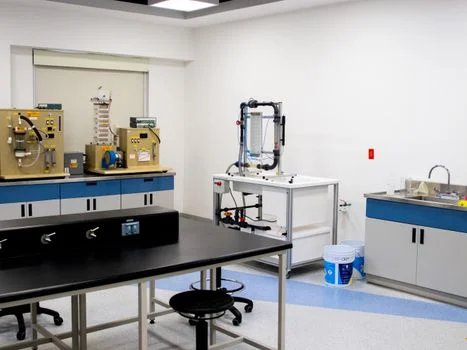
Hybrid ZLD systems for microelectronics wastewater achieve up to 99.5% water recovery by sequentially integrating DAF, MBR, RO, and IER processes, each targeting specific contaminant removal. The initial stage involves Dissolved Air Flotation (DAF) pretreatment, which effectively removes 90–95% of Total Suspended Solids (TSS) and 70–80% of Fats, Oils, and Greases (FOG) at typical operating pressures of 4–6 bar (per Top 2 Gradiant data). This step is crucial for reducing the fouling load on downstream membrane systems, particularly from particles and colloidal silica. The DAF system ensures robust primary clarification.
Following DAF, the wastewater enters the Membrane Bioreactor (MBR) stage, where PVDF MBR systems for 99% COD removal in microelectronics wastewater, utilizing 0.1 μm pore size membranes, achieve over 99% COD removal and significant ammonia reduction at typical flux rates of 15–25 LMH (liters per square meter per hour). The MBR effluent, now clarified and largely free of organics and suspended solids, is then directed to the Reverse Osmosis (RO) polishing stage. A 2-stage RO system for 95%+ water recovery and silica removal is commonly employed, recovering 90–95% of the water. To prevent silica scaling, which is a major concern in RO, antiscalant dosing (2–5 mg/L) and precise pH adjustment (6.5–7.5) are critical (Top 1 DuPont data). The final stage, Ion Exchange Resin (IER) recovery, targets specific contaminants like TMAH. IER systems can recover 80–90% of TMAH for reuse, leading to a 40% reduction in chemical procurement costs (Top 4 Springer review) and serving as a vital component in microelectronics wastewater resource recovery.
The 'zero-fouling' protocol is integral to maintaining system performance and membrane longevity. This includes strict pH adjustment of the RO feed to 6.5–7.5, continuous silica antiscalant dosing, and a regular Clean-In-Place (CIP) frequency of every 7–14 days, tailored to influent quality and flux decline rates.
| Stage | Influent Quality (Key Parameters) | Effluent Quality (Key Parameters) | Key Equipment | Chemical Dosing (Typical) |
|---|---|---|---|---|
| DAF Pretreatment | TSS: 50-500 mg/L, FOG: 20-100 mg/L | TSS: <50 mg/L, FOG: <20 mg/L | DAF Unit | Coagulant (e.g., PAC), Flocculant (e.g., Polymer) |
| MBR Stage | COD: 200-1500 mg/L, NH₃-N: 100-500 mg/L, TSS: <50 mg/L | COD: <50 mg/L, NH₃-N: <10 mg/L, TSS: <1 mg/L | PVDF MBR System (DF Series) | Nutrients (N, P), Antifoam (as needed) |
| RO Polishing | TDS: 500-2000 mg/L, Silica: 50-120 mg/L, COD: <50 mg/L | TDS: <50 mg/L, Silica: <5 mg/L, COD: <5 mg/L | 2-Stage Industrial RO System | Antiscalant (2-5 mg/L), pH Adjuster (Acid/Alkali) |
| IER Recovery | TMAH: 10-100 mg/L, Heavy Metals: 0.5-5 mg/L | TMAH: <1 mg/L, Heavy Metals: <0.05 mg/L | Mixed-Bed IER Columns | Regenerant (e.g., HCl, NaOH) |
CAPEX and OPEX Breakdown: 95% vs. 99.5% Water Recovery Systems
Implementing a microelectronics wastewater resource recovery system for a 5,000 m³/day fab involves a CAPEX range from ¥8M for 95% water recovery to ¥30M–¥45M for 99.5% Zero-Liquid Discharge (ZLD) (2026 market data). This capital expenditure for a 99.5% ZLD system includes the full suite of DAF, MBR, RO, and IER technologies, along with advanced automation and control systems necessary for seamless operation. A 95% recovery system, typically an MLD (Minimum Liquid Discharge) approach, might forgo some of the more intensive polishing or brine management components, reducing initial investment.
Operational Expenditure (OPEX) is a critical factor in the long-term viability of these systems. For a 99.5% ZLD system, annual OPEX can be significant, with membrane replacement alone costing approximately ¥1.2M/year for the MBR and RO stages due to the demanding nature of microelectronics wastewater. Chemical dosing for antiscalants, pH adjustment, and IER regeneration typically accounts for ¥800K/year. Energy consumption, requiring 2–4 kWh/m³ of treated water, adds an estimated ¥500K/year, depending on local electricity rates. In contrast, a 95% recovery system generally incurs lower OPEX due to less frequent membrane replacement and reduced chemical usage, though specific figures vary.
The Return on Investment (ROI) for these systems is driven by freshwater savings and avoided regulatory fines. A 99.5% recovery system can save approximately ¥4.5M/year in freshwater costs (assuming $8/m³), while a 95% recovery system might save ¥2.2M/year. The payback period for a 99.5% ZLD system typically ranges from 3–5 years, factoring in both water savings and the avoidance of escalating regulatory penalties. This makes high-recovery microelectronics wastewater resource recovery systems a financially sound investment despite higher initial CAPEX.
| Recovery Rate | CAPEX (¥, 5,000 m³/day) | OPEX/Year (¥) | Freshwater Savings/Year (¥) | Payback Period (Years) |
|---|---|---|---|---|
| 95% (MLD) | ¥8M–¥15M | ¥1.5M–¥2.5M | ¥2.2M–¥3.5M | 3–6 |
| 99.5% (ZLD) | ¥30M–¥45M | ¥2.5M–¥4M | ¥4.5M–¥7.5M | 3–5 |
Zero-Fouling Engineering: Preventing Silica Scaling and TMAH Fouling
Silica scaling in Reverse Osmosis (RO) membranes typically initiates when silica concentrations exceed 120 mg/L in the RO feed, necessitating precise antiscalant dosing and pH control. Without proactive measures, silica polymerization can rapidly foul membranes, leading to flux decline and increased cleaning frequency. Effective prevention involves maintaining the RO feed pH between 6.5–7.5 and continuously dosing specialized antiscalants at 2–5 mg/L. These antiscalants inhibit silica polymerization and crystal growth, extending membrane life and reducing operational interruptions.
TMAH (tetramethylammonium hydroxide) fouling, another significant challenge in microelectronics wastewater treatment, primarily impacts MBR membranes when concentrations exceed 50 mg/L. TMAH can adsorb onto membrane surfaces, reducing permeability and increasing trans-membrane pressure. Pretreatment with Dissolved Air Flotation (DAF) can remove some TMAH-associated colloids, while activated carbon adsorption can achieve up to 90% TMAH removal, protecting downstream membranes. An PLC-controlled chemical dosing system for antiscalant and pH adjustment is essential for precise chemical management and preventing both silica and TMAH-related fouling.
Robust Clean-In-Place (CIP) protocols are vital for restoring membrane performance. For organic fouling, an alkaline wash (pH 11) using caustic solutions is effective. For inorganic scaling, particularly silica, an acid wash (pH 2) with citric acid or similar agents is required (Top 1 DuPont data). Regular monitoring of flux decline and differential pressure guides the CIP frequency. In cases of severe or persistent fouling, a 'membrane autopsy' involving techniques like Scanning Electron Microscopy (SEM) imaging can diagnose the specific fouling mechanism (e.g., distinguishing between silica, organic, or biofouling) to optimize cleaning strategies and improve the overall efficiency of microelectronics wastewater resource recovery.
Vendor Selection Framework: 5 Critical Questions for Microelectronics ZLD Systems
Effectively evaluating vendors for microelectronics ZLD systems requires scrutinizing their technical solutions and performance guarantees across five critical areas, particularly regarding fouling prevention and recovery rates. This structured approach helps procurement teams select a partner capable of delivering reliable and cost-effective microelectronics wastewater resource recovery solutions.
- Question 1: 'What’s your silica scaling prevention protocol?' A competent vendor will detail their approach, including specific antiscalant dosing strategies, real-time pH monitoring, and membrane selection suitable for high-silica feeds. Look for comprehensive plans that integrate both chemical and physical methods.
- Question 2: 'What’s your TMAH recovery rate?' For facilities seeking to recover valuable reagents, the vendor should demonstrate an ability to achieve 80–90% TMAH recovery, typically through advanced Ion Exchange Resin (IER) systems, and provide data supporting these claims.
- Question 3: 'What’s your membrane flux decline rate?' Membrane performance is paramount. A target flux decline rate of less than 5% per year for PVDF MBR membranes indicates robust design and effective fouling mitigation strategies. Demand data from similar installations.
- Question 4: 'What’s your CAPEX/OPEX guarantee?' A reputable vendor should offer fixed-price contracts with clear performance clauses, including guarantees on water recovery rates, effluent quality, and projected operational costs, providing financial predictability.
- Question 5: 'What’s your compliance track record?' Request detailed case studies demonstrating successful compliance with stringent environmental regulations, such as EPA/EU discharge limits, for microelectronics wastewater treatment. This validates their practical experience and technical capabilities.
Frequently Asked Questions
Understanding the distinctions between Minimum Liquid Discharge (MLD) and Zero Liquid Discharge (ZLD) is a frequent starting point for microelectronics fabs evaluating wastewater resource recovery.
- What’s the difference between MLD and ZLD for microelectronics wastewater? MLD systems aim to recover 90–95% of water, significantly reducing discharge volume. ZLD systems, however, recover 99.5% or more, completely eliminating liquid discharge and achieving maximum microelectronics wastewater resource recovery.
- How much does a 1,000 m³/day ZLD system cost? For a smaller capacity, the CAPEX for a 1,000 m³/day ZLD system typically ranges from ¥6M–¥10M, with annual OPEX between ¥300K–¥500K, depending on influent quality and recovery targets.
- What’s the best pretreatment for TMAH wastewater? The most effective pretreatment for TMAH wastewater involves Dissolved Air Flotation (DAF) for initial TSS and FOG removal, followed by activated carbon adsorption or advanced oxidation processes to specifically target and remove TMAH before membrane stages.
- How often should RO membranes be cleaned in a microelectronics ZLD system? RO membranes in microelectronics ZLD systems typically require Clean-In-Place (CIP) every 7–14 days. This frequency can vary based on the influent's silica and TMAH concentrations, requiring diligent monitoring of flux and differential pressure.
- Can MBR systems handle high-silica wastewater? While MBR systems can handle some silica, high concentrations (above 100 mg/L) can lead to a 20–30% flux decline without proper antiscalant dosing and robust pretreatment. Silica is primarily a concern for downstream RO membranes.