What Rural Sewage Treatment Must Solve in Senegal
Rural sewage treatment in Senegal requires decentralized systems that fit dispersed settlements, local operating capacity, and site conditions. Around 64% of people living in rural Senegal lacked access to basic sanitation in 2022, according to The Borgen Project citing WASHdata, while approximately 1.25 million rural residents continued open defecation. A treatment decision must address both safe containment and the treatment of wastewater generated at households, schools, health posts, hotels, and clustered facilities. Technology selection should follow verified flow, wastewater quality, land, power, maintenance capacity, and receiving-water or reuse requirements.
These figures describe a sanitation-access problem, not plant-sizing data. The Borgen Project reported in February 2024 that UNICEF had supported Community-Led Total Sanitation programs in Senegal since 2009. By 2022, more than 1.8 million people across 4,300 villages had abandoned open defecation, according to the same account. CLTS combines local participation, sanitation education, basic latrines, and handwashing facilities. It does not, by itself, provide a sewage treatment train or demonstrate effluent performance.
That distinction matters in tender documents. A household latrine, communal washroom, or handwashing station may contain or safely manage fecal material without producing a wastewater flow suitable for biological treatment. A comparison of packaged sewage treatment plant options should therefore follow collection, treatment, and effluent management rather than count sanitation access facilities as treatment capacity.
The Senegal Rural Water Supply and Sanitation Project provides relevant institutional context, though the supplied World Bank document extract lacks sufficient technical information to select a treatment system. Buyers must verify the applicable collection boundary, responsible authority, discharge destination, and reuse objective before choosing equipment.
Choose the Treatment Configuration for the Site
The selected configuration must connect wastewater collection to a defined effluent destination and a residual-sludge route. The process sequence typically includes screening and collection, equalization where required, biological treatment, solids separation, disinfection, storage or reuse, and residual-sludge management. Equalization is not optional for every project, but it should be assessed when flow variation, infiltration, or batch discharge would otherwise overtax the selected process.
Constructed wetlands provide direct Senegalese pilot evidence. A study in Water reported a pilot built in 2018 at Gaston Berger University Campus in Saint Louis, comprising two vertical-flow stages and one horizontal-flow stage. The filters used silex, granite, and river gravel at different depths, with Phragmites and Typha as macrophytes. This demonstrates an approach tested in Senegal; it does not establish performance for another settlement, wastewater composition, or hydraulic arrangement. Current site-specific hydraulic and contaminant data are required before using the pilot as a performance benchmark.
The WSZ underground package sewage treatment plant is suitable where a decentralized site needs compact, automated equipment. Its catalog configuration combines anoxic/aerobic biological contact oxidation, sedimentation, and disinfection in a buried package. It can also be mounted on a trailer for mobile deployment, although deployment choice does not remove the need to design collection, power, and maintenance access.
The MBR membrane bioreactor wastewater treatment system is an alternative where limited footprint or demanding reuse criteria justify submerged membrane filtration and tighter solids separation. MBR adds process complexity, so the reuse objective must be defined before selection: sanitation improvement, environmental discharge, and irrigation reuse are not interchangeable acceptance targets.
| Configuration | Core process | Main site condition | Decision still required |
|---|---|---|---|
| Constructed wetland | Planted stages, local filter media and biological treatment | Land and local construction capacity are available | Current hydraulic loading, stage areas, media and effluent data |
| WSZ package | Anoxic/aerobic contact oxidation, sedimentation and disinfection | Compact installation and automated operation are priorities | Duty point, process guarantee, controls and buried-installation requirements |
| MBR | Activated sludge with submerged PVDF membrane filtration | Footprint is constrained or tighter separation is required | Reuse criteria, membrane maintenance, aeration, power and specialist support |
Compare Constructed Wetlands, Package Plants and MBR
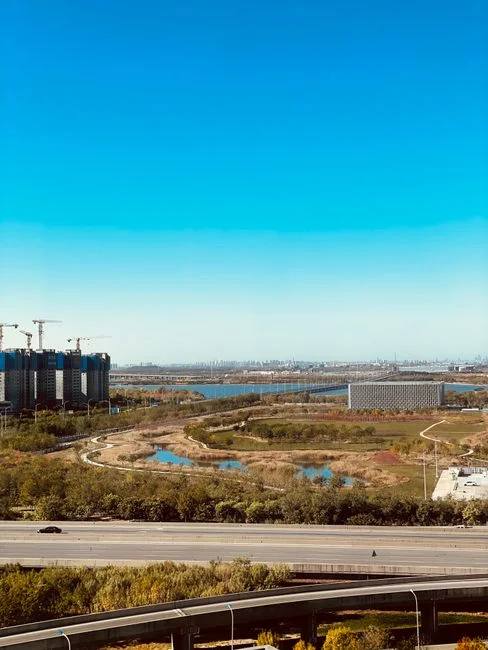
Constructed wetlands, package plants, and MBR systems solve different design constraints and should be compared by delivered treatment performance rather than catalog capacity. The decisive variables are wastewater characteristics, available land, electrical and mechanical support, the required effluent objective, expansion provisions, and the capacity of the personnel who will operate the system after handover.
A constructed wetland has the strongest direct Senegal pilot evidence in the supplied research. It uses filter media and planted treatment stages, but it requires adequate land, vegetation management, media replacement planning, access to every stage, and measures to prevent short-circuiting. Its construction can draw on local skills and materials, yet the Saint Louis pilot’s media and macrophytes cannot be transferred automatically to a new site without current design data.
The WSZ configuration combines anoxic/aerobic biological contact oxidation, sedimentation, and disinfection in one buried unit. The verified product catalog states that it is fully automated and requires no operator, with a published capacity of 1–80 m³/h. It can be installed below grade with landscaping above or mounted on a trailer. These are catalog characteristics, not project-specific guarantees. The supplier must still demonstrate the selected duty point, controls, treatment performance, access arrangements, and local service support.
The MBR configuration combines activated sludge with submerged PVDF membrane filtration. Its published catalog capacity is 10–2,000 m³/day, and the catalog describes effluent below 1 μm for near-reuse-quality applications. Membrane separation may suit a constrained site, but buyers should examine aeration reliability, cleaning access, instrumentation, electrical resilience, replacement requirements, and the availability of specialist support.
| Decision factor | Constructed wetland | WSZ package | MBR |
|---|---|---|---|
| Process configuration | Planted media stages | Integrated contact oxidation, sedimentation and disinfection | Activated sludge and submerged membrane filtration |
| Land and deployment | Requires land for treatment stages | Buried installation or trailer-mounted deployment | Compact equipment architecture |
| Mechanical complexity | Lower equipment dependence; media and vegetation management remain | Automated package with equipment maintenance | Higher process and membrane-service demands |
| Operating skill | Local construction and routine horticultural management | Catalog states no operator required, but inspection and fault response still need ownership | Trained operations and reliable specialist support |
| Evidence status | Direct Senegal pilot at Saint Louis | Product-catalog evidence; project-specific performance required | Product-catalog evidence; project-specific performance required |
| Expansion approach | Add or reconfigure stages subject to hydraulic review | Review installed capacity, controls and site constraints | Review biological capacity, membrane modules and ancillary systems |
Size the Plant from Verified Site Inputs
A rural treatment plant should be sized from current and seasonal wastewater flows, wastewater quality, and the receiving environment, rather than population alone. The primary requirements are the current population served, measured flow records, seasonal range, peak factor, and wastewater generation per person or connected facility. A school, health post, or hotel may have a smaller population than a settlement but a more concentrated or variable discharge, and infiltration can change the flow entering the treatment works.
Influent testing should cover BOD, COD, TSS, and the suspended-solids profile, pH, and temperature. Any industrial, healthcare, or food-related contribution must be identified because it can alter process loading and treatment objectives. The buyer should also document the proposed receiving environment—watercourse, infiltration area, irrigation system, or storage pond—and obtain the applicable acceptance criteria from the responsible authority.
For a constructed wetland, request proposed stage areas, media depths, hydraulic loading, freeboard, and a planting plan. The Senegal pilot confirms that media type, media depth, and macrophytes were central variables in the Saint Louis study. For package equipment, request the selected model, duty point, process calculations, guarantees, and controls scope. The WSZ range of 1–80 m³/h and MBR range of 10–2,000 m³/day are catalog capacity boundaries, not recommended design flows for a Senegalese community.
| Input to obtain | Why it affects the design | Document requested from bidder |
|---|---|---|
| Current and seasonal flow | Establishes hydraulic and biological loading | Measured-flow basis, peak factor and duty-point calculation |
| Influent quality | Determines process and solids-management requirements | BOD, COD, TSS, pH, temperature and relevant discharge profile |
| Receiving site | Sets the treatment and disinfection objective | Designated outlet, authority requirements and monitoring plan |
| Site and utilities | Controls construction, access and operation | Survey, groundwater information, power assessment and access plan |
| Operator capacity | Tests whether the system can remain in service | Named operator, training plan, service coverage and escalation route |
Plan for Construction, Operations and Community Ownership
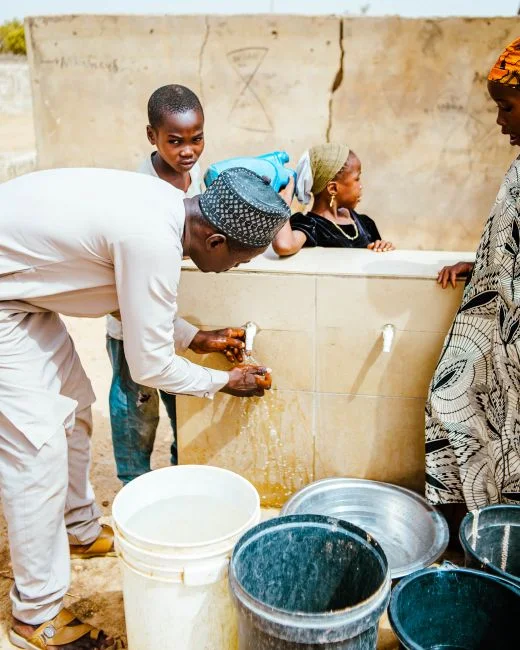
A treatment plant remains a public-health asset only if the responsible organization can inspect, operate, repair, and verify it. Community participation should begin during site selection and continue through access planning and operator training. This follows the inclusive local participation described in Senegal’s CLTS programs by The Borgen Project in February 2024, while extending that principle to the wastewater assets that CLTS does not itself design.
The O&M package should define inspections, biological-process checks, media or membrane maintenance, sludge removal, disinfection, spare parts, and fault response. Before award, identify the trained local operator or service provider, escalation contacts, laboratory support, and response times. The containerized wastewater treatment maintenance protocol can support development of the maintenance record, but the contract must assign responsibility for each task.
Construction risk differs by technology. For a buried WSZ installation, confirm excavation conditions, groundwater, access covers, lifting requirements, and whether landscaping can be restored after maintenance. For a constructed wetland, plan media replacement, vegetation management, short-circuit prevention, and access to each stage. For MBR, assess membrane cleaning, aeration reliability, power availability, instrumentation, and specialist support.
Performance verification should be operational, not limited to a handover certificate. Require records of inlet flow, process parameters, effluent sampling, sludge removal, and corrective actions. Define who reviews those records, how non-compliance is investigated, and what remedy applies. This creates an auditable basis for warranty claims and future capacity decisions.
Procurement Checklist for a Senegal Rural Project
A defensible tender should require bidders to demonstrate the proposed system for the actual site, not only describe a product. Request a site-specific process narrative, preliminary sizing calculation, hydraulic profile, treatment-stage drawings, and commissioning plan. Technical evaluation should also use the sewage treatment equipment supplier selection guide to check whether the submission contains the engineering basis needed for review.
- Require factory acceptance testing, installation and commissioning scope, operator training, warranty terms, a consumables list, and a long-term spare-parts quotation.
- Request references with comparable wastewater characteristics, climate, and operating arrangements. Identify which references are in Senegal and which are overseas.
- Obtain a transparent total-cost breakdown covering equipment, civil works, installation, power, chemicals, media or membranes, routine maintenance, and sludge disposal.
- Make acceptance conditional on documented test procedures and agreed influent and effluent sampling requirements, with responsibilities assigned in the contract.
- Confirm who determines the applicable discharge or reuse criteria. The supplied research does not provide a current numerical Senegalese effluent limit for these projects, so the tender must not invent one.
Technical scoring should reward complete hydraulic and process calculations, verifiable performance evidence, and a funded O&M arrangement. A low equipment price is not comparable if it excludes civil works, power, consumables, maintenance, or residual-sludge handling.
Frequently Asked Questions
How much does rural sewage treatment cost in Senegal?
No supported project price is available in the supplied research. Buyers should request a site-specific total-cost offer separating equipment, civil works, installation, commissioning, power, chemicals or consumables, routine O&M, and sludge handling. This check prevents a quoted package price from hiding the costs that determine lifecycle affordability.
Should a rural Senegal project choose a WSZ package plant or MBR?
Choose WSZ when a suitable decentralized flow can be handled by a compact, automated biological package and simpler integration is preferred. Consider MBR when footprint or the catalog’s
Frequently Asked Questions
How much does rural sewage treatment cost in Senegal?
For decentralized rural systems in 2026, capital expenditure (CAPEX) typically ranges from 150,000 to 350,000 XOF per person equivalent (PE), depending on the complexity of the treatment technology and the availability of local construction materials. Operational expenditure (OPEX) should be budgeted at approximately 5,000 to 12,000 XOF per PE annually to cover electricity, sludge management, and routine maintenance.
Should I choose a WSZ package plant or MBR for a decentralized project?
WSZ (Waste Stabilization Zone) or simplified activated sludge systems are generally preferred for rural Senegal due to their low mechanical complexity and reliance on passive aeration, which suits areas with unstable power grids. Membrane Bioreactor (MBR) systems offer superior effluent quality suitable for non-potable reuse, but they require high energy inputs, specialized membrane cleaning chemicals, and skilled labor that is often unavailable in remote regions.
How do you size a sewage treatment plant for a rural community?
Sizing is determined by calculating the daily organic load (BOD5) and hydraulic flow, typically estimated at 40 to 60 liters per capita per day for rural Senegalese households with limited piped water. Systems must be designed for a peak factor of 2.5 to 3.0 to account for diurnal flow variations and must include a 20 percent buffer for future population growth over a 10-year horizon.
Are constructed wetlands suitable for rural Senegal?
Constructed wetlands are highly suitable for rural Senegal due to their low energy requirements and ability to handle high solar radiation, which aids in pathogen reduction. To ensure efficacy, systems must be designed with a hydraulic retention time (HRT) of 3 to 5 days, and specific attention must be paid to selecting locally adapted macrophytes like Typha or Phragmites to manage the high evapotranspiration rates characteristic of the Sahelian climate.
What performance guarantees should I require from a sewage treatment supplier?
Contracts should mandate effluent quality guarantees that meet Senegalese National Standard NS 05-061, specifically targeting BOD5 levels below 30 mg/L, Total Suspended Solids (TSS) under 30 mg/L, and a fecal coliform reduction of at least 3-log units. Suppliers must also provide a minimum 24-month performance warranty, spare parts availability commitment for 10 years, and a documented sludge extraction schedule to ensure system longevity.