Separate the Data Center’s Wastewater Streams
A Sultanah data center needs separate treatment trains for cooling-tower blowdown, domestic sewage, process wastewater, wash water and contaminated stormwater because their flow rates, contaminants and reuse destinations differ. Cooling blowdown contains concentrated dissolved solids, suspended material and residual treatment chemicals, so it should not be routed through a sewage plant by default. A complete project flow diagram should connect makeup water, evaporation, blowdown, sewage, process drains, reuse points and final discharge. This is the same stream-separation discipline described in a data-center wastewater and cooling blowdown treatment framework.
Keep sanitary sewage separate from cooling and process water unless a combined design is justified by measured flow, contaminant loading, fouling risk and the selected reuse route. Domestic sewage requires a treatment train designed for organic matter, nutrients and microbiological control. Floor and equipment wash water may contain cleaners, metals or suspended solids and therefore needs its own assessment. Stormwater should be segregated unless it has contacted site equipment or process chemicals.
Regional evidence supports treating blowdown as a resource, not automatically as a disposal liability. An ASME International study examined heat recovery steam generator blowdown recycling in a Saudi Arabian combined-cycle power plant, although its chemistry and equipment differ from data-center cooling systems. The design implication is sound: evaluate blowdown recovery separately, then establish its suitability from site data. The data-center blowdown treatment guide provides a further reference for stream separation and reuse planning.
| Stream | Dominant characteristics to verify | Initial treatment direction | Likely destination requiring confirmation |
|---|---|---|---|
| Cooling-tower blowdown | Concentrated dissolved solids, suspended matter, residual chemicals and microbiological risk | Equalization, screening, physical separation and targeted polishing | Non-potable reuse, cooling makeup or approved discharge |
| Domestic sewage | Organic matter, nutrients and pathogens | Sewage treatment appropriate to the reuse route | Reclaimed water or approved sewer discharge |
| Process wastewater | Stream-specific chemicals, oils, metals or high salinity | Characterization followed by contaminant-specific treatment | Reuse, controlled treatment or disposal |
| Wash water | Suspended solids, cleaning chemicals and possible metals | Segregation, equalization and targeted treatment | Reuse or approved discharge |
| Contaminated stormwater | Site-specific solids, oils and chemicals | Source control, segregation and event-specific treatment | Approved stormwater route |
Build a Site Water Balance Before Selecting Equipment
The data-center water balance must distinguish water consumed by evaporation from water that leaves as recoverable blowdown. Measure makeup water, evaporation, blowdown, blowdown concentration, sewage generation and final discharge across normal and peak operating periods. Cooling-tower cycles of concentration describe how much circulating-water dissolved solids exceed makeup-water concentration; they are useful for controlling blowdown, but they do not replace direct flow measurement.
Genesis Water Technologies gives the theoretical relationship as 1 divided by cycles of concentration minus one. At 4 cycles, blowdown equals 25% of makeup volume; at 6 cycles, it equals 20%. Moving from 4 to 6 cycles therefore reduces theoretical blowdown by 5 percentage points, or 20%—not 50%. This distinction should be explicit in the design basis because the operational benefit must be balanced against scaling, fouling and microbiological risks. The same point is developed in the Zaria data-center treatment assessment.
A low Water Usage Effectiveness metric can conceal substantial recoverable discharge. Genesis Water Technologies explains that WUE uses annual site water usage divided by IT equipment energy and does not identify whether discharged blowdown could have been reused. A water-recovery case should therefore calculate avoided makeup demand from actual recovered flow, not infer savings from a headline efficiency metric.
Model peak summer demand, cooling-system staging, drought restrictions, power constraints and emergency blowdown events. These conditions affect both the quantity available for reuse and the reliability of downstream treatment. The Perm data-center water-treatment framework is useful for testing treatment decisions against operating constraints rather than a single nominal flow.
| Balance item | Measurement required | Design use |
|---|---|---|
| Cooling makeup | Total flow by operating period and system | Establish the base against which reuse savings are calculated |
| Evaporation | Estimated and reconciled from the water balance | Identify the portion that cannot be recovered |
| Blowdown | Continuous and event discharge flow | Size collection and treatment capacity |
| Blowdown quality | Conductivity, pH, suspended solids and relevant chemicals | Determine reuse and discharge treatment requirements |
| Sewage and other drains | Separate flow and contaminant characterization | Prevent incompatible streams from sharing equipment |
| Final discharge and reuse | Destination, flow and water quality | Verify actual recovery and compliance performance |
Match Treatment to Water Quality and Reuse Goals
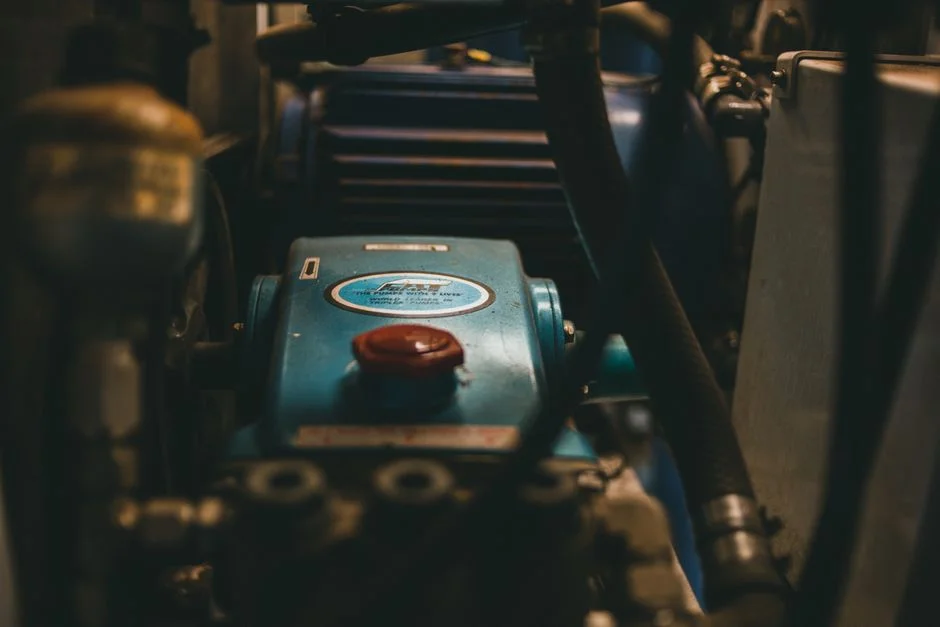
Treatment should be selected from the required water quality, not from a preferred piece of equipment. Start with equalization and removal of suspended material, debris and floating contaminants. A DAF system for industrial wastewater and blowdown pretreatment becomes more relevant when testing confirms oil, grease, colloids or floatable solids. Filtration alone will not remove the dissolved salts and treatment chemicals that can make cooling blowdown environmentally sensitive.
Ultrafiltration is appropriate where the design objective includes bacteria, colloids and suspended-solid removal before reverse osmosis or a sensitive reuse application. The specified ultrafiltration system for data-center blowdown polishing uses hollow-fiber PVDF membranes rated at 0.03 micron, with automatic backwash and air scour. The listed configurations span 2,000 to 40,000 L/h. These are equipment specifications, not a Sultanah duty calculation; the selected train must be sized from measured peak flow and the required recovery rate.
Disinfection is a separate control requirement. The specified chlorine dioxide generator configurations range from 50 g/h to fully automated units rated at 20,000 g/h. Chlorine dioxide should be considered when on-site production and controlled disinfection of an industrial cooling loop or process-wastewater stream are required. Residual control, chemical compatibility, storage and operator procedures must be included in the design basis.
Industrial reverse osmosis should be used only where dissolved-solids removal and a high-quality reuse product justify the added pretreatment, energy demand and concentrate management. The listed RO system supports recovery rates up to 95%, but that figure is not a guarantee for every feed composition or operating condition. The engineering question for a Sultanah facility is whether recovered water will serve lower-duty uses—such as toilet flushing, wash water or irrigation—or return as cooling makeup.
Blowdown-to-makeup reuse is more demanding than non-potable reuse because the water must be compatible with cooling chemistry, heat-transfer equipment and the site water-treatment program. The concentration and residual-chemical profile must also support the intended cycles of concentration without unacceptable scaling, corrosion or biological growth. A comparison of RO versus ion exchange for cooling blowdown reuse can inform that selection, but local feed analysis remains the deciding input.
| Treatment objective | Potential process | Required basis before selection | Main design issue |
|---|---|---|---|
| Remove floatable material, oil or grease | DAF with equalization | Contaminant characterization and peak flow | Sludge removal, odor control and chemical demand |
| Remove suspended solids, colloids and bacteria | UF | Turbidity, solids loading and recovery target | Backwash waste and membrane fouling |
| Control residual microorganisms | Chlorine dioxide | Contact objective, demand and operating controls | Residual management and operator safety |
| Produce low-dissolved-solids reuse water | Industrial RO | Full feed analysis, recovery target and concentrate route | Energy, pretreatment and concentrate disposal |
| Return treated blowdown to cooling | Physical separation plus UF, disinfection and potentially RO | Cooling compatibility and water-treatment review | Highest control and operating complexity |
Design for Water-Scarcity Conditions and Permit Constraints
Saudi water scarcity makes cooling-water recovery strategically important, but it does not replace a site-specific permit review. Rest of World reported in 2025 that Saudi Arabia is among the most water-stressed countries and that its two largest desalination plants produce more than one million cubic meters of water daily. The article also identifies heavy regional reliance on evaporation-based cooling, which increases the value of reducing avoidable once-through cooling and recovering suitable blowdown.
The water-energy coupling must be included in the project decision. Desalination requires energy, electricity generation can require water, and recovered blowdown can reduce demand for both. Evaluate the project at the site level rather than crediting only avoided makeup-water volume. A reuse decision may alter electrical demand, chemical consumption, concentrate disposal and downstream maintenance.
Confirm the permitted receiving route and reuse conditions with the authority having jurisdiction and receiving utility. The permit review should address temperature, pH, conductivity, suspended solids, residual treatment chemicals, monitoring obligations and any reuse restrictions. The supplied research does not establish Sultanah-specific numerical discharge limits, so the design must not infer them from general Gulf conditions or from a permit issued for another facility.
Warm discharge requires separate assessment. NC State University’s 2026 discussion identifies thermal pollution from cooling discharge as a potential impact on aquatic ecosystems and notes that evaporated water leaves salts and chemicals behind in the blowdown. That evidence supports treating temperature, salinity and residual chemicals as distinct constraints. It does not establish the applicable receiving-water or discharge limits for Sultanah.
Permit conditions should therefore be treated as design inputs with defined status. A water-requirements due-diligence discussion can support the structure of the compliance review, while a packaged wastewater treatment procurement guide can inform operator and handover checks. Neither replaces Sultanah-specific confirmation.
Implement the Treatment Program in Stages
A staged program keeps capital decisions tied to verified water quantities, contaminant concentrations and operational capability. Genesis Water Technologies proposes measurement, operating optimization, chemical-program improvement, blowdown treatment and advanced integration in sequence. That sequence is more defensible than purchasing the most advanced process first, because it identifies which contaminant actually limits recovery and avoids treating a discharge quantity that has not been measured.
- Install metering and water-quality monitoring for makeup, blowdown and evaporation, together with conductivity, pH and suspended-solids measurements. Validate the water balance across seasonal and emergency conditions.
- Repair leaks, eliminate unnecessary once-through cooling, correct premature blowdown triggers and reduce maintenance-related losses. Confirm that the resulting water is operationally available for treatment and reuse.
- Install physical separation and targeted treatment for confirmed contaminants. Include automatic controls, bypass protection and a safe response to upset conditions.
- Reuse treated blowdown in compatible non-critical applications and measure actual avoided makeup demand against the site baseline.
- Evaluate blowdown-to-makeup treatment only after residual streams, water quality, operating staff and concentrate handling have been assessed.
Modularity is the appropriate design principle. Genesis Water Technologies identifies modular treatment at 100 to 300 GPM as practical for many enterprise and colocation facilities. That is a general design reference, not a Sultanah sizing rule: the facility’s measured blowdown flow, operating pattern and reuse duty must determine the actual train configuration. The Esenyurt data-center treatment roadmap provides a comparable staged planning approach.
| Stage | Capital scope | Decision gate | Evidence required |
|---|---|---|---|
| Measurement and baseline | Meters, sampling points and water-quality monitoring | Is the water balance sufficiently reliable? | Seasonal flow, conductivity, pH and suspended-solids records |
| Operating optimization | Controls, repairs and leakage reduction | How much discharge remains after avoidable losses are removed? | Before-and-after flow and blowdown-trigger data |
| Physical and targeted treatment | DAF, filtration, disinfection or stream-specific units | Does the product meet the selected reuse specification? | Pilot results, guaranteed quality and operating data |
| Non-critical reuse | Storage, pumping, distribution and controls | Is reuse operationally reliable? | Actual recovered flow and avoided makeup demand |
| Advanced makeup integration | UF, RO and associated pretreatment and concentrate handling | Do benefits justify added complexity? | Full water balance, lifecycle cost and compliance confirmation |
Prepare an Equipment and Supplier Shortlist
Equipment bids should be compared on guaranteed performance and integration, not headline capacity. For every proposed unit, request guaranteed feed flow, treated-water quality, recovery, footprint, utility demand, automation scope, residual-waste generation and concentrate-disposal information. The supplier should state which values are guaranteed, which depend on feed chemistry and which are excluded from the offer. This is especially important for UF, where membrane flux and backwash demand depend on suspended-solids loading, and for RO, where recovery and concentrate volume depend on feed salinity and operating conditions.
Require a process and controls review covering existing pumps, storage, cooling chemistry, power supply, control-system integration and intended reuse destinations. A membrane skid that cannot communicate with the site controls or receive reliable feed has not solved the operating problem.
Ask each supplier to define monitoring, alarms, bypasses and fail-safe responses for loss of power, high turbidity, abnormal conductivity and chemical-dosing failure. Include a chlorine dioxide generation system only where its production, residual-control and safety requirements fit the selected disinfection duty. Similarly, a reverse-osmosis water purification system should be evaluated against the required reuse quality, feed analysis, pretreatment and concentrate route.
Lifecycle costing must cover membranes, filter media, chemicals, energy, cleaning, operator training and residual-waste handling. The supplied research does not provide Sultanah-specific prices, so neither capital cost nor savings can be responsibly quoted without the site water balance, utility tariffs, feed-water analysis and disposal terms. Require local commissioning support, operator handover, spare-parts strategy, warranty scope and a clear escalation process before shortlisting a supplier.
Frequently Asked Questions
What treatment does a data center in Sultanah need for cooling blowdown?
It needs equalization, screening and physical separation followed by treatment matched to the intended destination. Lower-duty non-potable reuse may require less treatment than cooling makeup, while discharge requires the applicable temperature, pH, conductivity, suspended-solids and residual-chemical criteria to be confirmed by the authority having jurisdiction and receiving utility.
How should equipment be sized for Sultanah cooling blowdown?
Begin with measured blowdown flow, seasonal peaks, event discharges, feed-water quality, required recovery and the selected reuse duty—not cooling-system tonnage alone. The supplier should then demonstrate that the proposed flow, recovery and product-quality guarantees remain valid under those inputs and operating scenarios.
What should a supplier quote for cooling blowdown treatment?
Request separate pricing for equipment, installation, controls, utilities, commissioning, operator training, preventive maintenance, membrane or media replacement, chemicals, energy, cleaning and residual-waste handling. A responsible Sultanah price also requires the measured water balance, feed analysis, reuse target, utility rates, electrical requirements and concentrate-disposal route.
Which reuse option offers the best compliance and operating risk?
There is no universal answer before permit conditions and water quality are known. Start with a compliant lower-duty non-potable use if the water specification, distribution system and authority approvals support it; reserve UF, disinfection and industrial RO for destinations that require greater reliability. Confirm Sultanah-specific limits and monitoring obligations directly with the authority having jurisdiction and receiving utility rather than inferring them from general Gulf conditions.