Why Senegalese Resorts Need a Dedicated Wastewater Strategy
Hotel resort wastewater treatment in Senegal usually requires a self-contained treatment train because new resorts may need to commission before a municipal trunk sewer is available. A robust 2026 process train combines bar screening, 8–12-hour equalization, an anoxic/aerobic MBR and UV or chlorine dioxide disinfection, with polishing for unrestricted irrigation. Under NS 05-061, hotels discharging more than 10 m³/day must meet BOD₅ ≤40 mg/L, COD ≤120 mg/L, TSS ≤50 mg/L, FOG ≤20 mg/L, pH 6.5–8.5 and fecal coliforms ≤2,000 CFU per 100 mL. The right choice depends on flow, reuse targets, site space and installation schedule.
The Thiès–Saly Petite Côte axis illustrates a specific procurement problem: the HydropureWater 2026 hotel guide describes limited ONAS sewer coverage in peri-urban resort corridors there, so developers may have to engineer treatment before opening. That condition should not be generalized to every site in Senegal. Each buyer must confirm the available connection, receiving environment and commissioning date.
Residential design curves also omit the operating interactions of a resort. Guest occupancy changes, banquets, kitchen service and simultaneous laundry shifts can produce a 2.5–3.0× peak hydraulic factor in a 3- to 4-star West African hotel, according to the HydropureWater 2026 guide. Its sizing example uses 2.5×. These are load periods that the biological process, equalization system and effluent storage must absorb.
Environmental handling matters as well. Mbengue’s 2026 study of the Ngor coastline identifies domestic wastewater and solid waste among the pollution pressures affecting the coastal zone. An on-site plant therefore needs a defined sludge route, not only an effluent outlet. Before procurement, the project team should establish average and peak flow, sewer availability, receiving environment, irrigation or toilet-flushing reuse targets, available plot area, power supply and the commissioning deadline.
Characterize Every Wastewater Stream Before Sizing the Plant
Resort sewage must be characterized as several interacting streams because laundry, kitchen and pool backwash can invalidate a biological design based only on guestroom wastewater. The HydropureWater 2026 Thiès guide reports a typical 100-room hotel influent at BOD₅ 250–400 mg/L, TSS 200–350 mg/L and FOG 80–150 mg/L during food-service peaks. It also reports laundry pH spikes of 9–11 and slug volumes equal to 30–50% of hourly flow during linen changeover. The same source recommends 8–12-hour equalization as the design benchmark.
Pool backwash presents a different load: BOD below 20 mg/L, elevated TDS, residual chlorine and high discharge flow during filter cycles. The guide recommends blending it below 10% of total forward flow. The tender should therefore distinguish room wastewater, kitchen and grease streams, laundry discharge, pool backwash and any septic or grease-truck flows before assigning them to the treatment train.
| Stream | Reported condition | Design implication |
|---|---|---|
| Guestroom and food-service wastewater | BOD₅ 250–400 mg/L; TSS 200–350 mg/L; FOG 80–150 mg/L during peaks | Provide biological treatment and adequate equalization; assess FOG pretreatment separately. |
| Laundry | pH 9–11; slugs equal to 30–50% of hourly flow | Use the stated 8–12-hour equalization benchmark and provide controlled dosing where required. |
| Pool backwash | BOD below 20 mg/L; high TDS, residual chlorine and cyclical high flow | Control blending below 10% of forward flow and verify residual chlorine effects on the biological process. |
Ask bidders for measured flow, pH, temperature, BOD₅, COD, TSS, FOG, surfactants, residual chlorine and operating-hour records, not room count alone. During tender review, use the bar-screen selection and headloss guide to check how rags, plastics and kitchen debris will be removed before equalization. The rotary mechanical bar screen can then be assessed against the 3–5 mm aperture specified in the HydropureWater 2026 train.
Select a Process Train for Hotel and Resort Conditions
The HydropureWater 2026 train links each unit to a defined resort problem: a 3–5 mm rotary bar screen removes solids, equalization buffers slug loads, an anoxic/aerobic MBR provides biological treatment, disinfection controls pathogens, and optional polishing prepares effluent for unrestricted irrigation. The equalization tank’s specific duty is to absorb laundry pH swings and banquet slug loads while protecting downstream biology.
The same source specifies submerged PVDF hollow-fiber membranes rated at 0.1–0.4 μm, operated at 12–18 LMH, with 2–3 hours anoxic HRT and 6–8 hours aerobic HRT. It states that the MBR route occupies approximately 60% less footprint than conventional activated sludge plus clarifier. Those figures are design inputs for an integrated MBR membrane bioreactor proposal, not proof of performance at a particular site.
| Process step | S2 2026 design basis | Buyer check |
|---|---|---|
| Bar screen | 3–5 mm rotary mechanical aperture | Confirm extracted solids handling, headloss and bypass provisions. |
| Equalization | 8–12-hour HRT with pH and temperature monitoring | Check that the bid includes mixers, aeration, probes and controls. |
| Biological treatment | Anoxic/aerobic MBR; 2–3 hours anoxic HRT; 6–8 hours aerobic HRT; 12–18 LMH; 0.1–0.4 μm PVDF membranes | Require membrane-area and bioreactor-volume calculations tied to the agreed design flow. |
| Disinfection | UV or chlorine dioxide | Compare chemical handling, by-products, odour, maintenance and operator competence. |
| Reuse polishing | Optional lamella clarification and automatic-backwash multi-media filtration | Include only where the confirmed reuse specification requires it. |
| Sludge | Plate-and-frame filtration producing approximately 25% dry-solids cake | Confirm the disposal route, storage arrangement and regulatory acceptance. |
For disinfection, UV avoids chemical handling and associated by-products. The HydropureWater 2026 guide identifies chlorine dioxide as preferred where avoiding trihalomethane formation and guest odour complaints is the priority. Compare the chlorine dioxide generator with the UV sterilizer on site conditions rather than treating either as universally preferable.
Residual solids still require a defined route. The guide sends waste activated sludge to a plate-and-frame filter press, producing approximately 25% dry-solids cake for disposal at an ONAS-approved facility. The tender should state who owns dewatering, transport and final disposal.
Size the System from Verified Hotel Flows
The HydropureWater 2026 sizing benchmark is 200 L per bed per day at average dry-weather flow, multiplied by a 2.5× peak factor. Its worked example converts 100 rooms at 1.8 beds per room into 180 beds: 180 × 200 L gives 36 m³/day average, and 36 × 2.5 gives 90 m³/day peak. Adding the source’s 20% kitchen and laundry allowance produces a 110 m³/day design peak.
That calculation is a transparent benchmark, not a permit-ready design. Occupancy pattern, event schedules, laundry cycles, kitchen discharge, pool backwash and any other connected flows must be verified before the result is fixed. A bidder should also identify whether the selected capacity is based on average, peak-hour or peak-day flow, because those are different design duties.
| Sizing step | HydropureWater 2026 example | Tender verification |
|---|---|---|
| Accommodation basis | 100 rooms × 1.8 beds per room = 180 beds | Submit the approved room mix and occupancy assumptions. |
| Average flow | 180 beds × 200 L/bed/day = 36 m³/day | Check against metered historical data where available. |
| Peak flow | 36 m³/day × 2.5 = 90 m³/day | Confirm whether the contract peak is daily or hourly. |
| Design peak | 110 m³/day after a 20% kitchen and laundry allowance | Require the equipment supplier to state the governing flow used in every sizing calculation. |
| MBR basis | 12–18 LMH; 2–3 hours anoxic HRT; 6–8 hours aerobic HRT | Check membrane area, reactor volumes, redundancy and peak operation. |
At the 110 m³/day design peak, membrane area follows from the selected flux and bioreactor volume follows from the stated biological HRT values; the bidder must show both calculations. For a more compact installation, the WSZ catalog lists capacity from 1–80 m³/h, but that catalog range does not replace the property’s hydraulic and organic design basis. A buried WSZ package sewage treatment plant should therefore be compared on verified peak flow, biological load, required effluent quality, soil conditions, access and commissioning sequence.
Separate Discharge Compliance from Water-Reuse Targets
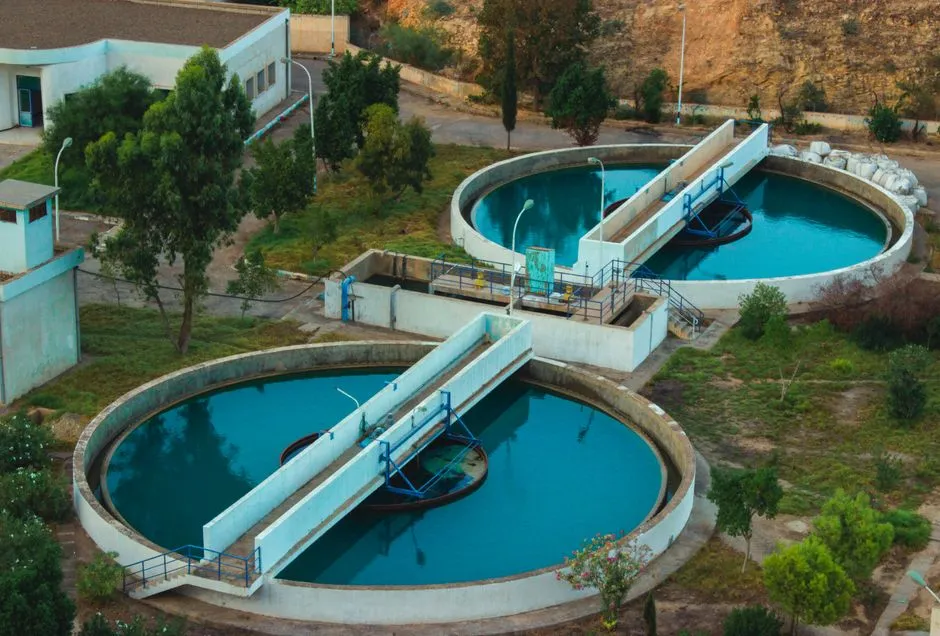
Discharge compliance and water reuse are separate design tests, because meeting NS 05-061 does not by itself establish unrestricted-irrigation suitability. The HydropureWater 2026 guide identifies ONAS as the permitting authority for discharges above 10 m³/day and states that review covers hydraulic capacity, effluent monitoring and sludge disposal.
For hotels discharging more than 10 m³/day, the guide attributes the following limits to NS 05-061: BOD₅ ≤40 mg/L, COD ≤120 mg/L, TSS ≤50 mg/L, FOG ≤20 mg/L, pH 6.5–8.5 and fecal coliforms ≤2,000 CFU per 100 mL. These are discharge-to-environment criteria, not reuse criteria.
| Parameter | NS 05-061 discharge limit reported by S2 | WHO 2006 unrestricted irrigation limit summarized by S2 |
|---|---|---|
| Fecal coliforms | ≤2,000 CFU per 100 mL | ≤10 CFU per 100 mL |
| Intestinal nematodes | Not specified in the supplied S2 summary | ≤1 egg/L |
| BOD₅ | ≤40 mg/L | Not specified in the supplied S2 summary |
| COD | ≤120 mg/L | Not specified in the supplied S2 summary |
| TSS | ≤50 mg/L | Not specified in the supplied S2 summary |
| FOG | ≤20 mg/L | Not specified in the supplied S2 summary |
| pH | 6.5–8.5 | Not specified in the supplied S2 summary |
Where the reuse line is intended for unrestricted irrigation, the S2 train adds lamella clarification and automatic-backwash multi-media filtration after MBR treatment and disinfection. The relevant equipment can be specified as a high-efficiency lamella sedimentation tank and a automatic-backwash multi-media filter. The buyer should require the performance guarantee to state whether each parameter applies at the reuse outlet, discharge outlet or both.
HydropureWater’s 2026 guide reports that 40–60% treated-effluent substitution can recover $0.40–$0.80 per cubic meter of displaced fresh water. The financial model should apply that benchmark only to water actually displaced. Before design freeze, confirm the current permit, receiving point and reuse rule with the relevant authority because the supplied research does not independently verify every present regulatory application.
Compare MBR, WSZ and Custom Plant Options
The HydropureWater 2026 procurement benchmarks favour a buried WSZ for smaller properties in the 30–80 m³/day range, an integrated MBR for reuse-sensitive applications and a custom concrete plant at larger scale. Its stated rule is that hotels below 200 rooms generally favour a plug-and-play WSZ or MBR skid on capital cost and schedule, while custom builds become more economical above 500 m³/day. These are S2 procurement benchmarks, not universal market prices.
| Decision factor | WSZ package | Integrated MBR | Custom concrete plant |
|---|---|---|---|
| S2 scale indication | Smaller properties in the 30–80 m³/day range | Package option generally favoured below 200 rooms; suited to defined reuse polishing | Becomes more economical above 500 m³/day |
| Process configuration | Anoxic/aerobic contact oxidation, sedimentation and disinfection in a buried unit | Dedicated membrane process with anoxic and aerobic zones, followed by disinfection and optional polishing | Designed around site-specific civil works and equipment |
| Footprint | Buried installation reduces above-ground congestion | S2 states approximately 60% less footprint than conventional activated sludge plus clarifier | Footprint depends on the selected civil and process design |
| Delivery | Prefabricated unit is craned into excavation and backfilled | Package skid reduces the amount of site biological construction | More procurement and construction interfaces |
| Principal risk | Hydraulic and organic basis may be understated; soil and lifting conditions require confirmation | Control complexity, membrane lead time and biological stability | Longer site works, interface risk and commissioning exposure |
The S2 installation sequence gives 8–12 weeks ex-works, 3–4 weeks for site work and 14–18 weeks from purchase order to compliant discharge. Bidders should state whether those durations include permit-dependent testing and who owns each delay. Civil readiness, excavation, lifting access, power, pipe routes and wet commissioning should therefore appear in the tender programme.
For package MBR equipment, S2 gives $280–$450 per m³/day of design capacity, FOB China, excluding civil works, sea freight and installation. At 110 m³/day, that becomes $33,000–$50,000 for equipment alone. Treat it as a source-specific benchmark rather than a Senegal market quotation. A fuller comparison of packaged options is available in the packaged sewage treatment plant selection guide.
Build the Capital and Operating Cost Model
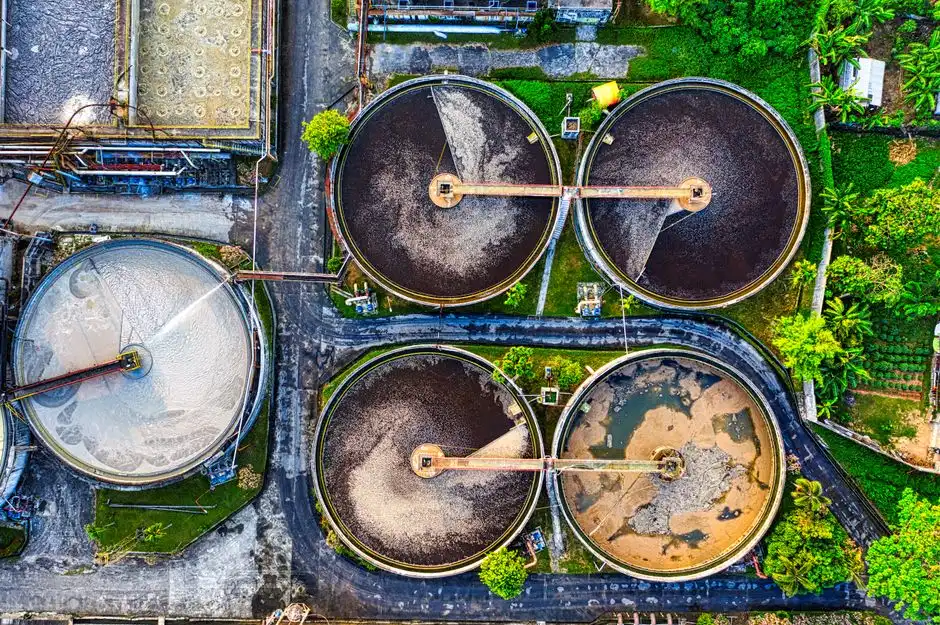
Equipment quotations and installed-project budgets must be separated because the 2026 HydropureWater guide reports $33,000–$50,000 FOB China for a 110 m³/day package MBR and $45,000–$75,000 as the broader all-in installed range for a typical 100-room hotel. Its worked FAQ example gives a more specific installed range of $45,000–$72,500. The difference reflects project-specific scope, so neither installed figure should be transferred without checking the bill of quantities.
| Cost layer | S2 2026 benchmark or required input | Procurement treatment |
|---|---|---|
| Package MBR equipment | $33,000–$50,000 for 110 m³/day, FOB China | Compare bids on the same capacity, membrane specification and scope. |
| Civil, freight and installation | S2 adds 30–45% above equipment cost | Price civil works, containerization or skid mounting, sea freight to Dakar, inland transport, installation and supervision separately. |
| All-in installation | $45,000–$75,000 broader guide range; $45,000–$72,500 worked example | Reconcile the difference between the two S2 figures against the actual scope. |
| Electricity | 0.8–1.2 kWh/m³ for MBR operation plus aeration blowers | Apply to the modelled throughput and local tariff. |
| Membrane replacement | Every 5–7 years; roughly 15–25% of initial membrane cost per event | Include in the lifecycle cash flow and confirm quoted lead time. |
| Reuse credit | $0.40–$0.80 per cubic metre where 40–60% of treated effluent displaces fresh water | Credit only the volume demonstrably displaced by toilet flushing and irrigation. |
The OPEX schedule should also price chemicals, service visits, membrane cleaning, laboratory or self-testing, power, sludge transport and disposal, consumables and operator training. The tender should request membrane replacement lead time, local spare-parts stock, service visit frequency, response time and what is excluded from the quoted guarantee. Treat the 0.8–1.2 kWh/m³ benchmark as a procurement assumption until the supplier confirms it against the selected duty.
Do not assume that all treated flow is reused. The $0.40–$0.80 per cubic metre benefit applies to the displaced portion identified by S2, so the model should use metered freshwater demand, toilet-flushing demand and irrigation demand. This keeps the reuse credit linked to an operating decision rather than nominal plant capacity.
Use a Risk-Based Vendor and Equipment Checklist
A credible shortlist should test tropical operating suitability and long-term serviceability before comparing price. The HydropureWater 2026 guide requests CE and ISO 9001/14001 documentation, at least three reference installations in West Africa or comparable tropical climates, membrane test reports and PLC remote telemetry. Require the references to identify climate, influent basis, operating hours, service arrangements and measured performance rather than only project names.
Material selection also needs a documented test trail. S2 describes PVDF as outperforming PES at sustained 35°C and tolerating chlorine cleaning at 500–1,000 ppm without permanent flux loss; it describes PES as degrading noticeably above 40°C. Ask each bidder to provide applicable membrane test reports and identify which cleaning chemicals and concentrations are permitted under warranty.
- Define the scope boundary: process, civil works, power, controls, commissioning, training, permits, sludge handling and performance testing.
- Require the pretreatment and equalization review, including laundry pH control, pool-backwash blending, solids removal and measured worst-case flows.
- Request the full hydraulic and organic sizing calculation, including membrane area, biological HRT, redundancy and peak operation.
- Require PLC remote telemetry, operator access controls, alarm history, data export and cybersecurity arrangements for an internet-connected system.
- Request a local or regional spare-parts plan. S2 identifies membrane replacement lead time as the largest MBR OPEX risk, so stock location and replenishment responsibility must be contractual.
- Define the performance guarantee, acceptance tests, sampling protocol, training, service response, consumables and excluded conditions.
- Confirm the final design values against current permits, site influent testing and the final equipment proposal, as required by S2.
When asking for an integrated MBR proposal, the integrated MBR membrane bioreactor technical schedule should expose membrane material, operating flux, controls, telemetry, cleaning method and replacement terms. This is more useful than accepting a generic “hotel package” label.
Frequently Asked Questions
What will hotel resort wastewater treatment in Senegal cost for a 100-room property?
HydropureWater’s 2026 guide gives $33,000–$50,000 FOB China for a 110 m³/day package MBR based on the worked hotel example. Its broader all-in installed range is $45,000–$75,000, while the worked example states $45,000–$72,500. Before setting a budget, ask each bidder for a bill of quantities separating membrane equipment, equalization, pretreatment, civil works, power, controls, Dakar freight, inland transport, installation, commissioning and sludge disposal.
How long will the treatment plant take to install and reach compliant discharge?
The S2 sequence is 8–12 weeks ex-works, 3–4 weeks for site work and 14–18 weeks from purchase order to compliant discharge. Make the tender programme conditional on excavation access, power availability, lifting requirements and permit-dependent testing. Require the supplier to state exactly what “compliant discharge” includes and which party owns each approval and commissioning activity.
Does a resort need a full-time wastewater plant operator?
S2 states that a dedicated operator is not required for plants under 200 m³/day when PLC control and remote telemetry are provided. It proposes quarterly service visits, including membrane integrity testing, chemical replenishment and calibration, with daily visual checks by the resort maintenance team. The tender should still define alarm escalation, access, sampling, recordkeeping and local corrective-action responsibility.
Can the same treatment train discharge to the environment and provide unrestricted irrigation reuse?
Only if it meets both applicable performance targets. S2 distinguishes the NS 05-061 hotel discharge criteria from the WHO 2006 unrestricted-irrigation summary of fecal coliforms ≤10 CFU/100 mL and intestinal nematodes ≤1 egg/L. The reuse line therefore needs stronger pathogen control and the additional lamella clarification and automatic-backwash multi-media filtration identified in the S2 train. Obtain written confirmation of the reuse rule and required monitoring from the relevant authority.
How should a resort select a wastewater treatment supplier?
Ask for at least three West African or comparable tropical reference installations, CE and ISO 9001/14001 documentation, membrane test reports, PLC telemetry details and a spare-parts stocking plan. Then require transparent scope boundaries, a measurable performance guarantee, acceptance tests, operator training, remote-monitoring obligations, service response times, consumables and a defined sludge route. Do not shortlist on package capacity or price alone; test whether the supplier can support the selected duty and provide replacement parts when required.