Which Rules Control a Monroeville Sewer Discharge?
Mining and metals plants near Monroeville meet pretreatment limits by treating each wastewater stream against the most stringent applicable requirement, then verifying compliance before discharge. Federal mining effluent guidance in 40 CFR Part 436, an NPDES permit where applicable, and the receiving sewer authority’s local limits may apply in layers. A defensible train generally starts with characterization and equalization, followed by pH correction, coagulation, solids separation, multimedia filtration, and membrane polishing when dissolved metals or salts remain. The correct equipment and final design values must be confirmed against the current permit, representative influent testing, and the Monroeville-area receiving authority’s requirements.
40 CFR Part 436 covers mine drainage, mineral-processing operations, and stormwater runoff, and its requirements are incorporated into NPDES permits (EPA, 2026-02, as summarized in the supplied commercial research). A mine may also be an industrial user subject to the receiving publicly owned treatment works’ pretreatment program. The applicable federal permit, pretreatment authorization or permit, local limits, monitoring requirements, and prohibited-discharge rules therefore form separate approval layers. The receiving authority—not a generic mining webpage—must identify which requirements apply to the proposed discharge.
The research identifies reserved subparts for Dimension Stone (A), Lightweight Aggregates (H), Lithium (U), Ball Clay (AH), Feldspar (AI), Talc/Steatite/Soapstone/Pyrophyllite (AJ), and Garnet (AK). A reserved subpart does not by itself supply numeric effluent limits; the operator must confirm whether the site’s mineral falls under an active subpart with numeric limits or a reserved subpart (EPA, 2026-02, as summarized in the supplied commercial research). No Monroeville-area numeric limit was supplied, so none should be inserted into an equipment specification without written confirmation.
| Approval layer | What it controls | Information the buyer must obtain |
|---|---|---|
| 40 CFR Part 436 and applicable NPDES permit | Mine drainage, mineral-processing wastewater, and covered stormwater requirements | Current permit, covered discharges, applicable subpart, monitoring conditions |
| POTW pretreatment program | Acceptance of industrial wastewater into the sewer system | Local discharge limits, prohibited discharges, monitoring, sampling, and authorization |
| State and site requirements | Conditions not supplied by the federal or local approval alone | Current state authorization, waste-characterization rules, and applicable monitoring records |
OSMRE describes mine drainage as a persistent metals-pollution source and investigated both direct treatment and co-treatment at municipal wastewater plants (OSMRE, 2023-06). Co-treatment is not a default design for an industrial discharger: the OSMRE work used municipal wastewater and identified potential increases in effluent iron loading and an approximately 0.5 pH-unit decrease during continuous trials. The regional mining pretreatment guide provides a useful comparison, but the Monroeville permit basis still must come from the receiving authority.
Characterize the Wastewater Before Choosing Equipment
Mining wastewater must be separated into design streams because acidity, dissolved metals, suspended solids, process reagents, and salts impose different treatment requirements. A single average influent result can conceal the peak acidity, metal load, or process-chemical event that determines equipment capacity and chemical demand.
Acid mine drainage can contribute acidity and dissolved metals. Process water may contain reagents, dissolved ore constituents, elevated TDS, and site-specific compounds such as cyanide, ammonia, or chloramines. Tailings-pond effluent may carry fine solids, processing chemicals, and leached metals. Dewatering discharge varies with geology and may be relatively clean or materially metal-loaded. These stream definitions should be established before equipment is selected.
The OSMRE study sampled three raw mine-drainage sources with pH values from 3.13 to 4.58 (OSMRE, 2023-06). Those values demonstrate why acidity, alkalinity, and metal loading must be measured; they are not design criteria for a Monroeville site. Representative sampling should also establish whether the streams can be combined or should remain segregated through treatment.
| Design stream | Principal concern | Required characterization | Decision enabled |
|---|---|---|---|
| Acid mine drainage | Acidity and dissolved metals | pH, alkalinity, flow, metals, sulfate, hardness | Chemical neutralization and metal-hydroxide precipitation |
| Process water | Reagents, dissolved ore constituents, and salts | Permit analytes, process-specific constituents, TDS or conductivity, flow | Segregation, treatment intensity, and reuse assessment |
| Tailings-pond effluent | Fine solids and leached metals | TSS, metals, pH, flow, and constituent data | Solids capture and clarification basis |
| Dewatering discharge | Variable geology and metal loading | Source-specific pH, flow, metals, TSS, and alkalinity | Whether to combine with drainage or treat separately |
For every stream, request representative results for pH, flow, TSS, metals, alkalinity, hardness, sulfate, TDS or conductivity, and any process-specific constituent named by the permit. Also document average and peak discharge, storm and upset conditions, sampling points, and the intended reuse demand. Where the authority requires composite sampling, continuous monitoring, or specific analytical methods, those requirements belong in the design basis as well. The permit may add analytes not visible in a generic characterization list, so the final analyte schedule must come from the current approval documents.
Build a Treatment Train Around the Failure It Prevents
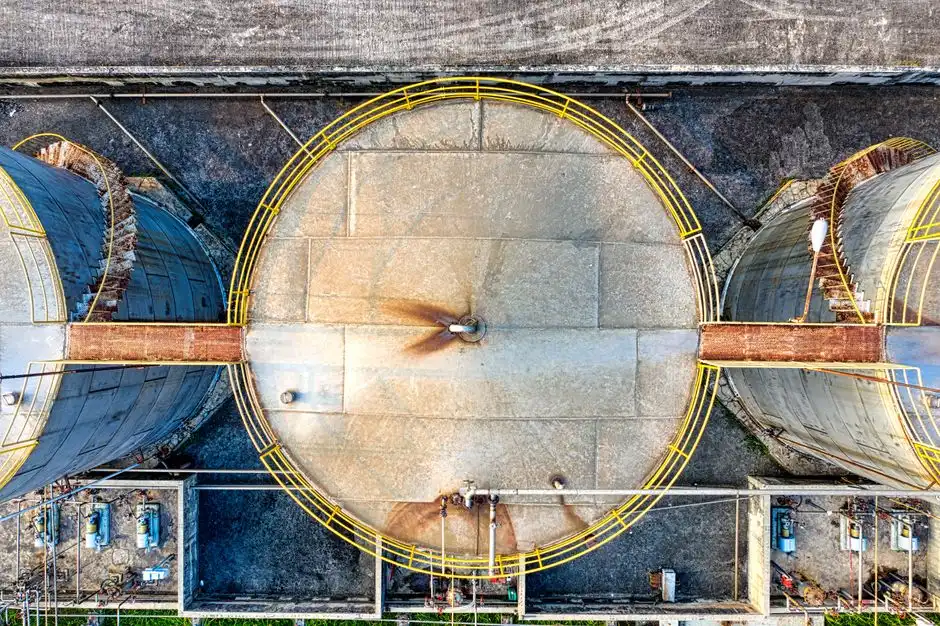
A defensible treatment train has six linked functions, and each unit operation should be purchased against the failure it prevents downstream.
- Equalization and flow management: Buffer variable mine-water flows so chemical feed, settling, filtration, and membrane systems are not exposed to uncontrolled peaks. The equalization calculation must use representative peak and upset conditions, not only an annual average.
- pH correction and metal hydroxide precipitation: Adjust pH so dissolved metals can precipitate as hydroxides. A cited AMD sequence raises pH above 10 with lime before thickening (PMC review, 2024-02, as summarized in the supplied commercial research), but the target must come from jar testing, influent chemistry, and permit requirements.
- Coagulation and flocculation: Aggregate suspended solids and fine metal particles into floc that the next separation step can remove. Chemical selection must be based on the required floc behavior rather than a generic product list.
- Solids separation: Use DAF when buoyant floc, oils, or floatable fines are important; use lamella clarification when sludge volume and footprint drive the decision (Genesis Water Technologies, 2025-11, as summarized in the supplied commercial research).
- Filtration and membrane polishing: Multimedia filtration removes turbidity and colloids before RO. The multimedia filter used for RO protection should be specified by the required outlet condition, including target SDI, rather than inlet turbidity alone. RO is then used when dissolved metals or salts remain above the sewer target. The supplied commercial research reports more than 99% rejection of dissolved metals and salts, with cited recovery of 50–70% for AMD feed and 70–85% for the RO stage of a ZLD train (AMPAC USA, 2025-09); the project recovery curve must be validated.
- Sludge handling: Chemical precipitation creates metal-bearing solids that require dewatering, characterization, handling, and a confirmed disposal route. See the comparison of dewatering options for mining sludge.
The sequence is not a guarantee that every stream needs every stage. For example, a segregated, low-solids stream may not justify the same membrane system as high-salinity process water. The design should show what each stage receives, what it removes, and what failure would occur if it were omitted.
Match Each Unit Operation to the Wastewater
Equipment selection should follow contaminant type, hydraulic condition, and downstream protection requirements—not a supplier’s standard skid.
For chemical control, specify a PLC-controlled automatic chemical dosing skid for pH adjusters, coagulants, flocculants, and specialty reagents. Automatic dosing, pre-wiring, and HMI integration should be tied to the measured control variable and the plant control narrative. The scope must also define tank capacity, duty/standby arrangement, calibration, and operator access.
For solids separation, compare the industrial DAF system for mining solids separation with a lamella clarifier. DAF is the stronger candidate where floc is buoyant, oils are present, or fines need to float. Lamella is generally more appropriate where heavy metal-hydroxide sludge volume and footprint constrain the installation. A high-efficiency sedimentation tank can be evaluated for footprint-sensitive clarification, but the decision must consider underflow solids, solids handling, and downstream filtration demand.
| Buyer decision | Selection condition | Information to require |
|---|---|---|
| DAF or lamella | Buoyant or oily floc favors DAF; heavy sludge and footprint constraints favor lamella | Floc properties, oil loading, hydraulic peak, underflow solids, sludge route, available footprint |
| Multimedia or UF before RO | Use multimedia for turbidity/colloid control; use UF when the specified membrane-feed condition requires it | Target outlet SDI, flow, chemistry, membrane material, flux, and backwash requirements |
| RO polishing | Dissolved metals or salts remain above the permitted target | Representative feed, recovery curve, concentrate route, and pilot or trial data |
| Filter press | Chemical-precipitation sludge requires dewatering before authorized disposal | Sludge volume, cake target, cycle time, filtration area, and controls |
The supplied UF specification is 0.03-micron PVDF, 2,000–40,000 L/h, automatic backwash, and air scour for RO pretreatment duty (commercial product research, 2026-02). Those values describe the cited equipment, not a recommended Monroeville flow. A UF system for RO pretreatment should therefore be selected against actual feed chemistry and peak duty.
For dissolved contaminants, evaluate industrial RO after a representative membrane-feed trial. The cited rejection claim is not a guarantee; site chemistry, scaling, recovery, and concentrate disposal determine performance. For chemical-sludge dewatering, the plate-and-frame filter press is available in filtration areas from 1 m² to 500 m² with manual, hydraulic, or fully automatic PLC control (commercial product research, 2026-02). These are product configuration choices, not project sizing values.
Do not use the OSMRE co-treatment results as a default industrial process. The work involved municipal wastewater and identified increased effluent iron loading and an approximately 0.5 pH-unit decrease in continuous trials (OSMRE, 2023-06). A separate comparison with biological treatment options for mining wastewater may be needed where organic or ammonia loads justify biological treatment, but it does not replace chemical characterization.
Turn the Permit Basis Into a Supplier Request
A comparable quotation requires a common site-specific design basis; otherwise vendors are pricing different treatment problems.
Issue the current permit and sewer-pretreatment limits with the request for quotation. Include limits and prohibited conditions for pH, metals, and TSS only where the authority has supplied them, together with monitoring, sampling, and reporting requirements. Do not populate missing local numbers from industry guidance or assume that a federal mining limit is automatically the sewer discharge limit.
Provide average and peak flow in m³/h, representative influent results by stream, the required pH and metals targets, reuse percentage, available footprint, available utilities, and the authorized sludge-disposal route. A buyer should also provide storm or upset conditions and the intended operating philosophy, because those inputs determine equalization, pumping, chemical storage, and redundancy.
| Supplier response required | Acceptable evidence | Procurement check |
|---|---|---|
| Design flow and equalization | Stream-by-stream hydraulic calculation | Peak, upset, and reuse assumptions are stated |
| Chemical and process setpoints | Jar-test or pilot basis where available | Targets are not copied from a generic treatment train |
| Equipment sizing | Calculations tied to identified contaminants | DAF versus lamella and filtration choice are justified |
| RO performance | Site-relevant recovery and rejection basis | Concentrate and scaling assumptions are included |
| Controls and monitoring | Control narrative, I/O list, and monitoring plan | Permit records and PLC/HMI functions are identified |
| Sludge generation | Estimated mass from the chemical balance | Moisture content, handling, and disposal route are stated |
Ask each supplier to identify design flow, equalization volume, chemical setpoints, sizing calculations, recovery assumptions, control narrative, redundancy, maintenance access, expected sludge-generation rate, and an effluent guarantee tied to the confirmed receiving limit. Also request lifecycle costs for chemicals, sludge disposal, membrane or filter replacement, power, and operator labor. The supplied research contains no complete-system price points, so the comparison should be based on scope, guarantees, operating assumptions, and lifecycle cost—not an invented price range.
Frequently Asked Questions
What compliance limits apply to a mining or metals plant discharging to a Monroeville-area sewer?
40 CFR Part 436, NPDES requirements where applicable, and the receiving sewer authority’s pretreatment rules may operate in layers, so the plant must use the most stringent applicable requirement. Confirm the current federal permit, pretreatment authorization, local discharge limits, monitoring conditions, and prohibited discharges with the receiving authority and other relevant regulators. No Monroeville numeric limit can be inferred from the supplied research.
What information is required to size an industrial wastewater pretreatment system?
Provide peak and average flow, representative chemistry for each stream, equalization needs, reuse targets, and confirmed permit limits. A generic capacity band is not a defensible sizing basis. The chemical balance, peak hydraulic condition, sludge-generation estimate, and receiving limits should drive equipment selection.
How should a buyer select a mining wastewater treatment supplier?
Request stream-specific design calculations, equipment guarantees, control integration, membrane-feed data, recovery curves, maintenance support, and a complete sludge-handling plan. Check that each proposed unit operation addresses an identified failure risk and that the supplier’s quoted flow, chemistry, footprint, and utility assumptions match the site. For membrane systems, require evidence appropriate to the actual feed rather than a generic rejection claim.
Should a mining plant use DAF or a lamella clarifier?
Use DAF where the treatment objective depends on buoyant floc, oily material, or floatable fines. Favor lamella where heavy metal-hydroxide sludge volume and footprint are the governing constraints. The decision should also account for underflow solids, sludge handling, downstream filtration needs, and the variability of the actual waste stream.
Can mine drainage be co-treated at a municipal wastewater plant instead of treated on site?
Not as a default. The OSMRE study was specific to municipal wastewater and identified potential increases in effluent iron loading and an approximately 0.5 pH-unit decrease in continuous trials (OSMRE, 2023-06). Any co-treatment proposal requires acceptance by the receiving authority and a site-specific industrial treatment evaluation; municipal research does not replace that assessment.