
What Treatment Does a Changwon Data Center Actually Need?
A Changwon data center normally needs separate treatment for sanitary sewage, cooling-tower blowdown and other process wastewater. Cooling blowdown should be characterized for conductivity, pH, suspended solids, silica, hardness, residual treatment chemicals and contamination risk, then screened for pretreatment before any reuse. Where a reliable cooling-water make-up destination exists, a UF–RO train can recover high-quality water; industrial RO systems are available with recovery rates up to 95%. Otherwise, DAF or clarification may suit solids-bearing industrial streams, while MBR can produce near-reuse effluent from biological wastewater. Final equipment sizing, discharge compliance and treatment selection require site data and Changwon permit requirements.
Do not specify one treatment train for every drain at the site. A practical design first separates streams by chemistry, regulatory status and disposal route:
- Sanitary sewage: collection, equalization, biological treatment, solids separation and disinfection, with a permitted final route.
- Cooling-tower blowdown: dedicated collection, solids control, scaling assessment, membrane pretreatment where justified, and reuse or controlled residual disposal.
- Process wastewater: source-specific treatment for the contaminants present rather than an assumption that it can enter the sanitary or cooling-water system.
- Storm water: segregation from contaminated process water, followed by the route required for the site drainage design.
- Hazardous or regulated industrial waste: segregated storage and a dedicated waste-treatment or disposal route.
Across these streams, the source-to-disposition sequence is collection, equalization, characterization, pretreatment, primary or biological treatment as applicable, disinfection where required, reuse and residual management. The detailed cooling-blowdown treatment guide for a data center illustrates the treatment logic, while the data-center wastewater treatment framework for another water-constrained city shows why local inputs remain essential.
Water management belongs in capacity and resilience planning. IDE Tech reported in 2026 that a 100-megawatt facility can require up to 2 million liters of water per day. The Changwon design therefore needs the current and proposed cooling configuration, a site water balance, wastewater analyses, intended reuse destinations and written discharge or sewer conditions. The supplied research establishes no Changwon permit limits, water-supply conditions or receiving-water data; those items must be obtained from the relevant authorities rather than inferred from overseas case studies.
Characterize Every Wastewater Stream Before Choosing Equipment
Equipment sizing starts with measured source data, not a single sample or the data-center’s IT megawatt rating. Build a source-by-source inventory that records flow, temperature, pH, conductivity, TSS, oil and grease, hardness, silica, calcium, chloride, residual biocide and treatment chemicals. The multimedia filtration equipment described for this application illustrates why feed chemistry must be established before a treatment train is selected.
| Design input | Minimum evidence requested | Why it changes the decision |
|---|---|---|
| Flow | Average, peak and minimum hourly flow; operating hours; start-up, shutdown and emergency-dump conditions | Determines equalization, treatment capacity, storage and standby duty |
| Water chemistry | Seasonal source-specific analyses with operating-range and event samples | Sets pretreatment, membrane compatibility, chemical demand and residual routes |
| Cooling operation | Makeup, evaporation, blowdown, reuse and measured losses | Establishes the data center water balance and actual treatment load |
| Reuse destination | Required quality, expected demand, operating hours and compatibility limits | Determines whether lower-grade reuse is preferable to cooling make-up |
| Residual route | Permit basis, receiving-system conditions and solids or concentrate acceptance | Prevents treatment capacity from being purchased without a viable outlet |
For cooling water, use the theoretical blowdown relationship of 1/(CoC−1) to establish an initial estimate. At 4 cycles of concentration, the relationship gives 25% blowdown; at 6 CoC, it gives 20%. Genesis Water Technologies reported in 2026 that actual blowdown can exceed theoretical estimates by 15–30% because of unmeasured losses and emergency dumps. The operating value should therefore be based on meter records and event logs, with the theoretical calculation used as a check.
Measure makeup water, evaporation, blowdown and reuse separately. Sampling must span seasonal operation, variable cooling load and abnormal operating states. A clean-water result does not characterize concentrated circulating water, while one full-load sample may miss chemical carryover, start-up dumps or composition changes.
Water Usage Effectiveness should not be the sole acceptance metric. Genesis Water Technologies described WUE in 2026 as annual site water usage divided by IT equipment energy and gave 0.47 gal/L, equivalent to 1.8 L/kWh, as an example within a cited 0.47–0.65 gal/L, or 1.8–2.5 L/kWh, range. That metric does not distinguish consumed water from water returned to the source, so it does not by itself demonstrate that blowdown has been reused effectively.
Treat Cooling-Tower Blowdown as a Separate High-Salinity Stream
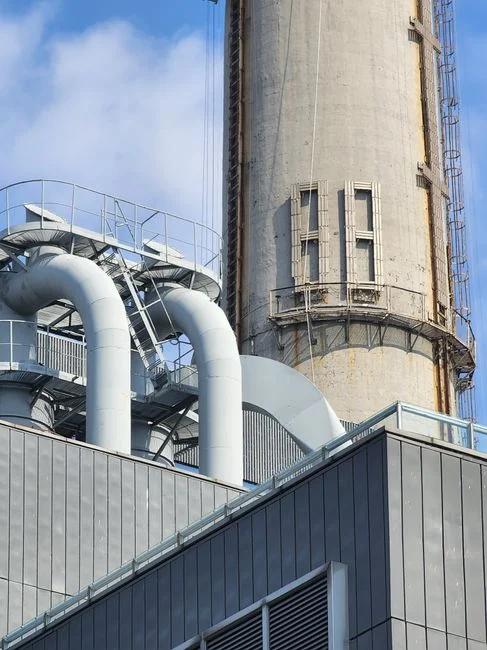
Cooling-tower blowdown is not dilute sewage. Evaporation removes water while leaving dissolved salts behind, and the tower periodically purges concentrated circulating water to control scaling and corrosion. Its chemical load makes reuse a design problem involving sparingly soluble compounds rather than a simple filtration task.
Silica, calcium carbonate and calcium sulfate are the principal scaling constraints identified by IDE Tech in 2026. Their behavior can limit recovery, foul RO membranes and affect downstream heat-transfer equipment. Consequently, the feed analysis must include the parameters needed for a scaling and solubility assessment, and the operating plan must control chemical additions that increase dissolved solids.
IDE Tech reported in 2026 that conventional brackish-water RO for cooling-tower blowdown typically reaches 75–80% recovery before scaling becomes unmanageable. Treat that as a conventional design benchmark, not a universal ceiling or a Changwon guarantee. An industrial reverse osmosis system for cooling-water recovery should be selected against the actual feed chemistry, recovery target, pretreatment and concentrate-disposal route.
A higher-recovery design can add controlled salt precipitation. IDE Tech describes routing RO concentrate to a fluidized-bed reactor where inhibitors are deactivated and sparingly soluble salts precipitate as dense pellets for solids withdrawal. The remaining brine is then described as primarily sodium chloride. This concept requires project-specific feasibility testing for precipitation, pellet handling, chemical control, hydraulics and concentrate stability; it is not a standard configuration to impose on an uncharacterized Changwon feed.
IDE Tech also described an industrial deployment blending blowdown from 20 hybrid cooling towers with RO brine and manufacturing wastewater. Its reported desalter operating point was approximately 95% overall recovery with permeate silica of about 1 mg/L. These are application-specific results, not guaranteed performance for a Changwon data center or a basis for selecting equipment without current site data.
Recovery and reuse value must be separated. RO can reduce freshwater withdrawal when its permeate has a destination, but it does not remove the obligation to manage solids, antiscalant, cleaning chemicals, membrane rinse water and residual concentrate. A water-softening step may also be required where hardness control supports downstream reuse, but it does not replace silica control or concentrate management.
Match the Treatment Train to Each Wastewater Stream
Treatment selection should follow the contaminant and end use, with each unit sized from measured flow and chemistry. The decision framework is:
- If cooling blowdown contains solids: evaluate media filtration or equivalent solids control, followed by UF where membrane protection requires it, and RO where the reuse specification and recovery target justify the additional stage.
- If wastewater contains suspended solids, FOG, oil and grease or colloids: evaluate DAF as a physical separation step before biological or membrane treatment.
- If sanitary sewage or biodegradable process wastewater requires a high-quality biological effluent: evaluate MBR, subject to aeration, cleaning, sludge removal and downstream disposal.
- If reuse requires very low dissolved salts: evaluate brackish-water RO with feed-specific scaling control and a complete residual route.
- If direct reuse is unsuitable: evaluate lower-grade process reuse, controlled discharge or evaporation and crystallization, subject to confirmed authority requirements.
| Technology | Applicable role | Selection evidence required |
|---|---|---|
| UF | Solids removal and protection before RO or sensitive reuse | Feed turbidity, flow, membrane compatibility, backwash waste and cleaning method |
| DAF | Removal of suspended material, oil and grease or floatable contaminants | Feed load, oil characteristics, chemical use, sludge withdrawal and odor controls |
| MBR | Biological treatment with membrane solids separation | Organic load, hydraulics, aeration, membrane cleaning and sludge route |
| Industrial RO | Dissolved-salt removal for reuse | Complete ionic analysis, scaling model, recovery, antiscalant, cleaning and concentrate disposal |
| Disinfection | Microbial control after the intended reuse and health-risk assessment | Reuse exposure, contact requirement, residual control, monitoring and chemical supply |
The HydropureWater UF range is 2,000–40,000 L/h, with 0.03-micron PVDF membranes, turbidity acceptance up to 300 ppm, automatic backwash and air scour. Use these as screening limits, not selection guarantees. A UF pretreatment train for RO and cooling blowdown must still be checked against actual feed conditions.
For solids-bearing wastewater, the supplied DAF range is 4–300 m³/h across 13 standard models. A DAF system for wastewater solids and oil removal should be selected from measured contaminant loading, not average flow alone. The supplied MBR range is 10–2,000 m³/day with filtration below 1 μm; an MBR system for biological wastewater treatment must be checked against biological loading, operating hours and sludge handling.
Industrial RO capability of up to 95% recovery is a product ceiling, not the selected project recovery. Genesis Water Technologies described a two-stage physical-separation case in 2026 where treated blowdown was redirected to non-critical process uses and reported makeup-water demand fell by 15–25%. That supports partial reuse as an option when closed-loop make-up quality is unnecessary.
Add disinfection only after defining the receiving use and health-risk assessment. The supplied chlorine-dioxide range is 50–20,000 g/h across manual and fully automated configurations. Select output from demand, dosing control and residual-monitoring data rather than choosing from the range alone.
Build a Water-Recovery and Residual-Disposal Decision Framework
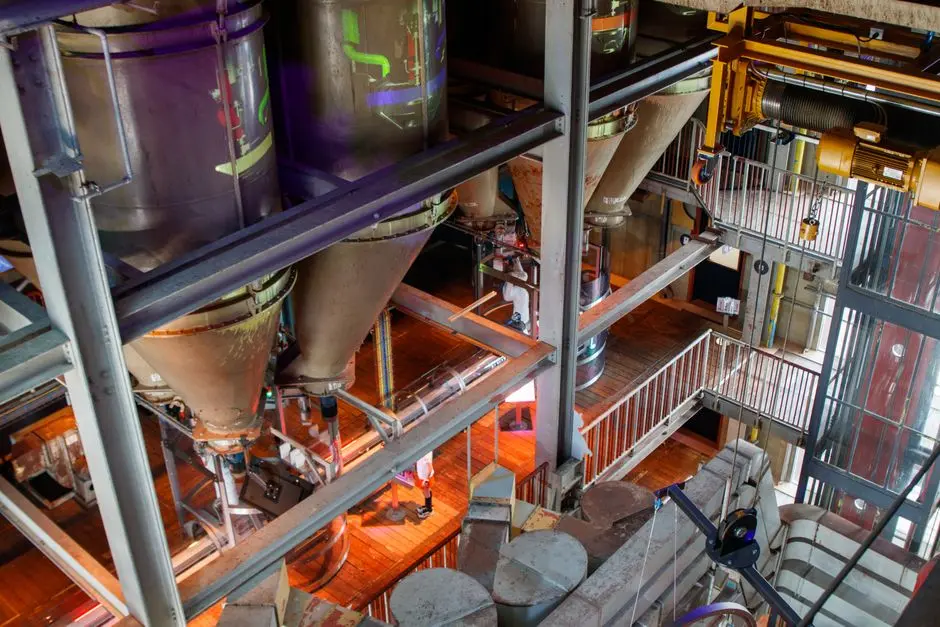
A recovery train should be justified by reduced freshwater withdrawal and residual discharge, not by recovery percentage alone. Rank destinations by demand, chemistry and operational compatibility: cooling-tower make-up first only where its quality requirement can be met reliably; then suitable process water, toilet flushing, washing or irrigation. Each destination needs its own specification and contamination assessment.
Genesis Water Technologies reported in 2026 that conventional cooling systems discharge approximately 20–40% of intake water as blowdown. That source range describes the size of the recovery opportunity, not a Changwon design value. Set a site objective from the measured water balance, then compare the capital, operating and residual-management cost of each route.
When direct reuse is unsuitable, assess dilution, controlled discharge, or evaporation and crystallization. The correct residual route must be confirmed in writing with the relevant Changwon authority. For evaporation or crystallization, request feed chemistry, scaling and solubility data, energy demand, condensate quality and handling, and solids-disposal requirements. The supplied research provides no Changwon cost or energy case.
Residual management remains part of the treatment train. A plate-and-frame filter press can be evaluated for dewatering separated solids, while an automatic chemical-dosing system may support controlled pretreatment or disinfection. Neither should be included without a solids mass balance, chemical demand and disposal route.
Design for upset conditions. Provide bypass logic, standby capacity and an approved route for off-spec water so a reuse-system failure does not interrupt critical cooling or cause uncontrolled blowdown. DCD reported in 2021 on the Korea-based Tomorrow Water concept, which co-locates wastewater recovery and data-center infrastructure and uses data-center waste heat. That is broader infrastructure context, not a Changwon site-treatment design.
Plan for Changwon Permitting, Monitoring and Operations
Product treatment capability does not establish permit compliance. Before ordering equipment, obtain written confirmation from the receiving sewer or discharge authority for the wastewater source, temperature, pH, suspended solids, oil and grease, conductivity and any locally regulated pollutants. The supplied research contains no numeric Changwon limits, so the permit envelope must remain open until confirmed.
Define each permit boundary. Cooling blowdown, sanitary sewage and industrial process streams may have different sources, sampling points, monitoring frequencies, recordkeeping duties and emergency responses. Establish who owns each discharge route and how an upset will be contained, sampled and reported.
Specify online measurements and interlocks appropriate to the train: flow, pH, conductivity, differential pressure and turbidity where relevant. Reuse water should automatically divert or move to controlled discharge when its quality leaves the agreed operating band. The valves, media and treatment parts used for monitoring and control should therefore be specified as part of the operating system, not as incidental accessories.
Each process has a specific operating burden:
- MBR: membrane cleaning, aeration, sludge removal and final solids disposal.
- UF: backwash frequency, backwash-water quality and waste treatment.
- RO: antiscalant control, membrane cleaning, high-recovery pretreatment, high-recovery pretreatment, concentrate routing and sampling.
- DAF: chemical conditioning, float removal, sludge withdrawal and odor management.
Develop one signed-off water balance covering makeup, evaporation, blowdown, reuse, discharge and emergency losses, then reconcile it with facility WUE reporting. Baker Donelson’s guidance on emerging risks to data-center cooling systems is useful risk context, but final legal and permit conclusions require South Korean regulatory and local-authority review.
Equipment Sizing and Supplier-Selection Checklist
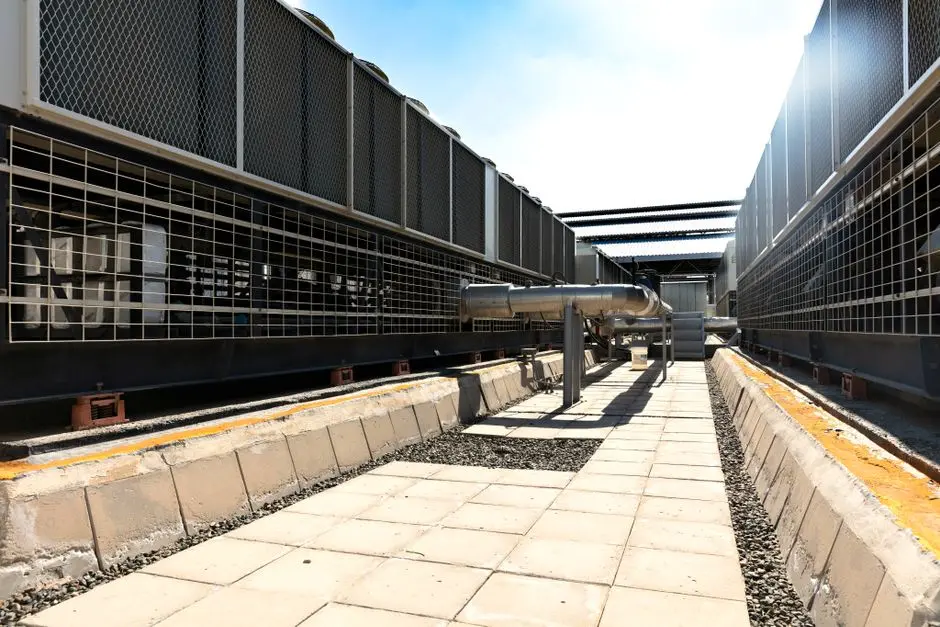
A defensible specification starts with a complete design basis. Request the design flow, maximum and minimum hourly flow, seasonal feed analyses, required recovery, reuse-water specification, operating hours, expansion plan and utility availability. Include RO and UF replacement elements in the long-term maintenance review rather than evaluating membranes only at purchase.
| Screening range | Published scope | Information still required |
|---|---|---|
| UF | 2,000–40,000 L/h | Peak flow, turbidity, recovery, backwash demand and feed chemistry |
| DAF | 4–300 m³/h across 13 standard models | Contaminant loading, operating hours, chemicals and sludge route |
| MBR | 10–2,000 m³/day | Organic loading, hydraulic profile, aeration and sludge disposal |
| Industrial RO | Product capability up to 95% recovery | Feed-specific recovery, scaling analysis, permeate quality and concentrate disposal |
| Chlorine dioxide | 50–20,000 g/h across manual and fully automated configurations | Design demand, dose control, residual limits and safety requirements |
Ask each bidder to define the treatment train, performance guarantees, bypass arrangement, solids and concentrate destinations, chemical consumption, cleaning cycles, spare parts, local service response and commissioning responsibilities. Require a mass balance for every selected unit, including feed, permeate, reject, sludge, wash water and chemical demand.
Compare bids on total cost of ownership and allocated risk: utilities, chemicals, membrane or media replacement, waste disposal, operator time, redundancy, downtime and compliance exposure. A lower equipment price can be outweighed by fouling, inconsistent recovery or unavailable local support.
Treat references as evidence of a particular application. IDE Tech’s approximately 95% overall recovery and approximately 1 mg/L permeate silica came from an industrial deployment in 2026, not a Changwon data-center guarantee. Require bidders to identify the feed composition, operating mode and acceptance conditions behind every performance claim.
Frequently Asked Questions
What determines the cost of wastewater and cooling-blowdown treatment in a Changwon data center?
The principal cost drivers are measured design flow, feed analysis, treatment-train complexity, recovery target, reuse infrastructure, solids or concentrate disposal, controls, utility demand and operator staffing. No Changwon project quotation is provided in the supplied research. Request a scenario-based budget separating equipment, installation, utilities, chemicals, media or membrane replacement, waste routes, testing, training and contingency.
How should treatment capacity be sized for a data center in Changwon?
Do not select capacity from IT megawatt alone. Require peak and minimum hourly wastewater flow, seasonal feed chemistry, cooling-system operating profile, operating hours, reuse-water specification and maximum recovery duty. The supplier should demonstrate that the selected train handles startup, shutdown and upset conditions, with redundant capacity or an approved diversion route where continuity is required.
What should buyers check before selecting an equipment supplier?
Request guaranteed flow and permeate or effluent duty, the recovery basis, membrane or media guarantees, reference feed data, spare-parts availability, local service response and contractual acceptance tests. Also require complete mass balances and clear allocation of waste-disposal and compliance risk. A catalogued maximum recovery rate is a screening value, not a guaranteed site performance.
Does a treatment system guarantee compliance for a Changwon data center?
No. Treatment equipment can be designed to meet a specified water quality, but permit compliance depends on the approved discharge route, source classification, local limits, monitoring and operating controls. The supplied research provides no Changwon-specific permit limits. Obtain written requirements from the relevant authority, define automatic off-spec handling, and obtain South Korean regulatory review before finalizing the train.
Related Equipment
- MBR system for biological wastewater treatment — specifications, capacity range, and technical data