What Treatment Does an Industrial ETP in Ahmadi Need to Deliver?
An effluent treatment plant in Ahmadi is an engineered treatment system that converts industrial wastewater into a stream suitable for its intended discharge or reuse route. The right design depends on the source wastewater, flow rate, contaminants, reuse application, and applicable permit—not simply on the plant name. Industrial ETPs can combine pretreatment, biological treatment, membrane separation, and disinfection. For procurement, request a complete performance guarantee, process drawings, guarantees for each critical parameter, sludge handling details, commissioning tests, and O&M documentation.
Start with the destination, not the equipment. A discharge route, on-site process-water reuse, cooling-water makeup, washing, irrigation, or another non-potable application each require a different water-quality profile. University of Twente research identifies nanofiltration as a method for polishing wastewater-treatment-plant effluent, while Wageningen University and Research examines constructed wetlands for micropollutant removal. These studies support advanced treatment options; they do not establish the applicable Ahmadi permit or reuse specification.
Identify the industrial source and every relevant process stream. Textile, pharmaceutical, food and beverage, chemical, paper and pulp, leather, and metal-processing plants can generate materially different wastewater. A 2025 textile-effluent study by Sayam in the International Journal of Basic Applied and Multidisciplinary Research characterized pH, TDS, DO, BOD, TSS, Cu, Zn, and Cr. The Bangladesh Department of Environment limits cited in that study are examples of the textile sector’s analytical range, not Saudi limits.
Request average, peak, and batch-discharge flow records, operating hours, future expansion, and episodic high-strength releases. The supplier must then state the design inlet basis, intended outlet use, governing permit, proposed sampling points, and every assumption requiring client confirmation. A 2026 effluent treatment plant design guide provides a broader reference for converting these requirements into a defensible design basis.
Build the Ahmadi ETP Process Around the Wastewater
A coherent treatment train assigns each unit a defined contaminant-removal duty before the water reaches the next process step. Screening and pretreatment protect downstream equipment from solids, rags, plastics, fibrous debris, oil and grease, and colloidal material. Chemical dosing can support coagulation, flocculation, neutralization, or contaminant removal, but the bid should name the chemical, dose range, control signal, residual handling, and dosing-system arrangement.
| Process stage | Required scope | Buyer check |
|---|---|---|
| Screening and pretreatment | Remove rags, plastics, suspended solids, fibrous material, FOG, oil and grease, and colloidal matter before biological or membrane treatment. | Confirm inlet basis, screen type, removal duty, screenings disposal, and bypass controls. |
| DAF | Physical separation of floatable and suspended material; Hydro | Confirm hydraulic and contaminant duty, recycle performance, and sludge withdrawal. |
| MBR | Activated-sludge treatment combined with submerged membrane filtration; Hydro | Confirm biological loading, flux strategy, cleaning, redundancy, and effluent guarantees. |
| UF | Higher solids-separation barrier for polishing or pretreatment; Hydro | Confirm feed quality, recovery, backwash, air scour, and cleaning-waste route. |
| Disinfection and polishing | Meet the confirmed microbiological and reuse requirements. | Define the end-use quality profile and validation protocol before selecting equipment. |
The table is intentionally split below because the supplied product specifications require precise attribution. A DAF system for industrial wastewater pretreatment is available in 13 models covering 4–300 m³/h according to the Hydro catalog. Its principal role is physical separation where suspended solids, FOG, oil and grease, or colloidal material must be removed. An integrated MBR wastewater treatment system is listed at 10–2,000 m³/day; the same catalog specifies effluent filtration below 1 μm and a footprint 60% smaller than conventional systems. These are product specifications, not project design guarantees.
Where tighter solids separation is required, the cataloged UF systems operate at 2,000–40,000 L/h with 0.03 μm PVDF membranes, accept feed turbidity up to 300 ppm, and use automatic backwash and air scour without chemicals, according to the Hydro product information. A rotary mechanical bar screen can protect downstream units, while the automatic chemical dosing system defines the controlled dosing duty to be confirmed in the project basis.
Disinfection must be selected against the treatment objective and reuse route; membrane separation alone should not be assumed to satisfy the required microbiological profile. For advanced polishing, University of Twente’s Direct nanofiltration of wastewater treatment plant effluent thesis evaluated direct nanofiltration for polishing effluent to EU Water Framework Directive standards and for effluent reclamation. This supports assessing nanofiltration where justified, but it does not define the Ahmadi permit requirement.
Choose the Treatment Technology by Wastewater Risk

Technology selection should follow the confirmed contaminant profile and end-use requirement, not peak flow alone. DAF is primarily a physical pretreatment option for floatable and suspended material. MBR combines biological treatment with membrane separation. UF provides a higher solids-separation barrier for polishing or pretreatment duty. None of these functions automatically covers every industrial wastewater stream.
| Decision condition | Technology to evaluate | Evidence required from bidder |
|---|---|---|
| Suspended solids, FOG, oil and grease, or colloidal material require removal | DAF, potentially followed by biological treatment | Design flow, contaminant loading, flotation performance, sludge removal, and bypass provisions. |
| Biological treatment and membrane solids separation are both required | MBR | Organic loading, membrane area or flux basis, cleaning frequency, redundancy, control philosophy, and life-cycle costs. |
| A higher solids-separation barrier is needed for polishing or pretreatment | UF | Feed turbidity, recovery, backwash frequency, air scour, membrane replacement, and cleaning-waste handling. |
| Conventional clarification already exists | MBR or conventional activated sludge | Footprint, solids separation, reuse potential, operating labor, maintenance, energy, and replace-versus-retain analysis. |
| Residual micropollutants or application-specific quality require additional removal | Advanced polishing | Target contaminants, pilot or supporting evidence, final-use profile, residuals, and whole-train compatibility. |
For high-strength or variable industrial wastewater, assess whether equalization, biological treatment, and controlled feeding are required upstream of the selected separator. Compare hydraulic capacity, organic loading, membrane-flux expectations, cleaning strategy, backup arrangement, and future expansion. A comparison of MBR versus conventional activated sludge can structure the technical evaluation, but plastics wastewater findings should not be transferred to another sector without matching wastewater data.
Where conventional clarification is already installed, compare the two routes on footprint, solids separation, reuse potential, operation, maintenance, and lifecycle consequences—not purchase price alone. For reuse, define the final application and its required quality profile. Wageningen University and Research’s 2022 thesis, Removal of micropollutants from wastewater treatment plant effluent by constructed wetlands, demonstrates the need to consider residual contaminants that may require dedicated removal.
The decision rule is straightforward: choose the smallest train that reliably meets the confirmed wastewater and end-use requirements, with appropriate pretreatment and a documented fallback for upset conditions.
Design Solids Handling and Final Water Polishing as Part of the ETP
Sludge handling and final polishing are process obligations, not accessory items. The design must define sludge generation, wasting, thickening, storage, dewatering, and final disposal, then identify how off-spec water, upset sludge, membrane-cleaning waste, and chemical residuals will be handled during startup and normal operation. Omitting these routes can leave the ETP unable to operate continuously even when the water-treatment equipment performs as specified.
Hydro’s plate and frame filter presses cover filtration areas from 1 to 500 m² and offer manual, hydraulic, or fully automatic PLC-controlled operation, according to the product catalog. The actual selection must follow sludge characteristics, expected batch size, operating hours, required cake condition, and permitted disposal route. The plate and frame filter press range is therefore a starting point for technical clarification, not an automatic selection.
For clarification, Hydro’s lamella clarifier specification lists surface loading rates of 20–40 m/h and chemical consumption reduction of up to 30%. These are product specifications, not universal design limits. The lamella clarifier product information should therefore be checked against the actual wastewater solids, settling behavior, and operating envelope.
Separate normal polishing from exceptional reuse requirements. University of Twente’s nanofiltration research supports evaluating advanced membranes when the specified application demands more than the base ETP provides, but a membrane choice should be tied to identified contaminants and an end-use quality profile. The RO and UF membrane filter-element information is relevant to equipment evaluation, not a substitute for process design.
Require the supplier to identify the source and destination of every residual stream, including concentrate, reject water, cleaning chemicals, screenings, and dewatering filtrate. Ask how normal operation and upset recovery differ. The contractor must also explain which streams return to the process headworks, which require separate collection, and which require final disposal.
Turn the Design Basis into a 2026 Supplier RFQ
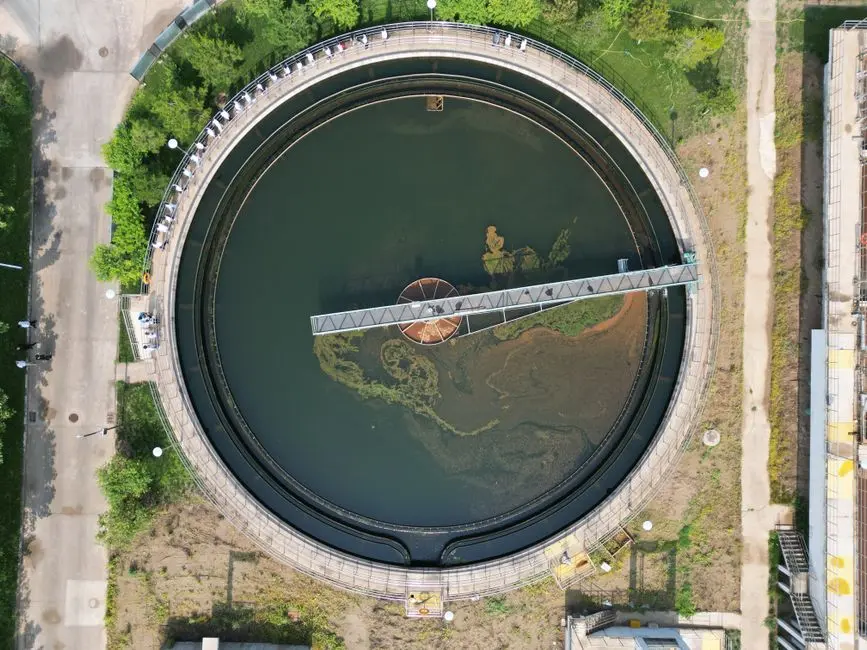
A comparable RFQ starts with the client’s evidence and requires each bidder to answer the same technical questions. The package should include wastewater characterization, flow records, process descriptions, site photographs, and a drain or site plan. It should also state the intended outlet use, governing permit, operating schedule, utility constraints, future expansion, and unresolved assumptions.
| RFQ package | Minimum information required | Commercial comparison |
|---|---|---|
| Process design | Process flow diagram, equipment list, duty points, design inlet basis, materials of construction, controls narrative, utilities, civil requirements, and battery limits. | Identify exclusions, client responsibilities, and design assumptions. |
| Performance guarantees | Flow, pH, TSS, BOD, COD, TDS, and confirmed sector- or reuse-specific parameters at agreed sampling points using stated test methods. | Define failure, test duration, sampling frequency, retesting, remedy, and liquidated damages. |
| Lifecycle inputs | Initial equipment, civil works, membranes or media, chemicals, energy, sludge handling, operator hours, maintenance, spares, and training. | Request comparable assumptions and transparent exclusions. |
| Delivery evidence | Commissioning plan, controls validation, operator training, O&M manuals, spares availability, warranty, and support plan. | Assess deliverability and accountability rather than headline price alone. |
Do not accept a general promise to “meet discharge standards.” Define exactly what constitutes failure, how long the test runs, where samples are taken, which laboratory methods apply, how often sampling occurs, how retesting works, and what remedy follows a failure. The governing permit and intended reuse specification should be annexed once confirmed; no Saudi numerical limit should be inferred from the international research cited in this guide.
Compare lifecycle consequences, not equipment quotations in isolation. Ask for utility consumption, chemical consumption, sludge quantity and route, membrane or media replacement, operator attendance, routine maintenance, critical spares, and training. Include performance-test prerequisites and identify which costs fall outside the fixed price.
Where the project involves an acquisition or change in operational control, use an established due-diligence structure to identify consent, pretreatment, discharge, monitoring, and reuse implications. The wastewater requirements for an industrial acquisition provides a transferable diligence framework, while the final Saudi compliance basis must come from the applicable authority and project permit.
Commercial review should be a separate pass. A low equipment price that excludes civil works, chemicals, membrane replacement, sludge disposal, controls integration, or commissioning will not remain comparable. Require each bidder to complete the same schedule and identify every exclusion, dependency, and client obligation.
Plan Implementation from Site Survey to Commissioning
Implementation should follow a gated sequence: site survey, wastewater characterization, design-basis confirmation, supplier selection, detailed engineering, procurement, installation, commissioning, and acceptance. The site survey must cover utilities, drainage routes, available floor area, equipment access, waste-removal routes, lifting requirements, and future expansion constraints.
- Complete wastewater characterization and collect average, peak, and batch-discharge flow records before the process train is fixed.
- Confirm the outlet use, permit basis, design loads, utilities, civil interfaces, controls requirements, and expansion assumptions.
- Issue a common RFQ and evaluate bids against the same design basis, guarantees, battery limits, and lifecycle inputs.
- Verify electrical supply, drainage, lifting access, foundations, equipment tie-ins, and waste routes before manufacturing or prefabrication.
- Schedule factory acceptance, site installation, pressure or leak testing, electrical and instrumentation checks, and control validation.
- Test the complete train with representative wastewater under a written acceptance protocol.
- Transfer O&M knowledge through operator training, manuals, spares, monitoring schedules, and troubleshooting contacts.
Unresolved assumptions about flow, batch releases, or contaminants can change the process train, so do not release long-lead equipment merely to preserve the procurement schedule. The staged performance test should verify pretreatment, biological operation, solids separation, disinfection, sludge handling, and final sampling—not only the main membrane unit.
Establish the O&M baseline at handover. It should cover daily observations, laboratory monitoring, membrane or media cleaning, chemical inventory, sludge routing, spare parts, operating records, and named troubleshooting contacts. The 2026 process-troubleshooting field guide can support operating preparedness, while the high-effluent ammonia troubleshooting guide illustrates the kind of parameter-specific response procedure the O&M package should contain.
Frequently Asked Questions
How much does an industrial effluent treatment plant in Ahmadi cost?
A defensible price requires wastewater characterization, average and peak flow, batch-discharge information, treatment objectives, outlet use, site utilities, civil work, and the full equipment scope. Request a priced bill of quantities separating pretreatment, biological treatment, separation, polishing, disinfection, sludge handling, controls, utilities, installation, commissioning, and O&M. No universal project price can be stated without these inputs.
Should an Ahmadi factory choose MBR or DAF?
DAF is primarily a physical pretreatment option for suspended solids, FOG, oil and grease, and colloidal matter; MBR combines biological treatment with membrane separation. Compare them against the complete treatment objective, confirmed wastewater profile, required reuse quality, operating resources, and backup arrangement—not as interchangeable equipment alternatives.
What capacity should an ETP in Ahmadi be designed for?
Average flow alone is insufficient. Ask suppliers to assess peak flow, operating hours, batch discharges, organic and contaminant loading, future growth, redundancy, upset conditions, and equalization. Require the selected duty points and any operating limitations to be tied to the stated design basis.
How do I compare ETP suppliers in Saudi Arabia?
Require comparable proposals covering the process basis, complete equipment scope, guarantees, sampling points, test methods, battery limits, utilities, civil works, sludge handling, commissioning, O&M, warranty, spares, and local support. Check whether each guarantee is enforceable and whether omitted items could shift cost or performance risk to the buyer.
Can treated wastewater from an ETP be reused?
Reuse depends on the exact application and a verified quality profile. University of Twente’s nanofiltration thesis supports advanced polishing for effluent reclamation, while Wageningen University and Research’s 2022 thesis identifies constructed wetlands as a micropollutant-removal option. Neither source substitutes for the project’s confirmed reuse requirements, and the industrial ETP and DAF selection guide provides a useful framework for matching the treatment objective before reuse is specified.