MBR or Activated Sludge for a Bay City Chemical Plant?
For chemical wastewater in Bay City, choose MBR when biology can treat the contaminants but reliable solids separation, a compact installation, or higher-quality reuse water is important. Choose conventional activated sludge when flow and load are stable, the wastewater is biodegradable, gravity settling is reliable, and site space is available. Neither system removes inhibitory or non-biodegradable chemicals by itself, so equalization, pH control, oil removal, precipitation, or other chemical wastewater pretreatment may be required first. The preliminary equipment decision should therefore follow wastewater characterization, the reuse or discharge objective, treatability testing, pretreatment design, and lifecycle comparison—not membrane area alone.
This is an application-led comparison for a chemical production, specialty-chemical, or industrial facility in Bay City, United States, not a universal equipment recommendation. An industrial membrane bioreactor replaces the separate clarifier of a conventional activated sludge system with membrane separation, but it does not expand the biodegradability of the feed. A conventional activated sludge system may remain the more practical choice when settled effluent is adequate and simpler operation outweighs reuse benefits.
Use the following sequence:
- Characterize the wastewater across production and operating conditions.
- Define the required discharge quality or industrial wastewater reuse application.
- Test biological treatability with representative wastewater.
- Identify pretreatment needed to protect biology and membranes.
- Compare footprints, utilities, controls, maintenance, sludge handling, and reuse value.
- Validate the selected treatment train before fixing guarantees and lifecycle cost.
The 2026 MBR cost-per-m3 guide provides a framework for developing that comparison, but the project data needed to price it must come from the actual plant.
What Each Treatment Process Actually Does
Conventional activated sludge and MBR both use microorganisms to remove biodegradable organics; their principal process difference is how solids are separated after biological treatment.
In a conventional activated sludge system, wastewater contacts activated biomass in an aerated reactor, and a gravity clarifier separates the biological solids from the treated liquid. Clarifier performance therefore depends on floc formation, settleability, hydraulic conditions, and solids inventory. Conventional treatment remains a credible option for chemical wastewater that is consistently biodegradable, moderately variable, and compatible with gravity settling.
An industrial membrane bioreactor couples the biological reactor to membrane filtration. The membrane retains solids within the reactor and replaces the separate clarifier function. This allows controlled separation without relying on gravity settling and can support a more compact treatment train. It does not, however, convert non-biodegradable compounds into harmless products, neutralize toxicants, or correct an unsuitable pH.
Organic biodegradability, pH, temperature, nutrients, toxicity, and residence time affect the biological stage in both processes. A membrane can improve separation control and help produce filtration-ready effluent, but it can also expose the treatment system to membrane fouling control concerns that are less prominent in a gravity clarifier.
Product specifications must be kept separate from universal performance claims. The verified integrated submerged-PVDF MBR system is specified to provide filtration below 1 μm, while the separate DF series flat-sheet MBR module uses a 0.1 μm pore size. These are product-specific filtration specifications, not evidence that every MBR will produce the same effluent or that membrane pores define the final reuse-water quality.
For preliminary process-flow development, the MBR process-flow diagram and P&ID guide can help separate biological reaction, membrane separation, pretreatment, and reuse functions.
Side-by-Side Comparison for Chemical Wastewater
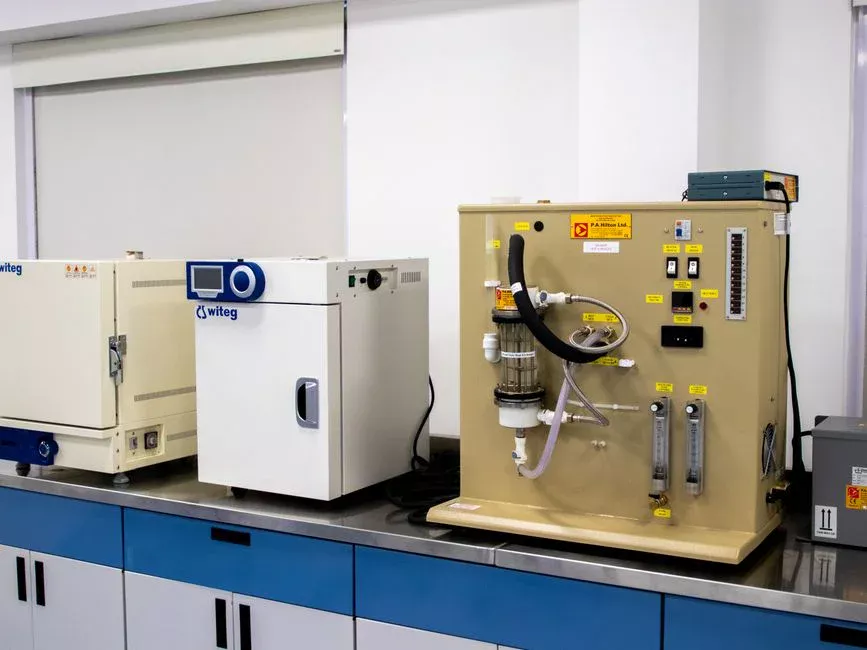
MBR’s main procurement advantage is controlled solids separation within a compact biological process, while CAS’s main advantage is operational simplicity where gravity settling performs reliably.
| Selection variable | MBR | Conventional activated sludge |
|---|---|---|
| Biological stage | Activated-sludge biology coupled directly with membrane separation | Activated-sludge biology followed by a gravity clarifier |
| Solids separation | Membrane retains solids within the reactor | Clarifier separates settleable biological solids |
| Footprint | Can reduce the treatment footprint by eliminating a separate clarifier | Requires reactor and clarifier area, with operating clearances |
| Effluent filtration | Provides a more controlled solids barrier and filtration-ready effluent | Requires downstream filtration if reuse or solids-removal needs exceed clarified effluent quality |
| Chemical-sludge compatibility | Toxicity, variable pH, oils, salts, and chemical carryover can impair biology and foul membranes | Toxicity, variable pH, oils, salts, and poor settling can impair biology or clarify solids carryover |
| Reuse suitability | Potentially preferable when water quality, footprint, or retrofit constraints justify membrane separation | Potentially suitable when settled effluent meets the reuse requirement and additional filtration is not needed |
| Operation and maintenance | Adds membrane monitoring, cleaning, replacement, and fouling management | Adds clarifier sludge inventory, settling control, and sludge handling |
| Scale-up consideration | Requires hydraulic and membrane-area design against peak flow, flux, temperature, and fouling tendency | Requires reactor volume, clarifier loading, sludge wasting, and hydraulic capacity |
HydropureWater’s verified product catalog claims that its integrated MBR occupies 60% less footprint than conventional systems. That is a manufacturer-specific product claim, not an industry-wide guarantee, and it should be checked against the proposed treatment train and site layout.
MBR can retain a higher effective biomass inventory and provides more controlled solids separation, but the supplied research does not support universal removal-efficiency or energy claims for chemical wastewater. CAS is generally simpler where gravity settling remains reliable, space is available, and the reuse objective does not require membrane-quality separation.
Industrial MBR experience is documented in a review of 182 large-scale projects commissioned or under construction from 2003 through 2019, each with capacity of at least 5,000 m³/day, as reported by the Large-Scale Membrane Bioreactors for Industrial Wastewater Treatment in China review in 2020. Those project scales are larger than many individual chemical-plant flows, so the review supports industrial application but does not establish a default module size or performance guarantee for a Bay City facility. Further application-specific comparisons are available in the analyses of industrial MBR and activated sludge selection and pulp-and-paper wastewater treatment.
Screen the Wastewater Before Choosing MBR
A chemical wastewater stream that inhibits biology or lacks adequate biodegradability cannot be made suitable merely by installing MBR.
Request a representative characterization that covers:
- Average flow, peak flow, and diurnal or batch-production variation
- pH, temperature, COD or BOD, and suspended solids
- Acute or chronic toxicity and the constituents responsible
- Salinity and other inhibitory ionic compounds
- Oils, grease, and floatables
- Nitrogen and phosphorus availability
- Target chemical constituents that are not readily biodegradable
- The proposed discharge or industrial wastewater reuse endpoint
Test biological treatability before comparing equipment. A compatible stream should permit an active biomass population to remove its biodegradable fraction under representative conditions. Rapidly variable pH, inhibitory constituent concentrations, excessive salinity, oils and grease, and non-biodegradable compounds require a specific engineering response; they should not be left as an unpriced assumption in an MBR-versus-CAS comparison.
Pretreatment should be mapped by contaminant category. Equalization can dilute short-term concentration shocks, while pH control can create a more stable biological feed. A dissolved air flotation unit may be required for oils, grease, or floatable material. Precipitation or specialized solids separation may be needed for metals or other precipitable contaminants. An automatic chemical dosing system may support controlled pH adjustment or reagent feed, but the chemical demand and operating response must be established from the wastewater rather than assumed.
Laboratory biodegradability and treatability testing should use actual process wastewater and expected operating variability. No general removal percentage can substitute for site data, particularly when production changes, cleanups, or batch dumps affect the stream.
MBR Equipment, Pretreatment, and Reuse Design
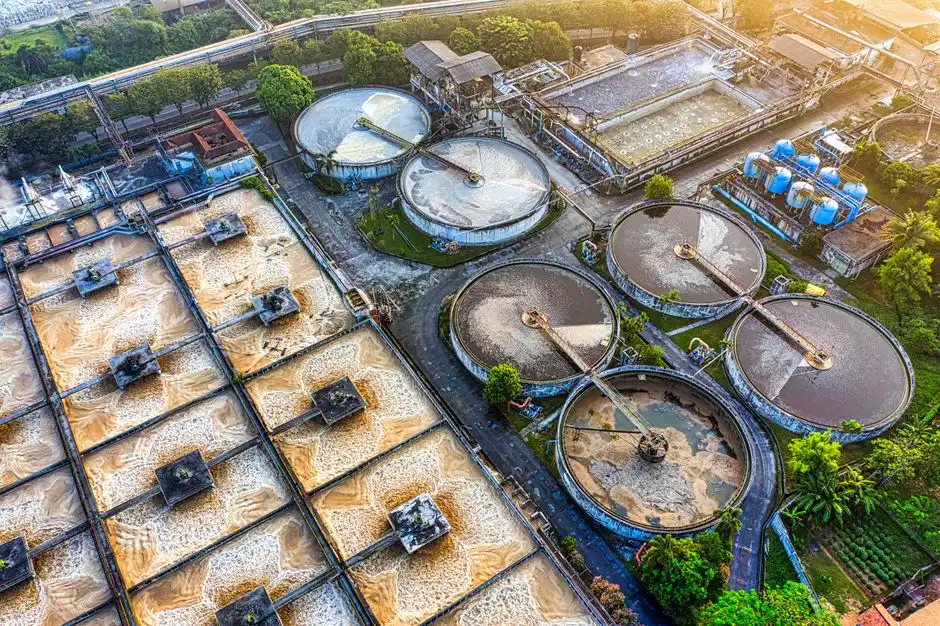
A preliminary MBR treatment train should make contaminant control, biological treatment, solids separation, and final reuse or discharge requirements visible as separate design functions.
A workable process sequence is:
- Collect industrial wastewater streams and segregate incompatible batches where practical.
- Provide equalization and the chemical wastewater pretreatment required for pH, oils, solids, metals, or toxicants.
- Feed the biological reactor.
- Separate biomass through the membrane module.
- Apply optional disinfection or polishing where the reuse or discharge objective requires it.
- Route final effluent to reuse, a permitted discharge, or another treatment stage.
| Verified product reference | Specification | Procurement interpretation |
|---|---|---|
| DF series flat-sheet module | 0.1 μm pore size; 80–225 m² configurations; 32–135 m³/day production range | Configuration examples, not universal sizing rules |
| DF series energy claim | 10–20× lower energy consumption than external cross-flow systems, according to the verified HydropureWater catalog | Manufacturer-specific claim; confirm applicable system boundary and project design |
| Integrated MBR | 10–2,000 m³/day supplier capability range | A capability reference only, not a recommendation without wastewater and duty confirmation |
| Integrated MBR filtration | Filtration below 1 μm | Product specification, not a universal reuse guarantee |
Final MBR sizing requires design flow, peak factor, flux, temperature, fouling tendency, operating schedule, membrane configuration, and required recovery. The DF module’s 80–225 m² configurations and 32–135 m³/day range cannot be selected from nominal wastewater flow alone.
Pretreatment protects both the biological population and the membrane. Membrane fouling control also requires source segregation, chemical carryover control, appropriate monitoring, an operator-defined cleaning strategy, and replacement planning. A detailed DF series flat-sheet MBR module specification should be compared with the integrated submerged-PVDF MBR system only after the process duty and pretreatment train are defined.
Build a Bay City Cost and Compliance Case
A defensible lifecycle comparison should price the complete treatment train and the consequences of failure, not compare membrane-system and clarifier-system purchase prices alone.
| Cost model | Items to request from each bidder | Decision use |
|---|---|---|
| Capital cost | Equalization, biological tank, aeration and controls, membrane module, chemical wastewater pretreatment, piping, electrical service, installation, and space requirements | Compares complete installed scope rather than isolated equipment |
| Operating cost | Membrane cleaning and replacement, aeration, pumping, chemicals, sludge handling, operator labor, instrumentation, and downtime allowance | Identifies recurring costs and supplier-specific maintenance exposure |
| Reuse and disposal value | Water displaced, additional downstream filtration avoided, disposal route, and impact on production if reuse water is unavailable | Tests whether reuse justifies the added process complexity |
| Compliance exposure | Actual facility authorization, local sewer or surface-water requirements, pretreatment conditions, monitoring, and reuse restrictions | Supports the Bay City permitting and operating case |
The supplied research does not provide a reliable Bay City project cost or a defensible generic price per cubic metre. Do not turn an equipment quotation into a complete lifecycle estimate. Request a site-specific model using the actual flow, wastewater characterization, treatment objectives, utility rates, operating schedule, anticipated cleaning and replacement, sludge route, and reuse value.
Permit decisions should be checked against the facility’s actual Bay City discharge authorization and reuse requirements, including any local sewer, surface-water, pretreatment, or reuse conditions. The supplied research contains no numerical Bay City limits, so numerical compliance claims would be unsupported. The industrial wastewater O&M guide can inform the operating scope, while the 2026 MBR cost-per-m3 guide provides a structure for developing the estimate.
Decision Framework for Selecting the Treatment Train
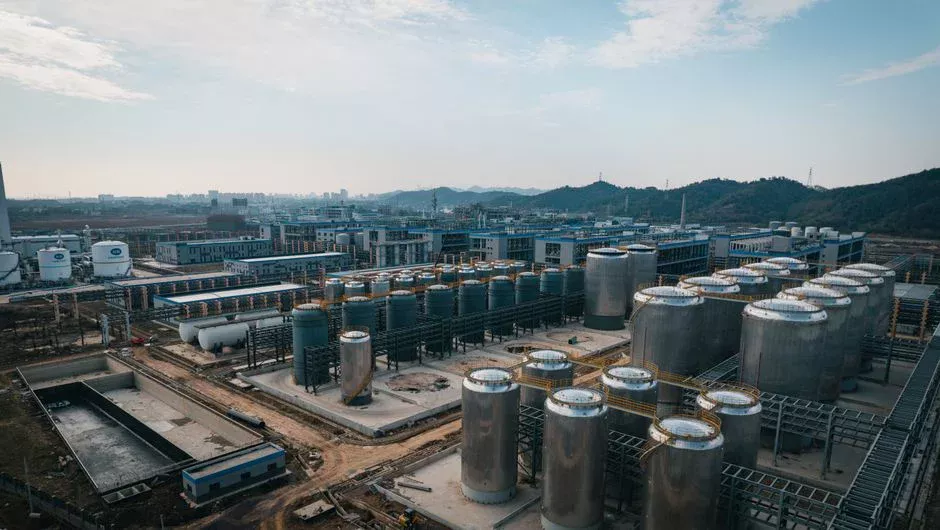
Five gates can turn the technical comparison into a defensible preliminary specification.
- Biological compatibility: Does representative wastewater support the required biological removal at the expected pH, temperature, salinity, toxicity, and loading conditions?
- Effluent or reuse quality: Does the required destination make controlled membrane separation and downstream polishing materially more valuable than settled effluent?
- Pretreatment need: Can equalization, pH control, DAF, precipitation, source reduction, or stream segregation make the feed compatible with biological treatment and protect the membranes?
- Footprint and infrastructure: Can the plant accommodate the reactor, membrane or clarifier, pretreatment, access, electrical service, controls, and sludge handling?
- Lifecycle operating feasibility: Can the facility staff maintain the system, manage membrane cleaning and replacement, and meet discharge or reuse requirements reliably?
Select MBR where controlled solids separation, compact installation, retrofit constraints, or reuse quality outweigh membrane fouling, maintenance, and operating complexity. Select conventional activated sludge where the wastewater is consistently biodegradable, gravity settling is reliable, available space supports the clarifier, and reuse does not justify MBR.
Select neither as an automatic answer when the stream is non-biodegradable or inhibitory. Source reduction, segregation, specialized chemical wastewater pretreatment, or a different treatment process may be required. Before finalizing membranes, pretreatment, guarantees, or lifecycle cost, require a pilot or representative-wastewater trial that includes the expected operating variability. The application-specific MBR and conventional activated sludge comparison for plastics wastewater illustrates why the process profile must precede the equipment decision.
Frequently Asked Questions
What is the main difference between MBR and conventional activated sludge for chemical wastewater?
Both processes use biological degradation, but MBR replaces gravity settling with membrane solids separation. MBR is generally more attractive where compact equipment, controlled solids separation, or filtration-ready reuse water is important; conventional activated sludge is generally simpler where settleable solids are adequate, gravity settling is reliable, and adequate space is available.
How much does an MBR cost compared with conventional activated sludge?
The supplied research does not establish a reliable Bay City project cost or a generic price per cubic metre. Request a site-specific lifecycle estimate covering equalization, biological treatment, membrane or clarifier equipment, chemical wastewater pretreatment, electrical service, installation, cleaning, replacement, chemicals, sludge handling, labor, and downtime. Include the value of reclaimed water and any additional filtration avoided by CAS.
Can MBR replace pretreatment for toxic or high-salt chemical wastewater?
No. MBR retains biomass and separates solids, but it does not remove toxicity, correct pH, or make a non-biodegradable compound biodegradable. Ask the supplier to identify how the proposed feed affects biology and membranes, then specify equalization, pH control, DAF, precipitation, source reduction, or another barrier where the actual wastewater analysis requires it.
How do I size an MBR for a Bay City chemical plant?
Do not size from nominal flow alone. Give the bidder average and peak flow, batch-production variation, wastewater constituents, pH, temperature, salinity, toxicity, target effluent or reuse quality, operating schedule, and pretreatment design. These inputs are needed to establish hydraulic capacity, biological volume, membrane area, flux, recovery, and cleaning assumptions. The DF module ranges are configuration references, not default selections.
How do I compare MBR suppliers during procurement?
Require each supplier to demonstrate the same process scope using the same wastewater basis. Check the proposed biological treatment, pretreatment, membrane material and configuration, solids-separation duty, monitoring, cleaning procedure, replacement provision, controls, operator training, service support, and performance assumptions. Then compare complete installed and lifecycle costs, applicable guarantees, and compliance with the facility’s actual Bay City authorization and reuse conditions.