What Petroleum Bulk Wastewater in Hopewell Actually Looks Like
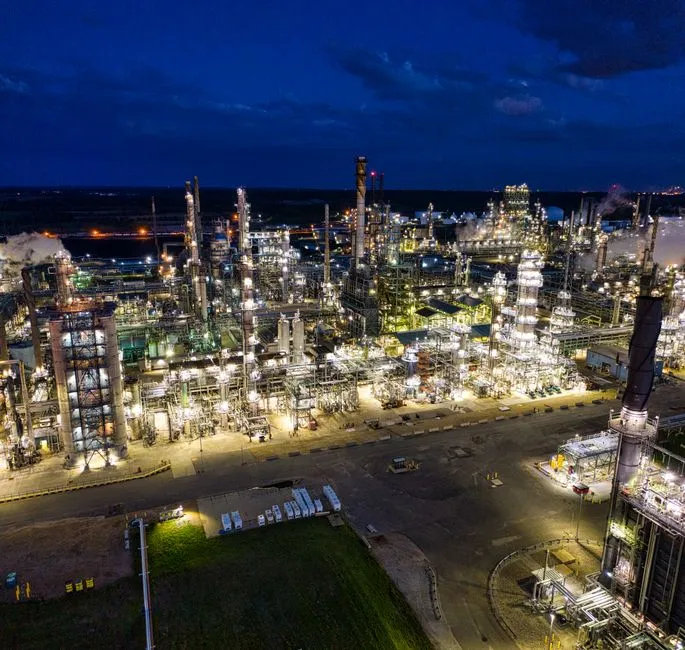
Petroleum bulk wastewater at a Hopewell terminal is the runoff, washwater, and contact water generated around aboveground storage tank farms, truck and rail loadout pads, and secondary containment areas — not the process wastewater from a refinery. The dominant contaminant classes the operator must remove are free and emulsified oils, FOG, light suspended solids, and intermittent sheen, with episodic spikes during tank drawdown and rainfall events.
Grit, sand, and scale also enter the stream and must be addressed upstream of any flotation or settling unit, which is why Kemco's reference process train starts with a hydrocyclone or shaker screen for high-density solids before the DAF (Kemco Systems, DAF for Industrial Wastewater Treatment). Hopewell facilities discharge under Virginia DEQ pretreatment rules to the Hopewell Regional Wastewater Treatment Facility; current local numeric FOG, TSS, and oil-and-grease limits must be confirmed with the utility and the Virginia DEQ before any equipment is specified, and the values in any vendor proposal should be checked against that confirmed envelope.
How a DAF Clarifier Separates Oils and Solids
A Dissolved Air Flotation (DAF) clarifier separates contaminants by dissolving air into a side stream under pressure and then releasing that air at atmospheric pressure inside the flotation tank, where it forms 30–50 micron micro-bubbles that attach to oil droplets, floc particles, and FOG and lift them to the surface (Clearwater/SigmaDAF USA, DAF Systems for Wastewater Treatment, 2026-04-27). A paddle skimmer then scrapes the floated layer off, while heavier settleable solids drop to a bottom collection zone and are removed by an auger in the same vessel (Clearwater/SigmaDAF USA, 2026-04-27). The DAF cannot reach the removal rates the vendor publishes without chemical coagulation and flocculation upstream; the same source notes that chemical conditioning is delivered through serpentine flocculator mix tubes or chemical mix tanks, both of which must be in the scope of supply. As a concrete sizing example, SigmaDAF's COMPACT DAF is built as a single skid for flows of 66 GPM or less and switches to a modular two-skid configuration above 66 GPM (Clearwater/SigmaDAF USA, 2026-04-27). For a Hopewell engineer evaluating vendor claims, the practical implication is that a DAF scope is really three pieces of equipment — chemistry, flotation, and sludge handling — packaged together, which is why a turnkey HydropureWater DAF system integrates chemical conditioning, sensors, and PLC control in one skid.
How a Conventional or Lamella Clarifier Separates Oils and Solids
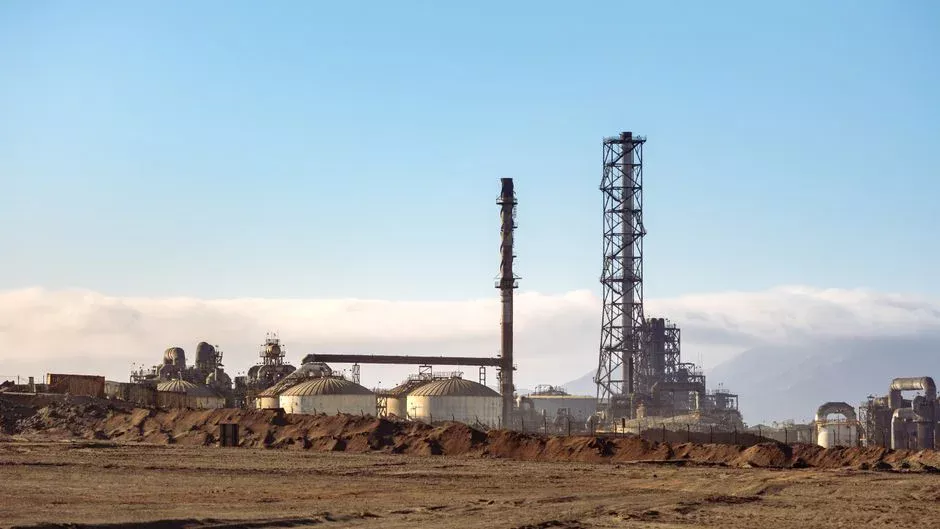
A conventional or lamella clarifier is a quiescent vessel in which denser particles settle under gravity; inclined lamella plates inside the tank multiply the effective settling area inside a compact footprint, which is why lamella designs are common in tight equipment rooms and retrofits. Because these systems function differently than flotation units, selecting the right technology depends on the primary contaminant profile.
The geometry inherently favors settleable heavy solids over buoyant oils — the opposite of what a DAF is engineered to do. In a petroleum bulk stream that contains free or emulsified FOG, the oil will tend to pass through a clarifier or accumulate as a surface scum that is harder to remove reliably than the skim from a DAF. The defensible role of a clarifier at a Hopewell bulk terminal is as a primary unit on a low-FOG, grit-dominated side stream, as a polishing step for heavy solids downstream of a DAF, or as pretreatment ahead of a metals-removal stage where settleable metal hydroxides are the target. For the FOG- and light-TSS-dominated main stream at a tank farm or loadout pad, a HydropureWater lamella clarifier is generally a complementary unit, not a substitute for flotation.
DAF vs Clarifier for Petroleum Bulk: Side-by-Side Comparison
The table below lines up the two technologies on the variables that drive a 2026 capital decision for a Hopewell petroleum bulk terminal. The DAF anchor figures are taken from Clearwater/SigmaDAF USA, 2026-04-27; clarifier plate geometry is left as a vendor-confirm parameter because the supplied research does not quote a specific lamella spacing for this duty.
| Decision variable | DAF clarifier | Lamella / conventional clarifier |
|---|---|---|
| Primary separation mechanism | Micro-bubbles (30–50 µm) attach to oil/floc and float it to the surface; skimmer removes the float; auger removes settled solids | Gravity settling of denser particles; inclined lamella plates increase effective area |
| Best-fit contaminant at a Hopewell tank farm | Free and emulsified FOG, light TSS, sheen from loadout and drawdown | Settleable grit, sand, scale, and metal-hydroxide solids |
| Key design parameter | 30–50 micron micro-bubble size; single-skid Compact DAF up to 66 GPM, two-skid above | Lamella plate spacing, plate angle, and surface loading rate (confirm with vendor) |
| Footprint intensity | Compact, high-rate; fits in a packaged skid with chemistry and controls | Compact when lamella plates are used; taller profile required for conventional gravity basin |
| Sensitivity to flow and load spikes | Designed for variable industrial loads; PLC automation adjusts skimmer and chemical dosing | Quiescent zone is more easily upset by hydraulic surges and slug loads |
| Pretreatment chemistry required | Yes — coagulant/flocculant conditioning upstream is mandatory to hit published removals | Optional for grit streams; usually required if metals or colloids are targeted |
| Downstream sludge handling | Floated scum and settled solids both handled inside the same tank via skimmer + auger | Bottom sludge only; surface scum removal is less reliable for emulsified oil |
| Hopewell petroleum bulk fit | Primary unit for tank-farm and loadout streams dominated by FOG and light TSS | Primary unit only for grit/scale/metals side streams; otherwise polishing or pretreatment |
Hopewell Pretreatment, Permitting, and Process Train Considerations
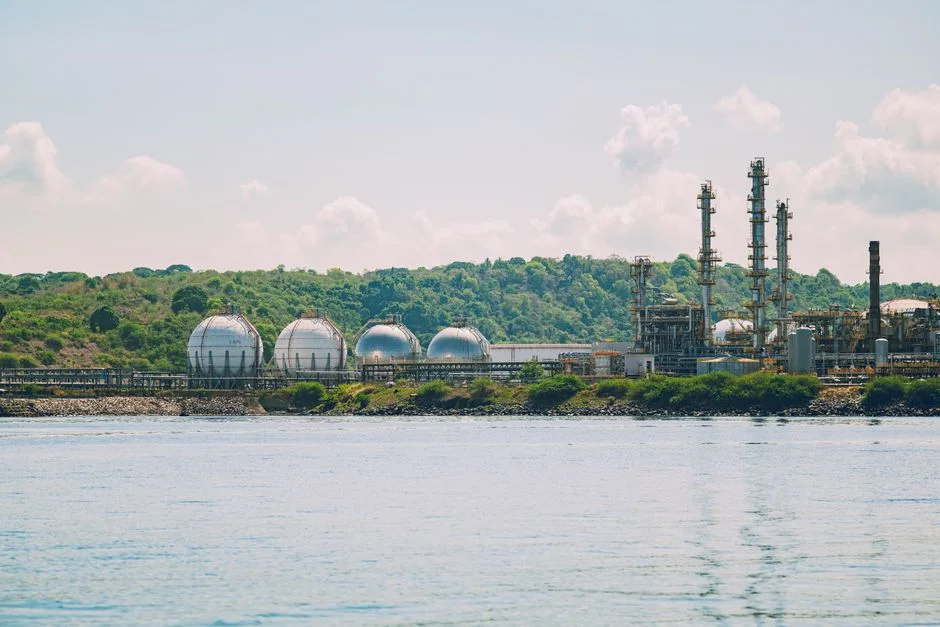
Either primary separator sits inside the same process train, and that train is the part the regulator actually evaluates. The reference sequence documented by Kemco is coarse filtration (hydrocyclone for sand and grit, or shaker screen for lint and scale), pH control with acid/caustic dosing, chemical conditioning for the DAF, the flotation or settling unit itself, and sludge dewatering with a filter press (Kemco Systems, DAF for Industrial Wastewater Treatment). DAF is recognized within the U.S. EPA's emerging-technology inventory as a physical/chemical treatment process in EPA 832-R-12-011, March 2013, which supports its use as a reference Best Available Technology in petroleum-category pretreatment programs (U.S. EPA, Emerging Technologies for Wastewater Treatment and In-Plant Wet Weather Management, EPA 832-R-12-011, March 2013). Hopewell terminals discharge to the Hopewell Regional Wastewater Treatment Facility under Virginia DEQ pretreatment rules; the current local numeric limits must be verified before finalizing the spec, and the same caution applies to jar-test and pilot data — both Clearwater/SigmaDAF USA, 2026-04-27 and Kemco Systems state that DAF performance depends on site-specific influent chemistry, so the engineer should insist on jar testing and, where possible, an on-site pilot before signing a PO. Practical implementation means pairing the DAF with an automatic chemical dosing system upstream and a plate and frame filter press downstream.
How to Choose for a 2026 Hopewell Bulk Petroleum Project
The default specification for a 2026 Hopewell petroleum bulk terminal is a DAF as the primary separator, because the contaminant profile at a tank farm and loadout pad — free and emulsified FOG, light TSS, sheen, and load spikes during drawdown — matches exactly what the DAF mechanism is built to lift (Clearwater/SigmaDAF USA, 2026-04-27; Kemco Systems). Choosing the correct unit ensures compliance with site-specific discharge constraints.
Choose a lamella or conventional clarifier as the primary unit only when the stream is grit-, scale-, or metals-dominated, or when the project is a capex-sensitive retrofit where the FOG load is genuinely low. For the DAF scope, specify 304 stainless steel as the standard wetted material with 316 stainless available for higher-chloride service, integrate the chemical conditioning package, the PLC control panel, the skimmer, and the auger sludge handling, and confirm the material traceability is in-house (Clearwater/SigmaDAF USA, 2026-04-27). For design flows at or above the 66 GPM Compact DAF threshold, plan a modular two-skid layout rather than a single oversized unit (Clearwater/SigmaDAF USA, 2026-04-27). For grit control upstream, a rotary mechanical bar screen in the GX series handles coarse screening, and the DAF itself can be the HydropureWater DAF system at the heart of the train. A useful cross-check on the decision is the petroleum pretreatment compliance guide and the 2026 petroleum pretreatment guide, which walk through the same choice in adjacent U.S. localities.
2026 Procurement Checklist for a Hopewell DAF or Clarifier
The table below is the working list of inputs a Hopewell engineer should have on the desk before issuing an RFQ, plus the vendor-evaluation criteria that protect the project once bids come back. The flow and chemistry items are explicitly called out as required inputs by Clearwater/SigmaDAF USA, 2026-04-27 and Kemco Systems; the installation-base and pilot-testing criteria reflect the same sources' descriptions of in-house manufacturing and on-site piloting.
| Category | Item to collect or verify | Why it matters |
|---|---|---|
| Process inputs | Design flow (GPM or m³/h), peak flow factor, influent FOG and TSS ranges, pH range, temperature | Required to size the DAF, the chemical dose, and the sludge-handling capacity |
| Site inputs | Available footprint, headroom, indoor/outdoor installation, hydraulic profile | Drives single-skid vs two-skid Compact DAF layout and lamella plate-pack height |
| Compliance inputs | Confirmed Virginia DEQ and Hopewell Regional WWTF discharge limits for FOG, TSS, pH, and oil & grease | Spec must be checked against current local limits before PO; values change with permit renewals |
| Vendor capability | Documented installation base, in-house manufacturing and material traceability, available pilot or jar testing, PLC automation level | SigmaDAF documents 800+ projects across 25+ countries (S1); in-house fabrication reduces material-traceability risk |
| Scope completeness | Upstream chemical conditioning package and downstream sludge dewatering included in the DAF scope, not quoted separately | Both Clearwater/SigmaDAF and Kemco describe DAF as a packaged system with chemistry and sludge handling |
| Lifecycle and support | Maintenance schedule, spare-parts lead time, remote-monitoring capability, service footprint | Protects uptime after commissioning; not all vendors publish this — request it in writing |
| Reference projects | Operating DAF or clarifier installations at petroleum bulk or tank-farm sites in the mid-Atlantic U.S. | Closes the gap between pilot data and full-scale performance on similar feedstock |
For project context beyond this article, the manufacturing high-water-volume management guide covers flow equalization, and the polymer reduction in sludge dewatering guide helps control the operating cost on the back end of the train.
Frequently Asked Questions
What drives the cost difference between
Frequently Asked Questions
Should a Hopewell petroleum bulk terminal choose DAF or a clarifier in 2026?
For petroleum bulk terminals in Hopewell, Dissolved Air Flotation (DAF) is generally the preferred choice over traditional clarifiers due to the nature of oil-water separation. Because petroleum hydrocarbons have a specific gravity lower than water, DAF systems utilize micro-bubbles to accelerate the buoyancy of emulsified oils and suspended solids, achieving removal efficiencies often exceeding 90-95%. Clarifiers are gravity-dependent and typically require significantly larger footprints and longer retention times, making them less efficient for the light, non-polar hydrocarbons common in petroleum wastewater.
What is the typical flow range for a compact DAF system in petroleum service?
Compact DAF units designed for petroleum bulk terminals typically handle flow rates ranging from 50 to 500 gallons per minute (GPM). These modular systems are engineered to manage the intermittent, high-load surges common in truck rack runoff and tank farm drainage while maintaining a small physical footprint, often occupying less than 200 square feet of floor space.
How much does a DAF system for a petroleum bulk terminal cost in 2026?
As of 2026, a fully integrated DAF system for a petroleum bulk terminal typically ranges between $150,000 and $450,000, depending on throughput capacity, materials of construction, and the level of automation. This estimate includes the flotation tank, air saturation system, chemical dosing skids, and sludge removal mechanisms, but excludes site-specific installation, civil works, and integrated PLC control panel integration costs.
What should a Hopewell factory look for when selecting a DAF or clarifier supplier?
Suppliers must demonstrate expertise in Class 1, Division 2 (C1D2) electrical standards and explosion-proof equipment, which are mandatory for hazardous petroleum environments. Facilities should prioritize vendors who provide turnkey pilot testing to verify oil-water separation performance on site-specific wastewater samples and those who offer local technical support capable of ensuring compliance with Virginia Department of Environmental Quality (DEQ) reporting requirements.
Does a DAF system help a Hopewell petroleum plant meet Virginia pretreatment limits?
Yes, a DAF system is highly effective at reducing Total Suspended Solids (TSS) and Oil and Grease (O&G) concentrations to meet local municipal pretreatment limits established by the City of Hopewell. By utilizing coagulants and flocculants to break oil emulsions, DAF systems can reliably lower O&G levels from influent concentrations of several hundred mg/L to effluent concentrations consistently below 10-50 mg/L, helping plants avoid surcharges or permit violations.