

Why Bledsoe-Area Refineries Discharge to a POTW, Not a Stream
Petroleum refineries, terminals, and re-refineries in or near Bledsoe County that send process wastewater to a municipal sewer are regulated as industrial users under EPA's national pretreatment program at 40 CFR 403, not as direct NPDES dischargers. The federal hook is Section 402(b)(8) of the Clean Water Act, codified at 33 U.S.C. § 1342(b)(8), which requires every POTW NPDES permit to include a program ensuring compliance with pretreatment standards by significant industrial sources (S1, Background). A refinery or terminal that wants to send wastewater down the drain is therefore in a triangular compliance regime: federal categorical pretreatment standards, federal prohibitions on what may enter a POTW at all, and POTW-specific numeric local limits enforced through a sewer-use ordinance and an industrial user discharge permit.
EPA's Local Limits Development Guidance (S1) confirms that pretreatment is implemented through three layers operating in parallel: prohibited discharges (40 CFR 403.5), categorical standards (40 CFR Parts 405–471), and POTW-specific local limits derived via the Maximum Allowable Headworks Loading (MAHL) approach (S1, Chapter 1.4). For a Bledsoe-area petroleum plant, this means a permit application or compliance audit has to address all three layers at once — and a deficiency in any one of them is enough to trigger a pass-through or interference finding.
Pass-Through and Interference: The Two Legal Tests
Every enforcement action under 40 CFR 403 rests on two definitions, and any pretreatment coordinator evaluating a refinery discharge will apply them in this order: pass-through first, interference second.
Pass-through is defined at 40 CFR 403.3(p) as "a discharge that exits the POTW into waters of the United States in quantities or concentrations that, alone or in conjunction with a discharge or discharges from other sources, is a cause of a violation of any requirement of the POTW's NPDES permit (including an increase in the magnitude or duration of a violation)" (S2). The phrase "is a cause" — not "is the sole cause" — is what makes this test so unforgiving; a refinery can be held liable even when other industrial users also contribute to an effluent violation.
Interference is defined at 40 CFR 403.3(k) as a discharge that both (1) inhibits or disrupts the POTW, its treatment processes or operations, or its sludge processes, use, or disposal, and (2) therefore causes a violation of the POTW's NPDES permit or of sewage-sludge use or disposal requirements under Section 405 of the Clean Water Act, the Resource Conservation and Recovery Act (RCRA), the Clean Air Act, the Toxic Substances Control Act, or the Marine Protection, Research and Sanctuaries Act (S2). Interference is broader than pass-through because it includes damage to the POTW itself — clogged aeration basins, dead biomass, untreatable sludge — even when the final effluent never leaves the plant in violation.
EPA's 40 CFR 403.5(a) general prohibitions forbid any pollutant discharge to a POTW that can cause either pass-through or interference, and these prohibitions apply to every nondomestic discharger, whether or not the POTW has an approved pretreatment program and whether or not the discharger has been issued a permit (S2). For a petroleum plant, that means compliance cannot be argued from a permit alone; the federal floor travels with the discharge.
The Eight Specific Prohibitions That Hit Refinery Wastewater
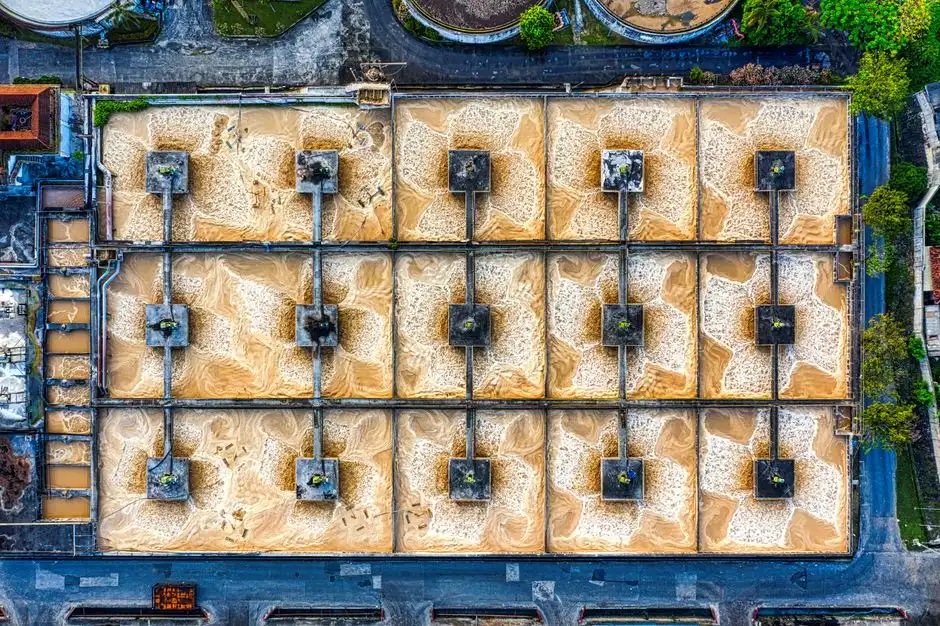
Layered on top of the general pass-through and interference prohibition, 40 CFR 403.5(b) lists eight specific prohibitions that EPA developed to "enhance control of hazardous wastes entering POTWs" (55 FR 30082, cited in S2). Refinery, terminal, and re-refinery wastewater triggers nearly all of them, and the table below maps each prohibition to the refinery stream that most often causes it.
| Prohibition (40 CFR 403.5(b)) | Numeric or test threshold | Refinery / terminal stream that triggers it |
|---|---|---|
| (1) Fire or explosion hazard | Closed-cup flashpoint < 140°F (60°C) per 40 CFR 261.21 methods | Gasoline-bearing side streams, solvent slop, API separator skimmings routed to sewer in error |
| (2) Corrosive structural damage | pH < 5.0 unless the POTW is specifically designed to accept it | Sour-water stripper bottoms, spent caustic, acid-cleaning rinses |
| (3) Solid or viscous pollutants causing flow obstruction | Qualitative — any amount that causes obstruction | Sand, grit, rags, wax, emulsified sludge from tank bottoms |
| (4) Pollutants (including BOD) at flow rate or concentration that causes interference | Qualitative — case-by-case POTW determination | High-BOD desalter water, biocide-treated cooling-tower blowdown |
| (5) Heat that inhibits biological activity | Discharges that raise POTW temperature > 40°C (104°F), unless the approval authority grants an alternate limit on POTW request | Hot process water, non-contact cooling water, blowdown from heat exchangers |
| (6) Petroleum oil, nonbiodegradable cutting oil, or products of mineral oil origin in amounts that will cause interference or pass-through | Qualitative — effect-based, not numeric | API/CPI separator overflow, oil-contaminated stormwater, slop oil |
| (7) Pollutants that create toxic gases, vapors, or fumes causing acute worker health and safety problems | Qualitative | Sulfide-bearing streams, VOC-laden water from tank-dewatering operations |
| (8) Trucked or hauled pollutants, except at POTW-designated discharge points | Qualitative — applies to all hauled waste | Slop oil, tank bottoms, emulsion-breaking residuals, off-spec product |
Three observations matter for compliance work. First, only prohibitions (1), (2), and (5) have fixed numeric thresholds in the rule itself; the others are effect-based, which means the POTW must show actual or threatened pass-through or interference to enforce them (S2). Second, the 40°C (104°F) temperature ceiling can be modified upward only if the approval authority agrees at the POTW's request — the burden is on the POTW, not the discharger. Third, prohibition (6) is the headline rule for petroleum plants: it does not set a numeric oil-and-grease ceiling in 40 CFR 403.5, but it makes any quantity that causes pass-through or interference a violation regardless of whether a numeric local limit exists (S2).
How the Receiving POTW Sets Numeric Local Limits: The MAHL Framework
Numeric local limits — the numbers that actually appear on an industrial user discharge permit — are set by the receiving POTW, not by EPA. EPA's Local Limits Development Guidance (S1) describes the five-step Maximum Allowable Headworks Loading (MAHL) approach that EPA expects every POTW to follow when it develops or re-evaluates its local limits.
- Step 1 — Determine pollutants of concern. The POTW screens its NPDES permit, water-quality criteria, sludge-quality standards, air-quality standards, and known industrial discharges to build a list of pollutants to evaluate (S1, Chapter 2.2 and Chapter 3).
- Step 2 — Collect and analyze data. Sampling at the headworks, in the collection system, and at industrial users, with methods described in Chapter 4 of S1.
- Step 3 — Calculate MAHLs for each pollutant of concern. MAHLs are the most restrictive of several Allowable Headworks Loadings (AHLs): effluent-quality based, sludge-quality based, inhibition based, and air-quality based, as detailed in S1, Chapter 5.
- Step 4 — Designate and implement local limits. Maximum Allowable Industrial Loadings (MAILs) are derived from the MAHLs after subtracting flows and loadings from uncontrolled sources, hauled waste, and a safety factor (S1, Chapter 6.2).
- Step 5 — Address collection system concerns. Worker safety, corrosion, and structural issues are evaluated separately (S1, Chapter 2.2).
Categorical standards apply in parallel with local limits. Petroleum refining has its own federal category at 40 CFR Part 419, and a Bledsoe-area refinery must meet the applicable 40 CFR Part 419 limits on top of any local limits the receiving POTW adopts (S1, Chapter 1.4.2). In practice, a plant engineer should expect the receiving POTW to ask for influent and effluent sampling data, flow data from controlled and uncontrolled sources, and a self-monitoring plan as part of any local-limits re-evaluation cycle (S1, Chapter 4.9). Numeric local limits themselves are not provided in the research and must be requested from the receiving POTW's pretreatment coordinator before any design or compliance decision is finalized.
The Pretreatment Train a Bledsoe Refinery Typically Runs
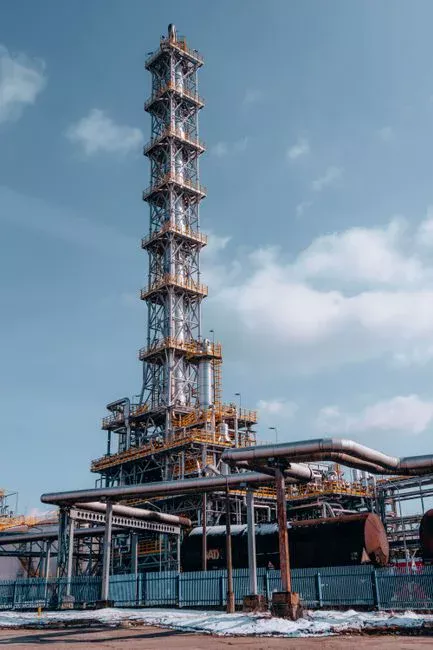
The treatment train that most directly addresses 40 CFR 403.5(b)(6) — the petroleum-oil prohibition — and the supporting prohibitions on pH, temperature, and hauled waste runs in five physical stages.
- Stage 1 — Source segregation and API or CPI oil-water separation. Gravity separation in an American Petroleum Institute (API) separator or a corrugated-plate interceptor (CPI) removes free oil before emulsified oil loads reach downstream units. This is the first line of defense against the 40 CFR 403.5(b)(6) prohibition.
- Stage 2 — Equalization and pH/temperature conditioning. Equalization basins smooth slug flows and let the operator meet the 40°C (104°F) POTW temperature ceiling (40 CFR 403.5(b)(5)) and the pH ≥ 5.0 floor (40 CFR 403.5(b)(2)) before discharge to the sewer.
- Stage 3 — Dissolved air flotation (DAF). Micro-bubble flotation removes emulsified oils and suspended solids that an API separator cannot capture. A dissolved air flotation (DAF) system is the workhorse for petroleum-plant pretreatment because it directly addresses the petroleum-oil prohibition at 40 CFR 403.5(b)(6).
- Stage 4 — Polishing and monitoring. Final oil-water-separator polishing, flow metering, and automated sampling support the self-monitoring the receiving POTW requires under its pretreatment program.
- Stage 5 — Sludge handling. Skimmed oil, DAF float, and sediment are typically routed to a sludge dewatering step rather than back to the sewer, which avoids creating a hauled-waste violation under 40 CFR 403.5(b)(8).
The table below summarizes the parameters an auditor will look for at each stage. The numeric local-limit values are not supplied by the research and must be requested from the receiving POTW; the column is intentionally left for the buyer to populate.
| Stage | Equipment | Parameter an auditor checks | Threshold (regulatory source) | Numeric local limit (request from POTW) |
|---|---|---|---|---|
| 1 | API / CPI separator | Free oil removal | 40 CFR 403.5(b)(6) effect-based | Request from receiving POTW |
| 2 | Equalization basin | pH, temperature | pH ≥ 5.0 (403.5(b)(2)); ≤ 40°C / 104°F (403.5(b)(5)) | Request from receiving POTW |
| 3 | DAF | Emulsified O&G, TSS | 40 CFR 403.5(b)(6) effect-based | Request from receiving POTW |
| 4 | Polishing OWS, flow meter, sampler | Continuous flow, pH, temperature | Self-monitoring per POTW control mechanism | Request from receiving POTW |
| 5 | Sludge dewatering | Float and sediment handling | 40 CFR 403.5(b)(8) hauled-waste | Request from receiving POTW |
For benchmark figures on a comparable DAF-led treatment train, see the engineering comparison in DAF oil water separator performance and compliance data and the Tennessee-specific specs in Tennessee industrial wastewater treatment engineering specs and cost benchmarks. For guidance on DAF versus clarifier selection, the article on DAF vs clarifier selection for petroleum refining wastewater is a useful adjacent read.
Documentation and Self-Monitoring a Pretreatment Coordinator Will Ask For
A pretreatment coordinator evaluating a refinery or terminal will not accept a verbal description of the treatment train. The records below are what the coordinator will request during a routine inspection or a local-limits re-evaluation, and they map directly to the federal rules.
- Baseline Monitoring Report (BMR) and 90-day compliance report for categorical standards under 40 CFR Part 419 (petroleum refining), plus ongoing periodic self-monitoring reports required by the POTW's control mechanism (S1, Chapter 4).
- Records that flashpoint, pH, and temperature of all streams entering the sewer meet 40 CFR 403.5(b)(1), (2), and (5) thresholds — these are the prohibitions most often cited in refinery enforcement actions (S2).
- Chain-of-custody records for any waste that leaves the site by truck, to evidence that material was discharged only at POTW-designated points per 40 CFR 403.5(b)(8).
- Flow measurement data from controlled and uncontrolled sources, which are the inputs the POTW will need when it reruns its MAHL calculation under the Local Limits Development Guidance (S1, Chapter 4.9).
- SPCC and slop-oil handling records linking physical operations to the prohibitions in 40 CFR 403.5(b)(6)–(7).
The BMR and 90-day report are required only of categorical industrial users — that is, facilities subject to 40 CFR Part 419 — so a small terminal not subject to the petroleum refining category may instead be operating under a control mechanism alone. Confirming which regime applies is a prerequisite to the rest of the documentation work.
Choosing Equipment: DAF Sizing, Capacity, and Configuration

The regulatory requirement (removing petroleum oil to non-interfering levels) has to be translated into a DAF specification that a supplier can quote against. The four specification decisions below line up with the compliance risks identified earlier.
- Hydraulic capacity. Match DAF hydraulic capacity (m³/h) to peak refinery wastewater flow with a safety margin for slug loads, and confirm the unit is rated for O&G loadings consistent with refinery equalized effluent rather than food-processing or municipal strength.
- Chemical conditioning. Specify the coagulant and flocculant dosing package to break oil-in-water emulsions ahead of the flotation cell. The 40 CFR 403.5(b)(6) prohibition applies to "amounts that will cause interference or pass through," not just free oil, so the chemical package is part of the compliance argument.
- Skimmer, sludge, and odor control. Request skimmer, sludge handling, and odor-control integration to keep float and residuals out of the hauled-waste stream (40 CFR 403.5(b)(8)).
- Instrumentation and data output. Confirm the supplier can provide flow, pH, and temperature instrumentation with the data output the receiving POTW's pretreatment coordinator expects for self-monitoring reports (S1, Chapter 4).
For context on how DAF compares with other oil-water-separator configurations, see the engineering comparison referenced in the previous section. Numeric cost benchmarks for DAF units of refinery-relevant capacity are not provided in the research and must be obtained from supplier quotations and from the buyer's own mass-balance work.
Frequently Asked Questions
What are pass-through and interference under 40 CFR 403, and which is the bigger risk for a refinery discharging to a sewer?
Pass-through (40 CFR 403.3(p)) is a discharge that causes a POTW to violate its own NPDES permit once the effluent leaves the plant. Interference (40 CFR 403.3(k)) is a discharge that disrupts the POTW's treatment or sludge processes and, as a result, causes an NPDES, RCRA, Clean Air Act, TSCA, or Marine Protection, Research and Sanctuaries Act violation (S2). For a petroleum plant, interference is usually the bigger near-term risk because residual oil and emulsified loadings damage biomass and clog aeration basins long before they cause a stream-effluent violation, while pass-through becomes the dominant risk if the POTW is already operating near its NPDES ceiling.
Does 40 CFR 403.5(b) set a numeric oil-and-grease limit for refinery wastewater?
No. The 40 CFR 403.5(b)(6) prohibition forbids "petroleum oil, nonbiodegradable cutting oil, or products of mineral oil origin in amounts that will cause interference or pass through" (S2). The rule is effect-based, not numeric. The numeric oil-and-grease limit that appears on an industrial user discharge permit comes from the receiving POTW's local-limits calculation under the MAHL framework in EPA's Local Limits Development Guidance (S1, Chapter 5.3.3) and from the categorical standard at 40 CFR Part 419. A buyer should request the actual local-limit number from the receiving POTW before sizing any treatment equipment.
What does it cost to upgrade an oil-water separator and add a DAF unit to satisfy 40 CFR 403.5(b)(6)?
Cost figures for refinery-scale DAF units and full oil-water-separator retrofits are not provided in the research, and any number quoted without a site-specific mass balance, peak-flow assumption, and influent oil concentration is unreliable. A buyer should request itemized quotations tied to (a) hydraulic capacity in m³/h, (b) influent O&G loading, (c) target effluent O&G, and (d) the local limit on the receiving POTW's discharge permit. Adjacent engineering reference points for DAF-led refinery pretreatment are available in the article on DAF oil water separator performance and compliance data and the Tennessee spec sheet linked earlier.
How should a plant engineer evaluate a DAF supplier for compliance risk, not just price?
Ask for, in writing: (1) confirmation that the unit is rated for refinery-grade O&G loadings, not food or municipal strength; (2) chemical-conditioning scope that addresses emulsified oil, since 40 CFR 403.5(b)(6) covers more than free oil; (3) skimmer and sludge-handling integration to keep residuals out of the hauled-waste stream under 40 CFR 403.5(b)(8); and (4) flow, pH, and temperature instrumentation whose data format matches the receiving POTW's self-monitoring report. Cross-check each answer against the Bledsoe-area POTW's sewer-use ordinance and the categorical standard at 40 CFR Part 419 before signing a purchase order. Lead time, installation footprint, and post-installation sampling support are the variables most often missed in a price-only comparison.