DAF oil separator alternatives differ mainly in FOG and TSS capture: DAF reaches 92-97% TSS and 90-95% FOG, versus gravity sedimentation at 70-85% TSS and dispersed air flotation at 80-90% for larger particles. DAF needs 30-50% less footprint than sedimentation tanks, yet it generates about 55% more sludge than centrifugal vortex units. For high-FOG meat or dairy streams, DAF usually wins on removal reliability; for low-TSS oily streams, centrifugal separation can cut OPEX. This comparison gives removal rates, energy use, and compliance data so you can match pretreatment to your wastewater profile.
Why Pretreatment Choice Sets Wastewater Treatment ROI
Pretreatment technology choice sets whole-plant ROI because primary FOG and TSS removal governs aeration energy, sludge mass, and fine risk. DAF typically delivers 92-97% TSS and 90-95% FOG removal at 0.3-0.5 kWh/m³, while gravity sedimentation uses 0.1-0.2 kWh/m³ but often leaves emulsified oil. Footprint, sludge volume, and discharge limits decide which option pays back in about 3-5 years.
In 2024, a major cheese plant in Wisconsin drew EPA attention under 40 CFR Part 112 after FOG exceeded the 100 mg/L sewer limit and upset the municipal biological plant. When emulsified oils or colloids slip through primary separation, the biology sees shock loading, inhibited microbes, and bulking sludge.
Failed oil-water separation hits the plant three ways. Excess FOG coats aeration diffusers and membranes, adding roughly 20-30% oxygen-transfer energy and faster fouling. Chemical coagulant and polymer use then climbs as operators try to patch weak mechanical separation. Non-compliance with limits such as EU Urban Waste Water Directive 91/271/EEC or China’s GB 8978-1996 can bring daily fines and production stops.
A workable industrial train starts with screening, pH adjustment, and coagulation/flocculation. Conditioned water then enters the primary separator, where a Dissolved Air Flotation (DAF) System or a gravity unit is selected. Decision drivers are removal efficiency, available footprint, energy intensity, and sludge volume—not CAPEX alone. Most plants we size aim for lowest cost per cubic meter treated with stable permit compliance.
How DAF Oil Separator Alternatives Work and Where They Fit
Oil-water separation works by exploiting density, buoyancy, and particle size. Knowing each mechanism predicts performance when load and emulsion strength swing.
Gravity Sedimentation: Stokes' Law governs settling of particles denser than water over a 2 to 4-hour hydraulic retention time (HRT). Lamella clarifiers for low-FOG, high-TSS streams shrink footprint, but gravity units still struggle below about 50 µm and with free oil near specific gravity 1.0. Dairy and petrochemical emulsions usually need another method.
Dissolved Air Flotation (DAF): DAF uses buoyancy instead of settling. Clarified effluent is pressurized to 4-6 bar and air-saturated. When that recycle stream is released, 20-50 µm microbubbles attach to floc, cut effective density, and lift solids and FOG to the surface. DAF captures colloidal FOG that gravity systems miss.
Dispersed Air Flotation: Mechanical aerators or spargers make larger bubbles, about 1 mm. Hardware is simpler and CAPEX is lower, but surface area per volume is smaller, so fine oil and colloids are poorly captured. Reserve it for large, already buoyant solids.
Centrifugal/Vortex Separation (e.g., Swirltex): Vortex flow creates centrifugal force and separates by density at high velocity. Units can produce up to 55% less sludge than DAF when chemical dose is lower. They suit low-TSS, high-FOG streams in tight footprints, at higher CAPEX and with more high-speed maintenance.
| Technology | Core Mechanism | Min Particle Size | Primary Limitation |
|---|---|---|---|
| Sedimentation | Gravity Settling | >50 µm | Ineffective for emulsified oils/FOG |
| DAF | Microbubble Buoyancy | >10 µm | High chemical and energy demand |
| Dispersed Air | Mechanical Aeration | >100 µm | Low efficiency for colloidal solids |
| Centrifugal | Centrifugal Force | >20 µm | High CAPEX and mechanical complexity |
Head-to-Head Comparison: DAF vs Sedimentation vs Dispersed Air Flotation vs Swirltex
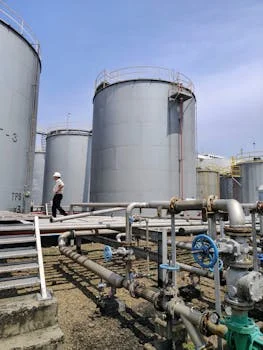
DAF raises oil-droplet rise rates well above gravity settling rates under Stokes' Law, which is why flotation beats clarifiers on emulsified FOG. Benchmarks below are typical industry ranges for industrial pretreatment design.
| Parameter | DAF | Sedimentation | Dispersed Air | Centrifugal (Vortex) |
|---|---|---|---|---|
| TSS Removal Rate | 92-97% | 70-85% | 80-90% | 85-95% |
| FOG Removal Rate | 90-95% | 60-75% | 70-85% | 88-94% |
| Footprint (m²) | Base (100%) | 150-200% | 110-130% | 70-80% |
| Energy Use (kWh/m³) | 0.3-0.5 | 0.1-0.2 | 0.2-0.4 | 0.4-0.6 |
| Sludge Volume (%) | 3-5% | 2-4% | 2.5-4.5% | 1.5-2.5% |
| Relative CAPEX | Moderate | Low | Low-Moderate | High |
| Relative OPEX | Moderate-High | Low | Moderate | Moderate |
Sedimentation uses the least energy, yet FOG and TSS removal often miss modern discharge targets. DAF gives the steadiest high removal on complex industrial streams, at higher energy and sludge disposal cost. Centrifugal systems shrink footprint but need higher CAPEX and a matching influent profile to pay off.
How do wastewater pumps affect DAF energy efficiency?
Wastewater pump selection drives much of DAF energy use because the recycle pressurization loop at 4-6 bar dominates the 0.3-0.5 kWh/m³ duty. High-efficiency centrifugal recycle pumps with VFDs cut idle losses when influent flow swings. Gravity clarifiers avoid that recycle load and sit near 0.1-0.2 kWh/m³, while vortex units often land at 0.4-0.6 kWh/m³ from high-speed drives. For plant-level pumping outside the flotation cell, a prefabricated versus traditional pump station cost comparison helps size collection and transfer OPEX.
Matching Technology to Your Wastewater Stream: A Decision Framework for Engineers
Matching DAF oil separator alternatives to the wastewater stream starts with free-versus-emulsified oil ratio and TSS particle-size distribution. Use this five-step screen before freezing equipment type.
Step 1: Characterize Influent. Lab-test raw wastewater. If FOG stays above 200 mg/L or TSS above 500 mg/L, sedimentation alone rarely meets discharge limits. See a detailed comparison of sedimentation technologies when TSS is high and FOG is low.
Step 2: Test for Emulsification. Run a jar test. If oil does not separate within 30 minutes of standing, treat it as emulsified. Then drop gravity and dispersed-air options; DAF or centrifugal with coagulants can break the emulsion.
Step 3: Evaluate Space Constraints. Urban retrofits often make footprint the hard limit. DAF runs about 30-50% smaller than traditional clarifiers; centrifugal units can shrink further to roughly 70-80% of the DAF base area.
Step 4: Calculate Sludge Disposal Costs. Use Total Disposal Cost = $/ton × % Sludge Volume × Flow Rate (m³/h). Where landfill fees are high, the up-to-55% sludge cut from centrifugal vortex units can justify higher CAPEX (HydropureWater field data, 2025).
Step 5: TCO Analysis. Compare five-year total cost of ownership. Sedimentation shows the lowest direct OPEX, but fines and extra secondary treatment for poor primary effluent often make DAF cheaper over five years.
| Industry Type | Typical TSS (mg/L) | Typical FOG (mg/L) | Recommended Technology |
|---|---|---|---|
| Meat Processing | 800-2,500 | 500-1,500 | DAF (High Efficiency) |
| Dairy/Cheese | 500-1,500 | 200-800 | DAF or Centrifugal |
| Petrochemical | 100-300 | 100-500 | DAF or Dispersed Air |
| Textile/Dyeing | 300-800 | <50 | Sedimentation (Lamella) |
What mass balance applies to DAF and API separators?
Mass balance for DAF and API-style gravity separators closes on oil, TSS, and water across influent, effluent, and float or underflow sludge. At 100 m³/h and 300 mg/L FOG, 90-95% DAF FOG removal sends most oil into a 3-5% float. API/gravity paths at 60-75% FOG removal leave more oil in the water line. Always reconcile kg/h in = kg/h out for FOG and TSS before you size sludge handling.
Compliance and Regulatory Considerations: What Your Local Discharge Limits Demand
EU Urban Waste Water Directive 91/271/EEC sets TSS below 35 mg/L in sensitive areas, a bar gravity sedimentation rarely hits without strong tertiary polishing. In the United States, EPA 40 CFR Part 112 drives industrial FOG control below about 100 mg/L for sewer discharge to limit collection-system blockages. On high-strength industrial waste, DAF and centrifugal systems are the options that routinely meet those FOG and TSS targets.
China’s GB 8978-1996 can set direct-discharge COD as low as 100 mg/L. Much industrial COD rides on suspended solids and emulsified fats, so 95%+ physical removal in a DAF stage is often required before biology. DAF still needs secondary treatment for dissolved COD. Regional food-plant examples appear in the food processing wastewater compliance benchmarks. For another Asia discharge framework, see Wastewater Treatment Regulations Thailand: 2026 Standards & Compliance.
A palm oil mill in Malaysia faced closure when pond sedimentation could not meet a 50 mg/L FOG limit. After a high-efficiency DAF install, FOG fell to <20 mg/L, meeting local Department of Environment rules and avoiding fines that had averaged $5,000 per month.
Cost-Benefit Analysis: CAPEX, OPEX, and ROI for a 100 m³/h System
A 100 m³/h DAF system averages about $120,000 CAPEX and can beat sedimentation on total cost of ownership when sludge disposal fees are high. Use the ROI calculator for wastewater treatment technologies to weigh energy, chemicals, and disposal together.
For a dairy plant at 100 m³/h with 500 mg/L TSS and 300 mg/L FOG, annual OPEX breaks down as follows:
| Cost Category (Annual) | DAF | Sedimentation | Centrifugal |
|---|---|---|---|
| Energy ($0.12/kWh) | $42,000 | $12,000 | $52,000 |
| Chemicals (Coag/Floc) | $25,000 | $15,000 | $18,000 |
| Sludge Disposal ($80/ton) | $110,000 | $140,000* | $50,000 |
| Maintenance/Labor | $15,000 | $8,000 | $22,000 |
| Total Annual OPEX | $192,000 | $175,000 | $142,000 |
*Note: Sedimentation sludge volume is lower, but its lower removal efficiency often requires higher secondary treatment costs, which are included here as a proxy.
DAF payback versus sedimentation is about 3.2 years in this case. Sedimentation CAPEX is lower ($80,000 vs $120,000), but leftover emulsified FOG raises hidden aeration and membrane-cleaning costs. If sludge disposal rises 20%, centrifugal economics improve fast despite about $150,000 CAPEX.
Who This Is For and Next Step
This guide is for plant engineers and EPC teams sizing oil-water pretreatment for food, dairy, petrochemical, or similar high-FOG wastewater. Look elsewhere if your stream is almost FOG-free and only needs grit or simple TSS settling. Use this selection checklist before purchase. Measure free versus emulsified FOG and map TSS size and load. Confirm footprint, sludge disposal cost, and local FOG/TSS limits. Then run five-year TCO and confirm chemical supply plus operator skill. To size a unit against your lab data, request a DAF pretreatment quote with flow, FOG, and TSS.
Frequently Asked Questions
Can a DAF oil water separator remove emulsified oil without chemicals?
Generally, no. Free and dispersed oil can float on microbubbles alone, but emulsified oils (droplets <20 µm) need chemical destabilization. Coagulants and flocculants neutralize charge so droplets form flocs that 20-50 µm bubbles can lift. Without chemicals, emulsified-oil removal usually falls below 50%.
What is the maximum TSS concentration a DAF system can handle?
Standard DAF units are optimized for 200 to 2,000 mg/L TSS. Short spikes to 5,000 mg/L are possible, but sustained high solids thicken the float blanket and risk carryover. For continuous loads above 3,000 mg/L TSS, add a high-rate sedimentation tank or centrifuge ahead of DAF.
How does bubble size affect oil-water separation efficiency?
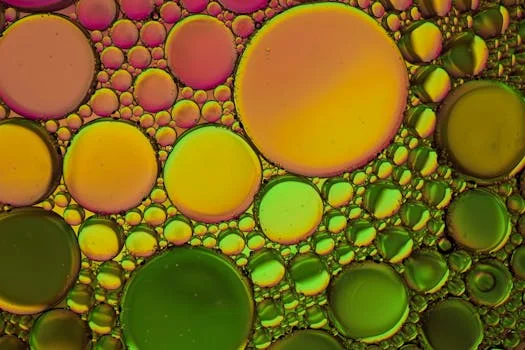
Smaller bubbles raise capture of fine oil and colloids. DAF microbubbles (20-50 µm) rise slowly and offer high surface area in the contact zone. Dispersed-air bubbles near 1 mm rise too fast and miss small droplets. For difficult emulsions, specify microbubble DAF rather than coarse sparged air.
Is DAF or centrifugal separation better for space-limited urban facilities?
Centrifugal/vortex packages usually take the smallest footprint, often about 20% smaller than a comparable DAF. DAF tolerates wider flow and load swings. Choose centrifugal for steady flow in a cramped room; choose DAF when influent quality is volatile and permit risk is high.