Why Corpus Christi-Area Petroleum Plants Face Tighter Pretreatment Scrutiny in 2026
Petroleum terminals, bulk plants, and small refineries along the Corpus Christi Ship Channel discharge to the Corpus Christi Water's Oso Water Reclamation Plant and the Greenwood facility, both operating under TCEQ TPDES permits with MAHL-derived local limits that tightened between 2024 and 2026 (per TCEQ TPDES permit records on file with the City). The cluster is the largest refining and export complex on the U.S. Gulf Coast outside Houston, and the receiving POTWs are at hydraulic and biosolids capacity, which is why local limits on hexane-extractable material (HEM), TSS, BTEX, and TPH have been pushed down rather than relaxed. Under 40 CFR Part 403, any noncategorical Significant Industrial User (SIU) discharging process wastewater to a Corpus Christi POTW is in scope, with the trigger at 25,000 gpd of non-domestic waste, and the consequence chain runs straight: a Notice of Violation opens a 30–60 day cure window, a second violation in twelve months escalates the facility to Significant Noncompliance (SNC), a Show Cause hearing follows, and the terminal either accepts administrative orders, surcharges, mandated zero-discharge status, or permit termination. The 2024–2026 EPA National Pretreatment Program audit cycle is the third pressure: EPA Regional 6 review teams are pulling files at noncategorical SIUs, not just at categorical refineries, and the local limits that the Oso and Greenwood plants derived using the MAHL method are now the numbers auditors test against.
The Citation Chain: CWA → 40 CFR Part 403 → TCEQ TPDES → MAHL Local Limits
The defensible citation map a Coastal Bend engineer can hand to a regulator runs Clean Water Act of 1972 (33 U.S.C. § 1251 et seq.) → EPA General Pretreatment Regulations at 40 CFR Part 403 → TCEQ adoption of local limits under the TPDES program → Corpus Christi Water's Technically Based Local Limits (TBLL) derived using EPA's Maximum Allowable Headworks Loading (MAHL) method. The MAHL method is the workhorse: the POTW calculates the maximum mass of each pollutant of concern that can pass through the headworks without violating the downstream NPDES permit, the Texas Surface Water Quality Standards, the 40 CFR Part 503 biosolids numerical criteria, or NIOSH and ecological worker-protection thresholds (per the 2020 St. Joseph, MO TBLL evaluation by Black & Veatch, final report adopted 2020-12, used here as a published reference template for the methodology). Four MAHL inputs drive every local limit a terminal sees: NPDES limits on the receiving POTW, state water quality standards, biosolids disposal criteria, and worker/ecosystem protection factors. The POTW converts the MAHL into a Maximum Allowable Industrial Loading (MAIL) for each Industrial User, allocates mass against flow, and prints the daily-maximum and monthly-average numbers that the permit cites. For petroleum refining operations subject to categorical standards, the federal floor is 40 CFR Part 419 Subparts A–E, with PSES/PSNS anchored at 100 mg/L O&G and 100 mg/L ammonia as N, scaled by the size and process configuration factors published in the 2019 EPA Detailed Study of the Petroleum Refining Category. The Corpus Christi cluster sits on top of those federal floors with the MAHL-derived local limits; the higher of the two numbers governs the discharge.
What Corpus Christi Permits Typically Require in 2026: HEM, TSS, BTEX, TPH
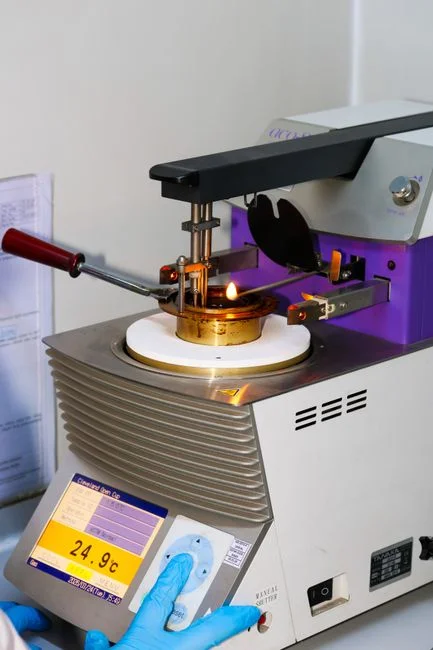
Most 2026 permits in the Corpus Christi basin set HEM (oil and grease) at 100–200 mg/L daily maximum and approximately 250 mg/L TSS, derived using EPA's MAHL method under 40 CFR Part 403, with stricter water-reuse-driven POTWs pushing daily maximum HEM toward 50 mg/L (per St. Joseph, 2020 TBLL methodology, applied to TCEQ receiving-stream data). The analytical surrogate matters: HEM is the federally used proxy for fats, oils, and grease in U.S. pretreatment, defined in 40 CFR § 401.16 and measured by EPA Method 1664A using n-hexane extraction, and it is the parameter most bulk-plant permits cite as "O&G." The watchlist parameters sized to the local MAHL allocation are benzene, toluene, ethylbenzene, xylene (BTEX) and total petroleum hydrocarbons (TPH); engineers should treat benzene and TPH as the lead parameters for permit negotiation because the MAHL they generate often constrains daily flow more than O&G does. Significant Noncompliance thresholds under EPA's National Pretreatment Program are: a single-day exceedance ≥1.5× the numerical limit, violation of a numerical limit for more than 5% of measurement days in any six-month period, or failure to provide required reports within 30 days of the due date — and any of those triggers a Show Cause path.
| Parameter | Typical 2026 Corpus Christi Permit Ceiling | Method / Standard | Watchlist Note |
|---|---|---|---|
| HEM (O&G surrogate) | 100–200 mg/L daily max; ~50 mg/L where water-reuse applies | EPA Method 1664A; 40 CFR § 401.16 | Lead parameter for negotiation |
| TSS | ~250 mg/L daily max | SM 2540D | Weekly grab minimum |
| BTEX (sum or individual) | Site-specific MAHL allocation | EPA 624 / 8260 | Benzene drives mass cap |
| TPH | Site-specific MAHL allocation | EPA 8015 (GRO/DRO) | Lead parameter for negotiation |
| Ammonia as N | 100 mg/L categorical floor; tighter where local | SM 4500-NH3 | 40 CFR Part 419 categorical |
| pH | 6.0–9.0 standard, 6.5–7.5 ahead of DAF | SM 4500-H+ | Chemistry gate for DAF |
The Four-Stage Pretreatment Train for a Corpus Christi Petroleum Plant
The four-stage train is the operating answer to those permit ceilings, and the order is non-negotiable. Stage 1 — Source segregation. Segregated laterals for product-handling pads, covered and locked dump valves, and dedicated oil/water sewering on truck-loading islands cut the volume hitting the train by 40–70% in field retrofits (HydropureWater field data, 2025–2026) and keep hydrocarbon-contaminated streams out of the clean stormwater system that EPA's Multi-Sector General Permit (MSGP) governs. Stage 2 — Primary separation. An API gravity separator sized for at least 30 minutes of residence time at peak flow, or a corrugated plate interceptor (CPI) with 1–2 inch plate spacing and ~45° corrugation angle, removes free oil down to roughly 60–150 µm. A single-technology approach fails here because wash-rack water carries sub-50 µm emulsified oil driven by surfactants, and a CPI alone rarely meets a 100 mg/L HEM ceiling on emulsified flow (per the technology comparison in the HydropureWater 2026 field reference). Stage 3 — Emulsified-oil polishing. A Dissolved Air Flotation (DAF) system operating at 60–90 psig saturation, 2–5 gpm/ft² surface hydraulic loading, and a 20–30% safety margin on the air-to-solids ratio handles the 10–25 µm fraction. DAF alone fails on slug loads because free oil blankets the micro-bubble surface and crashes the A/S ratio, which is why a primary stage ahead of the DAF is standard practice (HydropureWater field data, 2026). Stage 4 — Biological or adsorption polishing. MBBR or activated sludge for ammonia and sulfide, with granular activated carbon deployed where the train must swing from 50 mg/L HEM permit to under 20 mg/L in a water-reuse loop. Chemistry closes the gap: pH adjustment to 6.5–7.5 ahead of the DAF and a demulsifier or coagulant dose of 50–200 mg/L via a PLC-controlled chemical dosing system is what unlocks residual under 50 mg/L HEM a strict POTW will demand.
| Stage | Technology | Key Sizing Parameter | Operating Range | Failure Mode If Undersized |
|---|---|---|---|---|
| 1 — Segregation | Segregated laterals, covered dump valves | Hydraulic reduction | 40–70% flow cut (HydropureWater 2025–2026) | Slug overload downstream |
| 2 — Primary O/W | API or CPI separator | Residence time (API); plate spacing (CPI) | ≥30 min at peak; 1–2 in plates, ~45° | Free oil carryover; DAF blanketing |
| 3 — Emulsified polish | DAF | Surface hydraulic loading; ASR | 2–5 gpm/ft²; 20–30% ASR margin | Oil carryover; A/S crash on slugs |
| 4 — Polish | MBBR, activated sludge, or GAC | MLSS or EBCT | Site-specific; GAC for <20 mg/L reuse | Ammonia/BTEX breakthrough |
Corpus Christi-Specific Waste Streams and How to Feed Them Into the Train
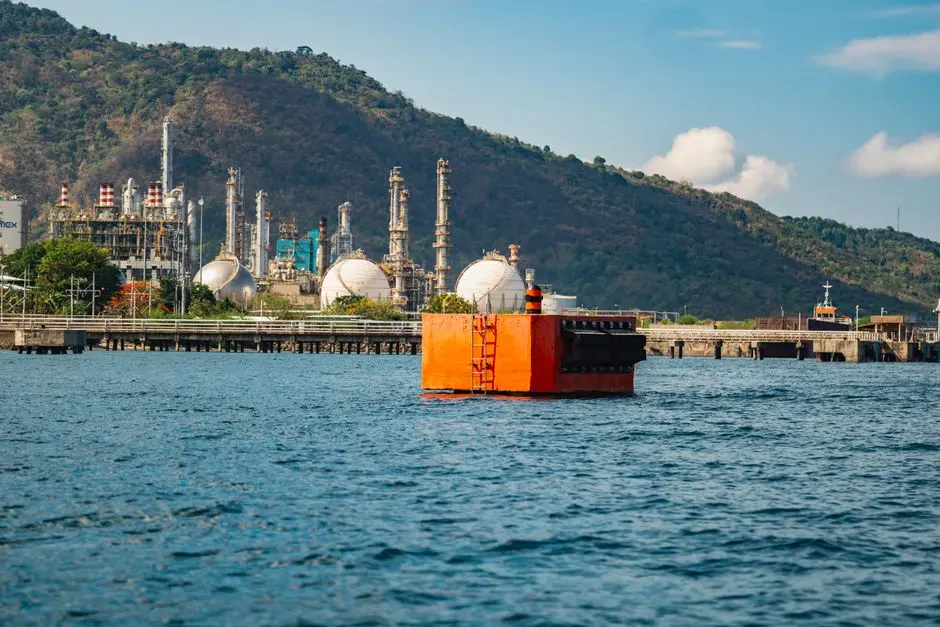
The streams a Coastal Bend plant generates map to the train by droplet-size distribution, not by generic name. Tank-bottom water is free oil plus sludge and routes to the API or CPI primary. API or coalescer dump slugs are free oil and must hit the API/CPI primary first — feeding a slug straight to the DAF blankets the micro-bubbles and crashes the air-to-solids ratio. Truck and rail loading drip is mostly free oil and routes to primary after segregated loading-island sewering; a DAF-only configuration on this stream is the most common single-technology mistake in field audits. Vehicle wash-rack wastewater is emulsified — surfactants from detergents drive droplet sizes below 50 µm — and routes to the DAF polishing stage after primary. Hydrostatic test water and stormwater contacting product-handling areas stay segregated out of the clean stormwater system via MSGP-compliant berming and covered dump valves. Engineers working through a similar decision in a different coastal basin can cross-check the trade-off in this DAF vs clarifier decision guide for petroleum wastewater, and a parallel pretreatment walkthrough for plastics and rubber plants is in the sister 2026 pretreatment compliance guide for plastics and rubber plants.
Self-Monitoring, BMPs, and the 2026 NPP Audit-Ready File
The self-monitoring cadence most Corpus Christi POTWs expect in 2026 is: a daily visual free-oil inspection at the outlet weir logged on a dated and initialed paper or digital sheet, a weekly TSS grab, a monthly HEM composite (EPA Method 1664A, 24-hour flow-proportional where the permit specifies), and a 24-hour flow-proportional composite for BTEX/TPH where the local limit is non-zero. Sampling taps must be accessible and tagged, and the flow meter must be calibrated annually. BMPs do most of the audit-prep work: spill containment around all aboveground storage tanks, drip pans under truck loading arms, covered and locked dump valves on coalescers, segregated sewer laterals that keep product-handling pads out of the clean stormwater system, and visible tagging of all sample points. A written Spill Prevention and Countermeasure Plan (40 CFR Part 112) tied to the sewer map eliminates roughly half of common audit findings (HydropureWater field data, 2025). The cheapest insurance, however, is defensible chain-of-custody — most SNC findings originate from sampling-procedure deficiencies, not from the underlying treatment performance, and a tight COC log keeps a strong operating record from collapsing under an EPA Region 6 cross-check.
Frequently Asked Questions
What HEM and TSS limits does a Corpus Christi petroleum plant typically see on its 2026 discharge permit?
Most 2026 Corpus Christi permits set HEM (oil and grease) at 100–200 mg/L daily maximum and approximately 250 mg/L TSS, derived using EPA's MAHL method under 40 CFR Part 403 (per the 2020 St. Joseph, MO TBLL evaluation by Black & Veatch). Stricter POTWs in water-reuse basins push daily maximum HEM toward 50 mg/L.
Can a DAF unit alone handle petroleum wastewater from a Corpus Christi terminal?
No, in most cases. Free oil from coalescer dumps and tank drops blankets DAF micro-bubbles and crashes the air-to-solids ratio; a DAF alone fails under slug loads (HydropureWater field data, 2026). A CPI or API primary stage ahead of the DAF is standard practice, with pH held at 6.5–7.5 ahead of the flotation cell.
What triggers Significant Noncompliance (SNC) under the EPA National Pretreatment Program?
Under EPA's National Pretreatment Program, SNC is triggered by any of the following: violation of a numerical limit by ≥1.5× for any single day, violation of a numerical limit for more than 5% of measurement days in a six-month period, or failure to provide required reports within 30 days of the due date (per 40 CFR Part 403). An SNC can lead to enforcement action, surcharges, or permit termination.
What analytical method defines the "O&G" limit on a Corpus Christi petroleum discharge permit?
EPA Method 1664A, which uses n-hexane extraction and is reported as Hexane Extractable Material (HEM). HEM is the federally used surrogate for fats, oils, and grease under 40 CFR § 401.16 and is the parameter most U.S. POTW permits cite as "O&G" (per St. Joseph, 2020 TBLL). The 20–30% ASR safety margin is standard practice for the DAF polishing stage.