What an RO System Actually Does in an Industrial Plant
Reverse osmosis is a pressure-driven membrane separation process. Water is forced through a semi-permeable membrane with a pore size of approximately 0.0001 microns, allowing water molecules through while rejecting larger dissolved species, ions and organic molecules (Forbes, 2022). Unlike carbon or sediment filtration, which target visible and physical contaminants, RO strips dissolved salts, heavy metals and small organics without a phase change — the same mechanism that made it the baseline for desalination, pharmaceutical water, semiconductor rinse and food and beverage process streams (Forbes, 2022).
The no-phase-change property is the recurring procurement argument. RO uses pressure rather than thermal energy, so it avoids the vaporisation-energy penalty of distillation (Forbes, 2022; E3S Web of Conferences, 2018). Energy intensity scales with feed salinity and chosen recovery, not with the latent heat of vaporisation.
When a buyer says "RO system" they usually mean the membrane train alone. In practice, an industrial RO system is a packaged assembly of the high-pressure pump, energy-recovery device (on seawater and high-recovery brackish units), pressure vessels, membrane elements, pretreatment, clean-in-place skid, instrumentation and PLC controls. Pretreatment and CIP are not optional accessories — they decide whether the train runs for three years or three months, which is the central engineering question this guide is built around.
RO System Advantages: Where It Earns Its Place
Rejection performance is the headline advantage of reverse osmosis systems. Residential-grade units remove up to 99% of lead, asbestos and 82 additional contaminants (Forbes, 2022). Industrial RO extends that capability to dissolved ions, silica and small organics that no other single barrier matches at the same throughput. The same membrane chemistry handles brackish feed at 200–400 psi and seawater at higher pressure (Forbes, 2022), so an engineer can apply one process-line-of-reasoning across a plant's full salinity range — only pump selection, energy-recovery device sizing and membrane specification change.
Operationally, RO runs as a steady-state, PLC-controlled process with periodic chemical cleaning rather than batch chemistry. This suits continuous 24/7 plant operation, where shifts in throughput or feed quality are absorbed by VFD-controlled pumps and automated CIP sequencing. There is no thermal cycle, no regeneration acid flush, and no resin exhaustion step to plan around.
Footprint and recovery are the advantages that often decide an industrial bid. Industrial RO trains can be specified for high recovery — up to 95% on suitable feedwater — which shrinks the downstream concentrate volume compared with low-recovery residential units and reduces both disposal cost and intake hydraulic load. The same package that a homeowner dismisses as wasteful becomes a compact, high-recovery dissolved-species barrier at industrial scale. A useful sanity check before specifying is to run the design past an industrial RO sizing guide so that flux, element count and pump duty are not inherited from a residential data sheet.
RO System Disadvantages: The Engineering Trade-offs
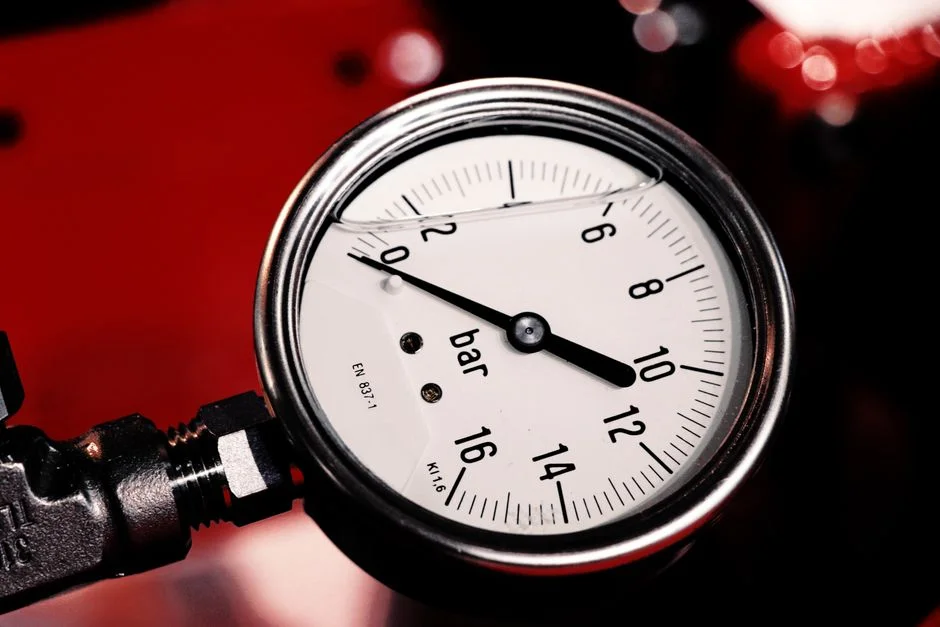
High pressure demand is the primary engineering trade-off. Brackish RO requires 200–400 psi to push water through the membrane, against the 40–45 psi of a suburban supply (Forbes, 2022). Seawater and high-recovery designs push pressure further, so pump selection, VFDs and energy-recovery devices become material OPEX lines rather than background accessories. The energy intensity is mechanical, not thermal, but it remains the largest variable cost in the OPEX stack.
Concentrate (reject) management is the second trade-off. Studies cited by Forbes show RO systems waste 3–20× the permeate volume, and the Whole House Water Filter Systems source republished by Wastewater Digest (WWD) cites up to 20 gallons flushed per gallon filtered. Industrial systems reduce this through recovery tuning and energy-recovery devices, but the concentrate stream requires a destination — sewer, evaporation pond, brine recovery or ZLD — and that requirement is a site-level constraint that should be resolved before purchase.
Membrane fouling and scaling are the third trade-off. The membrane rejects everything it catches, so hardness, silica, organics and biological matter accumulate on the surface and force periodic CIP. Operating cost depends as much on CIP frequency as on energy, which is why the pretreatment train is treated as part of the RO system in this guide, not as a separate budget line.
Mineral stripping and pH depression are the fourth trade-off. RO removes calcium, magnesium, potassium, bicarbonates and added fluoride, and the resulting permeate has a lower, more acidic pH (Forbes, 2022; WWD via Whole House Water Filter Systems, 2024). For industrial users this is a corrosion question for downstream piping and a process-fit question for the end use — boiler feed, rinse water and some food streams all have different responses to demineralised water.
Capex and skilled O&M close the list. Whole-home RO units are described as expensive to retrofit and maintain (Forbes, 2022); industrial plants face the same dynamic at a larger scale, plus a need for trained operators or a service contract. None of these disadvantages are disqualifying, but each one is a parameter the engineer has to manage.
When RO Is the Right Choice — and When It Is Not
RO is justified when the process needs dissolved-species removal — desalination, boiler-feed demineralisation, pharmaceutical water, semiconductor rinse, or strict reuse-discharge limits — because no single barrier below RO matches dissolved-ion rejection at the same throughput. It is also justified when the feed is variable in salinity and a single membrane train can be retasked by swapping pump duty and recovery setpoint rather than by adding unit operations.
RO is over-specified where the real target is suspended solids, organics or oil and grease. Those are better handled upstream by multi-media filtration, MBR or DAF. Adding RO on top of an unsuitable pretreatment train does not remove the fouling load — it transfers it onto an expensive membrane, where it shows up as monthly CIP and shortened element life. A frequent industrial failure mode is specifying RO to "polish" an effluent that the upstream biology was already supposed to polish, then watching flux decay.
Feedwater classification is the decision lever. The higher the TDS, hardness, silica or organic load, the harder RO works and the more pretreatment, antiscalant and CIP it consumes. The practical check is a feedwater parameter list a buyer should request from any supplier before quoting: TDS, hardness, alkalinity, silica, iron, manganese, free chlorine, SDI₁₅, temperature, and the target permeate quality. Without those numbers, any recovery claim is decorative.
Concentrate destination must also be resolved before purchase. Sewer discharge, evaporation pond, ZLD or brine recovery each set a different ceiling on the economic recovery rate, and that ceiling is what links the membrane selection to the civil and disposal design.
| Feedwater profile | RO viability | Indicative recovery target | Key pretreatment needed |
|---|---|---|---|
| Soft, low-TDS municipal or condensate | Often over-specified; consider ion exchange or IX/RO hybrid | To be confirmed against permeate spec | Cartridge filtration, possibly no softener |
| Hard brackish well or surface water (TDS, hardness and silica present) | Standard industrial application for brackish water RO | To be confirmed against feed analysis and concentrate disposal route | Multi-media filter, softener or antiscalant, SDI control |
| High-TDS or variable industrial reuse stream | Viable with UF pretreatment and energy recovery | Lower recovery to manage scaling; confirm by site test | UF + antiscalant + CIP infrastructure, as in this textile RO process guide |
| Seawater or high-salinity brine | Viable with energy-recovery device and seawater RO elements | Typically 35–50% in single pass; request supplier model | UF, high-pressure pump, ERD, corrosion-resistant materials |
| Effluent polishing for reuse where biology is the main target | Usually wrong tool; MBR or MBR + RO hybrid only | Match to reuse spec, not to a default | MBR upstream, RO only if dissolved cut required |
Building the OPEX Picture: Pressure, Energy, Membrane Life, CIP
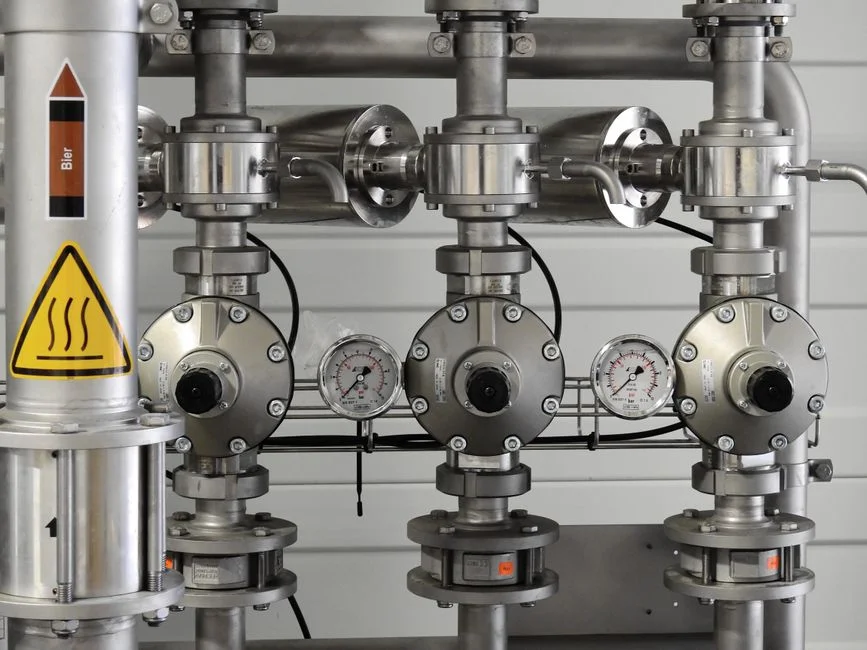
Energy is driven by pressure. The 200–400 psi needed for brackish feed (Forbes, 2022) makes pump electricity the single largest variable OPEX line, which is why energy-recovery devices are standard on industrial trains above a certain throughput. The unit that matters for procurement is kWh per cubic metre of permeate at the design recovery, not nameplate motor power.
Membrane replacement is a planned consumable. 10-inch and 40-inch RO elements are stocked items, available as RO membrane elements and spares, and replacement frequency is set by feedwater quality and recovery rather than by calendar time. A 3-year element life is achievable on well-pretreated brackish feed; a 12-month life is the common signal that pretreatment is underspecified.
CIP frequency is the leading indicator of pretreatment performance. More frequent cleaning means the upstream multimedia filter, softener or UF train is underspecified. A buyer should ask every supplier for an expected CIP interval at the design feedwater before signing — a vendor who will not commit to a number in writing is signalling that the pretreatment scope is still open.
Concentrate handling carries a cost — sewer surcharge, evaporation pond capacity, brine transport — that does not appear in the membrane vendor's quote but often dominates lifecycle cost at high recovery. The Forbes 3–20× waste range is a starting reference, not an industrial steady-state; the actual number is set by recovery and energy-recovery design.
Spare parts and instrumentation close the stack. Pressure vessels, conductivity meters, flowmeters and RO controllers are available as integrated water-treatment parts, valves and media and should be costed in the OPEX line, not treated as one-off purchases.
| OPEX lever | What drives it | What to ask the supplier | Where it appears in the bid |
|---|---|---|---|
| Energy (kWh/m³ permeate) | Feed salinity, recovery, pump efficiency, energy-recovery device | Specific energy at design recovery; presence of ERD | Electrical OPEX, often 30–50% of variable cost |
| CIP chemicals and frequency | Feedwater fouling load, pretreatment adequacy, recovery | Expected CIP interval in days under site feedwater | Chemical OPEX, downtime cost |
| Membrane replacement | Feedwater quality, recovery, CIP discipline | Expected element life in months, not years | Spare parts OPEX, line in the consumables budget |
| Concentrate disposal | Recovery rate, sewer/evaporation/ZLD route | Annual reject volume at design recovery and disposal cost per m³ | Site services OPEX, often hidden in the civils scope |
| Instrumentation and spares | Plant uptime targets | Recommended spares list and controller model | Maintenance budget |
Pretreatment Stack: What Has to Sit in Front of the Membrane
Multi-media filtration is the standard first stage, protecting the membrane from suspended solids and turbidity spikes and producing an SDI₁₅ suitable for RO. Softening or antiscalant dosing is required for hard feedwater to prevent sulphate, carbonate and silica scale. UF as RO pretreatment is increasingly specified where feed SDI is variable or where the plant wants to extend RO membrane life, and a packaged UF RO pretreatment skid can be quoted as a single line item alongside the RO train. An industrial water softener is the common pairing for hard well water. The pretreatment train decides whether the "RO is high maintenance" disadvantage becomes real — get it right and the RO runs on planned CIP, get it wrong and the operator is cleaning membranes monthly.
Frequently Asked Questions
What is the biggest disadvantage of an industrial RO system?
The primary disadvantage is the combination of high pressure demand — 200–400 psi for brackish feed (Forbes, 2022) — and the concentrate stream that follows. Energy recovery devices and high-recovery design reduce
Frequently Asked Questions
What are the main advantages and disadvantages of an industrial RO system?
The primary advantage of industrial Reverse Osmosis (RO) is its ability to reject 95% to 99.7% of dissolved salts, organics, and pathogens, providing a consistent high-purity permeate suitable for boiler feed or process water. It offers a compact footprint compared to thermal desalination and operates continuously with automated control systems.
The main disadvantages include high operational expenditure (OPEX) due to electricity consumption and membrane replacement costs, and the requirement for extensive pre-treatment to prevent fouling and scaling. RO systems are also sensitive to feed water fluctuations, which can lead to rapid membrane degradation if SDI (Silt Density Index) exceeds 3.0.
How much water does an RO system actually waste in industrial operation?
In industrial applications, recovery rates typically range from 50% to 85%, meaning for every 100 gallons of feed water, 15 to 50 gallons become concentrate (waste). Brackish water systems typically operate at 75%–85% recovery, while seawater systems are limited to 35%–50% due to osmotic pressure constraints and the risk of mineral precipitation.
Actual waste volume is highly dependent on the feed water chemistry and the implementation of high-recovery configurations, such as multi-stage arrays or concentrate recycling. Facilities must account for the discharge of this brine stream, which often requires environmental permitting and chemical neutralization.
What pressure does an industrial RO system need for brackish versus seawater feed?
Brackish water RO (BWRO) systems typically operate at feed pressures ranging from 150 to 400 psi (10 to 28 bar) to overcome the osmotic pressure of feed waters with total dissolved solids (TDS) between 1,000 and 10,000 mg/L. These systems utilize low-energy membranes to optimize energy consumption.
Seawater RO (SWRO) requires significantly higher pressures, typically between 800 and 1,200 psi (55 to 83 bar), to counteract the osmotic pressure of high-salinity feed (35,000+ mg/L TDS). Modern SWRO plants almost exclusively employ Energy Recovery Devices (ERDs) to capture hydraulic energy from the high-pressure concentrate stream, reducing total power consumption by up to 40%.
Is RO the right choice for my plant, or should I use DAF, MBR or a softener instead?
The choice depends on the target water quality and incoming contaminant profile. Use Dissolved Air Flotation (DAF) if the primary objective is removing suspended solids, fats, oils, and grease (FOG) as a pre-treatment step. Membrane Bioreactors (MBR) are superior for biological wastewater treatment where high-strength organic loads are present, while softeners are specifically used for ion exchange to remove hardness ions (calcium and magnesium) to prevent scaling.
RO is the correct choice only when high-purity water is required for process or boiler feed. If the feed water contains high levels of turbidity or biological load, RO must be preceded by DAF or MBR to protect the membranes from irreversible fouling.
What should I ask an RO supplier before buying — sizing, recovery, concentrate, CIP and lead time?
Request a detailed mass balance and projection report showing the flux rate (typically 12–18 GFD for brackish) and the specific recovery percentage guaranteed for your feed chemistry. Ask for a concentrate management plan, including the projected volume and chemical composition of the brine stream to ensure local discharge compliance.
Inquire about the Clean-in-Place (CIP) system integration, specifically the tank capacity, heating requirements, and chemical compatibility of the skid piping. Finally, verify the lead time for standard versus custom membrane housings and pressure vessels, and request a spare parts list that includes specific membrane models and seal kits to minimize downtime during maintenance cycles.