What Gwangju's Climate and Watershed Mean for a Data Center's Water Footprint
Gwangju sits in a humid subtropical climate, and the summer wet-bulb temperatures on the Yeongsan River basin drive aggressive evaporative loss in cooling towers, so makeup-water demand and blowdown volume are not steady-state — they spike through the monsoon-to-summer cycle. Because no Gwangju-specific numeric figure for evaporative loss is in the supplied research, treat the seasonal swing as a qualitative input that any site engineer must quantify from local wet-bulb data before sizing blowdown storage.
Open-loop evaporative cooling extracts and evaporates water every day of the year and returns it to the watershed only as precipitation, which can lower groundwater and reduce streamflow over time, according to Sprenger at NC State (Sept 2026). The same hydrological logic that drives U.S. pushback in states like Virginia and Arizona applies to a Yeongsan-basin data center; a Gwangju site that draws heavily from municipal drinking-water systems during a multi-year drought will compete with residents, agriculture, and downstream tributaries for the same source. Engineers planning a new build should treat the basin balance as a permit-relevant variable, not a background assumption, and review the comparable blowdown treatment guide for Konya, Türkiye for a parallel climate framing.
Data-center cooling demand is described as an "inflexible demand" that cannot easily be turned off during drought, because unlike residents who can stop watering lawns, most data centers cannot shut down their cooling systems without halting operations (Sprenger, NC State, Sept 2026). The engineering answer in Gwangju is therefore a treatment train that reduces draw rather than a permit that restricts runtime, and the policy direction is converging on closed-loop, recycled, or non-potable water sources — a theme the broader sustainability options for data-center cooling water explore in more detail.
Even a water-light site inherits watershed stress indirectly through grid electricity: 78% of the electricity in the seven U.S. states Ceres studied came from water-using power plants, and 66% of that electricity was generated in medium-high to extremely high water-stress areas (Ceres, cited in Sprenger, NC State, Sept 2026). Surface this finding to procurement and ESG teams because the same indirect water load travels through the Korean grid, and a Gwangju site that reduces blowdown but sources power from a thermal-heavy mix has not actually shrunk its watershed footprint.
Cooling Blowdown: What the Stream Actually Contains
Blowdown is the water left behind after evaporation concentrates dissolved solids; it must be drained to protect equipment and is defined as blowdown in NC State's reporting on data-center water impacts (Sprenger, NC State, Sept 2026). The stream is not "dirty water" in a generic sense — it is a defined industrial wastewater with a chemistry that drives every unit operation downstream.
At a typical 4 cycles of concentration, cooling-tower blowdown runs 4–8× the makeup-water TDS, i.e. 1,200–6,000 mg/L, depending on cycles and source water (Genesis Water Tech, 2026). A facility using 10 million gallons per month of makeup therefore discharges 2.5–3 million gallons of blowdown at 4 cycles of concentration (Genesis Water Tech, 2026), a sizing anchor for the entire downstream train. Genesis Water Tech also notes that as facilities push toward higher cycles of concentration to reduce water consumption, blowdown volume drops but the water-quality challenge intensifies, because the same salts and treatment chemicals are concentrated into a smaller stream.
Blowdown carries elevated calcium, magnesium, silica, and alkalinity, plus accumulated biocides, corrosion inhibitors, scale inhibitors, and dispersants; legacy chromate and high-phosphate chemistries are flagged as a particular reuse and discharge hazard (Genesis Water Tech, 2026). Suspended solids in blowdown typically run 10–50 mg/L even with basin filtration, and biological content — planktonic bacteria, algae, biofilm fragments — must be controlled before any membrane or reuse step (Genesis Water Tech, 2026). A practical reference on evaporative cooling-tower water treatment provides the broader chemistry context for these streams.
| Parameter | Typical blowdown range | Source |
|---|---|---|
| Total dissolved solids (TDS) | 1,200–6,000 mg/L (4–8× makeup) | Genesis Water Tech, 2026 |
| Cycles of concentration | 4 typical; higher reduces volume but concentrates contaminants | Genesis Water Tech, 2026 |
| Volume vs. makeup (at 4 cycles) | 25–30% of makeup water discharged | Genesis Water Tech, 2026 |
| Suspended solids | 10–50 mg/L despite basin filtration | Genesis Water Tech, 2026 |
| Key scaling species | Calcium, magnesium, silica, alkalinity | Genesis Water Tech, 2026 |
| Treatment chemicals of concern | Biocides, corrosion/scale inhibitors, dispersants; legacy chromates, high-phosphate programs | Genesis Water Tech, 2026 |
| Biological content | Planktonic bacteria, algae, biofilm fragments | Genesis Water Tech, 2026 |
Three End-Use Paths for Blowdown in a Gwangju-Style Site
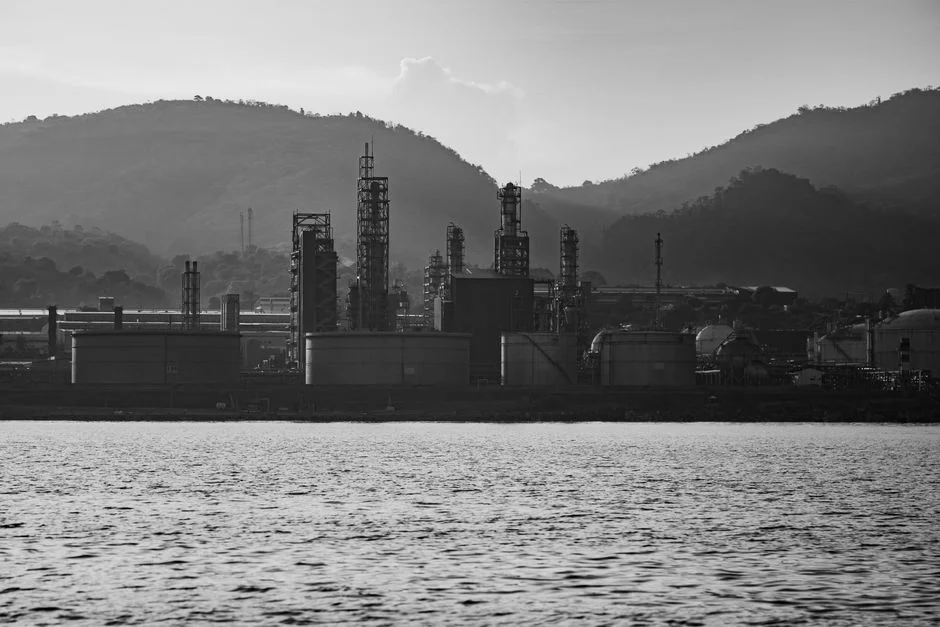
The end-use decision — sewer discharge, on-site reuse, or zero liquid discharge — must be made before the unit operations are selected, because the right train is set by where the water goes, not by which membrane is cheapest. Three options are operationally distinct and have very different capex and opex consequences.
Sewer-discharge compliance. Municipalities are tightening industrial discharge permits, with some jurisdictions now setting TDS limits below 1,500 mg/L and direct-discharge fees exceeding $5–15 per 1,000 gallons in water-stressed regions (Genesis Water Tech, 2026). Verify the local Korean discharge sewer's TDS, chloride, phosphorus, and biocide limits before sizing — at 1,200–6,000 mg/L blowdown TDS, raw discharge will fail most tightening sewer bylaws without polishing.
On-site reuse as cooling-tower makeup. This is the highest-value end-use because it directly cuts both freshwater intake and discharge volume, with typical recovery of 60–85% (Genesis Water Tech, 2026). Process-water reuse for irrigation, equipment washdown, or toilet flushing is a valid but lower-recovery option; the practical reuse target in Gwangju, where the outdoor-irrigation season is short, is the cooling tower itself rather than landscaping.
Zero liquid discharge (ZLD). ZLD eliminates liquid waste entirely and is justified only in water-scarce or discharge-prohibited sites; the cost band is $3–8 million capex for a data-center-scale ZLD with $5–15 per 1,000 gallons opex (Genesis Water Tech, 2026), so it is a last-resort configuration in Korea. End-use selection in Gwangju is driven by (a) local sewer TDS and biocide limits, (b) the operator's water-positive targets, and (c) whether the site can be co-located with a municipal reclamation plant à la BKT / Tomorrow Water's Jungnang concept in Seoul (DCD, May 2021) — flag all three to the client before selecting a train.
| End-use path | Typical recovery | Capex (data-center scale) | Best fit in Gwangju when… | Source |
|---|---|---|---|---|
| Sewer discharge (with polishing) | N/A — stream is discharged | Lowest capex; opex dominated by discharge fees ($5–15/kgal) | Local sewer TDS limit ≥ 1,500 mg/L and no biocide restriction | Genesis Water Tech, 2026 |
| On-site reuse as cooling-tower makeup | 60–85% | $250k–$500k for a 50,000 GPD RO train + pretreatment | Freshwater reduction is a permit or ESG driver; makeup quality is achievable | Genesis Water Tech, 2026 |
| Process / non-potable reuse (irrigation, washdown) | Lower than makeup reuse | Generally below RO reuse | Site has year-round non-potable demand; secondary to makeup reuse in Gwangju | Genesis Water Tech, 2026 |
| Zero liquid discharge (ZLD) | 95–99% | $3–8 million; $5–15/kgal opex | Discharge is prohibited or water is genuinely unavailable | Genesis Water Tech, 2026 |
| Co-location with WWRF (BKT / Tomorrow Water model) | Depends on host plant | Multi-year, public-private | Greenfield, multi-MW, with land controlled near a reclamation plant | DCD, May 2021 |
Building the Treatment Train: Filtration, Membranes, and Evaporation
Side-stream filtration is the first lever: continuous removal of suspended solids and biological loading at 1–5% of circulation flow lets the cooling tower run at higher cycles, which drops blowdown volume and improves its quality for downstream reuse (Genesis Water Tech, 2026). A multi-media filter ahead of the membrane train is the conventional anchor for this step, with spiral self-cleaning units reaching 10–25 micron filtration as a more compact alternative.
Ultrafiltration (UF) is the membrane workhorse for pretreatment: it removes suspended solids, bacteria, viruses, and high-MW organics, runs at 10–30 psi with 90–95% recovery, and feeds RO or NF (Genesis Water Tech, 2026). A hollow-fiber ultrafiltration system for blowdown pretreatment typically backwashes with permeate and needs chemical cleaning only every 1–3 months, which keeps availability high. Genesis Water Tech also notes that integrating bio-organic flocculants into the upstream filter step improves colloidal removal and protects the UF membranes.
Reverse osmosis is the reuse-grade step: it removes 95–99% of dissolved solids, hardness, silica, and most treatment chemicals, producing permeate at 10–50 mg/L TDS suitable for direct return to the cooling tower; recovery on blowdown is 50–85%, limited by scaling, and a 50,000 GPD RO unit is in the $250,000–$500,000 installed band with $1.50–3.00 per 1,000 gallons opex (Genesis Water Tech, 2026). An industrial RO system for blowdown reuse in this service typically runs at 150–400 psi to overcome osmotic pressure, with antiscalant injection to control scaling on the concentrate side.
Nanofiltration is the right choice when the limit is hardness and sulfate, not total TDS: it runs at lower pressure (75–150 psi), reaches 70–85% recovery, and produces permeate at 30–50% of feed TDS, which is often enough to push cycles higher without full RO (Genesis Water Tech, 2026). Evaporative concentration (MVC, brine concentrator, or solar ponds) is the bridge from RO to ZLD: MVC at 95–98% recovery produces distillate below 10 mg/L TDS and concentrates brine to 20–30% dissolved solids, with capital of $1–3 million for 10,000–30,000 GPD and 15–25 kWh per 1,000 gallons of distillate (Genesis Water Tech, 2026). The common reuse train is RO at 50–75% recovery feeding MVC at 95% recovery of concentrate, giving 85–95% overall recovery with very small liquid discharge — the configuration to compare against a discharge-only path.
Why a Gwangju Site Should Default to Reuse, Not Discharge
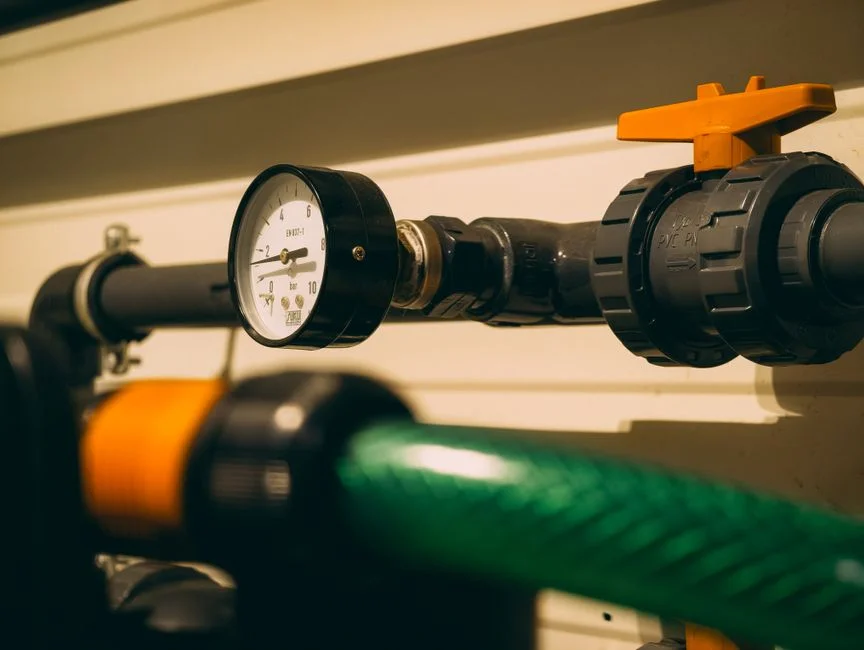
Direct-discharge fees in water-stressed regions already exceed $5–15 per 1,000 gallons, and some jurisdictions have TDS limits below 1,500 mg/L that effectively prohibit untreated blowdown discharge (Genesis Water Tech, 2026). At 1,200–6,000 mg/L blowdown TDS, raw discharge will fail most tightening Korean sewer bylaws, which makes the "send it to the sewer" default financially and legally fragile.
On-site reuse as cooling-tower makeup is the highest-value end-use because it reduces both freshwater intake and discharge volume simultaneously, typically at 60–85% recovery (Genesis Water Tech, 2026). Sprenger at NC State explicitly identifies closed-loop, dry, or micro-channel cooling plus recycled or non-potable water as the way to drastically reduce direct water consumption in future facilities (Sprenger, NC State, Sept 2026) — a reuse train inside the data center is the practical expression of that policy direction in Korea, and a Daejeon-specific blowdown treatment guide applies the same logic to a comparable Korean metropolitan context.
The Tomorrow Water / BKT concept from Seoul takes the reuse logic one step further by co-locating the data center with a municipal water-reclamation facility and reusing waste heat (DCD, May 2021). Tomorrow Water's BBF and Proteus biofiltration replace settlement tanks and reportedly use 80–85% less area than a clarifier; at Jungnang, the company halved the reclamation center's footprint and halved its energy use (DCD, May 2021). Worth raising with Gwangju Metropolitan City and K-water as a long-horizon option — not a default for a private site — and the same logic is worth comparing against a data-center cooling blowdown treatment in Tirunelveli, India in another water-stress context.
Sizing and Cost Anchors for a Gwangju Hyperscale Blowdown Train
Blowdown volume is the starting number for everything else. At 4 cycles of concentration, blowdown is 25–30% of makeup water, so a 10 million-gallon-per-month facility discharges 2.5–3 million gallons per month of blowdown (Genesis Water Tech, 2026). Multiply that ratio by any projected makeup figure to size pretreatment, RO, and brine handling without guessing.
Filtration capex for the side-stream and pretreatment step is $50,000–$200,000 for a typical data-center installation based on flow, with minimal opex beyond solids disposal and routine maintenance (Genesis Water Tech, 2026). RO capex and opex for a 50,000 GPD blowdown-recovery unit is $250,000–$500,000 installed and $1.50–3.00 per 1,000 gallons treated, including energy, chemicals, membrane replacement, and maintenance (Genesis Water Tech, 2026). MVC capex for 10,000–30,000 GPD is $1–3 million, with 15–25 kWh per 1,000 gallons of distillate (Genesis Water Tech, 2026) — only justifiable when discharge is restricted or when ZLD is mandated. Full ZLD capex is $3–8 million for data-center duty, with $5–15 per 1,000 gallons opex, achieving 95–99% overall water recovery (Genesis Water Tech, 2026); use only when the alternative water supply is genuinely unavailable. For a Korean-relevant sanity check, the comparable blowdown treatment guide for Konya, Türkiye applies the same bands to a similar climate.
| Train element | Capacity anchor | Capex (installed) | Opex | Source |
|---|---|---|---|---|
| Side-stream / multimedia filtration | 1–5% of circulation flow | $50,000–$200,000 | Solids disposal + routine maintenance | Genesis Water Tech, 2026 |
| UF pretreatment | Per upstream flow; 90–95% recovery | Sized per project | Permeate backwash, periodic CIP | Genesis Water Tech, 2026 |
| RO (blowdown reuse) | 50,000 GPD example; 50–85% recovery | $250,000–$500,000 | $1.50–3.00 per 1,000 gallons | Genesis Water Tech, 2026 |
| MVC evaporative concentrator | 10,000–30,000 GPD; 95–98% recovery of concentrate | $1–3 million | 15–25 kWh per 1,000 gallons distillate | Genesis Water Tech, 2026 |
| Full ZLD train | Data-center scale; 95–99% overall recovery | $3–8 million | $5–15 per 1,000 gallons | Genesis Water Tech, 2026 |
Decision Framework: Picking the Right Configuration for a Gwangju Site
The default path for most Gwangju hyperscale sites is side-stream filtration, UF pretreatment, and RO returning permeate to the cooling tower, targeting 60–85% reuse recovery (Genesis Water Tech, 2026). This is the lowest-capex configuration that simultaneously addresses the "inflexible demand" framing from Sprenger (NC State, Sept 2026) and the tightening discharge limits that Genesis Water Tech (2026) documents — and it is the path that most directly defends the freshwater-withdrawal side of the water budget to a Korean permitting authority.
Choose ZLD only when the local sewer authority confirms a hard prohibition on TDS or biocide discharge AND no alternative makeup source is available, because the $3–8 million capex and $5–15 per 1,000 gallons opex (Genesis Water Tech, 2026) require a specific, contractual water constraint to justify. Choose co-location with a municipal reclamation plant — the BKT / Tomorrow Water model — only for greenfield, multi-megawatt sites where land is owned or controlled, because it changes the permitting and reuse calculus but adds years to the project timeline (DCD, May 2021). Validate every choice against the Korea Clean Water Conservation Act effluent framework, the relevant ME / NIE test methods, and K-water intake tariffs; specific Korean numeric limits are not in the supplied research set, so request them from the local authority before any sizing is finalized. Side-stream multi-media filtration, automatic chemical dosing, a high-efficiency sedimentation tank, and a UV sterilizer typically round out the polishing train downstream of RO.
| If the site condition is… | Then choose… | Why | Source |
|---|---|---|---|
| Sewer TDS limit ≥ 1,500 mg/L AND no biocide prohibition | Discharge path with polishing | Lowest capex; opex is the discharge fee | Genesis Water Tech, 2026 |
| Permit tightening OR ESG / water-positive target | Reuse (side-stream + UF + RO, 60–85% recovery) | Highest-value end-use; cuts both draw and discharge | Genesis Water Tech, 2026 |
| Hard TDS / biocide prohibition AND no alternative water | ZLD train (RO + MVC + crystallizer) | Only justified by a contractual water constraint | Genesis Water Tech, 2026 |
| Greenfield, multi-MW, with controlled land near a WWRF | BKT / Tomorrow Water-style co-location | Long-horizon option; integrates waste heat and biofiltration | DCD, May 2021 |
| Climate-driven summer spikes in evaporative loss | Reuse with blowdown storage buffer | Smooths monsoon-to-summer swing; sized per local wet-bulb data (not in supplied research) | Qualitative; no Gwangju-specific number in supplied research |
Frequently Asked Questions
What blowdown chemistry should I use to size a Gwangju data-center treatment train?
Use a blowdown TDS of 1,200–6,000 mg/L (4–8× makeup), suspended solids of 10–50 mg/L, and the full treatment-chemical load (biocides, scale and corrosion inhibitors, plus legacy chromate or high-phosphate risks), per Genesis Water Tech (2026). At 4 cycles of concentration, expect 25–30% of makeup water to leave as blowdown — confirm the figure against a site-specific water balance because the Korean wet-bulb swing can push cycles above 4 in summer.
What capex should I expect for a hyperscale RO reuse train in Korea?
A 50,000 GPD RO unit treating blowdown is in the $250,000–$500,000 installed band with $1.50–3.00 per 1,000 gallons opex, including energy, chemicals, membrane replacement, and maintenance (Genesis Water Tech, 2026). Add $50,000–$200,000 for side-stream and multimedia filtration pretreatment (Genesis Water Tech, 2026); request a Korean-installation quote from a qualified supplier because local fabrication, seismic, and electrical markup can shift the figure.
Which Korean permits and discharge limits do I need to confirm before sizing?
Confirm the Korea Clean Water Conservation Act effluent framework applicable to your site, the local NIE (National Institute of Environmental Research) test methods, the receiving sewer's TDS / chloride / phosphorus / biocide limits, and K-water intake tariffs. Specific Korean numeric limits are not in the supplied research set, so these inputs must be requested from the local authority and the Gwangju Metropolitan City environmental office before any equipment list is finalized.
How does a closed-loop cooling system change the blowdown problem?
Closed-loop, dry, or micro-channel cooling plus recycled or non-potable water can drastically reduce direct water consumption in future facilities, per Sprenger (NC State, Sept 2026). The trade-off is energy: water-sparing systems often use more electricity, so pair any closed-loop decision with a renewable-power plan to avoid shifting the water load to the grid.