What an ETP in Abu Dhabi Must Achieve in 2026
An Abu Dhabi ETP design starts with a single decision: where the treated stream is allowed to go. The two distinct routes an industrial operator must choose between are sewer discharge to the local collection network, regulated through the Abu Dhabi Distribution Company interface, and marine-zone discharge, regulated through the Abu Dhabi environment agency. The applicable parameter limits, sampling frequency and reporting obligations differ between the two routes, and the chosen train must be sized to whichever limit is binding for the site's actual waste stream before any unit operation is purchased.
For hazardous streams — chemical, galvanizing, metal-coating and leachate — one local supplier's stated approach is to design directly for zero liquid discharge so that no effluent leaves the site, which eliminates the discharge-permit risk entirely for the operator (S3, nohaqua.com). That option removes the sewer-vs-marine fork for that waste class but introduces a brine-management scope that must be costed.
Odour has become an explicit permit variable. A 2026 Chemical Engineering Transactions olfactometry study in Abu Dhabi used a 3 ouE/m³ 98th-percentile benchmark and found that this level would be exceeded at nearby receptors from measured emission sources, demonstrating that open-top vessels and passive deodorizing are not adequate for new builds (S2, Al Katheeri et al., 2026). Covered vessels and dedicated odour treatment are part of the 2026 ETP scope, not an add-on. The sizing implications for biological and sludge-handling stages are covered in the containerized MBR sizing guide for Abu Dhabi.
Front-End Protection: Screening, Grit and Oil/Water Separation
Headworks is the section most RFQs under-specify, and the unit operation the Abu Dhabi market treats as non-negotiable. Continuous-duty fine screening, typically a rotary mechanical bar screen, must remove rags, plastics and fibrous debris before the stream reaches pumps, valves and biological stages; without it, pump impellers and aerator diffusers fail prematurely. The local market treats separation of oil, grease and settleable solids as the first step of the train (S5, alkhabeerwt.com), which is why an oil/water separator is specified alongside the screen rather than after it.
For oil & gas and refinery effluents in Abu Dhabi, a corrugated-plate interceptor or a dissolved gas flotation pre-separator must precede biological treatment; free oil that carries through into an aeration tank destroys biomass activity and collapses the MLSS. Specify headworks for peak wet-weather flow rather than daily average — Abu Dhabi storm surges, tank-farm washdowns and refinery desalter dumps routinely generate multi-times daily average hydraulic load on the ETP front end. A peak factor must be confirmed against the site's influent survey before any headworks vessel is ordered.
| Parameter | Design input required from buyer | Typical driver |
|---|---|---|
| Average daily flow (m³/d) | Site flow survey or production schedule | Steady-state hydraulic sizing |
| Peak wet-weather flow (m³/h) | Site flow survey including storm/run-off events | Screen aperture and separator overflow sizing |
| Influent free oil & grease (mg/L) | Composite sampling across operating shifts | Separator residence time and coalescer media |
| Solids loading (TSS, mg/L) | 24-hour composite sample | Screen aperture and grit handling capacity |
| Temperature peak (°C) | Site logger or cooling-water return data | Material selection for vessels and pipework |
Primary Clarification: DAF, Lamella or Conventional
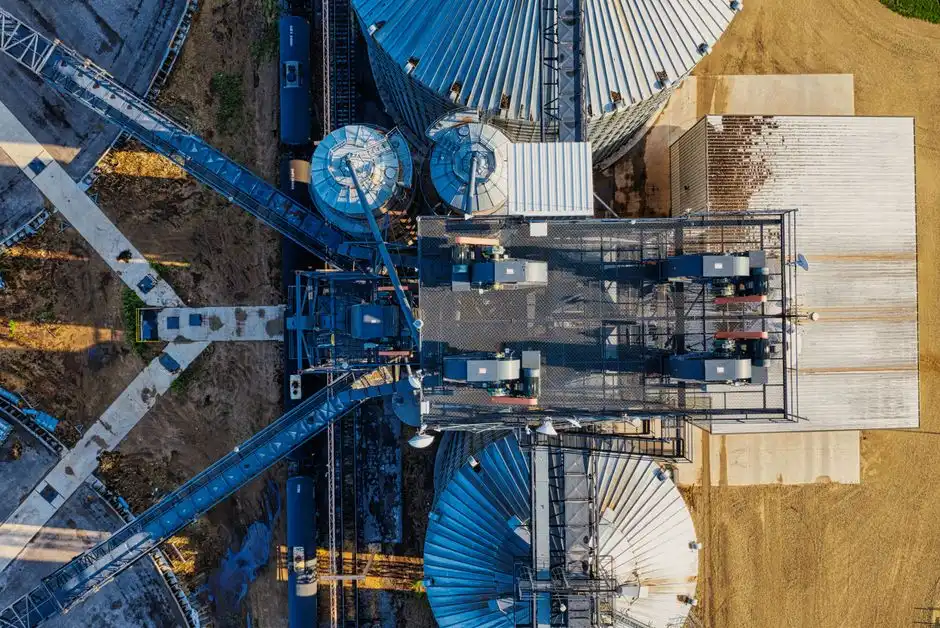
Primary clarification removes the bulk of the FOG, suspended solids and any chemical precipitate before the biological stage. For high-FOG and emulsified-oil streams — food, refinery and metalworking — dissolved air flotation is the workhorse; for higher-solids chemical and leachate duty with a constrained footprint, lamella or inclined-plate settlers are the better fit. The local market describes sedimentation tanks and flotation units as alternative primary technologies (S5), so the choice is genuinely site-specific rather than catalogue-driven.
For galvanizing and metal-coating effluents, DAF with coagulant and flocculant dosing is where the bulk of the heavy-metal hydroxide precipitate is removed before biological treatment; biological stages on their own cannot handle the metal loads these streams generate. Plate counts, surface loading rates and air-to-solids ratios must be specified against the actual influent characterization — vendor catalogue defaults will not reflect a refinery desalter dump or a metal-finishing rinse spike. Vendors should be asked to confirm the parameter values below against site data rather than rely on generic ranges.
| Parameter | Site-specific input required | Used to size |
|---|---|---|
| Air-to-solids ratio (A/S) | FOG, TSS and float-solids fraction from site data | Recycle pump and saturator sizing on the DAF system |
| Surface loading rate (m³/m²/h) | Peak hourly hydraulic load | DAF tank area or lamella plate area |
| Coagulant dose (mg/L) | Jar-test on site effluent | Dosing skid sizing and chemical storage |
| Flocculant dose (mg/L) | Jar-test on site effluent | Polymer make-down unit sizing |
| Float solids production (kg/d) | Site float sampling or mass balance | Skimming and sludge handling downstream |
Biological Stage: Activated Sludge, MBR or Anaerobic
Biological treatment breaks down the soluble organics that primary clarification leaves behind. The Abu Dhabi market operates both aerobic bioreactors, where oxygen is supplied for high-strength organic wastewater, and anaerobic digesters that break down sludge and organics without oxygen while producing biogas usable as fuel (S5). The choice between them is driven by influent strength, temperature, reuse objective and the site's tolerance for aerobic-tank footprint.
An MBR membrane bioreactor — activated sludge combined with a submerged PVDF membrane — delivers near-reuse-quality effluent and uses a substantially smaller footprint than conventional activated sludge, which is why it has become the default choice when the 2026 objective is direct reuse of the ETP permeate rather than discharge. For high-strength, high-temperature petrochemical and food effluent, an EGSB or UASB anaerobic stage ahead of the aerobic or MBR polisher cuts aeration energy and generates usable biogas; this hybrid train is already built in the local market (S5).
Quoted biofilm and MLSS operating windows in vendor proposals must be cross-checked against Abu Dhabi's summer ambient temperatures, which push aeration-tank biology near its upper limit and require cooling, shading or covered-tank design. Dissolved-oxygen setpoints, HRT and SRT all need to be confirmed against site temperature data rather than a temperate-climate default.
| Parameter | Site-specific input required | Used to size |
|---|---|---|
| Influent COD/BOD (mg/L) | 24-hour composite across operating shifts | Aeration tank volume and F/M ratio |
| Influent temperature range (°C) | Site logger, summer peak value | Cooling duty, MLSS setpoint, membrane flux |
| Target effluent COD/BOD (mg/L) | Discharge route or reuse specification | HRT and SRT design |
| Salinity / chloride (mg/L) | Site sample | Membrane selection and biological inhibition check |
| Reuse volume required (m³/d) | Plant utility demand schedule | MBR vs CAS decision and downstream RO sizing |
Tertiary Polishing and Reuse: UF, NF, RO and AOP

Polishing upgrades biological effluent to either a marine-zone limit, a sewer limit at sites where the receiving plant is sensitive, or a reuse quality for utility, cooling or irrigation duty. A UF polishing system is the standard post-biological polish for suspended solids, colloids and bacteria without chemical dosing, and is the right unit operation when reuse is for utility or cooling duty. Direct nanofiltration has been formally studied at PhD level as a single-step polish to take WWTP effluent to a quality suitable for agricultural or indirect potable usage (S1, Schrader, University of Twente) — relevant for Abu Dhabi potable-reuse pilots where the feed is already a low-turbidity secondary effluent.
Advanced Oxidation Processes — O₃/H₂O₂ or UV/H₂O₂ — are the local market's answer to persistent organics such as pharmaceutical residues and specific industrial recalcitrants (S5), and they should be evaluated whenever the influent contains these compound classes. Constructed wetlands have been demonstrated at PhD level for micropollutant removal from WWTP effluent (S4, Lei 2022, Wageningen University) and are a low-energy tertiary option for Abu Dhabi sites with available land and a reuse-for-irrigation objective. For a higher-purity reuse stream, an industrial RO system sits after UF as the standard train, with concentrate routed to brine management for ZLD sites.
Sludge Handling, Odour Control and Chemical Dosing
A large share of ETP OPEX and 2026 permit risk sits in the auxiliary systems the head RFQ often forgets. A plate-and-frame filter press or decanter centrifuge is the standard sludge-dewatering step in UAE ETPs and should be sized against the biological wasting rate from the aeration tank rather than against influent flow, since dewatering duty is set by the mass of wasted solids, not by the hydraulic load.
An automatic chemical dosing skid — PLC-controlled coagulant, flocculant and pH adjustment — is what holds DAF and chemical-precipitation performance steady under Abu Dhabi's variable industrial loads; manual dosing cannot keep pace with a refinery ETP's diurnal swings. Enclosed primary tanks plus chemical or biological scrubbing on the vent stream is the only defensible answer to the 3 ouE/m³ 98th-percentile odour benchmark documented in the 2026 Abu Dhabi olfactometry study (S2); open-top tanks and passive deodorizing are not compliant for new builds in 2026.
Matching the Train to Your Waste Stream: 2026 Decision Matrix

Use the matrix below to shortlist the treatment train that matches your Abu Dhabi waste stream before contacting vendors. Each row links the waste class to a unit-operation sequence and a discharge route; the route decision should be locked first because it sets the parameter envelope for the rest of the train.
| Waste stream | Recommended train | Typical discharge route |
|---|---|---|
| Refinery / oil & gas | Oil/water separation → DAF → activated sludge or MBR → UF/RO; covered vessels and odour scrubbing | Reuse for utility/cooling, or marine zone |
| Galvanizing / metal coating | DAF with coagulant dosing (heavy-metal hydroxide removal) → neutralization/precipitation → MBR → UF; ZLD if sewer permit is constrained (S3) | ZLD preferred, otherwise sewer |
| Food & beverage | Screening → DAF → anaerobic (UASB/EGSB) → MBR → RO, with biogas-to-energy recovery on the anaerobic stage (S5) | Reuse for utility duty |
| Leachate and hazardous chemical | Equalization → chemical oxidation/AOP → biological → RO → brine concentrator/crystallizer to achieve ZLD (S3, S5) | ZLD, no liquid stream offsite |
For containerized or modular MBR sizing on a specific site, the containerized MBR sizing guide for Abu Dhabi covers flow-to-membrane-area logic. Sites with cooling-tower blowdown as a side stream should cross-reference the Abu Dhabi data-center cooling blowdown treatment guide, since blowdown blending changes the ETP feed envelope.
CAPEX and OPEX Inputs to Send Abu Dhabi ETP Vendors
The most common reason Abu Dhabi ETP proposals are not comparable is that bidders are asked to quote against different scopes. The checklist below is what each vendor must receive, and what each proposal must break out, before a like-for-like comparison is possible.
Send the full influent characterization — flow, pH, COD/BOD, TSS, FOG, heavy metals, salinity, temperature peaks — together with the target discharge route (sewer vs marine) and the reuse volume required, so vendors size against the same envelope. Ask each bidder to break out, separately, CAPEX, annual OPEX, energy consumption, chemical consumption, sludge generation and the consumable-replacement schedule; the local supplier practice is to present this as a single bundled figure (S3, S5), which makes vendor comparison unreliable. Request compliance evidence against the 3 ouE/m³ 98th-percentile odour benchmark from the 2026 Abu Dhabi olfactometry study (S2), and against the marine-zone TDS and heavy-metal limits the Abu Dhabi environment authority applies, before contract award. Confirm that the vendor's reference list includes at least one operating installation on the same waste stream in a GCC climate; the 2026 market for Abu Dhabi ETP work is built on a small number of suppliers with multi-decade local track records (S3).
Frequently Asked Questions
What drives the cost of an ETP in Abu Dhabi in 2026?
Cost is driven by the influent envelope (flow, COD/BOD, salinity, heavy metals), the discharge route, and whether ZLD is required. The local supplier market typically bundles CAPEX, OPEX, energy and chemical use into a single figure (S3, S5), so to get a comparable budget a buyer must require each bidder to break out CAPEX, annual OPEX, energy consumption, chemical consumption, sludge generation and consumable replacement as separate line items before proposal evaluation.
Which suppliers should an Abu Dhabi ETP buyer shortlist in 2026?
The 2026 Abu Dhabi ETP market is built on a small number of suppliers with multi-decade local track records on refinery, galvanizing, food and leachate streams (S3). Shortlist criteria should include at least one operating installation on the same waste stream in a GCC climate, plus documented compliance evidence against the 3 ouE/m³ 98th-percentile odour benchmark from the 2026 Abu Dhabi olfactometry study (S2, Al Katheeri et al., 2026) and the marine-zone TDS and heavy-metal limits applied by the Abu Dhabi environment authority.
When is MBR the right choice over conventional activated sludge in Abu Dhabi?
MBR is the right choice when the 2026 objective is direct reuse of the ETP permeate rather than discharge, when footprint is constrained, or when downstream RO requires a low-SDI feed. The submerged PVDF membrane delivers near-reuse-quality effluent and replaces the clarifier plus sand-filter combination of a CAS scheme. Conventional activated sludge remains appropriate for sites where the discharge route is sewer and reuse is not in scope.
How should odour control be specified for a 2026 Abu Dhabi ETP new build?
Covered primary tanks, covered sludge handling, and chemical or biological scrubbing on the vent stream are the only defensible answer to the 3 ouE/m³ 98th-percentile benchmark documented in the 2026 Abu Dhabi study, which showed exceedance at nearby receptors from measured emission sources (S2, Al Katheeri et al., 2026). Open-top tanks and passive deodorizing are not compliant for new builds in 2026 and should be ruled out at the specification stage.