The Three Compliance Layers a Hopkins Chemical Plant Must Hit
Chemical plants near Hopkins, Minnesota meet pretreatment limits before sewer discharge by stacking three compliance layers: federal categorical pretreatment standards under 40 CFR Part 403, site-specific local limits set by the receiving POTW (Metropolitan Council Environmental Services in the Twin Cities metro) and approved under 40 CFR 403.5(c), and an emerging layer of PFAS technology-based effluent limitations that EPA is currently developing for chemical manufacturers and other industrial categories. Plants hit those limits with a treatment train of equalization, pH and oxidation-reduction control, coagulation or dissolved air flotation, biological or advanced oxidation where required, and polishing on granular activated carbon, ion exchange, or reverse osmosis when PFAS or trace organics are in scope. Compliance is enforced at the end-of-pipe, at the point of connection to the POTW collection system.
Layer 1 is the federal categorical standard. 40 CFR Part 403 is the umbrella regulation, but the actual pollutant limits live in the subparts tied to a plant's primary product — 40 CFR Part 414 for organic chemicals, 415 for inorganic chemicals, 417 for soap and detergent manufacturing, 418 for fertilizers, 419 for petroleum refining, and several others depending on what the plant makes. A chemical plant that ships the wrong subcategory baseline into its design basis will size equipment against the wrong end-of-pipe numbers. Identifying the correct subcategory is the first engineering step, not a paperwork step.
Layer 2 is the POTW local limit. Under 40 CFR Part 403.5(c), EPA specifies which POTWs must develop local limits, and the limits are site-specific, numeric or narrative, and can include BMPs (EPA, "Pretreatment Standards and Requirements-Local Limits"). Their purpose is to prevent pass-through — defined at 40 CFR 403.3(p) as a discharge that causes a violation of the POTW's NPDES permit — and interference, defined at 40 CFR 403.3(k) as a discharge that disrupts the POTW's treatment processes, operations, or sludge processes, use, or disposal. For Hopkins, the receiving POTW is Metropolitan Council Environmental Services (MCES), which operates under a Minnesota Pollution Control Agency-delegated NPDES program; MCES-issued, MPCA-approved local limits are enforced at the point of connection to the collection system per 40 CFR Part 403.5(c).
Layer 3 is the in-development PFAS effluent rule. EPA states it is "advancing technology-based effluent limitations and pretreatment standards for key industrial categories that discharge PFAS, including chemical manufacturers and other sources," with a proposed rule to be "issued for public comment in the coming months" (EPA, "EPA Advances Comprehensive PFAS Strategy," 2025). A 2026 capex decision that ignores Layer 3 risks a forced retrofit inside the planning horizon; a 2026 decision that over-builds for Layer 3 risks stranded capital if the final rule narrows scope.
How a POTW Sets Local Limits for Industrial Users
POTWs set local limits using EPA guidance that covers how to calculate maximum allowable loadings, collect and analyze data, design and implement the limits, identify pollutants of concern, and perform annual review plus periodic reevaluation (EPA, "Pretreatment Standards and Requirements-Local Limits"). Not every categorical standard translates directly into an end-of-pipe number, so POTWs do that translation themselves and submit the derivation to their approval authority — for Minnesota, that is MPCA acting under delegated NPDES authority.
40 CFR Part 403.5 is the procedural anchor: it specifies which POTWs must develop local limits, what those limits must protect against (pass-through, interference, sludge impacts, NPDES permit compliance), and the public-participation and approval steps. Most of the general prohibited discharge standards in 40 CFR Part 403.5 are not specific numeric limitations, which is why the POTW has to derive them from its own treatment capability, its receiving-water quality, and its sludge management pathway (EPA, "Pretreatment Standards and Requirements-Local Limits").
Local limits are enforced as pretreatment standards and apply at the end-of-pipe discharge, that is, at the point of connection to the POTW's collection system (40 CFR Part 403.5(c), per EPA). EPA can enforce approved local limits as pretreatment standards. For an SIU (significant industrial user) at a Hopkins chemical plant, that means the sampling point, the reporting cadence, and the BMPs in the discharge permit all sit at the building sewer connection, not at the headworks of the plant's own process train.
The practical move for a chemical plant is to pull the current MCES local-limits letter, the sampling protocol (composite versus grab, 24-hour flow-weighted, etc.), and the SIU reporting cadence before any equipment sizing. Without that letter, the categorical standard is a necessary floor but not a sufficient ceiling — MCES can and does set a tighter local limit on a specific metal or organic when the receiving-water or sludge pathway demands it.
The 2026 Treatment Train Most Chemical Plants Specify
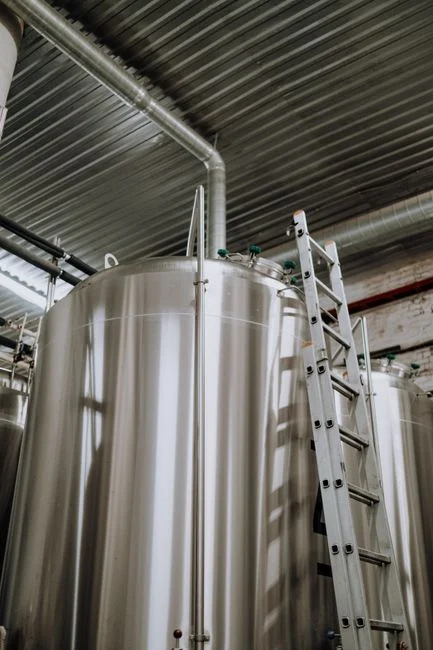
The defensible process flow for a Hopkins chemical plant in 2026 runs: equalization → pH adjustment and ORP control → coagulation/flocculation → dissolved air flotation → biological treatment (activated sludge, MBR, or moving-bed biofilm) → GAC or ion exchange → RO or UF polishing, with sludge dewatering as a compliance-critical step. Each stage addresses a specific categorical or local-limit parameter; the goal is to match the unit operation to the pollutant it actually removes rather than chain polishing steps on the back end.
Equalization plus pH adjustment and oxidation-reduction control are the front-end guard. Batch chemical manufacturing produces slug loads that would breach categorical standards without hydraulic and chemical buffering. Where hexavalent chromium or sulfides are present, ORP control is the mechanism that keeps the front of the train inside the reducing or oxidizing window the downstream chemistry requires. Coagulation, flocculation, and a DAF system for chemical-plant wastewater handle suspended solids, free and emulsified oils, and metals precipitates — the parameters that drive most categorical BOD/TSS/oil-and-grease/metal limits.
Biological treatment — typically an MBR system for high-strength chemical wastewater where space is constrained or effluent quality is tight — addresses the high-strength organic load typical of organic chemical manufacturing wastewater. Where the categorical subcategory requires advanced oxidation for recalcitrant compounds, that step sits between biological and the polishing train.
For PFAS or trace organics in scope, the EPA-validated separation toolkit is granular activated carbon, ion exchange resins, and high-pressure membranes such as reverse osmosis, paired with destruction technologies under EPA study including supercritical water oxidation, electrochemical oxidation, hydrothermal alkaline treatment, non-thermal plasma, and pyrolysis/gasification of PFAS-laden residuals (EPA, "EPA Advances Comprehensive PFAS Strategy," 2025). A RO and UF membrane elements train typically follows multimedia filtration and UF polishing to keep the membrane surface within its SDI window.
Sludge handling is in scope because the pass-through and interference definitions at 40 CFR 403.3(k) and (p) explicitly cover damage to POTW sludge processes and disposal (EPA, "Pretreatment Standards and Requirements-Local Limits"). A sludge dewatering filter press sized for the expected cake volume is a pretreatment compliance asset, not a downstream afterthought. Chemical dosing across the train — coagulant, polymer, pH corrector, ORP adjust — is normally handled on a PLC-controlled chemical dosing skid tied to the upstream online analyzers.
| Stage | Primary Pollutants Addressed | Key Equipment | Compliance Driver |
|---|---|---|---|
| Equalization | Hydraulic and load surges | EQ basin, mixers | Slug-load protection vs. categorical standards |
| pH / ORP control | pH excursion, Cr(VI), sulfides | Chemical dosing skid, ORP probe | Categorical metal limits; downstream chemistry |
| Coagulation / flocculation / DAF | TSS, oils, metals precipitates | DAF system, polymer dosing | Categorical BOD/TSS/O&G/metal limits |
| Biological / MBR | BOD/COD, ammonia | MBR system, aeration | Categorical organic limits; local nutrient limits |
| GAC / ion exchange | Trace organics, PFAS (if in scope) | Carbon contactors, IX vessels | Local narrative limits; PFAS pretreatment rule (proposed) |
| RO / UF polishing | PFAS, TDS, residual organics | RO and UF membrane elements | PFAS pretreatment rule (proposed); tight local limits |
| Sludge dewatering | Sludge volume, hauled waste | Filter press | 40 CFR 403.3(k) and (p) interference/pass-through |
Process Parameter Table: What Each Stage Has to Hit
The categorical and local-limit parameters that drive equipment sizing include pH, TSS, BOD/COD, oil and grease, total metals (Cd, Cr, Cu, Ni, Pb, Zn), and ammonia. The exact pH window is set by MCES in the local-limits letter and is commonly 5.0–10.0 or 6.0–9.0 depending on the receiving POTW — request the actual letter rather than assume a default. Flow equalization should target the diurnal curve of batch chemical manufacturing; the engineer should request the plant's actual shift and campaign pattern before sizing the EQ basin volume.
PFAS scoping: if the plant is in the EPA PFAS effluent rulemaking scope, expect PFOA, PFOS, PFHxS, PFNA, HFPO-DA (GenX), PFBS, and a hazard index across the mixture, as reflected in the April 2024 National Primary Drinking Water Regulation (EPA, 2024). Membrane protection: SDI/SDI15 targets for downstream RO typically require multimedia filtration plus UF polishing; a UF polishing system downstream of a multi-media filter removes suspended solids and colloids to a level compatible with RO pretreatment.
| Parameter | Typical Driver | Sizing Input the Engineer Must Obtain |
|---|---|---|
| pH window | MCES local-limits letter | Current letter with the numeric ceiling and floor |
| TSS / BOD / COD | 40 CFR Part 414 / 415 categorical subcategory | Plant-specific influent composite data |
| Oil & grease | Categorical standard | Plant-specific grab and composite data |
| Total metals (Cd, Cr, Cu, Ni, Pb, Zn) | Categorical + MCES local limit | Plant-specific total and dissolved data; local-limit derivation |
| Ammonia | Local nutrient limit | Plant influent profile; receiving POTW nitrification capacity |
| PFAS (PFOA, PFOS, PFHxS, PFNA, HFPO-DA, PFBS, hazard index) | EPA PFAS effluent rule (in development, 2025–2026) | Plant process inventory; source-trace sampling |
| EQ hydraulic surge | Batch campaign pattern | Plant diurnal curve; CIP and reactor dump events |
| RO feed SDI15 | Membrane warranty | Vendor SDI target; multimedia + UF upstream |
PFAS: What Is Locked vs. Still Moving in 2026
Final (April 2024): EPA announced the final National Primary Drinking Water Regulation with legally enforceable MCLs for PFOA and PFOS, and for PFHxS, PFNA, HFPO-DA, and a hazard index for mixtures of those three plus PFBS, with public water system compliance by April 2029 (EPA, 2024).
In proposal (2025–2026): EPA announced two proposed rules for public comment. The first would allow eligible drinking water systems to opt in to up to two additional years — until 2031 — for compliance with PFOA and PFOS enforceable limits. The second would address procedural concerns with the prior rule for PFHxS, PFNA, HFPO-DA, and the Index PFAS. Both proposals are to be published in the Federal Register with a 60-day public comment period, and EPA will hold a public hearing on July 7, 2026 (EPA, "EPA Advances Comprehensive PFAS Strategy," 2025).
In development: EPA states it is "advancing technology-based effluent limitations and pretreatment standards for key industrial categories that discharge PFAS, including chemical manufacturers and other sources," with a proposed rule to be issued for public comment in the coming months (EPA, 2025). This is the rule chemical-plant pretreatment designers must watch. EPA has also moved its PFAS Destruction and Disposal Guidance from a three-year to annual update cycle, so the validated technology list is moving faster than typical EPA reference documents (EPA, 2025).
For a 2026 capex decision, the practical interpretation is: PFOA and PFOS pretreatment is the only layer that is unambiguously locked; the Index PFAS and the industrial effluent rule are both in motion, and the right move is to size GAC/IX contactors for staged PFOA/PFOS load while leaving the IX regeneration and RO reject handling pathways open for a future retrofit if the final industrial rule broadens scope.
Procurement Checklist: What to Ask Before You Buy
The procurement-grade questions below are what a Hopkins chemical-plant engineer should hand to a vendor before issuing an RFQ. They map to the three compliance layers and the unit operations in the treatment train.
| Question | Why It Matters | Evidence / Input to Request |
|---|---|---|
| Confirm the receiving POTW and current SIU discharge permit, including the local-limits letter and renewal date (MCES for Hopkins, MN) | Wrong POTW = wrong local limits = wrong design basis | MCES local-limits letter, SIU permit, renewal date |
| Identify the correct 40 CFR categorical subcategory for the plant's primary product (organic chemicals, inorganic chemicals, pesticides, pharmaceuticals, etc.) | Wrong subcategory = wrong categorical baseline | EPA categorical subpart citation; product mix |
| Decide whether to pre-treat for PFAS now or wait for the industrial effluent rule; weigh staged GAC/IX design against retrofit cost | Avoid both over-build and stranded capital | Plant PFAS source-trace data; vendor retrofit cost curve |
| For equipment, request documented performance on chemical-manufacturing duty — not just generic industrial duty — and a guaranteed pollutant removal at the local-limit threshold, not at an idealized feed | Generic performance curves understate the actual local-limit challenge | Vendor reference list on chemical duty; performance guarantee on local-limit parameters |
| Plan for sludge — a filter press sized for the expected cake volume is a pretreatment compliance asset | 40 CFR 403.3(k) and (p) cover sludge handling | Cake volume projection; cake handling and disposal pathway |
For unit operations, ask the vendor for a DAF system for chemical-plant wastewater with documented TSS and oil-and-grease removal on chemical duty, a sludge dewatering filter press sized for the projected cake volume, and a PLC-controlled chemical dosing skid integrated with online pH and ORP analyzers. Engineers scoping parallel compliance decisions in adjacent sectors can review the mining and metals pretreatment guide or the petroleum-plant pretreatment compliance guide for comparable procurement patterns.
Frequently Asked Questions
What pretreatment limits apply to chemical plants discharging to the sewer near Hopkins, Minnesota in 2026?
Three independent layers: federal categorical pretreatment standards under 40 CFR Part 403, with the specific subpart set by the plant's primary product (e.g., 40 CFR Part 414 for organic chemicals, 415 for inorganic); MCES-issued local limits approved under 40 CFR Part 403.5(c); and the EPA PFAS effluent limitations guideline for industrial categories that discharge PFAS, including chemical manufacturers, which EPA states will be proposed for public comment "in the coming months" (EPA, "EPA Advances Comprehensive PFAS Strategy," 2025).
What unit operations do chemical plants use to meet categorical and local pretreatment limits?
Equalization, pH and ORP control, coagulation and DAF, biological or MBR treatment, GAC or ion exchange, and RO polishing where trace contaminants or PFAS are in scope, with sludge dewatering as a compliance-critical step. The EPA-validated separation toolkit is granular activated carbon, ion exchange resins, and high-pressure membranes such as reverse osmosis; destruction technologies under study include supercritical water oxidation, electrochemical oxidation, hydrothermal alkaline treatment, non-thermal plasma, and pyrolysis/gasification of PFAS-laden residuals (EPA, 2025).
How much does a chemical-plant pretreatment system cost in 2026?
The supplied research does not give a Hopkins-specific capex figure. Pretreatment system cost depends on design flow, influent load, the correct 40 CFR categorical subcategory, the MCES local-limits letter, whether PFAS polishing is in scope, and sludge dewatering capacity. Request a site-specific budgetary proposal tied to the actual local-limits letter and the plant's influent characterization rather than rely on a generic number.
What should I look for in a wastewater equipment supplier for a chemical plant?
Documented performance on chemical-manufacturing duty (not just generic industrial), the ability to guarantee pollutant removal at the actual local-limit threshold, factory-tested skid delivery to reduce field commissioning risk, and a consumables and membrane supply pathway for ongoing operation. Verify the supplier's reference list on the same categorical subpart the plant operates under. For a related compliance view on a different industry, the semiconductor pretreatment compliance guide covers analogous supplier-selection criteria for trace-contaminant duty. An MBR system for high-strength chemical wastewater, a DAF system for chemical-plant wastewater, a PLC-controlled chemical dosing skid, a sludge dewatering filter press, and RO and UF membrane elements from a single vendor typically simplify the consumables chain.
What is the enforcement risk if a chemical plant misses its pretreatment limits?
Enforcement is at the end-of-pipe under 40 CFR Part 403.5(c) and can include SIU permit revocation, civil penalties, and a mandatory retrofit. A pass-through or interference finding — both defined at 40 CFR 403.3 — can also expose the plant to third-party cleanup actions consistent with the polluter-pays principle (EPA, 2025). A documented engineering basis and a defensible treatment train materially reduce that exposure.