Why Makassar Data Centers Need a Dedicated Blowdown Treatment Train
A 100 MW data center can require up to ~2 million liters of water per day for evaporative cooling, which sets the volumetric scale at which a Makassar facility must think about blowdown (S4, IDE Tech). On a 10 million-gallon monthly basis, a tower operating at 4 cycles of concentration loses approximately 25–30% of makeup water as cooling-tower blowdown (CTBD) — the purge stream that keeps dissolved solids from scaling the loop (S1, Genesis Water Tech). At that ratio, blowdown becomes the largest routine wastewater stream a hyperscale site generates, not sanitary or humidification discharge.
Makassar sits on South Sulawesi's coast where makeup water is typically brackish groundwater or PDAM surface supply. Discharge goes either to the municipal sewer or to a coastal outfall, and both routes are tightening around TDS, chloride, and biocide residuals. Documented blowdown quality sits at 1,200–6,000 mg/L TDS (4–8× makeup), 10–50 mg/L suspended solids, with accumulated biocides, corrosion inhibitors, scale inhibitors, and dispersants in the matrix (S1). That stream will not pass tightening discharge limits untreated, and it cannot be diluted away because the receiving utilities are themselves capacity-constrained (S3, HOBI/EESI).
Cooling design, climate, and water source drive variability more than equipment choice (S3). Makassar's humid tropical climate pulls operators toward higher cycles of concentration to cut freshwater demand, which in turn concentrates silica, calcium, and alkalinity faster and raises RO scaling risk. A dedicated treatment train — sized to local chemistry and local discharge paths — is therefore the difference between a permit-ready site and a project that stalls on water compliance.
Water Sources and Blowdown Chemistry in Makassar
Documented blowdown characteristics cover five contaminant groups (S1). TDS sits at 1,200–6,000 mg/L, or 4–8× makeup. Scaling minerals — calcium, magnesium, silica, and alkalinity — concentrate in proportion to cycles of concentration. Treatment chemicals accumulate: biocides, corrosion inhibitors, scale inhibitors, and dispersants. Suspended solids from corrosion products, biofilm fragments, and airborne particulates sit at 10–50 mg/L even with basin filtration. Biological content — planktonic bacteria, algae, and biofilm-forming organisms — persists in well-maintained systems and must be addressed in any recovery train.
Indonesian legacy systems using chromate or high-phosphate chemistry create specific reuse and discharge problems and must be confirmed in a site audit before RO is specified (S1). A cooling loop running on either program can foul membranes, exceed discharge limits for chromium or phosphorus, or both. The audit step is not optional; it dictates whether the pretreatment program needs to be re-formulated before the recovery train is commissioned.
Makeup water in Makassar is typically brackish groundwater or PDAM surface water. Both contribute hardness, silica, and chloride that concentrate in the loop. The exact profile for a specific site is a missing input that must come from on-site testing of source water and of a representative blowdown sample under normal operating chemistry; no specific TDS or hardness value for Makassar is given in the supplied research. Cooling-loop treatment chemistry concentrates proportionally with cycles of concentration, so the design must specify low-fouling, non-phosphate, low-toxicity programs from day one (S1).
Treatment Train Technologies: Side-Stream Filtration, UF, NF, RO, MVC
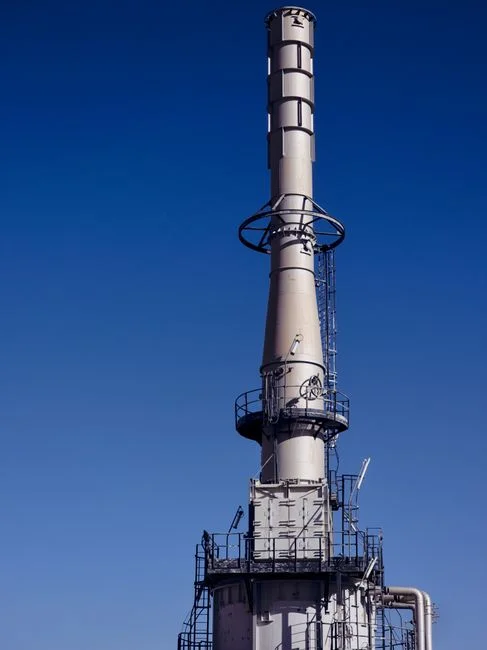
The unit operations assemble into a train that protects the membrane step and concentrates recovery to the highest economic point. Each step has a documented operating envelope (S1).
Side-stream or self-cleaning mechanical filtration operates on the recirculating loop, not on the blowdown stream directly. It removes suspended solids, reduces biological loading, and prevents accumulation of corrosion products that degrade system performance. Sizing is 1–5% of total circulation flow, with 10–25 micron filtration achieved by self-cleaning spiral units that scrape accumulated solids continuously. Capex is $50,000–200,000 for typical data center installations, with minimal opex beyond solids disposal and routine maintenance. This step is what keeps downstream membranes from being loaded past their tolerance.
Ultrafiltration at 0.01–0.1 micron pore size, 10–30 psi operating pressure, and 90–95% recovery serves as the RO pretreatment. It removes colloids, bacteria, and biofilm fragments without consuming high energy and without chemical addition. Backwashing with permeate maintains performance, with chemical cleaning every 1–3 months depending on feed water quality. For a Makassar blowdown with biofilm fragments and corrosion byproducts in the matrix, a UF pretreatment skid for cooling-tower blowdown is the appropriate barrier ahead of RO.
Reverse osmosis is the core recovery step. RO removes 95–99% of dissolved solids, hardness, silica, and most treatment chemicals, with permeate at 10–50 mg/L TDS suitable for cooling-tower makeup either directly or blended with standard makeup. Operating pressure is 150–400 psi to overcome osmotic pressure of the concentrated feed. Antiscalant injection is required to control silica and CaSO4 scaling. Recovery for blowdown RO is 50–85%, limited by scaling potential as concentrate TDS rises. A 50,000 GPD RO system treating blowdown sits at $250,000–500,000 installed, with opex of $1.50–3.00 per thousand gallons. An industrial RO system for blowdown reuse sized to peak blowdown flow is the right anchor for this stage, and a multi-media filter as side-stream pretreatment ahead of the UF protects the membrane from gross particulates.
Nanofiltration operates at 75–150 psi with 70–85% recovery and permeate TDS at 30–50% of feed. NF is the right choice when hardness rather than total TDS drives the discharge or reuse constraint, and it consumes less energy than RO. For a site with relatively low chloride but high calcium and magnesium, NF may replace RO on the partial-softening side of the train.
Mechanical vapor compression takes the RO concentrate from 50–75% recovery up to 95–98% recovery on the concentrate, producing distillate at <10 mg/L TDS. Energy use is 15–25 kWh per 1,000 US gallons of distillate. Capex is $1–3 million for systems processing 10,000–30,000 GPD. MVC is the bridge between RO and ZLD — used to push overall recovery past the RO scaling limit when discharge options are constrained or expensive.
Crystallizer and salt-cake handling are only added when ZLD is mandated. ZLD systems combine RO/NF concentration (70–80% recovery) with MVC or brine concentrator and a final crystallizer. Overall water recovery reaches 95–99%, with solid waste at <1% of original blowdown volume. Capex sits at $3–8 million for data-center scale, with opex of $5–15 per thousand gallons treated. Without a discharge prohibition or a hard freshwater ceiling, ZLD is rarely the economic optimum.
| Unit Operation | Function | Operating Envelope | Capex Band (data-center scale) |
|---|---|---|---|
| Side-stream / self-cleaning filter | Suspended solids, biological load reduction | 1–5% of circulation; 10–25 micron | $50,000–200,000 |
| Ultrafiltration (UF) | Colloids, bacteria, biofilm fragments | 0.01–0.1 micron; 10–30 psi; 90–95% recovery | Site-specific |
| Reverse Osmosis (RO) | Dissolved solids, hardness, silica | 150–400 psi; 50–85% recovery; permeate 10–50 mg/L TDS | $250,000–500,000 (50,000 GPD) |
| Nanofiltration (NF) | Partial softening, lower energy than RO | 75–150 psi; 70–85% recovery; permeate 30–50% of feed TDS | Site-specific |
| Mechanical Vapor Compression (MVC) | Concentrate volume reduction; high-purity distillate | 95–98% recovery; distillate <10 mg/L TDS; 15–25 kWh/1,000 gal | $1–3 million (10,000–30,000 GPD) |
| Crystallizer (ZLD stage) | Solid salt cake; final liquid elimination | Overall 95–99% system recovery | $3–8 million (ZLD system) |
Designing for Reuse: Cooling-Tower Makeup, Cycles of Concentration, and WUE
Reusing RO permeate as cooling-tower makeup raises cycles of concentration and reduces both freshwater intake and blowdown volume. U.S. DOE guidance cited in S3 confirms that lifting COC from 3 to 6 cuts makeup water by approximately 20% and blowdown by approximately 50%. The mechanism is direct: a more concentrated loop can be held to the same scaling limit with less makeup because more water is recycled through RO before being purged. RO permeate sits at 10–50 mg/L TDS (S1) and is essentially demineralized; it is normally blended with standard makeup to maintain stable cooling-water chemistry rather than fed neat. Blowdown-recovery streams typically achieve 60–85% reuse of CTBD (S1).
Water Usage Effectiveness (WUE, L/kWh-IT) is the industry metric for tracking water performance against IT energy use (S3, S4). A reusable reuse train should be benchmarked against a stated WUE target with annual disclosure — not a vague corporate water goal. The operational decisions behind the number (cycles of concentration, makeup source mix, recovery rate) are what auditors and local communities will ask about.
Energy tradeoff is real. A wastewater reuse train (UF+RO) can have over 5× the energy demand of freshwater (S2, Open Engineering Inc. LCA), but is offset by lower blowdown, lower chemical use, and the avoided cost of grid water. Treatment energy accounts for roughly 80% of the GWP difference between reuse and freshwater scenarios. For a Makassar facility, the practical implication is to size RO energy-recovery devices and to confirm grid carbon intensity before committing to ZLD; the LCA shows that under a fully decarbonized grid the carbon penalty of reuse becomes negligible while water savings accrue at full value. Where silica and hardness are the constraints, an industrial softener to control scaling minerals ahead of the membranes and an automatic antiscalant and biocide dosing skid keep the loop within chemical program limits.
Makassar Regulatory and Discharge Constraints
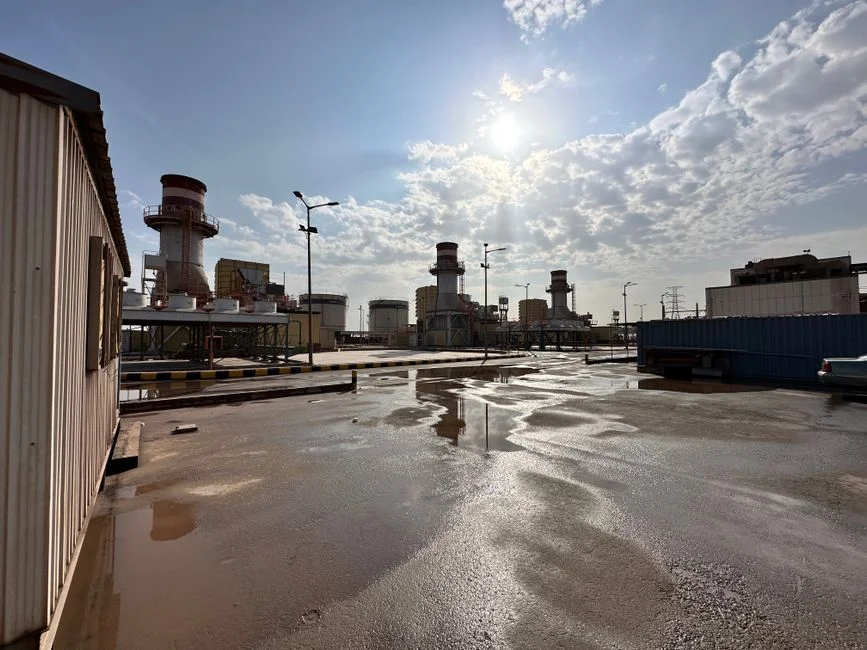
Makassar's coastal setting defines three discharge paths: municipal sewer (PDAM or a local IPAL), coastal outfall, or haul-off to a licensed waste receiver. Each path carries different limits for TDS, chloride, heavy metals, and biocide residuals (S1, S3). Some jurisdictions already enforce TDS <1,500 mg/L on industrial discharge (S1); at 1,200–6,000 mg/L CTBD TDS, blowdown cannot be discharged untreated under such a limit.
The de-facto compliance path for sewer discharge is pretreatment plus local-utility acceptance, mirroring the published U.S. example of Jacksonville Electric Authority's pretreatment program (S3). The analogous Indonesian rules — both the national framework and the specific PDAM or provincial limits — must be confirmed with the local sewer authority before final design. No specific Indonesian TDS or chloride number is given in the supplied research; the design must be qualified against the limits actually in force at the receiving facility at the time of permit application.
Glycol-water loops in dry coolers and outdoor piping create a separate, smaller accidental-release risk. Both ethylene and propylene glycol create high oxygen demand if they reach surface water (S3), and propylene glycol is preferred where leaks could reach surface water. Closed-loop systems are designed to stay sealed; the operational risk is during maintenance drain-downs, not routine operation. For a Makassar site near coastal drainage, glycol type and containment are part of the permit conversation.
Reuse vs. Discharge vs. Zero Liquid Discharge: Decision Framework for Makassar
Three end-use strategies exist for blowdown, and the choice is driven by freshwater availability, discharge cost, and regulatory pressure (S1).
Cooling-tower makeup reuse offers the highest economic return at 60–85% recovery (S1). For a Makassar site where municipal water is brackish, PDAM capacity is constrained, and discharge limits are tightening, this is the recommended default. Capex is the RO skid plus pretreatment; opex is the energy and chemical program. A filter press for RO and ZLD residuals handles the solids stream from the membrane cleaning cycle.
Discharge compliance — TDS reduction, metals removal, biocide neutralization — is justified where reuse is impossible but discharge fees in water-stressed regions at $5–15 per thousand gallons (S1) make untreated discharge uneconomic. This is a partial-treatment path, not a recovery path.
Zero liquid discharge (RO + MVC + crystallizer, 95–99% overall recovery) is technically proven but capital-intensive at $3–8 million for data-center scale, with opex of $5–15 per thousand gallons (S1). ZLD is only justified when discharge is prohibited, freshwater is unavailable, or the facility has committed to a water-positive public target that cannot otherwise be met.
A hybrid path — concentrate blowdown 80–90% with RO+MVC, then haul or deep-well inject the remaining brine — captures most recovery benefit at substantially lower capital than full ZLD. The remaining brine may qualify for deep-well injection, hauling to an approved disposal facility, or periodic discharge under a special permit (S1).
| Strategy | Recovery | Capex (data-center scale) | Opex | When to Choose for Makassar |
|---|---|---|---|---|
| Cooling-tower makeup reuse (RO) | 60–85% | $250,000–500,000 (50,000 GPD RO skid) | $1.50–3.00/kgal treated | Default; PDAM capacity constrained, discharge tightening |
| Discharge compliance only | Variable | Site-specific | Avoided discharge fees $5–15/kgal | Reuse not feasible but discharge fees penalize untreated blowdown |
| Hybrid (RO + MVC + brine haul/inject) | 80–90% | Between reuse and full ZLD | Lower than full ZLD | Discharge restricted but not prohibited; freshwater cap exists |
| Zero liquid discharge (full ZLD) | 95–99% | $3–8 million | $5–15/kgal | Discharge prohibited or water-positive commitment required |
For most Makassar hyperscale and colocation builds in 2026, the default starting position is reuse with RO at 60–85% recovery, with MVC added only if the discharge route proves more expensive than the incremental energy. The 2026 industrial wastewater market outlook puts the equipment-supply base in a position to deliver these skids on typical EPC lead times, but each site must verify the local PDAM and provincial limits before locking the design.
Frequently Asked Questions
What is the right treatment train for cooling-tower blowdown in a Makassar data center?
The default is side-stream or self-cleaning mechanical filtration on the recirculating loop, followed by ultrafiltration and reverse osmosis, with permeate returned as cooling-tower makeup and concentrate either discharged to sewer after compliance polishing or fed to MVC if higher recovery is needed. Specific sizing depends on the site audit of makeup water chemistry, the existing cooling-water treatment program (chromate or high-phosphate legacy chemistry must be re-formulated before RO), and the local discharge limits (S1).
What capex band should a Makassar EPC expect for a blowdown reuse train in 2026?
For a data-center-scale RO system treating blowdown at 50,000 GPD, installed capex is $250,000–500,000, with opex of $1.50–3.00 per thousand gallons treated (S1). Side-stream filtration adds $50,000–200,000. Adding MVC for high-recovery concentrate treatment adds $1–3 million for 10,000–30,000 GPD systems, and full ZLD with crystallizer sits at $3–8 million. No Indonesian-specific installation factor is given in the supplied research; a buyer must request a site-specific quotation that includes freight, duties, and installation labor to ground-truth the band.
How do I select a supplier for a Makassar data-center blowdown train?
Request a packaged UF + RO skid with documented operating envelopes (UF at 90–95% recovery, 0.01–0.1 micron; RO at 50–85% recovery on blowdown, 150–400 psi, permeate 10–50 mg/L TDS), a side-stream filter sized to 1–5% of circulation flow, and a chemical dosing program compatible with membrane pretreatment (S1). Verify the supplier's reference list for hyperscale or industrial sites with comparable TDS feed and confirm lead time for the RO membranes and high-pressure pumps against the project's mechanical completion date. The absence of a Makassar-specific reference list is not a disqualifier, but the supplier must demonstrate experience with brackish, scale-prone feed water at the relevant recovery target.
What WUE target should a Makassar data center commit to?
WUE is reported in liters per kWh-IT, and the U.S. DOE highlights it as the standard industry metric (S3, S4). The actual target number should be set during design against the chosen cooling architecture, cycles of concentration, and reuse recovery rate, then disclosed annually. A reuse train that lifts COC and recovers 60–85% of blowdown (S1) materially lowers WUE versus a once-through design, but the committed number must reflect the as-built operating point, not a vendor's marketing value.