Why Barcelona Residential and Camp Projects Need a Different Sizing Logic
Residential blocks and seasonal camps around Barcelona generate a wastewater flow that is lower per occupant and more uniform through the day than hotel flows, so a sizing sheet copied from a hotel reference will over-specify the plant. The HydropureWater Barcelona hotel packaged MBR guide (2026) sets 0.25–0.35 m³/guest-night at 75% occupancy — a figure that absorbs the morning/evening room turnover that does not exist in an apartment block, and ignores the seasonal April–October occupancy peak and shoulder-season lull that drive a Barcelona camp. The same guide applies a 1.5–2.0× peaking factor that still works for residential/camp duty, but it has to sit on a per-capita base appropriate to the use type, not on a hotel per-guest-night band.
Climate simplifies the biological design. Mixed-liquor temperature sits at 15–25 °C year-round in Barcelona, so no biological heating is needed and the containerised MBR enclosure can be pad-mounted outdoors (HydropureWater 2026). The footprint argument is sharper for non-hotel duty: the HydropureWater integrated MBR wastewater treatment system delivers roughly 60% smaller footprint than an equivalent conventional train (HydropureWater product data, 2026), which is the deciding factor on tight Eixample or Barceloneta plots and on peri-urban camp pads where setbacks and landscaping eat the available area.
The Six-Step Sizing Workbook for a Containerised MBR
The six steps below are the chain a project engineer runs once before issuing a sizing memo. Each step closes with a numerical or descriptive input; a defensible design records all six.
- Step 1 — Design population. For residential blocks, count full-time residents and any commercial tenants whose wastewater joins the domestic stack. For camps, count peak-season occupants and state the design occupancy period (typically April–October) so the engineer can separate ADWF from peak hydraulic day. Pure Aqua uses 50 gpd per capita as a sizing cue for its MBR-C line (pureaqua.com) — useful as a cross-check, not a substitute for site-specific demand.
- Step 2 — Per-capita ADWF. Pick a residential/camp-appropriate per-capita value (lower than the 0.25–0.35 m³/guest-night hotel band) based on the fixture count, occupancy pattern, and any greywater reuse. The hotel figure is hotel-specific and not portable; the residential value is the one the permit reviewer will challenge if it is wrong.
- Step 3 — Peaking factor. Apply 1.5–2.0× on ADWF to absorb Mediterranean morning/evening turnover and seasonal camp peaks (HydropureWater Barcelona hotel guide, 2026). For camp projects, the seasonal swing does not increase the factor — it shifts the design occupancy that the factor is applied to.
- Step 4 — Loads. Specify influent BOD, COD, TSS, NH4-N, oil/grease, and temperature. MBR effluent typically delivers 90–95% contaminant removal (Imemflo, 2026), so the design effluent band is set by the MBR step and the polishing train is sized to close the gap to the regulatory target.
- Step 5 — MBR cassette count. Use a flat-sheet PVDF cassette such as the DF series (80–225 m², 32–135 m³/day per cassette, 0.1 µm pore size, HydropureWater product data, 2026), or an HF module such as the Pure Aqua MBR-C (0.04 µm UF, 20-ft or 40-ft HC, pureaqua.com). For camp duty without on-site membrane specialists, size with one redundant cassette.
- Step 6 — Container envelope. A 20-ft ISO HC unit suits small residential blocks and small camps. A 40-ft ISO unit is the reference for larger flows, with MENA-Water documenting more than 1200 m³/day filtered in a single 40-ft ISO container with stainless internal tanks (mena-water.com).
| Step | Input | Benchmark / Source |
|---|---|---|
| 1. Population | Full-time residents or peak-season occupants + design period | Pure Aqua 50 gpd per capita (pureaqua.com) |
| 2. Per-capita ADWF | Residential/camp value, not hotel | HydropureWater 2026 (hotel 0.25–0.35 m³/guest-night not portable) |
| 3. Peaking factor | 1.5–2.0× on ADWF | HydropureWater 2026 |
| 4. Loads | BOD, COD, TSS, NH4-N, FOG, temperature | MBR removal 90–95% (Imemflo 2026) |
| 5. Cassette count | DF series flat-sheet 80–225 m², 32–135 m³/d per cassette, 0.1 µm | HydropureWater product data, 2026 |
| 6. Container | 20-ft HC or 40-ft ISO; >1200 m³/d in one 40-ft (stainless tanks) | MENA-Water |
Worked Example: 250-Peak-Occupant Mediterranean Camp Near Barcelona
The workbook works best when it is filled in. A 250-peak-occupant camp about 40 km from the coast, with kitchen and laundry block on the same drain, is a realistic Barcelona-area reference case.
Population. 250 occupants at peak in July–August, dropping to roughly 80 in the November–March shoulder season. The peak population drives the hydraulic design; the shoulder population drives the biological load check.
ADWF. The HydropureWater 2026 hotel figure of 0.25–0.35 m³/guest-night is not portable to a camp. Use a residential/camp-appropriate per-capita value appropriate to the fixture count, occupancy pattern, and any on-site greywater reuse; the exact figure is site-specific and must be confirmed against the local fixtures before tender.
Peaking. Apply 1.5–2.0× (HydropureWater 2026) to absorb the diurnal camp curve (showers + meals concentrate in two windows) and the summer peak. The design hydraulic capacity lands in a range that the DF series flat-sheet cassettes (32–135 m³/day each, HydropureWater 2026) serve with one redundant unit.
Equalisation. 4–6 h of flow equalisation to flatten the diurnal curve before the membranes (HydropureWater 2026). Without it, the morning meal+shower peak will drive the membrane tank past its design flux even when the daily total is within range.
Container. A 40-ft ISO envelope with stainless internal tanks (MENA-Water reference) fits the cassette array, blowers, and control panel with space for a small DAF and the plate-and-frame filter press. A 20-ft HC unit is the lower bound for a smaller camp variant — the design engineer should check cassette access and CIP clearance before locking the 20-ft choice.
Matching the Container to Membrane Type and Site Constraints
Both containerised formats in the market are submerged PVDF ultrafiltration, but their mechanical behaviour on FOG- and lint-loaded waste is different. For camp kitchens and shared laundry blocks, that difference is the call that determines cleaning frequency and membrane life.
Flat-sheet PVDF cassettes such as the DF series (0.1 µm pore size) use integrated coarse-bubble aeration scouring, run at 10–20× lower energy than external cross-flow systems, and the elements are individually replaceable, which simplifies maintenance on a site without membrane technicians (HydropureWater product data, 2026). Hollow-fibre MBR (for example the Pure Aqua MBR-C at 0.04 µm) offers higher packing density and is widely deployed (HydropureWater 2026), but is more sensitive to fouling from oil, grease, and fibrous solids — it requires a fine pre-screen and FOG removal upstream. The MBR UF stage reduces virus and bacteria by 99.9999% (MENA-Water), which is the relevant log-removal for camps near bathing waters or for irrigation reuse.
Container envelope selection is a footprint and access decision. A 20-ft HC unit fits compact urban residential blocks; a 40-ft unit is the reference for camps, larger residential developments, and any site that wants factory-tested Plug & Play delivery (MENA-Water). For Mediterranean hotel duty with variable FOG, flat-sheet is the lower-risk default; the same logic carries to camp kitchens, where DAF-fed flat-sheet cassettes are the conservative choice.
| Criterion | Flat-sheet PVDF (DF series) | Hollow-fibre UF (e.g., MBR-C) |
|---|---|---|
| Nominal pore size | 0.1 µm (HydropureWater 2026) | 0.04 µm (pureaqua.com) |
| Energy vs cross-flow | 10–20× lower (HydropureWater 2026) | 10–20× lower (HydropureWater 2026) |
| FOG tolerance | Robust cassette construction (HydropureWater 2026) | Needs fine pre-screen and FOG removal (HydropureWater 2026) |
| Maintenance access | Individual sheets within cassette (HydropureWater 2026) | Module-level replacement (HydropureWater 2026) |
| Pathogen log-removal | 99.9999% on UF (MENA-Water) | 99.9999% on UF (MENA-Water) |
| Container fit | 20-ft HC or 40-ft ISO | 20-ft HC or 40-ft HC (pureaqua.com) |
Headworks, Sludge, and Disinfection Around the MBR
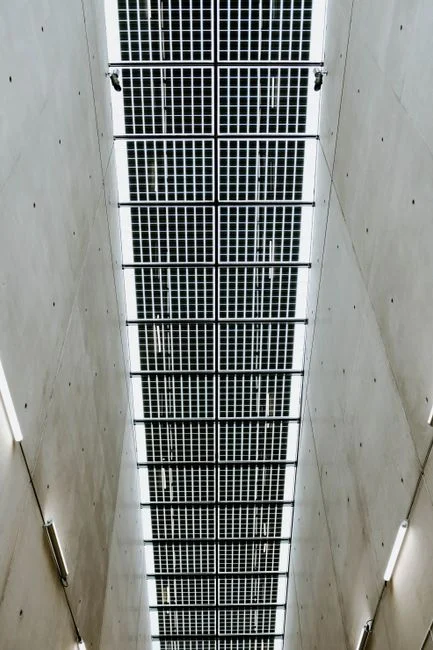
The MBR is only as reliable as the equipment around it. A rotary bar screen at 2–3 mm aperture — such as the GX series rotary bar screen — is the first defence for camp and residential flows carrying rags, plastics, and food waste before the membranes (HydropureWater 2026). A 1.5 mm drum screen is the Pure Aqua MBR-C pre-treatment reference (pureaqua.com); either is acceptable provided it stops the material that fouls the cassette.
For camp kitchens and blocks with shared cooking, a DAF unit removes fats, oils, and grease; without it, the FOG that residential and camp kitchens produce coats the membrane and shortens cleaning intervals (HydropureWater 2026). Skipping the DAF on a camp project is the most common cause of membrane fouling I see in tender reviews.
Downstream of the bioreactor, MBR waste-activated sludge at 0.8–1.5% dry solids (HydropureWater 2026) is dewatered on a small plate-and-frame filter press to ≥20% DS for off-site disposal. UV-C sterilisation is the default polish for non-potable reuse under RD 1620/2007 because it is chemical-free and effective against chlorine-resistant organisms; chlorine dioxide is the alternative when a residual is required in the reuse loop (HydropureWater 2026). A matched train — screen, DAF, MBR, sludge press, UV — from a single supplier scope avoids interface gaps on small packaged plants.
Spanish and Catalan Permits: EU, RD 1620/2007, ACA/OTAS, and BCASA
Three regulatory layers sit on top of any Barcelona residential or camp STP. Sizing and selection must align with what the permit team actually requires, not with the discharge-only target.
EU Directive 91/271/EEC sets the discharge compliance floor for urban waste water (HydropureWater 2026) — every containerised MBR in Barcelona must clear this minimum. Real Decreto 1620/2007 governs water reuse; the lowest tier caps TSS at ≤10 mg/L, BOD5 at ≤25 mg/L, COD at ≤125 mg/L, turbidity at ≤2 NTU, and E. coli at ≤200 CFU/100 mL, with stricter reuse tiers (toilet flush, cooling-tower make-up at higher quality) requiring RO polishing (HydropureWater 2026). The Catalan Water Agency (ACA) issues the discharge or reuse authorisation through OTAS, and inside the Barcelona municipal catchment BCASA layers additional trade-effluent conditions: pH 6–10, temperature below 40 °C, and zero FOG discharge to the sewer (HydropureWater 2026).
For camp projects targeting irrigation reuse, MBR effluent is a viable RO feed, and the MBR→UF/RO polishing train has been demonstrated on municipal and hotel wastewater (HydropureWater 2026). The 99.9999% virus/bacteria log-removal on the UF stage (MENA-Water) supports the risk case for reuse. A camp applying for discharge-to-sewer does not need the RO polish; a residential block targeting irrigation reuse does — the sizing differs by about one polishing stage.
| Layer | Authority / Instrument | Requirement | Source |
|---|---|---|---|
| EU floor | Directive 91/271/EEC | Discharge compliance for urban waste water | HydropureWater 2026 |
| Reuse tiers | Real Decreto 1620/2007 (lowest tier) | TSS ≤10 mg/L, BOD5 ≤25 mg/L, COD ≤125 mg/L, turbidity ≤2 NTU, E. coli ≤200 CFU/100 mL | HydropureWater 2026 |
| Reuse, higher tier | RD 1620/2007 (toilet flush, cooling-tower make-up) | Requires RO polishing | HydropureWater 2026 |
| Catalan authorisation | ACA / OTAS | Discharge or reuse permit | HydropureWater 2026 |
| Barcelona municipal | BCASA trade-effluent | pH 6–10, T < 40 °C, zero FOG to sewer | HydropureWater 2026 |
Pre-PO Checklist: Documentation, Energy, and OPEX

Before signing the PO, the supplier must deliver a P&ID, hydraulic profile, electrical load list, control narrative, membrane warranty (typically 5 years), and CE marking under EU Machinery Directive 2006/42/EC (HydropureWater 2026). For a parallel reference on tropical-climate containerised MBR sizing, see the containerised MBR sizing guide for Manila.
OPEX drivers to budget: membrane replacement every 5–8 years, flat-sheet MBR energy at 0.4–0.8 kWh/m³, chemical dosing (sodium hypochlorite for CIP, citric acid for scale control), and sludge disposal (HydropureWater 2026). For a single-skid packaged MBR in the 100–300 m³/d band, the skid CAPEX envelope is broadly €100,000–€250,000 with auxiliary equipment adding an estimated 30–50% (HydropureWater 2026); treat this as a tender-comparison reference, not a fixed quote, and request a site-specific budget price from shortlisted vendors.
Lock in a maintenance contract covering remote monitoring, a quarterly membrane integrity test, and guaranteed flux recovery after CIP (HydropureWater 2026). Match the cassette and pre-treatment train — GX series rotary bar screen, DAF if FOG is present, plate-and-frame filter press, UV — as a single supplier scope, with the automatic chemical dosing system for CIP reagents, to avoid interface gaps on small packaged STPs.
Frequently Asked Questions
What per-capita flow should I use for a Barcelona apartment block versus a seasonal camp?
Use a residential/camp-appropriate per-capita value derived from the fixture count, occupancy pattern, and any on-site greywater reuse. The 0.25–0.35 m³/guest-night figure from the HydropureWater Barcelona hotel packaged MBR guide (2026) is hotel-specific — it absorbs the morning/evening room turnover that an apartment block does not have — and is not portable to apartments or seasonal camps. State the value, the data source, and the fixture assumption in the design memo; the permit reviewer will ask for it.
When do I choose a 20-ft ISO HC unit versus a 40-ft ISO unit?
Pick a 20-ft HC for compact urban residential blocks and small camps where the design flow falls inside a single DF series cassette's 32–135 m³/day rating (HydropureWater 2026), or where the Pure Aqua MBR-C in a 20-ft HC envelope (pureaqua.com) covers the load. Pick a 40-ft ISO when the design flow approaches or exceeds the upper end of a single cassette, when the site wants factory-tested Plug & Play delivery, or when MENA-Water's documented capacity of more than 1200 m³/day in a single 40-ft container with stainless internal tanks (mena-water.com) is needed. Verify CIP clearance and cassette access in the 20-ft option before locking it; that is the most common error on small packaged plants.
Do I need RO polishing downstream of the MBR?
Only if the reuse end-use demands a tier above the lowest tier of RD 1620/2007. The lowest tier (TSS ≤10 mg/L, BOD5 ≤25 mg/L, COD ≤125 mg/L, turbidity ≤2 NTU, E. coli ≤200 CFU/100 mL) is cleared by MBR alone; stricter tiers (toilet flush, cooling-tower make-up at higher quality) require RO polishing (HydropureWater 2026). A camp applying for discharge-to-sewer does not need the RO polish; a residential block targeting irrigation reuse must justify whether the higher tier applies, and the MBR→UF/RO train is a proven combination on municipal and hotel wastewater (HydropureWater 2026).
What is the indicative CAPEX envelope, and what documents should the supplier deliver before I cut a PO?
For a single-skid packaged MBR in the 100–300 m³/d band, the skid CAPEX envelope is broadly €100,000–€250,000 with auxiliary equipment adding an estimated 30–50% (HydropureWater 2026) — treat this as a tender-comparison reference, not a fixed quote, and request a site-specific budget price against your influent data and the Spanish reuse tier you are targeting. The pre-PO documentation pack should include a P&ID, hydraulic profile, electrical load list, control narrative, membrane warranty (typically 5 years), and CE marking under EU Machinery Directive 2006/42/EC (HydropureWater 2026). On the supplier-selection side, the differentiator between shortlisted vendors is usually the maintenance contract — remote monitoring, quarterly membrane integrity test, and guaranteed flux recovery after CIP — rather than headline CAPEX.
Related Equipment
- HydropureWater integrated MBR wastewater treatment system — specifications, capacity range, and technical data
- DF series PVDF flat-sheet MBR cassette — specifications, capacity range, and technical data
- DAF unit for FOG removal — specifications, capacity range, and technical data
- GX series rotary bar screen — specifications, capacity range, and technical data
- plate-and-frame filter press — specifications, capacity range, and technical data
- UV-C steriliser — specifications, capacity range, and technical data