Why packaged MBR is the default for Barcelona hotels
A packaged MBR combines activated sludge with submerged membrane filtration in a single factory-built skid, removing the secondary clarifier that conventional activated-sludge plants (ASP), moving-bed biofilm reactors (MBBR), and sequencing batch reactors (SBR) all require. On tight Eixample or Barceloneta plots, that consolidation is the deciding factor: the HydropureWater integrated MBR wastewater treatment system delivers a roughly 60% smaller footprint than an equivalent conventional train (HydropureWater product data, 2026). MBR effluent typically falls in a 90–95% contaminant-removal band, which clears the thresholds for either sea-outfall-quality discharge or non-potable reuse without a third polishing stage (Imemflo, hotel MBR reference, 2026). A working benchmark is the 200-bed 5-star hotel installed at 250 m³/d on hollow-fibre MBR, operating continuously and meeting the local wastewater reuse standard. MBBR and SBR remain technically viable but cannot match MBR on TSS, turbidity, or pathogen log-removal without adding coagulation, filtration, and disinfection units that erode the footprint and CAPEX advantage.
Sizing the packaged MBR STP for a Barcelona hotel
For a 220-room 4-star hotel in central Barcelona at 75% average occupancy, the per-guest-night flow is 0.25–0.35 m³, giving an average dry-weather flow of roughly 55–75 m³/d. Apply a 1.5–2.0 peak factor to absorb the morning and evening turnover spikes, and the design capacity for the STP lands in the 110–150 m³/d range, with a 4–6 h equalisation tank to flatten the diurnal curve. Hotel wastewater also carries 30–50 mg/L of oil and grease from kitchens, and lint plus surfactants from laundry; many operators route laundry to a separate greywater stream or pre-treat it before the MBR to limit membrane fouling (Imemflo, 2026). For Mediterranean climate, mixed-liquor temperature sits at 15–25 °C year-round, so no biological heating is required. Barcelona occupancy peaks April–October and around Mobile World Congress and Sónar; the 1.5–2.0 peaking factor covers those events without oversizing the basin.
| Parameter | Design value | Notes |
|---|---|---|
| Average flow per guest-night | 0.25–0.35 m³ | 220-room × 75% occupancy benchmark |
| Average dry-weather flow (ADWF) | 55–75 m³/d | 220 rooms at the benchmark above |
| Peak factor | 1.5–2.0× | Morning + evening turnover, MWC / Sónar peaks |
| Design hydraulic capacity | 110–150 m³/d | With 4–6 h flow equalisation |
| MLSS | 8,000–12,000 mg/L | Standard submerged MBR operating window |
| HRT | 6–8 h | Aerobic reactor |
| SRT | 20–30 d | Maintains nitrification at Mediterranean temperature |
| Membrane flux (flat-sheet PVDF) | 15–25 L/m²·h | Suction 8 min on / 2 min relax |
| FOG load from kitchens | 30–50 mg/L | Requires DAF upstream of membranes |
For a worked reference, the DF series flat-sheet MBR module ships in 80–225 m² cassettes rated at 32–135 m³/day per unit, so a 150 m³/d design typically uses two cassettes with one redundant.
Compliance stack: EU Directive, RD 1620/2007 and the ACA permit
Three regulatory layers sit on top of any Barcelona hotel STP. EU Directive 91/271/EEC sets the minimum discharge standards for urban waste water and is the floor every plant must clear. Real Decreto 1620/2007 governs the reuse of treated water and defines quality tiers for non-potable hotel end-uses (toilet flushing, irrigation, cooling-tower make-up); the lowest tier caps TSS at ≤10 mg/L, BOD5 at ≤25 mg/L, COD at ≤125 mg/L, turbidity at ≤2 NTU, and E. coli at ≤200 CFU/100 mL, with stricter tiers requiring RO polishing. The Catalan Water Agency (ACA) issues the discharge or reuse authorisation through OTAS, and inside the Barcelona municipal catchment BCASA layers additional trade-effluent conditions: pH 6–10, temperature below 40 °C, and zero FOG discharge to the sewer. When the hotel targets reuse, MBR effluent is a viable RO feed and the MBR→UF/RO polishing train has been demonstrated on municipal and hotel wastewater (Design of RO plants for reclaiming treated municipal water, 2024).
| Regulator | Instrument | Key parameter | Limit / target |
|---|---|---|---|
| European Union | Directive 91/271/EEC | Discharge quality (urban waste water) | Sets the compliance floor for all plants |
| Spain | Real Decreto 1620/2007 | TSS | ≤10 mg/L (lowest reuse tier) |
| Spain | Real Decreto 1620/2007 | BOD5 | ≤25 mg/L |
| Spain | Real Decreto 1620/2007 | COD | ≤125 mg/L |
| Spain | Real Decreto 1620/2007 | Turbidity | ≤2 NTU |
| Spain | Real Decreto 1620/2007 | E. coli | ≤200 CFU/100 mL |
| ACA / OTAS | Discharge / reuse authorisation | Plant-specific permit | Issued case by case |
| BCASA | Trade-effluent byelaw | pH | 6–10 |
| BCASA | Trade-effluent byelaw | Temperature | < 40 °C |
| BCASA | Trade-effluent byelaw | FOG to sewer | Zero discharge |
Hollow-fibre vs flat-sheet MBR for hotel duty
Both formats are submerged PVDF ultrafiltration; the difference is mechanical behaviour on FOG-rich, lint-loaded hotel wastewater. Hollow-fibre (HF) MBR offers higher packing density and is widely deployed (Suez, DuPont, Mitsubishi, Toray-supplied variants) but is more sensitive to fouling from oil, grease, and fibrous solids. Flat-sheet (FS) MBR uses 0.1 µm PVDF cassettes with integrated coarse-bubble aeration scouring, runs at 10–20× lower energy than external cross-flow systems, and the elements are individually replaceable, which simplifies maintenance. The DF series flat-sheet MBR module covers 80–225 m² per cassette at 32–135 m³/day, well-matched to the 110–150 m³/d sizing above. For Mediterranean hotel duty with variable FOG, FS MBR is typically the lower-risk choice because of mechanical robustness and easier cleaning-in-place; HF is acceptable when a fine pre-screen and FOG removal are installed upstream. Specify PVDF material, 0.1–0.03 µm nominal pore size, suction-cycle operation (8 min on / 2 min relax), and in-line CIP with sodium hypochlorite and citric acid.
| Criterion | Hollow-fibre (HF) MBR | Flat-sheet (FS) MBR |
|---|---|---|
| Packing density | High | Moderate |
| FOG / lint tolerance | Lower — needs fine pre-screen and FOG removal | Higher — robust cassette construction |
| Aeration energy vs cross-flow | 10–20× lower than cross-flow (same as FS) | 10–20× lower than cross-flow |
| Element replacement | Module-level | Individual sheets within cassette |
| Cleaning-in-place | Backflush + chemical | Relax + chemical, in-line CIP feasible |
| Typical suppliers | Suez, DuPont, Mitsubishi, Toray (HF) | HydropureWater DF, Toray FS |
| Hotel-duty recommendation | Acceptable with pretreatment | Preferred lower-risk choice |
Packaged unit vs containerised MBR+RO for reuse
A single packaged MBR (WSZ-type or skid MBR) is the lowest-CAPEX path and suits discharge-to-sewer scenarios; for typical hotel capacities in the EU market, packaged MBR CAPEX sits in the order of €350–€700 per m³/d installed (illustrative European range, 2026). A containerised MBR plus UF/RO polishing is required when the hotel targets non-potable reuse under RD 1620/2007; the MBR→RO train is a proven combination on municipal and hotel wastewater. Add RO polishing only when a credible reuse end-use exists — toilet flush, irrigation, or cooling-tower make-up — because RO adds an estimated 25–40% to CAPEX and raises OPEX through membrane replacement and energy, while reducing potable water purchase in water-stressed Barcelona. For a 220-room hotel producing 220–310 m³/d, a single containerised MBR skid is feasible; above roughly 500 m³/d a multi-skid or concrete-tank MBR is more cost-effective. Where a buried installation is preferred to free up rooftop or parking-deck space, the underground packaged sewage treatment plant is the standard reference.
Pretreatment, sludge handling and disinfection
The MBR is only as reliable as the equipment upstream and downstream of it. Headworks should start with a rotary bar screen at 2–3 mm aperture to strip rags, plastics, and food waste from kitchen flows before they reach the membranes. A DAF unit then removes fats, oils, and grease; without it, the 30–50 mg/L FOG from hotel kitchens coats the membrane and shortens cleaning intervals. The MBR produces concentrated waste-activated sludge at 0.8–1.5% dry solids, which a small plate-and-frame filter press can dewater to ≥20% DS for off-site disposal. Downstream of the MBR, UV-C sterilisation is the default polish for non-potable reuse because it is chemical-free and effective against chlorine-resistant organisms; chlorine dioxide is the practical alternative where a residual is required. Procurement should include the GX series rotary bar screen, the DAF, the plate-and-frame filter press, and a UV steriliser as a matched train.
Procurement checklist and CAPEX/OPEX envelope
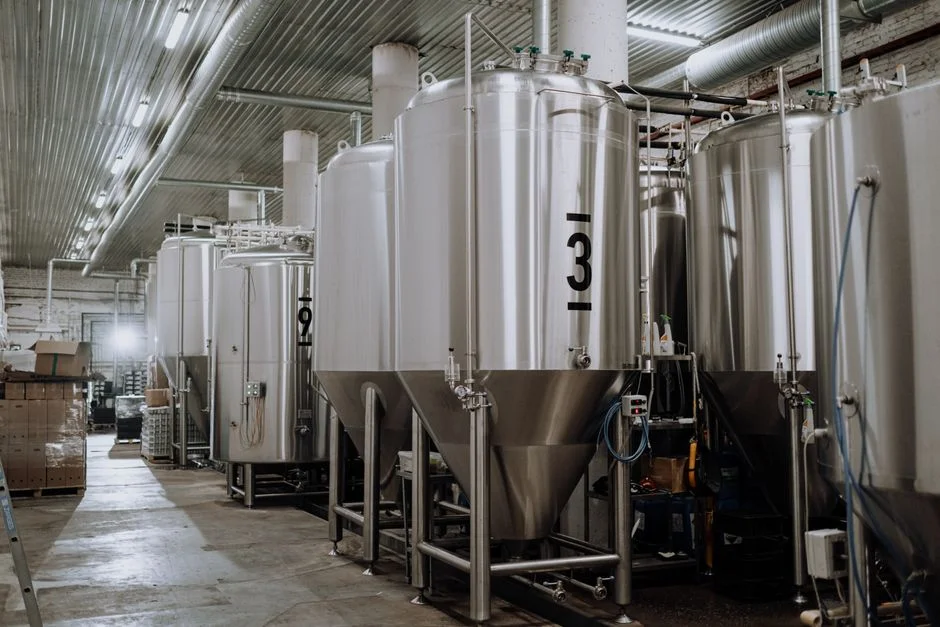
Before signing a PO, the supplier must deliver a P&ID, hydraulic profile, electrical load list, control narrative, membrane warranty (typically 5 years), and CE marking under EU Machinery Directive 2006/42/EC. OPEX drivers are membrane replacement every 5–8 years, energy at 0.4–0.8 kWh/m³ for flat-sheet MBR, chemical dosing (sodium hypochlorite for CIP, citric acid for scale control), and sludge disposal. For a 100–300 m³/d Barcelona hotel, the STP skid CAPEX envelope is broadly in the order of €100,000–€250,000, with auxiliary equipment adding an estimated 30–50%; treat the band as a tender-comparison reference rather than a fixed quote. Lock in a maintenance contract covering remote monitoring, a quarterly membrane integrity test, and guaranteed flux recovery after CIP. For a parallel reference on Mediterranean hotel sizing, see the worked example for packaged MBR STP sizing for Lisbon hotels; for RO polishing parameters, see RO design criteria for MBR polishing; and where an existing tank is being retrofitted, see MBR retrofit of existing hotel tanks.
| Item | Value / range | Source / note |
|---|---|---|
| Packaged MBR CAPEX envelope (100–300 m³/d) | ~€100,000–€250,000 for the skid | Illustrative European range, 2026 |
| Auxiliary equipment adder | +30–50% | Screens, DAF, UV, sludge dewatering |
| Energy (flat-sheet MBR) | 0.4–0.8 kWh/m³ | HydropureWater product data, 2026 |
| Membrane replacement interval | 5–8 years | With proper CIP regime |
| CE marking | EU Machinery Directive 2006/42/EC | Mandatory |
| Warranty | ~5 years on membranes | Confirm in tender |
Frequently Asked Questions
How many m³ per day per room should I size a hotel MBR for in Barcelona?
Size the MBR for 0.25–0.35 m³ per guest-night at average dry-weather flow, then apply a 1.5–2.0 peak factor for the morning and evening turnover and seasonal events such as Mobile World Congress. For a 220-room hotel at 75% occupancy, this gives an ADWF of 55–75 m³/d and a design capacity of 110–150 m³/d with 4–6 h of flow equalisation.
Does a packaged MBR meet Spanish RD 1620/2007 reuse quality?
A submerged MBR with PVDF flat-sheet or hollow-fibre membranes clears the lowest reuse tier of RD 1620/2007 — ≤10 mg/L TSS, ≤25 mg/L BOD5, ≤125 mg/L COD, ≤2 NTU turbidity, and ≤200 CFU/100 mL E. coli. Stricter reuse tiers (toilet flush, cooling-tower make-up at higher quality) require an additional UF/RO polishing loop downstream of the MBR.
Hollow-fibre or flat-sheet membrane for hotel wastewater?
For FOG-rich hotel duty, flat-sheet PVDF is the lower-risk choice because of mechanical robustness, integrated aeration scouring, and easier cleaning-in-place. Hollow-fibre is acceptable when a fine pre-screen and DAF FOG removal are installed upstream of the membrane tank.
Do I need a separate greywater treatment for the laundry?
Many hotel operators install a separate greywater treatment plant for laundry waste to keep lint and surfactants out of the main MBR train, which reduces membrane fouling and improves overall MBR effluent quality; the trade-off is a second treatment stream to operate and maintain, and a separate hydraulic profile in the plant room.
Which EU directive applies to a hotel STP in Barcelona?
EU Directive 91/271/EEC sets the minimum discharge standards for urban waste water, the Spanish Real Decreto 1620/2007 governs water reuse quality, and the Catalan Water Agency (ACA) issues the discharge or reuse permit through OTAS, with BCASA adding trade-effluent conditions inside the Barcelona municipal sewer catchment.