What 'BWT Fluoride Removal Evaluation' Actually Means in 2026
A BWT (boiler/biological/bioprocess water treatment) fluoride removal evaluation is an engineering study that selects a removal process, fixes its position inside the wider treatment train, and sets a numeric performance target for a fluoride-bearing stream. It is not a product search; it is a process-selection problem anchored to the U.S. EPA maximum contaminant level (MCL) of 4 mg/L for fluoride in drinking water, which most industrial teams also adopt as an internal target whenever the stream feeds boiler make-up, RO permeate reuse, or a downstream polishing step.
Per Crystal Quest's commercial fluoride removal page (accessed 2026), the same 4 mg/L MCL is the reference number that any fluoride polishing step must hit or beat, and municipal water is typically maintained in the 1.5–2.5 mg/L band before fluoridation. The scope of this article is the four workhorse processes — chemical precipitation, activated-alumina adsorption, selective ion exchange, and membrane separation (RO/NF) — plus the supporting equipment that a BWT train needs to make any of them work.
Where Industrial Fluoride Comes From and Why It Matters in a BWT Train
Industrial fluoride loads in a BWT context originate from a short, well-defined list of upstream processes. Per Crystal Quest (2026), high-fluoride wastewaters are generated by glass and steel manufacturing, foundry operations, and aluminum-fluoride or inorganic fluoride chemistry, where inorganic fluorine appears as sodium fluoride, a byproduct of aluminum production. Concentrations above 5 mg/L are detrimental to tooth structure, which is one reason the EPA MCL is set where it is and why industrial streams sit well above the municipal 1.5–2.5 mg/L baseline and must be treated as designed-for contaminants, not background noise.
The position of the fluoride step in the BWT train follows from the chemistry. Fluoride removal normally sits after suspended-solids and hardness reduction, before RO/NF polishing, so that membranes are protected from scaling and from fluoride breakthrough that would push permeate past reuse targets. The same source stresses that competing ions — silica, sulfate, and alkalinity — depress adsorption capacity, so the evaluation must include a competing-ion review alongside the fluoride number. Pretreatment typically starts with a DAF system for fluoride-bearing wastewater pretreatment to drop suspended solids and colloidal matter, followed by a multi-media filter ahead of the fluoride removal step to polish turbidity before the adsorption or ion-exchange vessel.
The Four Workhorse Processes: How Each Removes Fluoride
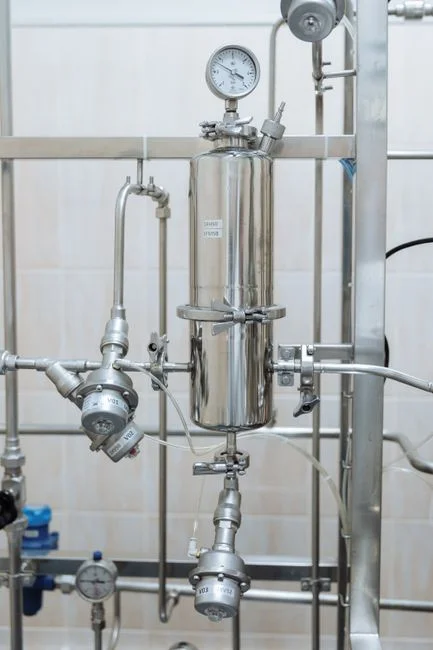
Calcium-based precipitation forms calcium fluoride sludge and serves as the bulk-reduction first step for high-concentration streams, particularly aluminum-fluoride manufacturing wastewater. It is favored upstream because it knocks the load down efficiently, but it produces a sludge that requires downstream dewatering and does not, on its own, reach low-ppb effluent.
Adsorption on activated alumina is the mechanism used in commercial fluoride filters. Per Crystal Quest (2026), the media is a synthetic aluminum oxide with a minimum of fines, a uniform particle size similar to ion-exchange resins, low pressure loss, and physical stability over a wide pH range. The removal is not dependent on ion exchange; it is a combination of adsorption and chemical reaction with the media, which prevents capacity from being depleted by competing ions in the same way an exchange resin would be. Commercial adsorption systems in this class are sold in tank sizes that cover flow rates from 14 to 205 gallons per minute, which is the practical envelope for planning.
Selective ion exchange uses resins targeted at fluoride and is suited to polishing duty at moderate flow where effluent targets are tight and feedwater chemistry is controlled. The trade-off is regenerability: resins need periodic chemical regeneration, and the spent regenerant becomes a brine stream that requires handling.
Membrane separation (RO and NF) physically rejects the fluoride ion and is the right answer when the goal is reuse or multi-ion rejection. It is sensitive to feedwater quality, recovery ratio, and energy cost, so an industrial multi-media filter and chemical conditioning upstream are mandatory. Per Crystal Quest (2026), RO permeate can comfortably beat the 4 mg/L MCL, but the concentrate stream carries the rejected fluoride and must be discharged or treated further.
Process Comparison Matrix: 2026 Selection Criteria
The matrix below summarizes the supported research. Where a cell is qualitative, the underlying source does not provide a numeric breakpoint, and specific numbers should be confirmed against the resin, media, or membrane manufacturer for the actual chemistry in your stream.
| Process | Influent fluoride range | Typical target effluent | pH tolerance | Regenerable? | Waste output | Competing-ion sensitivity | Train position | Indicative flow envelope |
|---|---|---|---|---|---|---|---|---|
| Precipitation (lime / calcium) | High (>10 mg/L); bulk reduction | Mid-range; needs downstream polishing | Controlled alkaline | No — sludge produced | Calcium fluoride sludge (dewatering required) | Moderate | First step on high-load streams | Wide; sized to upstream flow |
| Activated-alumina adsorption | Low to mid (≈1.5–10 mg/L) | Below 4 mg/L EPA MCL; can polish further | Wide pH window per Crystal Quest (2026) | Yes — media can be regenerated | Spent regenerant / exhausted media | Silica, sulfate, alkalinity reduce capacity | Polishing after precipitation or as stand-alone on lower-load streams | 14–205 gpm commercial envelope per Crystal Quest (2026) |
| Selective ion exchange | Low to mid (≈1.5–4 mg/L) | Tight polishing | Narrow — feedwater chemistry controlled | Yes — chemical regeneration | Brine / spent regenerant | High — competing ions consume capacity | Final polishing under controlled chemistry | Moderate flow; sized to vessel count |
| Membrane (RO / NF) | Low to mid after pretreatment | Comfortably below 4 mg/L; suitable for reuse | Wide, but pH-controlled to protect membrane | Membrane replacement (not regenerated) | Concentrate stream carrying rejected fluoride | Low for fluoride itself, but scaling ions must be managed | Polishing / reuse barrier, downstream of media filtration | Sized to recovery ratio and feed flow |
The following table provides a qualitative view of suitability, as the research does not provide numeric breakpoint data for specific media or membranes. Confirm with pilot or vendor data at your actual concentration before procurement.
| Influent fluoride band | Recommended primary process | Required pretreatment | Polishing step |
|---|---|---|---|
| < 1.5 mg/L | Often no dedicated step; verify against internal reuse target | Standard BWT solids/hardness removal | RO if reuse is the goal |
| 1.5–4 mg/L | Activated-alumina adsorption, or RO if reuse is required | DAF + multi-media filtration | RO/NF or ion exchange for tight targets |
| 4–10 mg/L | Activated-alumina adsorption as the workhorse | DAF + multi-media filtration + pH adjustment | Ion exchange or RO |
| > 10 mg/L | Precipitation first, then adsorption or ion exchange | Hardness reduction, pH control, sludge dewatering | RO if reuse is required |
2026 Decision Checklist: Choosing the Right Step for Your BWT Train

- Define the target. Is the goal the EPA 4 mg/L MCL for potable reuse, a tighter boiler-feed spec, or a discharge limit? Each target shifts the process choice; boiler-feed specs are typically tighter than the MCL, while discharge-only duties may accept adsorption alone.
- Characterize the influent. Total fluoride, pH, competing ions (silica, sulfate, alkalinity), and whether the stream is constant or spike-loaded are essential variables. If this data is not on file, request it from the upstream process owner before specifying equipment.
- Match the train position. High-fluoride bulk streams usually need precipitation first, followed by adsorption or ion-exchange polishing, and an RO/NF barrier only if reuse is the goal. Per Crystal Quest (2026), competing ions depress adsorption capacity, so the polishing step must be sized for actual water conditions rather than a laboratory baseline.
- Size the supporting equipment. DAF or lamella clarification upstream protects media, a multi-media filter is required ahead of any RO, automatic chemical dosing manages pH and coagulant, and a plate and frame filter press handles calcium-fluoride sludge.
- Confirm the regeneration and waste-handling story before procurement. Adsorption media and ion-exchange resins have different waste-handling implications than RO concentrate; obtain the spent-media, brine, and concentrate handling plan in writing alongside the equipment quote.
For a detailed analysis of how biological and membrane steps interact inside a broader train, the MBR vs conventional activated sludge comparison covers the biological side, and the ZLD plant 2026 buyer's guide covers the concentrate-disposal end of the fluoride train.
Where HydropureWater Equipment Fits in a Fluoride-Laden BWT Train
HydropureWater supplies the supporting equipment around the fluoride removal step, not the fluoride-selective media itself. Clarification and pretreatment start with a DAF system for fluoride-bearing wastewater pretreatment and a multi-media filter ahead of the fluoride removal step, which protect media life and RO performance. Chemical conditioning — pH adjustment and coagulant/flocculant feed — is handled by an automatic chemical dosing for pH and coagulant control, which is required to make precipitation and adsorption steps work at design capacity.
Polishing and reuse are covered by an industrial RO system for fluoride polishing and reuse, with an ultrafiltration unit acting as RO pretreatment or as a standalone barrier on high-turbidity feeds. Sludge handling downstream of precipitation is managed by a plate and frame filter press for calcium-fluoride sludge, supported by a high-efficiency sedimentation tank to reduce chemical consumption upstream. The industrial wastewater treatment compliance guide walks through the permitting logic that frames a fluoride discharge permit.
Frequently Asked Questions
What fluoride level triggers a dedicated removal step?
Any stream expected to exceed the EPA 4 mg/L MCL, or that feeds a boiler, RO, or reuse loop with a tighter internal target, warrants a dedicated process. Per Crystal Quest (2026), municipal water is maintained in the 1.5–2.5 mg/L band, so any industrial load above that range—and especially above 4 mg/L—requires a designed-for step.
How do I choose between activated alumina adsorption and RO for a BWT polishing step?
Use RO when the goal is multi-ion rejection, reuse, or a very tight permeate target, provided the site can handle a concentrate stream. Use activated alumina when the goal is selective fluoride polishing at lower capital cost without concentrate disposal; the commercial envelope is 14–205 gpm per Crystal Quest (2026), which covers most polishing-side BWT duties.
What pretreatment does an RO or adsorption step need?
Suspended solids and colloidal matter must be reduced first. A