Why León de los Aldama is a special case for data-center water
León sits in the semi-arid Bajío basin, where Conagua surface allocations and deep wells are shared with municipal and agricultural users, requiring a multi-megalitre-per-day evaporative site to be justified against competing demand. Make-up is normally drawn from a Conagua title or a deep well, but the city is also inside SAPAM's municipal wastewater service area, which makes reclaimed municipal make-up technically available as an alternative to freshwater.
Discharge is governed by NOM-001-SEMARNAT-2021 for surface-water recipients and by SAPAM industrial pretreatment rules for any sewer connection; these requirements should be confirmed in the Conagua title before equipment is ordered. Climate pushes wet-bulb temperatures high enough that cooling towers are routinely run at aggressive cycles of concentration, which concentrates hardness, silica, and biocide residuals into the blowdown and drives the treatment intensity described in the next sections. Top-ranking 2026 data-center blowdown guides rarely frame the site inside a Mexican water-stress or NOM-001 context, which is the gap this blueprint fills.
The boil-vs-blow decision must be made before any other equipment choice. A dry-cooled facility in León shifts the water problem to the power plant, where the CFE generation mix and any behind-the-meter gas plant still evaporate water upstream; an evaporative facility shifts the problem to on-site blowdown, where hardness, silica, and biocides must be removed before discharge or reuse. Both options remain in scope for a Bajío hyperscale or colocation build, and the rest of the train is sized against whichever fork is taken.
The two wastewater streams a León data center actually produces
Cooling-tower blowdown is the dominant liquid stream in an evaporative design, where dissolved minerals and treatment chemicals concentrate as pure water evaporates, and blowdown is discharged continuously to protect heat-rejection equipment. Sanitary wastewater from restrooms, kitchens, and cafeterias is a separate, lower-volume stream that can usually be handled by the municipal sewer after coarse screening, while condensates from computer-room air-handling units are typically low in total dissolved solids but can carry trace metals and need their own routing decision. A closed-loop refers to the building-side loop, often a glycol-water mix to cold plates, but it does not eliminate water use, because evaporation and blowdown still occur at the heat-rejection stage. Cooling towers account for 20–30% of water demand at power plants (Open Engineering Inc., 2026 engrXiv LCA), and the same evaporative physics drives data-center blowdown volumes, which at large sites are on the order of 100,000+ gallons per day and can reach roughly 150,000 gallons per day at existing permitted sites, per a 2026 review of Texas data-center blowdown permitting.
| Stream | Source | Typical character | Treatment decision |
|---|---|---|---|
| Cooling-tower blowdown | Evaporative heat rejection | High TDS, hardness, silica, biocides, suspended solids | Equalize → soften/DAF → MMF → UF → RO; UV/ClO2 polish |
| Sanitary wastewater | Restrooms, kitchens, cafeterias | BOD, TSS, fats, oils, grease | Coarse screening; discharge to SAPAM sewer if pretreatment limits are met |
| CRAH condensate | Air-handling units | Low TDS, possible trace metals | Route to blowdown equalization or reuse, depending on analytics |
| Boiler/CRAH blowdown | Steam humidification, heat exchangers | Moderate TDS, silica | Blend with cooling-tower blowdown for RO feed |
Treatment train: from screening to disinfection for León blowdown
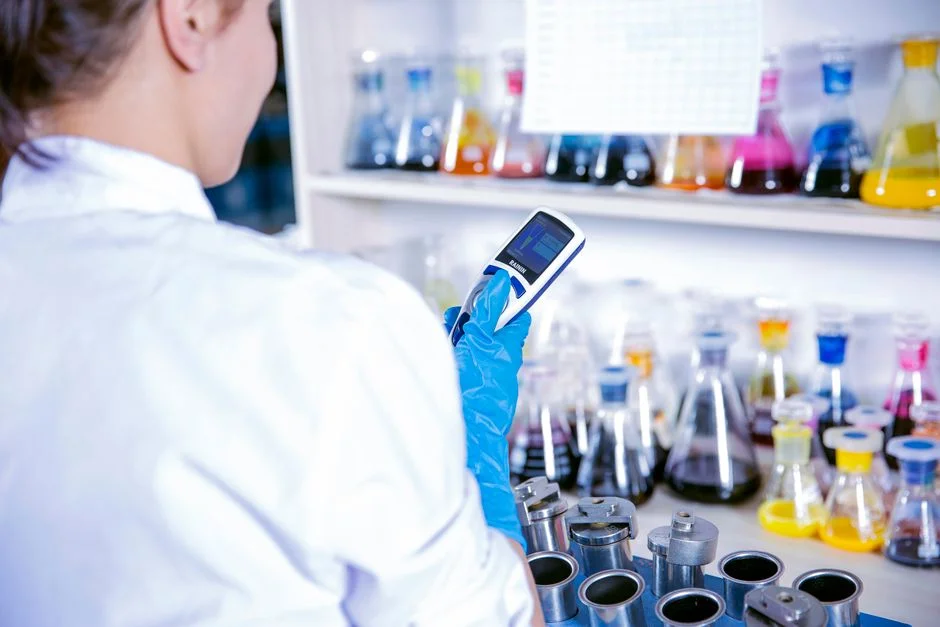
The defensible process flow for a León blowdown train runs in six stages, each with a parameter set locked against the SAPAM or NOM-001 permit and the RO vendor's design projection. Step 1 is equalization and screening, where a rotary bar screen removes debris and an equalization tank buffers diurnal swings in blowdown rate so downstream chemistry stays stable. Step 2 is hardness and silica reduction, delivered either by lime/soda softening or by a DAF unit for cooling-tower blowdown with coagulant and flocculant dosing, which knocks down Ca²⁺, Mg²⁺ and reactive silica to protect the RO membranes downstream. Step 3 is multimedia filtration, using a multi-media filter for RO pretreatment plus a PLC-controlled antiscalant and coagulant dosing skid to bring turbidity and Silt Density Index into the RO feed window. Step 4 is ultrafiltration with 0.03 µm PVDF ultrafiltration as a reliable microbiological and colloidal barrier that tolerates variable inlet turbidity through automatic backwash and air scour. Step 5 is antiscalant dosing plus an industrial RO for high-COC reuse step, where permeate is polished for cooling-tower make-up and concentrate is routed to discharge or, if ZLD is justified, to a thermal concentrator and crystallizer. Step 6 is residual disinfection, using UV sterilization for chemical-free microbial control and an on-site ClO2 for residual disinfection when reclaimed municipal make-up is part of the water strategy.
| Stage | Function | Key parameters to set in URS |
|---|---|---|
| Equalization & screening | Buffer flow, remove debris | Retention time, screen aperture, pump redundancy |
| Softening / DAF | Drop Ca²⁺, Mg²⁺, silica, TSS | Lime/soda dose or DAF air-to-solid ratio, target hardness and reactive silica |
| Multimedia filtration | Protect RO from turbidity and SDI | Filter media gradation, backwash interval, SDI to RO feed |
| Ultrafiltration | Microbiological and colloidal barrier | 0.03 µm PVDF hollow-fiber, flux, CEB/air-scour frequency |
| RO + antiscalant | Demineralize for high-COC reuse | Recovery, feed pressure, permeate quality, antiscalant selection |
| UV / ClO2 | Residual microbial control | UV dose for make-up loop; ClO2 residual for reclaimed-water make-up |
Numeric limits for each parameter must come from the SAPAM discharge permit, NOM-001-SEMARNAT-2021 tables, and the RO design software for the specific recovery target. For a baseline LCA comparison, the 2026 engrXiv study uses depth filtration, granular activated carbon, and chlorination as the freshwater make-up train, and a UF+RO train for the reuse scenario (Open Engineering Inc., 2026).
Make-up water options: freshwater, reclaimed municipal, or recycled blowdown
The make-up water choice sets both the LCA footprint and the achievable cycles of concentration, providing the basis for an apples-to-apples comparison. In the baseline train of depth filtration, GAC and chlorination, the reclaimed-municipal scenario carries about twice the global warming potential of the freshwater case, with treatment energy responsible for roughly 80% of that difference (Open Engineering Inc., 2026 engrXiv LCA). When the make-up train is upgraded to UF plus RO to support higher cycles of concentration, water-treatment energy rises to over five times that of freshwater, but the gain in cycles of concentration cuts blowdown volume and chemical consumption. The study also reports an indirect upstream water penalty of approximately 0.93 L/m³ for the reuse train, which is less than 0.1% of the direct freshwater-displacement benefit, so the headline freshwater saving survives the upstream accounting. A cooling system commissioned today and operated through 2050 will spend most of its service life under grid conditions where the GWP penalty of reuse is negligible, while its water savings accrue at full value (Open Engineering Inc., 2026 engrXiv LCA). For Mexico, the CFE grid trajectory, not today's tariff, is the appropriate metric for the carbon side of the trade-off.
| Make-up option | Treatment train (LCA basis) | Treatment energy vs freshwater | GWP vs freshwater | Effect on COC / blowdown |
|---|---|---|---|---|
| Potable freshwater (Conagua title or deep well) | Depth filtration + GAC + chlorination | 1× (baseline) | 1× (baseline) | Lower COC, more blowdown |
| Reclaimed municipal (SAPAM) | Depth filtration + GAC + chlorination | Higher; ~80% of the GWP gap | ~2× | Same train, depends on COC target |
| Reclaimed municipal, high-COC | UF + RO + antiscalant | Over 5× | Higher under today's grid, narrowing on a decarbonizing CFE grid | Higher COC, less blowdown and chemical use |
| Recycled on-site blowdown | Softening/DAF + MMF + UF + RO | Same order as reclaimed-RO | Same order as reclaimed-RO | Reduces freshwater demand most aggressively |
For the RO and membrane elements, the supplier's RO and UF membrane filter elements portfolio must be specified against the design recovery, feed water, and target permeate quality.
Discharge to drain vs ZLD: a León decision framework
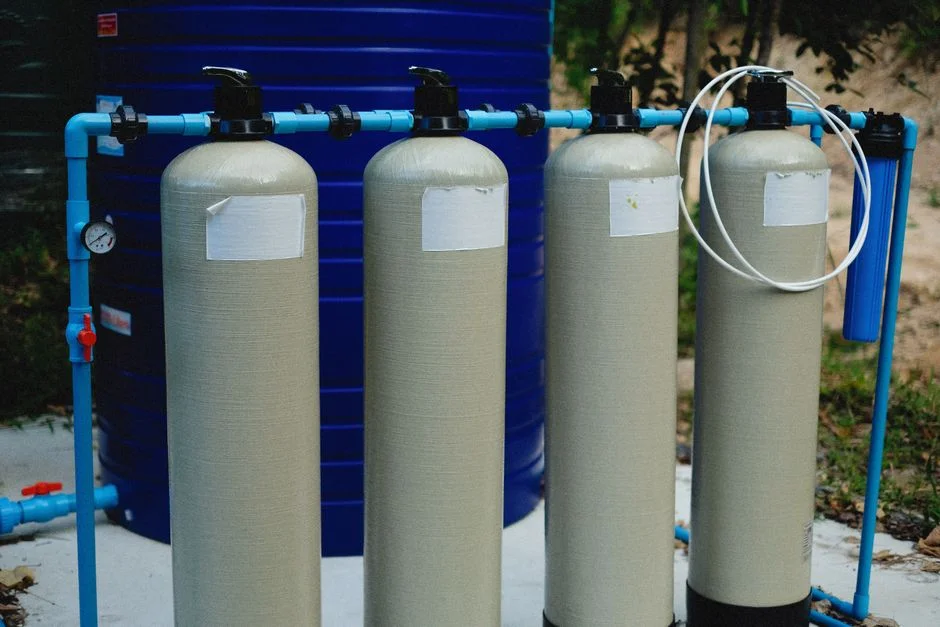
The end-of-pipe decision is discharge to the SAPAM sewer under SAPAM industrial pretreatment rules, discharge to surface water under NOM-001-SEMARNAT-2021, or pushing the membrane concentrate to zero liquid discharge. ZLD combines the membrane train above with a brine concentrator and a crystallizer, as detailed in the ZLD buyer's guide. ZLD trades higher CAPEX and energy for zero discharge and immunity from future Conagua allocation cuts, which is attractive in the Bajío but only after the membrane stage is fully optimized. Sludge from DAF, softening, and RO pretreatment is dewatered with a plate-and-frame filter press before disposal, and the dewatering throughput must be sized from the actual solids load. If the site is on a tight Conagua allocation or faces community opposition to a new well, the ZLD premium is easier to defend; if the SAPAM sewer is available with spare capacity and the tariff is workable, the membrane-plus-discharge train is usually the lower-CAPEX path. For an evaporative facility inside the city of León, blowdown routing should be locked at the URS stage to avoid expensive scope changes. For a parallel Latin American case where the same boil-vs-blow fork applies, the Valencia, Venezuela data-center blowdown guide covers a comparable regulatory and climate setting.
Frequently Asked Questions
What CAPEX and OPEX should a León engineer budget for a cooling-blowdown treatment train?
The supplied research does not contain Mexican peso CAPEX or OPEX figures for a León data-center blowdown train. The actionable step is to send the site-specific feed analysis, the target cycles of concentration, the discharge destination, and the desired permeate quality to a vendor to request a budgetary quote against those inputs; that quote is the only defensible number to provide to a Conagua or EPC reviewer.
What equipment sizing and lead-time inputs should a buyer request before issuing an RFQ?
Size the train from the actual make-up water analysis and the chosen cycles of concentration, since the 2026 engrXiv LCA shows the UF+RO reuse train unlocks higher COC and lower blowdown volume. Lead time must be requested item by item: RO skids, UF modules, softening or DAF units, and the on-site ClO2 generator for residual disinfection on a reclaimed-municipal make-up all have different factory queues, and the dewatering plate-and-frame filter press must be ordered in parallel with the sludge-producing stages.