
Why Nickel Removal Is a 2026 Compliance Problem
Nickel is classified alongside lead, zinc, mercury, cadmium, copper, chromium, and arsenic in heavy-metal contamination literature, making Ni(II) treatment an enforced requirement rather than an option for industrial discharges (S3, 2021). The streams that carry it — electroplating rinses, stainless steel pickling baths, nickel-cadmium battery production, printed circuit board manufacturing, and mine drainage — span a wide concentration window and matrix chemistry, so a single "best" method does not exist (S3, 2021). The 2021 npj Clean Water review states that the most applicable method should be chosen based on removal efficiency, chemical or adsorbent requirements, initial concentration, optimal treated pH value, and operating conditions — not on theoretical maximum uptake (S3, 2021). That decision is the starting point of any shortlist an engineer hands to procurement.
For an EHS manager, the practical consequences are predictable. A nickel-laden stream at a non-compliant pH is a consent-to-operate risk; an undersized or mis-selected polish step generates a Notice of Violation after a routine composite-sample event. Choosing the right train in 2026 is about fitting removal efficiency, sludge handling, and water-reuse targets to a documented influent envelope.
Nickel Removal Methods at a Glance: The 2026 Comparison Matrix
The npj Clean Water 2021 review classifies heavy-metal removal technologies into five families — adsorption, membrane, chemical, electric, and photocatalytic — noting that a complete picture of heavy metal removal from wastewater remains a work in progress (S3, 2021). The matrix below organizes that framework, plus constructed-wetland and biosorption literature, into the columns an engineer uses to shortlist: pH window, target influent Ni range, strength, main limitation, secondary-waste profile, and train role. Fenton-assisted chemical precipitation is a documented upgrade path and is flagged in the table so readers see the train option immediately (S3, 2021).
| Method | Family (S3) | Typical pH window | Target influent Ni range | Main strength | Main limitation | Sludge / secondary waste | Typical role in a train |
|---|---|---|---|---|---|---|---|
| Chemical precipitation (hydroxide / sulfide; Fenton-assisted) | Chemical | Alkaline (per S3 operating conditions) | High to medium concentration bulk streams | Scalable, well understood | Effluent requires polish to tight limits | Metal-laden hydroxide/sulfide sludge | Front-end / bulk removal |
| Ion exchange (strong cation / chelating) | Chemical (resin-based) | Near-neutral to mildly acidic | Low residual polishing | Very low effluent Ni, possible recovery | Regeneration brine/eluate handling | Concentrated regenerant | Polishing step |
| Adsorption (activated carbon, chitosan, agricultural-waste biosorbents) | Adsorption / biosorption | Per adsorbent optimum in S3 Supplementary Tables | Dilute streams, polishing | Low-cost media, handles dilute Ni | Spent-media disposal, regeneration constraint for chitosan (S3) | Spent solid media | Polishing / niche |
| Membrane (UF as RO feed; RO; MEUF) | Membrane | Near-neutral (RO); per MWCO for MEUF (S3) | Low residual, water reuse | RO delivers very low Ni, reuse possible | Fouling, scaling, concentrate disposal | Concentrate reject stream | Final polish / reuse |
| Electrocoagulation (EC) | Electric | Near-neutral to mildly alkaline | Medium concentration | In-situ coagulant, no external dosing | Electrode cost, sludge handling | Metal-bearing sludge | Bulk or pre-polish |
| Constructed wetlands | Adsorption/biosorption (open literature, S2) | Ambient | Low-concentration diffuse flows | Low OPEX | Land footprint, climate sensitivity | Substrate media | Diffuse / mine drainage polish |
| Photocatalytic / advanced oxidation polishing | Photocatalytic | Per catalyst optimum | Trace / organic co-contaminant polish | Targets organics alongside metals | Rarely primary for industrial Ni load | Catalyst replacement | Polishing niche |
The five-family framing from S3 matches how suppliers are organized, allowing engineers to transition from the matrix to specific method evaluations.
Chemical Precipitation: The Workhorse Pretreatment
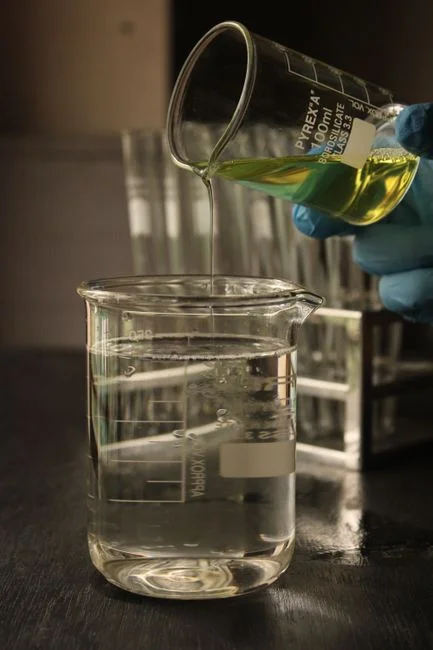
Precipitation raises pH with an alkali (or adds a sulfide source) to convert dissolved Ni(II) into an insoluble hydroxide or sulfide solid, which is then settled or filtered. Per the npj Clean Water 2021 review, the Fenton reaction is used to improve the removal efficiency of chemical precipitation, providing a low-effort upgrade path when basic hydroxide dosing does not clear discharge limits (S3, 2021). The equipment chain that typically follows precipitation is a lamella clarifier for nickel-bearing sludge and, downstream, a plate-frame filter press for sludge dewatering before disposal.
Strengths include scalability, familiar chemistry, and CAPEX requirements lower than membrane systems. Weaknesses involve the need to dewater metal-laden sludge and the likelihood that effluent will require a polish step to meet tight limits. Best fit: high-concentration bulk streams where the discharge limit is not the tightest; almost always used as the first stage in a train.
Ion Exchange: Polishing to Tight Discharge Limits
Ion exchange captures Ni(II) on a cation resin and elutes it later with an acid or brine regenerant that can be sent to metal recovery or a contained waste stream. The npj Clean Water 2021 review cites strong cation resins as effective for low residual targets, with chelating resins selected when selectivity against competing hardness ions is required (S3, 2021). The resin choice is the most consequential engineering decision in this section because chelating resins trade capacity for selectivity and require a controlled regeneration schedule.
Strengths include very low effluent Ni and the potential for nickel recovery from the regenerant. Weaknesses include the need to manage concentrated brine or eluate, and the fact that resin life shortens quickly when iron, organics, or oil coat the beads. Best fit: polishing to tight discharge limits on a stream that has already been through precipitation or EC.
Adsorption and Biosorption: When Carbon, Chitosan or Agricultural Waste Fit
The npj Clean Water 2021 review documents carbon-based adsorbents — including activated carbon and silica composites — alongside chitosan-based adsorbents as active research fronts (S3, 2021). Practical constraints exist, as chitosan-based adsorbents require improved regeneration methods to enhance reusability, representing a CAPEX-versus-OPEX trade-off (S3, 2021). Open-access literature documents a range of low-cost media, including nettle ash, sawdust, palm shell activated carbon, lignite, lignin, and hazelnut shell, reported for nickel and related heavy metals (S4).
Strengths: adsorption handles dilute streams and targets polishing where precipitation has completed the bulk work. Weaknesses: solid-phase handling, spent-media disposal, and regeneration constraints mean adsorption is rarely the primary step for a high-load industrial Ni stream. Best fit: polishing dilute streams, pilot-scale niche applications, and sites where a low-cost waste-derived adsorbent is locally available.
Membrane Processes: UF, RO and Micellar-Enhanced Ultrafiltration
The npj Clean Water 2021 review covers micellar-enhanced ultrafiltration (MEUF) for simultaneous nickel and organic removal using different molecular weight cut-off membranes (S3, 2021). In practice, UF on its own acts as a suspended-solids and colloidal barrier, serving primarily as UF pretreatment in front of RO rather than direct dissolved-Ni rejection. The membrane step that rejects dissolved Ni(II) is an industrial RO system for nickel polishing, and plants should plan around replacement RO and UF membrane elements as recurring OPEX.
Strengths: RO delivers very low residual Ni and enables water reuse. Weaknesses: membrane fouling, scaling, concentrate disposal, and energy demand at high recovery are significant operating requirements. Best fit: plants where water reuse is part of the economic case or discharge limits are too tight for precipitation plus ion exchange.
Electrocoagulation, Photocatalysis and Constructed Wetlands
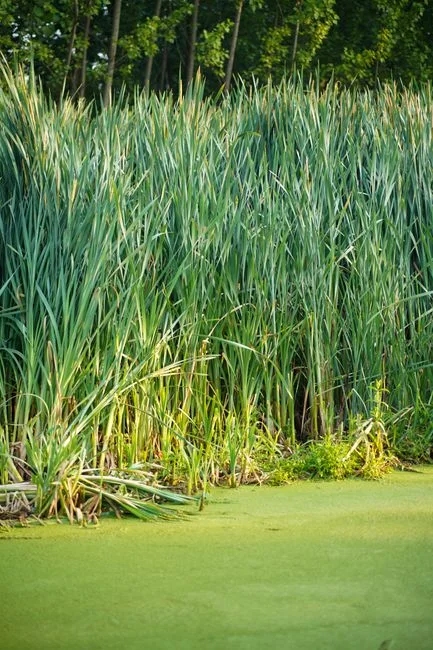
Electrocoagulation (EC) generates coagulants in situ from sacrificial electrodes and is well studied for Ni(II) removal (S3, 2021). Photocatalytic and advanced oxidation methods are useful as polishing, but are rarely the primary step for an industrial Ni load (S3, 2021). Constructed wetlands are documented for nickel removal in literature indexed via OpenAlex and are typically relevant for low-concentration diffuse flows, mine-drainage polishing, or community-scale applications rather than confined high-load plants (S2).
Strengths and weaknesses: EC removes the need for external chemical dosing but introduces electrode cost and metal-bearing sludge; photocatalysis is strong for trace organics but weaker as a stand-alone metals step; constructed wetlands deliver low OPEX at the price of a large land footprint and climate sensitivity. Best fit: EC where chemical logistics are difficult; photocatalysis as a niche polish; wetlands where the site has the land and the stream is already dilute.
Building the Right Treatment Train for Your Industry
The literature's general rule is to pair a bulk-removal step with a polishing step and to design for sludge handling alongside the discharge target (S3, 2021). The table below maps that rule to four common industrial streams. PLC-controlled chemical dosing for pH adjustment and a compact integrated purification skid are common across most of these trains.
| Industry / stream | Bulk-removal step | Solids separation | Polishing step | Sludge / concentrate handling |
|---|---|---|---|---|
| Electroplating / metal finishing rinses | Hydroxide precipitation, pH adjustment | Lamella clarifier | Ion exchange or RO | Filter press dewatering, metal recovery option from regenerant |
| Stainless steel pickling, battery cathode | Precipitation + Fenton-assisted upgrade (S3) | Lamella or DAF for fine solids | Ion exchange or RO | Filter press, dedicated acid-waste handling |
| Mining / metal processing | Dense-sludge precipitation | DAF or lamella | Adsorption or constructed wetland polish (S2) | High-volume sludge to filter press; wetland as passive polish |
| Printed circuit board / mixed finishing | Precipitation + EC optional | Lamella | RO for water reuse | Filter press; RO concentrate to recovery or controlled disposal |
Specific engineering playbooks for electroplating wastewater and mining/metals compliance provide further guidance on managing influent envelopes and sewer pretreatment limits.
How to Choose a Nickel Removal Supplier in 2026
Convert the technical comparison into a procurement checklist. Require a documented matrix of guaranteed effluent Ni, target influent range, pH window, sludge volume, and energy use. Ask vendors to define the train on the P&ID: which unit is the bulk-removal step, which is the polishing step, and how sludge or RO concentrate is handled. Confirm after-sales scope: membrane and resin supply, dosing-chemical spare parts, control instrumentation, and on-site commissioning. Finally, verify reference plants in the same industry as your stream rather than generic "heavy metal" references.
Frequently Asked Questions
Which nickel removal method is cheapest for a small electroplating shop in 2026?
Hydroxide precipitation followed by a clarifier is the lowest-CAPEX route because the chemistry and equipment are standard; precipitation remains the bulk-removal backbone, with polishing methods added only when discharge or reuse limits demand them (S3, 2021). For a defensible budget, the buyer should request a per-cubic-metre OPEX split for chemicals, sludge disposal, and any polishing step.
How do I shortlist nickel removal suppliers without seeing pilot data?
Ask each vendor to provide reference plants in the same industry as your stream and to guarantee an effluent-Ni value at your documented influent concentration, pH window
Frequently Asked Questions
Which nickel removal method gives the lowest effluent concentration for an electroplating plant?
Reverse osmosis (RO) and nanofiltration (NF) consistently achieve the lowest effluent concentrations, typically reducing nickel levels to below 0.05 mg/L. These membrane processes provide a physical barrier that removes divalent nickel ions regardless of the influent concentration, effectively meeting the most stringent global discharge standards, such as the 0.1 mg/L limit often seen in sensitive aquatic discharge zones.
How do I shortlist a nickel removal system supplier without getting locked into one technology?
Issue a request for proposal (RFP) that defines required effluent quality (e.g., <0.5 mg/L Ni) and maximum allowable operating expenditure (OPEX) rather than specifying a technology. Require bidders to submit a comparative technical analysis including at least two distinct treatment pathways, such as a hybrid ion-exchange/precipitation system versus a membrane-based solution, and mandate that all equipment be integrated via an open-protocol automation system (e.g., BACnet or Modbus) to avoid proprietary software lock-in.
What is the typical lead time to install a full nickel wastewater treatment train in 2026?
For a standard industrial wastewater treatment plant, the typical lead time from final design approval to operational commissioning is 24 to 36 weeks. This timeline accounts for current supply chain constraints on specialized components like ion-exchange resins, high-pressure pump skids, and PLC hardware, which remain the primary drivers of project duration in the 2026 market.
Is chemical precipitation alone enough to meet nickel discharge limits, or do I need a polishing step?
Chemical precipitation using hydroxide or sulfide reagents typically achieves effluent nickel concentrations in the range of 0.5 to 2.0 mg/L, which may be insufficient to meet increasingly common sub-0.5 mg/L discharge limits. A polishing step, such as selective ion-exchange resin columns or organo-sulfide precipitation, is usually required to reliably reach consistent compliance levels below 0.2 mg/L, especially when complexing agents like EDTA or citrates are present in the waste stream.
What operating-cost items should I budget for when comparing adsorption versus membrane nickel removal?
When comparing adsorption to membrane systems, you must budget for distinct OPEX profiles: adsorption costs are dominated by media replacement cycles, hazardous waste disposal fees for spent media, and periodic regeneration chemicals. Conversely, membrane systems carry higher electricity costs for high-pressure feed pumps, expenses for antiscalant chemical dosing, regular membrane cleaning (CIP) solutions, and membrane element replacement every 2 to 3 years.