

Why Lawrenceville Mining and Metals Plants Discharge Under a POTW Permit, Not Just an NPDES Permit
Any US mine that generates wastewater must hold a National Pollutant Discharge Elimination System (NPDES) permit under EPA's direct-discharge framework, and that NPDES permit is the federal floor (S1, S2). When the discharge path is a municipal sewer rather than a surface water outfall, the operation sits on top of a second compliance layer: the receiving publicly owned treatment works (POTW) treats the site as an Industrial User (IU) and issues a separate Industrial User discharge permit with its own numerical limits, sampling requirements, and inspection access (S5, p. 4–5). The two regimes do not substitute for one another; the IU permit is enforced in parallel with the POTW's own NPDES permit and is federally enforceable once adopted (S5, p. 14).
40 CFR Part 403 sets the General Pretreatment Regulations: general prohibitions, specific prohibitions, IU permitting, and the obligation for approved POTW programs to develop technically-based local limits under 40 CFR 403.5(c) (S5, p. 13). For Lawrenceville-area mining and metals sites, the relevant categorical standards sit inside 40 CFR Parts 405–471, and the precise subpart — 40 CFR Part 405 for ore mining and dressing, 40 CFR Part 433 for metal finishing, 40 CFR Parts 461–471 for nonferrous metals forming — determines which numerical limits apply on top of the local limits (S5, p. 14). A pretreatment design that ignores the IU permit layer will pass a discharge to a sewer that the POTW has no statutory authority to accept, regardless of how clean the water is by NPDES-only metrics.
How Technically-Based Local Limits Are Actually Set
EPA's Local Limits Development Guidance (2004) and 40 CFR 122.44(j)(2)(ii) require a written technical evaluation of the need to revise local limits following each NPDES permit issuance, and that cycle is typically five years (S4, ES-2). The Maximum Allowable Headworks Loading (MAHL) approach starts with influent and effluent monitoring, calculates site-specific removal efficiencies, and solves for the pollutant load the headworks can accept while still meeting NPDES permit limits, state water quality standards, and biosolids quality criteria (S4, 3-1 to 3-4). The Maximum Allowable Industrial Load (MAIL) is then derived by applying a safety factor to the MAHL and discounting for uncontrolled sources, hauled waste, and growth allowance (S5, p. 14).
Biosolids protection is what makes conservative pollutants like metals especially constraining. The MAHL must keep sludge digestion inhibition in check and must keep the receiving POTW in compliance with 40 CFR Part 503 Annual Application Loading Rate (AAR) and Cumulative Application Loading Rate (CAR) limits, which is why a metals-loaded IU typically faces tighter local limits than a BOD-only discharger (S4, 3-4). The St. Joseph, Missouri Technically-Based Local Limits (TBLL) study is a published, named-jurisdiction worked example, and its Pollutants of Concern (POC) list is a defensible benchmark when a local TBLL is not yet public. The list covers 21 metals and salts — arsenic, barium, boron, cadmium, chloride, chromium, cobalt, copper, cyanide, fluoride, glyphosate, iron, lead, manganese, mercury, molybdenum, nickel, selenium, silver, sulfate, and zinc — plus the conventionals BOD, TSS, ammonia, FOG, and sulfide (S4, ES-2 and Table 2-3). The WPF is rated for 27.0 mgd with a 54.0 mgd peak (S4, 2-1), and the conventional pollutant removals the consultant used to derive the MAHL are tabulated below.
| Pollutant | Units | Influent Average | Influent Min | Influent Max | Effluent Average | Effluent Min | Effluent Max |
|---|---|---|---|---|---|---|---|
| BOD | mg/L | 214.0 | 34.7 | 824 | 4.77 | < 2.0 | 16.2 |
| TSS | mg/L | 291.0 | 16.0 | 2,347 | 10.9 | 1.0 | 88.5 |
| Ammonia | mg/L | 6.05 | 0.55 | 35.1 | 1.81 | 0.50 | 14.92 |
| FOG | mg/L | 20.86 | 19.67 | 26.46 | 2.88 | 1.925 | 18.7 |
| Sulfide | mg/L | 0.20 | 0.13 | 0.34 | 0.01 | 0.004 | 0.02 |
For metals where the WPF had limited non-detect data, St. Joseph's consultant used site-specific removal efficiencies of 50% for selenium, 75% for silver, and 49% for zinc, with a literature value of 81% for zinc carried as a sensitivity (S4, 2-12). These are the numbers an engineer should expect to defend in jar tests and pilot work at their own site, because the same conservative-pollutant math will run at the receiving POTW.
The Pretreatment Train That Mining and Metals Plants Actually Run
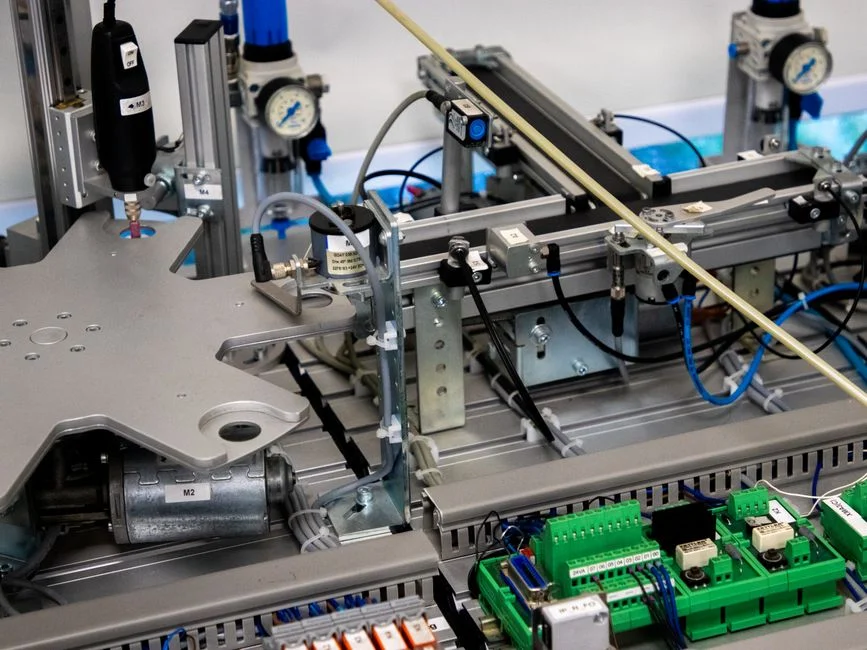
The canonical four-step mining train — pH adjustment, coagulation and flocculation, ancillary chemical conditioning, and filtration — is the spine of any defensible design (S1). Step 1 is pH adjustment: the right acid or alkali dose restores a neutral pH and simultaneously drives dissolved metals to precipitate as hydroxides for downstream removal (S1). Step 2 is coagulation and flocculation: coagulants neutralize colloidal charge, flocculants bridge particles into settleable or floatable masses, and this stage is the workhorse for suspended solids and fine metal particulates (S1). Step 3 is ancillary chemical conditioning, which covers corrosion inhibitors for collection piping, ion-exchange polishing for trace metals that escape precipitation, and biocides to control biological growth in equalization and clarification basins (S1). Step 4 is filtration: backwash multimedia filters (often with Natzeo media) polish residual fines, centrifugal systems handle larger particles up to 2,000 micron, and ceramic silicon-carbide ultrafiltration membranes are positioned for harsh mining chemistry with high flux, low fouling, and chemical and thermal robustness (S1, S3).
What the canonical narrative omits, and what an IU permit will absolutely require, is the indirect-discharge-specific equipment set layered on top of the four steps. Equalization sized to convert peak flows to the daily-average load the downstream chemistry can handle is non-negotiable, because the St. Joseph TBLL sets peak-day limits of 1,000 mg/L BOD, 1,200 mg/L TSS, and 100 mg/L ammonia specifically to protect the WPF from slug discharges (S4, 4-2). FOG and oil removal at the headworks protects the receiving bar screens — St. Joseph retained a 200 mg/L FOG daily maximum with a 100 mg/L FOG surcharge trigger because the WPF staff had already seen maintenance issues at the influent bar screens from FOG (S4, ES-4 and 4-2). Hauled-waste streams must pass through the same Industrial Pretreatment Program and are subject to the same regulations, including IU permitting and inspection access, so a sludge storage or transfer pad is effectively a regulated IU discharge point (S5, p. 13). Finally, the solids-handling stage must produce a filtrate and a cake whose quality respects 40 CFR Part 503 biosolids limits, which is what closes the loop back to the MAHL derivation (S4, 3-4).
Practical equipment selection: a rotary bar screen at the headworks protects the equalization basin from rags and large debris; a PLC-controlled coagulant, flocculant, and pH dosing skid drives Step 1 and Step 2 with the dose-to-flow ratio the POTW will want to see logged; a DAF system for FOG and suspended-solids removal handles the 200 mg/L FOG daily maximum and the suspended carryover from chemical precipitation; and a filter press for the biosolids stream dewaters the clarifier or DAF underflow to a cake whose filtrate returns to the head of the train and whose solids meet 40 CFR Part 503.
Mapping Your Operation to the Right 40 CFR Subpart and Local POC List
Self-classification is the step that determines which categorical standards stack on top of the local limits. The table below is the working map for Lawrenceville-area mining, ore processing, and metals-fabrication sites, drawn from the 40 CFR Part 403 industrial-category framework (S5, p. 14) and the St. Joseph POC list (S4, ES-2).
| Operation Type | Typical 40 CFR Subpart | Categorical Driver | St. Joseph POC List Coverage |
|---|---|---|---|
| Ore mining and dressing | 40 CFR Part 405 | Dissolved metals, suspended solids from milling and concentrating | Arsenic, lead, cadmium, copper, zinc, mercury, plus TSS and conventionals |
| Metal finishing (plating, anodizing, etching) | 40 CFR Part 433 | Total Toxic Organics (TTO), metals | Cadmium, chromium, copper, lead, nickel, silver, zinc, plus TTO |
| Nonferrous metals forming | 40 CFR Parts 461–471 | Process wastewater metals, oils | Aluminum, copper, zinc, lead, FOG, TSS |
| Iron and steel / fabricated metals (drawing, stamping, coating) | 40 CFR Parts 420, 432, 461 | Oils, TSS, metals from contact and cooling water | FOG, TSS, iron, lead, zinc, ammonia |
Industrial User classification then drives the oversight burden. Categorical Industrial Users (CIU) face the strictest baseline reporting; Non-Significant Categorical (NSCIU) and Middle-Tier Categorical (MTCIU) qualify for reduced oversight under 40 CFR 403.3(v)(2) and 40 CFR 403.12(e)(3) only if their flow and load sit below the qualifying thresholds (S5, p. 14–15). Hauled waste must be managed through the same Industrial Pretreatment Program and is subject to many of the same regulations, including IU permitting and inspection access, so any site that ships sludge off-site for disposal is effectively a second IU in the same program (S5, p. 13). A related fabricated metals 40 CFR 433 compliance guide walks through the metal-finishing subpart in more detail if the site's primary subpart is 433 rather than 405.
Sizing and Justifying the Train for Your Lawrenceville Site
Before any equipment is specified, the engineer must pull five inputs from the local POTW: the current TBLL Pollutants of Concern list, the daily-maximum and peak-day numerical limits, the basis-of-design flow and loadings for the IU, the hauled-waste acceptance policy, and the biosolids quality criteria the POTW needs to stay inside 40 CFR Part 503 (S4, 3-4; S5, p. 13). Without those five inputs, any capital quote is a guess, and any quote that omits them is a red flag.
Design must address three limit families simultaneously: average daily limits, peak-day (slug) limits, and surcharge triggers. The St. Joseph TBLL is the reference case: 1,000 mg/L BOD, 1,200 mg/L TSS, and 100 mg/L ammonia as peak-day limits to protect the WPF from slug discharges, and 200 mg/L FOG daily maximum with a 100 mg/L FOG surcharge trigger to protect the bar screens (S4, ES-4 and 4-2). Equalization volume is sized to convert peak flows to the daily average the downstream chemistry can absorb; without equalization, a correctly designed pH and coagulation train will still violate peak-day limits during batch discharges from the upstream process. Filtration and membrane selection should be justified by the residual metal and TSS targets the local limit imposes, not by capital cost alone; for very low TSS and metal targets, ceramic UF provides a defensible final barrier (S3), while for less stringent sites multimedia filtration may suffice (S1).
Supplier selection in 2026 should be tied to compliance risk, not equipment price. The four criteria to put on the request-for-quote: proven reference plants in the relevant 40 CFR subpart, in-house PLC and HMI control with remote monitoring (the same architecture LiqTech describes for its integrated controls (S3)), an installed base that includes both equalization and dewatering so the supplier owns the whole train, and the ability to provide site-specific jar-testing and pilot data rather than a generic proposal. Equipment candidates that satisfy these criteria include a PVDF ultrafiltration as the final polishing barrier for sites with tight residual metal limits, and a multi-media filter for sites whose local limits allow a more conventional polish. For a parallel 2026 pretreatment-limits playbook covering a different IU category, see the parallel 2026 pretreatment-limits playbook for a different IU category, and for a worked mining case study, the 2026 case study on mine wastewater process trains shows how a real site ties the four-step canon to compliance reporting.
Frequently Asked Questions
What does an Industrial User discharge permit actually add on top of an NPDES permit?
It adds a separate numerical compliance regime issued by the receiving POTW under 40 CFR Part 403, with local limits derived using the MAHL approach, IU-specific sampling, surcharge triggers, inspection access, and hauled-waste control — and the IU permit is federally enforceable once adopted by the POTW (S4, ES-2; S5, p. 4–5 and p. 14). An NPDES-only design will not satisfy the sewering POTW.
How should a mining or metals plant budget for a 2026 pretreatment train in the Lawrenceville area?
Budget cannot be sized without the local POTW's current TBLL Pollutants of Concern list, the daily-maximum and peak-day limits, and the basis-of-design flow and loadings, because those three inputs drive the equalization volume, the chemical dose rates, and whether a ceramic UF polish is required. The engineer should request a written confirmation of those numbers from the POTW before any vendor quotes a price, and should treat any quote built on assumed local limits as non-comparable.
How is the right 40 CFR subpart chosen for a specific Lawrenceville operation?
Match the dominant process to the industrial-category list: ore mining and dressing falls under 40 CFR Part 405, metal finishing under 40 CFR Part 433, and nonferrous metals forming under 40 CFR Parts 461–471 (S5, p. 14). The subpart determines which categorical standards apply on top of the local limits, and it also drives whether the site is a CIU, MTCIU, or NSCIU under 40 CFR 403.3(v)(2) and 40 CFR 403.12(e)(3), which sets the baseline reporting burden.
What supplier-selection criteria protect against 40 CFR Part 503 biosolids noncompliance?
Require the supplier to demonstrate site-specific jar-testing and pilot data on the actual mine or process wastewater, an installed base that includes both equalization and dewatering so the biosolids stream is engineered end-to-end, and integrated PLC and HMI controls with remote monitoring so dose-to-flow logs are auditable (S3). Filtration and membrane selection should be justified by the residual metal and TSS targets the local limit imposes, because the MAHL itself is constrained by 40 CFR Part 503 AAR and CAR limits (S4, 3-4) — capital cost alone will not protect the biosolids ceiling.