BHP's 2026 Approach to Mine Wastewater Treatment
BHP treats wastewater at its mine plants through a multi-stage process train: intake clarification, lime or sulfate precipitation for metals and hardness, multimedia filtration, reverse osmosis for desalination, and either brine evaporation, deep-well injection, or tailings storage facility return. Olympic Dam in South Australia uses RO and sulfate removal, while Escondida in Chile is fed by a ≈3,500 L/s seawater desalination plant, allowing the mine to operate without continental aquifer draw.
BHP defines "mine water" as four segregated streams: process water (used in crushers, grinding, flotation), contact water (rainfall and runoff that has touched ore or contaminated surfaces), tailings storage facility (TSF) return water (recycled supernatant from tailings ponds), and sewage from accommodation camps. Segregation at the bund wall or sump is the first unit operation; blending these streams would force over-treatment of clean volumes and under-treatment of contaminated ones.
Water stewardship at BHP is governed by the company's Water Stewardship Standard, which is mapped to the International Council on Mining and Metals (ICMM) Water Reporting Guidance and the CEO Water Mandate. The same Global Mining Institute and ICMM framework that shaped BHP's CSR lineage is documented in academic literature on Central Appalachian coal mining (Cook, Sarver & Krometis, 2015, Resources/MDPI, https://doi.org/10.3390/resources4020185) — the paper traces how international guidance translated into community-level wastewater upgrades. BHP applies the same logic at the asset level.
In its 2025 Sustainability Report, BHP reports that reused and recycled water supplied approximately 75% of operational demand across the portfolio, with the remainder drawn from seawater (Escondida, Western Australia Iron Ore), saline groundwater (Olympic Dam), and limited freshwater abstraction. Freshwater draw has been progressively displaced by seawater or brine reuse since the commissioning of the Escondida desalination corridor in 2017. BHP discloses water-reuse intensity per tonne of ore processed as the headline 2026 performance metric, alongside site-level mass balances audited under ICMM's third-party assurance protocol.
Where BHP's Mine Water Comes From: Intake Sources by Asset
Source water defines the treatment train. Seawater is not brackish groundwater, and TSF return is not sewage — and the unit operations downstream diverge sharply depending on which one you start with. BHP's three flagship assets each draw from a different point in that spectrum.
Escondida (Atacama, Chile): Seawater is drawn from the Pacific through a dedicated desalination corridor at Caleta Coloso, feeding one of the largest seawater RO trains in mining (≈3,500 L/s combined capacity across two phases). Because the feed is consistent in TDS (≈35,000 mg/L) and free of heavy metals, the train is dominated by SWRO, with concentrate routed to solar evaporation ponds sized for the Atacama's ≈3 mm/year rainfall and >2,500 mm/year evaporation.
Olympic Dam (South Australia): Intake is brackish saline groundwater from the Great Artesian Basin periphery and from Roxby Downs aquifer wells, with TDS typically 8,000–18,000 mg/L, high sulfate (>2,500 mg/L), and elevated hardness from calcium and magnesium. The high sulfate load is the defining design driver — it forces a precipitation step ahead of any RO unit, or scaling on the membrane would force cleaning cycles measured in days rather than months.
Newman / Jimblebar (Western Australia): Intake is dominated by pit dewatering, stormwater capture, and ore-processing return water from the Pilbara operations. TSS is high (often 500–3,000 mg/L during storm events), salinity is moderate (TDS 1,500–5,000 mg/L), and the water is cycled through TSFs before being clarified and either reused for dust suppression or processed through RO where salinity demands. Newman does not draw from a continental freshwater source — the Pilbara aquifers are too saline to be useful without treatment.
BHP uses four intake categories internally: raw/freshwater (rare in 2026), seawater (Escondida, WAIO), pit dewater (Newman, Olympic Dam), and TSF return (all three). Cook et al. (2015) document the parallel challenge in Appalachian coal mining, where inadequate wastewater treatment drives community engagement — BHP's CSR framework emerged from the same international guidance (Global Mining Institute, ICMM) but is anchored in operational engineering rather than community-scale systems.
The Core Treatment Train: From Clarifier to Brine
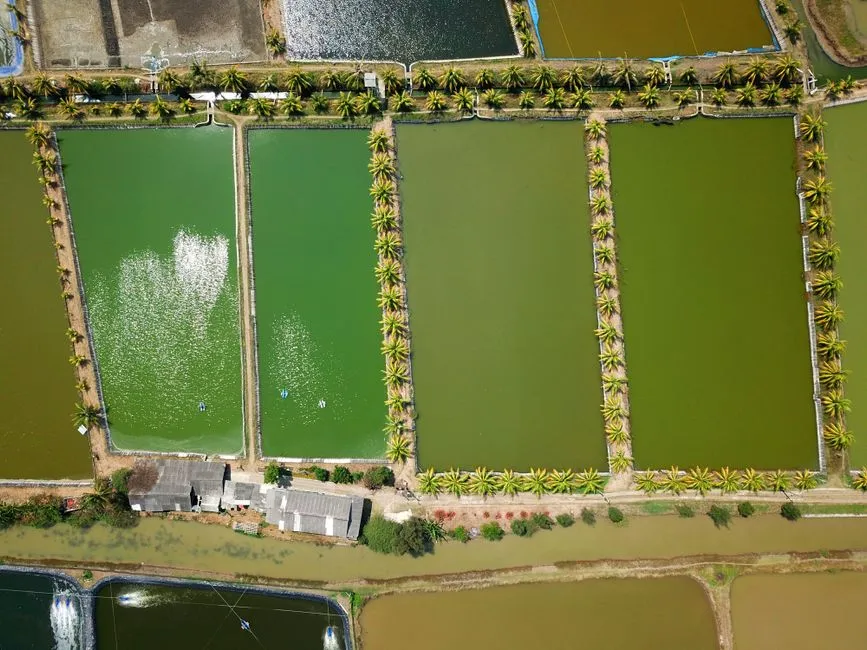
The unit operations BHP uses across its three flagship assets follow a consistent five-stage train. The specific equipment changes by site, but the process flow does not — clarification, precipitation, filtration, RO, then brine management. Engineers designing a BHP-style plant should think of it as a single train with site-specific parameters, not five independent systems.
- Primary clarification. High-rate thickeners and lamella clarifiers remove suspended solids, tailings fines, and oil/gream at surface-loading rates of 20–40 m/h for lamella units and 1–3 m/h for conventional thickeners. Polymer dosing (typically 0.5–5 g/m³ of feed) is used to build floc. A high-rate lamella clarifier for primary clarification operating at the upper end of that range (30–40 m/h) is a comparable industrial reference for the same duty at copper and gold operations.
- Lime softening / sulfate precipitation. Lime (Ca(OH)₂), caustic (NaOH), or barium chloride is dosed to precipitate calcium sulfate (gypsum), heavy metals, and hardness. Sulfate reduction from >2,500 mg/L to <250 mg/L is achievable with stoichiometric lime dosing plus a clarifier. pH control is critical — most mine water trains target pH 9.5–10.5 for the precipitation step, then re-carbonate to pH 7–8 before RO. PLC-controlled chemical dosing for lime and coagulant injection with redundant pumps is the standard configuration.
- Multimedia filtration. Sand and anthracite filters (or multimedia with garnet) reduce SDI to <3, the typical RO feed limit. Filtration rates run 5–15 m/h with backwash cycles of 12–24 hours, triggered by differential pressure rather than timer. Multi-media filtration as RO pretreatment is the standard reference unit, sized to deliver SDI <3 at 10 m/h.
- Reverse osmosis. BWRO at Olympic Dam (recovery 40–60%), SWRO at Escondida (recovery 35–45%). Two-pass RO is used where permeate TDS must drop below 50 mg/L for boiler feed or process reuse. Concentrate (brine) flow is 40–65% of feed — this is the stream that drives the rest of the train.
- Brine management. Three options depending on climate, geology, and economics: solar evaporation ponds (Atacama), deep-well injection (where permitted hydrogeology exists), or return to TSF (cycled back into the tailings circuit). At Olympic Dam, controlled discharge to the local salt pan system has been the historical pathway, subject to SA EPA licence conditions under the ANZG 2018 framework.
For camp and office sewage at remote sites, BHP uses packaged biological plants — typically MBR or SBR units buried or skid-mounted. A comparable buried unit is the WSZ underground package plant sized for 1–80 m³/h, which handles blackwater and greywater with effluent suitable for reuse in dust suppression or irrigation.
| Stage | Unit Operation | Typical Parameter | Site-Specific Driver |
|---|---|---|---|
| 1 | High-rate thickener / lamella | 20–40 m/h (lamella) | Tailings fines, TSS 500–3,000 mg/L |
| 2 | Lime / caustic precipitation | pH 9.5–10.5; SO₄²⁻ <250 mg/L | Olympic Dam sulfate, Escondida hardness |
| 3 | Multimedia filtration | SDI <3 at 10 m/h | RO membrane protection |
| 4 | RO (BWRO / SWRO) | Recovery 35–60% | Brine 40–65% of feed |
| 5 | Evaporation / DWI / TSF return | Site-specific | Climate, geology, regulation |
Site-by-Site Comparison: Olympic Dam vs. Escondida vs. Newman
The table below is the one a bid manager should screenshot into a design review. Source water, key process units, reuse percentage, discharge pathway, and the primary compliance instrument are all there — and they are the five variables that determine whether a BHP-style plant is even buildable in your jurisdiction.
| Parameter | Escondida (Chile) | Olympic Dam (SA) | Newman / Jimblebar (WA) |
|---|---|---|---|
| Source water | Pacific seawater (~35,000 mg/L TDS) | Brackish groundwater (8,000–18,000 mg/L TDS) | Pit dewater + TSF return (1,500–5,000 mg/L TDS) |
| Key process units | SWRO, lime softening, evaporation ponds | BWRO, lime/sulfate precipitation, controlled discharge | High-rate thickener, multimedia, partial RO |
| Reuse % | >75% (desal-supplied) | ~60–70% (TSF return, RO permeate) | ~80–85% (TSF cycled, dust suppression) |
| Discharge pathway | Solar evaporation ponds, controlled brine to TSF | SA EPA-licensed discharge / TSF return | TSF return, dust suppression, minor RO concentrate |
| Primary compliance | DS90/2000 + RCA conditions | ANZG 2018 + SA EPA licence | ANZG 2018 + RIWI Act / DWER licence |
| Approx. feed flow | ≈3,500 L/s (desal corridor) | ~150–200 L/s (process water) | ~300–500 L/s (Pilbara operations) |
Escondida's reuse exceeds 75% because the mine demand is met primarily by desalinated water — the "freshwater" baseline is seawater to begin with, so every cubic metre of brine sent to evaporation is a cubic metre already counted as reused. Olympic Dam is held to ANZG (2018) freshwater quality guidelines for any discharge, which is why sulfate removal is mandatory — direct discharge of brackish brine at >10,000 mg/L TDS would breach the guidelines' ecosystem protection triggers. Newman is the most cycled of the three, with TSF return water dominating the intake and RO used only where the salinity spike forces it.
The CSR framework that drives BHP's water stewardship is the same one documented by Cook et al. (2015, Resources/MDPI) as the international guidance that pushed Central Appalachian coal mines to upgrade wastewater treatment. BHP's Water Stewardship Standard is the asset-level implementation of that guidance, and it is why a BHP-style plant in 2026 looks like a five-stage train rather than a single clarifier and a discharge pipe. For engineers sizing a similar plant for copper concentrate, the ZLD sizing for copper concentrator water walkthrough covers the same concentrate-management decision tree.
2026 Compliance Snapshot: ANZG, Chile DS90, ICMM Water Reporting

Three regulatory stacks drive BHP's 2026 process choices, and each one is responsible for a specific unit operation being mandatory rather than optional.
Australia (ANZG 2018): The Australian and New Zealand Guidelines for Fresh and Marine Water Quality establish default trigger values for TDS, sulfate, chloride, copper, uranium, and other mine-relevant analytes. Olympic Dam and Newman must meet these at any discharge point, which is why sulfate removal is sized to <250 mg/L and RO permeate TDS is held to <500 mg/L before reuse or release. The ANZG framework is implemented state-by-state — SA EPA at Olympic Dam, WA DWER at Newman — but the underlying guideline values are national.
Chile (DS90/2000 + RCA): Decreto Supremo 90 sets mining-sector discharge limits for TDS, sulfate, chloride, and metals, but each major operation is also subject to site-specific conditions in its Resolución de Calificación Ambiental (RCA). Escondida's RCA caps the desalination corridor's concentrate disposal volume and defines the evaporation pond monitoring program. The 2026 update to Chile's MMA disclosure requirements has tightened site-level water balance reporting, putting pressure on operators to demonstrate reuse intensity per tonne of ore.
International (ICMM + UN CEO Water Mandate): ICMM's Water Reporting Guidance and the UN CEO Water Mandate set the disclosure framework BHP uses in its annual Sustainability Report. Third-party assurance under ISAE 3000 is mandatory for site-level water balance and reuse percentage. The same CSR/compliance chain is documented in Cook et al. (2015, Resources/MDPI, https://doi.org/10.3390/resources4020185) — international guidance pushing operators to upgrade wastewater systems in response to community and regulatory pressure. BHP's policy stack is the global-mining version of that mechanism.
Compliance pressure is not abstract: high TDS in the Atacama is exactly why Escondida desalts rather than direct-discharges into the desert aquifer, and the sulfate load at Olympic Dam is exactly why brine is treated rather than released to the local salt pan system. Each unit operation exists because a regulation requires it.
Designing a BHP-Style Wastewater Plant: What an Engineer Should Specify
Translating the BHP benchmark into a procurement spec comes down to six decisions. The first decision dictates everything downstream, so get it right before you size a single tank.
- Source-water characterisation first. TDS, sulfate, hardness, suspended solids, and FOG (fats, oils, grease) must be measured across at least four seasons before any equipment is selected. A feed with TDS >10,000 mg/L needs a precipitation step; a feed with TDS >30,000 mg/L needs SWRO; a feed with TSS >500 mg/L needs a lamella or DAF ahead of any media filter.
- For high-TDS feeds, default to RO. BWRO and SWRO configurations with 60–95% recovery targets are the workhorses for mine water. Industrial reverse osmosis systems with up to 95% recovery are the analog reference for what to specify — two-pass where permeate TDS must drop below 50 mg/L.
- Brine management: ZLD vs. evaporation vs. TSF return. The decision is driven by climate (evaporation pond viability), hydrogeology (deep-well injection feasibility), and capex appetite. Where water is scarce and the concentrate has reuse value (e.g., for dust suppression), ZLD crystallisation is justifiable; where climate and land allow, evaporation ponds are still the lowest-cost option. The Zero Liquid Discharge engineering specs and ROI article walks through the capex/opex tradeoff.
- Embed online monitoring for compliance automation. Total nitrogen, conductivity, pH, and sulfate should all be on continuous analyzers with data logging tied to the SCADA system. Online water quality monitoring sensors are the reference specification for what to install — they pay for themselves in reduced manual sampling and faster incident response.
- Camp/office sewage at remote sites. Use packaged biological plants — MBR for higher effluent quality, WSZ for buried installations with lower flow. The integrated MBR wastewater treatment system for 10–2,000 m³/day is the analog for camp-sized duties.
- Chemical dosing must be PLC-controlled with redundancy. Lime, caustic, polymer, and antiscalant pumps should be on duty/standby pairs with flow-paced control tied to feedwater flow. The PLC-controlled chemical dosing skid is the standard reference configuration.
The Cook et al. (2015) framework underlines a final point: in mining, wastewater treatment is no longer a compliance burden to be minimised. It is the visible evidence that a CSR commitment has been operationalised. BHP's process train is the equipment-level translation of that commitment, and any engineer designing a BHP-style plant in 2026 is being asked to do the same.
Frequently Asked Questions
What percentage of its water does BHP reuse across its mine operations?
Approximately 75% of operational water demand is met by reused and recycled water across BHP's portfolio, with the remainder drawn from seawater (Escondida, Western Australia Iron Ore) and brackish groundwater (Olympic Dam). BHP discloses site-level reuse intensity per tonne of ore processed in its annual Sustainability Report, third-party assured under ICMM guidance.
Why does Escondida use seawater desalination instead of continental groundwater?
Escondida sits in the Atacama Desert, where continental aquifers are over-allocated and ecologically sensitive. The dedicated seawater desalination corridor (≈3,500 L/s across two phases) eliminates the need for aquifer draw, anchors the mine to a long-term water supply independent of drought cycles, and aligns with Chile's DS90/2000 and RCA requirements on concentrate disposal. More detail on concentrate management is covered in the ZLD sizing for copper concentrator water guide.
How does BHP treat sulfate-laden brine at Olympic Dam?
Olympic Dam's process train uses lime and caustic precipitation ahead of BWRO to reduce sulfate from >2,500 mg/L to <250 mg/L, then discharges under SA EPA licence conditions aligned with the ANZG (2018) freshwater quality guidelines. TSF return is used for cyclone water and dust suppression where the salinity and sulfate are within reuse limits. The CSR-driven compliance chain behind this treatment stack is documented in Cook, Sarver & Krometis (2015, Resources/MDPI).
What regulatory framework drives BHP's water reuse targets?
Three layers: ANZG 2018 in Australia, DS90/2000 plus site-specific RCA conditions in Chile, and the ICMM Water Reporting Guidance plus UN CEO Water Mandate at the international level. Each layer requires BHP to disclose site-level water balance, reuse intensity, and TSF return flows, with third-party assurance under ISAE 3000.