Why Copper Concentrator Water Breaks Generic ZLD Flowsheets
Sizing a Zero Liquid Discharge (ZLD) system for copper concentrator water in 2026 follows a six-stage framework: (1) characterize the stream for sulfate, hardness, and residual flotation reagents; (2) reduce volume via thickener overflow recovery; (3) precipitate dissolved Cu, Fe, As, and Mn; (4) concentrate with industrial reverse osmosis at up to 95% recovery; (5) crystallize the final 5–10% brine via MVR; (6) dewater and landfill or sell the salt. Each stage must be sized against the upstream mass balance, not generic ZLD benchmarks. Copper concentrator water is not interchangeable with refinery brine or general industrial RO concentrate — the source streams (thickener overflow, tailings reclaim water, process water blowdown, filter-press filtrate) carry sulfate at 1,000–15,000 mg/L, total hardness of 400–3,000 mg/L as CaCO₃, and residual xanthate, frother, and MIBC that no off-the-shelf membrane train was designed to handle.
The MDPI 2025 review on membrane technologies for ZLD and MLD (published 2025-02-19) frames ZLD as a harmonized train of membrane and thermal stages, but that paper does not address mining-specific sulfate loads above 8,000 mg/L, calcium sulfate supersaturation in the membrane stage, or silica/arsenic carryover that complicates crystallization. In practice, the chemical interference points are predictable: sulfate scaling above 8,000 mg/L forces antiscalant selection; residual xanthate and frother foul RO membranes within weeks if not stripped upstream; and As at 0.1–5 mg/L plates onto crystallizer surfaces. Regulatory pressure has also shifted — many 2026 mining jurisdictions (Chile's SMA, Peru's MINEM, Arizona DEQ, US EPA multi-sector permits) now restrict or eliminate new brine ponds, pushing ZLD from optional to mandated for any new concentrator water discharge.
Step 1 — Characterize the Concentrator Water Before Sizing Anything
Any flowsheet decision is only as good as the characterization data behind it. Copper concentrator reject streams show wide diurnal and seasonal variability — flotation shifts cause 2–3× swings in residual reagent concentration, and ore-grade changes shift sulfate and metal loads week-to-week. The minimum parameter checklist before sizing any equipment is shown below.
| Parameter | Typical range | Why it matters for sizing |
|---|---|---|
| pH | 7–10 | Drives hydroxide precipitation staging and RO antiscalant selection |
| TSS | 200–5,000 mg/L | Sets clarifier/DAF sizing and filter press capacity |
| Sulfate (SO₄²⁻) | 1,000–15,000 mg/L | Controls RO recovery ceiling and crystallizer salt mix |
| Chloride (Cl⁻) | 200–3,000 mg/L | Determines NaCl vs Na₂SO₄ split in fractional crystallization |
| Total hardness | 400–3,000 mg/L as CaCO₃ | Lime/soda softening dose and CaSO₄ scaling risk |
| Cu | 1–50 mg/L | Must be <0.1 mg/L entering RO to prevent irreversible fouling |
| Fe | 5–200 mg/L | Co-precipitates with As at pH 8.5–9; fouls membranes if missed |
| Mn | 0.5–20 mg/L | Slow-kinetics oxidation; needs pH 10+ for full removal |
| As | 0.1–5 mg/L | Co-precipitates with Fe; regulator-driven target often <0.1 mg/L |
| Residual xanthate | 0.5–10 mg/L | RO foulant; requires activated carbon or oxidation upstream |
| COD | 100–1,500 mg/L | Sets biological or oxidation pretreatment load |
The sampling protocol must capture reagent variability: a 24-hour composite plus three grab samples per shift, run for at least two weeks, is the minimum to bound the design. Equalization of 12–24 hours is non-negotiable — without it, the precipitation reactors and RO high-pressure pumps will be sized for the peak, not the average, and CAPEX jumps 20–30%.
Step 2 — Reduce Volume at the Source with Thickener and Reclaim Recovery
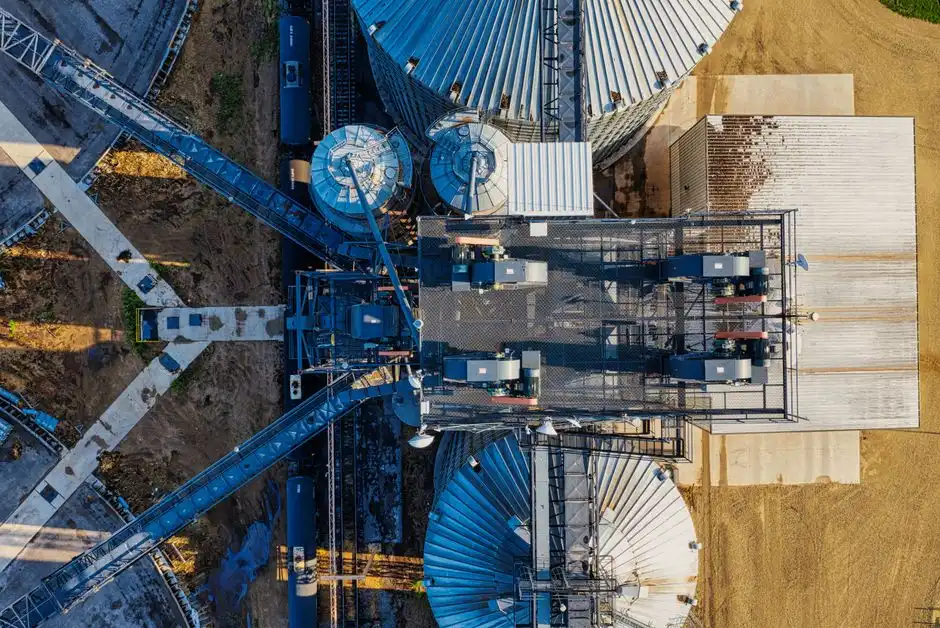
The cheapest cubic meter to treat is the one that never reaches the ZLD feed sump. Recycling thickener overflow and clarified filter-press filtrate directly back to the grinding circuit typically recovers 60–80% of the water volume before it ever enters the ZLD train — a flowsheet decision that can halve the size (and CAPEX) of everything downstream. A dissolved air flotation system ahead of the recycle sump strips emulsified frother and suspended fines that would otherwise accumulate in the mill water loop; a high-efficiency sedimentation tank operating at 20–40 m/h surface loading (HydropureWater sedimentation tank spec) reduces downstream chemical demand by up to 30% by capturing bulk TSS before equalization.
The trade-off is real: recycling concentrates reagents and salinity in the process loop. The flowsheet must include a calculated bleed rate that bounds TDS in the mill water circuit at a level the flotation circuit can tolerate (typically <5,000 mg/L TDS in the grinding water). That bleed becomes the ZLD feed — and its volume, not the raw concentrator water flow, is the number the rest of the system is sized against.
Step 3 — Precipitate Dissolved Metals Before the Membrane Train
Metal removal must precede the membrane train, because Cu, Fe, Mn, and As will foul RO membranes irreversibly if they reach the high-pressure elements. A 10 mg/L Cu leak can cut membrane life from a nominal 5 years to under 2 — a cost that dwarfs any savings from skipping the precipitation stage. The standard configuration is two-stage hydroxide precipitation: pH 8.5–9 with ferric chloride coagulant for Fe and As co-precipitation (As requires Fe:As mass ratio above 20:1 for reliable removal below 0.1 mg/L), followed by pH 10–11 with lime or NaOH for Cu and Mn. Each stage needs 30–45 minutes hydraulic retention in a stirred reactor with positive pH control.
For sites with tighter effluent targets or mercury in the ore body, sulfide precipitation with NaHS or FeS handles residual Cu and Hg to <0.1 mg/L — but it brings higher reagent cost, H₂S scrubber requirements on the reactor vent, and a more complex safety case. Sludge from both stages routes to a plate-and-frame filter press (1–500 m² filtration area per HydropureWater spec) with a dewatering target of 60–75% moisture for landfill disposal. The filter press is typically the same unit that later dewaters the crystallizer salt — see Step 6.
Step 4 — Concentrate the Brine with Industrial Reverse Osmosis
Two-pass RO is the standard for high-sulfate mining brine. The first pass runs at 75–80% recovery with brackish-water elements; the second pass uses seawater or high-rejection elements to push total system recovery to 90–95%. Per the industrial RO system spec, 95% recovery is mechanically achievable — but sulfate scaling forces antiscalant dosing and limits practical recovery to about 92% on most copper streams, because the concentrate approaches CaSO₄ saturation above 8,000–10,000 mg/L SO₄²⁻ at typical pH. An automatic chemical dosing system tied to the RO skid PLC keeps antiscalant and pH control within ±2% of setpoint without dedicated operator attention.
RO concentrate TDS typically lands between 30,000 and 80,000 mg/L — well below the 200,000+ mg/L saturation point that thermal crystallizers need for efficient salt production. The gap between 80,000 and 200,000 mg/L is the interface the crystallizer must close, and it is the single largest driver of thermal CAPEX. Reducing it by even 5% at the RO stage measurably shrinks the MVR.
Step 5 — Crystallize the Final 5–10% Brine with MVR or Multi-Effect Evaporation
Mechanical vapor recompression (MVR) is the 2026 default for new copper ZLD designs because of its 2–4× energy advantage over multi-effect evaporation (MEE). MVR crystallizers run at 15–30 kWh per m³ of distillate; MEE falls back at 50–80 kWh/m³ with lower CAPEX but higher steam demand, which only makes sense at sites with cheap waste heat below roughly $0.02/kWh thermal equivalent. The crystallizer feed is the 5–10% RO blowdown, and it produces a mixed salt at 200,000–250,000 mg/L TDS — typically a blend of Na₂SO₄ (thenardite), NaCl (halite), and CaSO₄.
| Technology | Energy use | CAPEX vs MVR | Best fit |
|---|---|---|---|
| MVR crystallizer | 15–30 kWh/m³ | Baseline | Default for new 2026 copper ZLD; sites with electricity below ~$0.05/kWh |
| MEE + forced circulation | 50–80 kWh/m³ (thermal equiv.) | −20% to −35% | Sites with cheap waste heat; smaller throughputs |
| Fractional crystallization | Adds 10–20 kWh/m³ over baseline MVR | +15% to +25% | High-sulfate streams where Na₂SO₄ byproduct offsets OPEX 10–25% |
Salt purity determines disposal economics. In high-sulfate streams, fractional crystallization can split Na₂SO₄ from NaCl — that adds CAPEX but creates a sellable byproduct (industrial-grade Na₂SO₄ trades at $80–$150/tonne in 2026) that offsets 10–25% of ZLD OPEX. If the salt mix is contaminated with heavy metals or reagent residues, it routes to a secure landfill at $30–$80/tonne disposal cost.
Step 6 — Handle Solids and Confirm Zero Liquid Discharge
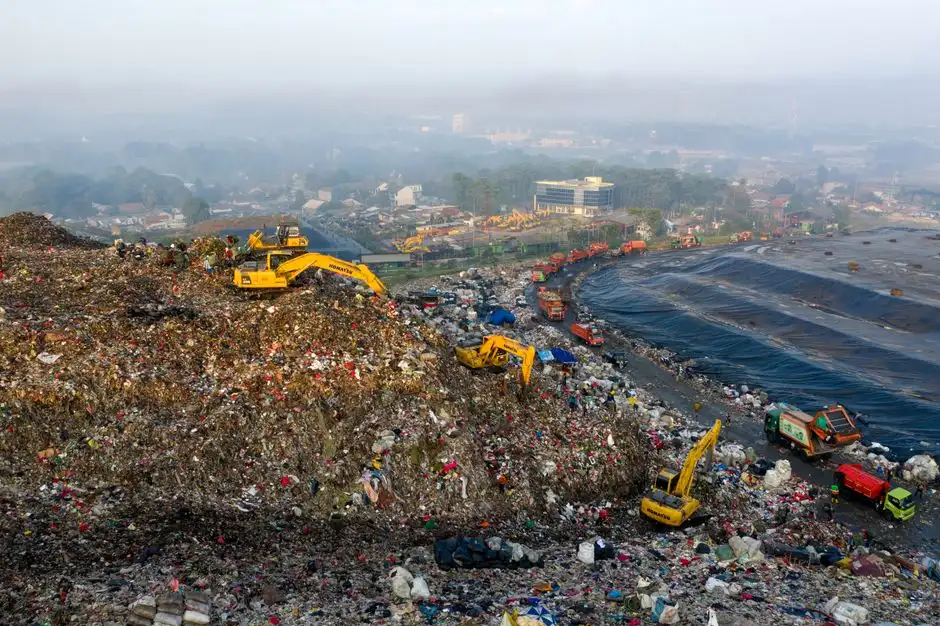
The crystallizer underflow reports to a centrifuge or — more commonly on copper sites — the same plate-and-frame filter press used for metal sludge in Step 3, configured with separate plate sets so the salt cake and the metal hydroxide cake do not cross-contaminate. Dewatered salt at 60–75% moisture goes to landfill or byproduct sale. MVR distillate is typically below 10 mg/L TDS and is recycled to the mill, but trace organics (frother carryover, residual xanthate breakdown products) usually require a polishing activated carbon filter or air stripper before the water is acceptable for grinding-circuit reuse.
| Stage | Volume (relative) | TDS / solids | Output |
|---|---|---|---|
| Raw concentrator water | 100% (baseline) | 2,000–8,000 mg/L | Feed to equalization |
| After thickener reclaim recycle | 20–40% | 5,000–15,000 mg/L | ZLD feed sump |
| RO permeate | 90–95% of ZLD feed | <200 mg/L | Recycle to mill |
| RO concentrate → MVR | 5–10% of ZLD feed | 30,000–80,000 mg/L | Crystallizer feed |
| MVR distillate | ~95% of crystallizer feed | <10 mg/L | Recycle to mill (after carbon polish) |
| Salt cake | 0.5–1.5% of crystallizer feed | Solids at 60–75% moisture | Landfill or byproduct sale |
| Surface discharge | 0 | — | Zero Liquid Discharge confirmed |
The PLC-controlled automatic chemical dosing system from Step 4 carries forward to keep the RO stage stable without dedicated operators, and the same control platform typically monitors pH, conductivity, and flow on the MVR — reducing ZLD staffing to roughly 0.5–1.0 FTE per shift on a 50 m³/h train.
When ZLD Is the Wrong Answer for Copper Concentrator Water
ZLD is not always the right answer, and a defensible engineering position requires saying so. A 50 m³/h copper ZLD train in 2026 runs $15M–$40M USD depending on salt-separation and crystallizer selection (order-of-magnitude anchored in the MDPI 2025 review's energy/economics context). OPEX lands at $3–$8 per m³ treated, dominated by MVR electricity and antiscalant — at low copper prices below roughly $3.50/lb on the LME, deep-well injection or a lined Class II brine pond can be the economically rational choice.
Choose ZLD when (a) brine ponds are banned or capped by the 2026 regulatory environment in your jurisdiction, (b) water scarcity in the operating region forces >90% recovery for the mine to maintain throughput, or (c) the site has cheap electricity below ~$0.05/kWh that makes MVR competitive. The hybrid alternative — MLD (minimal liquid discharge) at 95–98% recovery with a small lined brine pond for the residual 2–5% — is often the cost-optimum, sitting between conventional treatment and full ZLD. For projects evaluating whether ZLD is justified, the pre-feasibility study should compare all three side by side on $/m³ treated, $/tonne copper produced, and regulatory risk over a 20-year horizon.
Frequently Asked Questions
What is the typical OPEX for a copper concentrator ZLD system in 2026?
OPEX runs $3–$8 per m³ treated for a 50 m³/h train, dominated by MVR electricity at 15–30 kWh/m³ and antiscalant dosing. At electricity prices above $0.07/kWh, OPEX can climb past $10/m³ and ZLD stops being competitive with controlled brine disposal.
What RO recovery rate should I target for high-sulfate copper concentrator water?
Target 90–92% total recovery across a two-pass RO train, not the 95% mechanical maximum. Sulfate above 8,000 mg/L forces CaSO₄ scaling, and pushing past 92% recovery on most copper streams requires antiscalant doses that erode the operating-cost advantage of higher recovery.
How is the metal-rich sludge from precipitation handled in a ZLD flowsheet?
Sludge from the two-stage hydroxide precipitation (Fe/As at pH 8.5–9, then Cu/Mn at pH 10–11) is dewatered to 60–75% moisture in a plate-and-frame filter press and routed to a secure landfill. The same filter press, configured with separate plate sets, handles the crystallizer salt cake.
When is MLD a better choice than full ZLD for copper concentrator water?
MLD at 95–98% recovery with a small lined brine pond for the residual 2–5% is usually the cost-optimum when brine ponds are still permitted and water scarcity does not force >90% recovery. MLD avoids the MVR crystallizer entirely, cutting CAPEX 40–60% versus full ZLD.
How much electricity does an MVR crystallizer use on mining brine?
MVR crystallizers on copper concentrator brine use 15–30 kWh per m³ of distillate produced — roughly 2–4× less energy than multi-effect evaporation. This is why MVR is the 2026 default for new copper ZLD designs, particularly at sites with electricity below $0.05/kWh.