Why Liberal-Area Refineries Cannot Treat Pretreatment as an Internal Target
Petroleum plants near Liberal, Kansas meet pretreatment limits by running a 5-stage train — API/CPI oil removal, DAF flotation, equalization with pH trim, biological polishing (MBBR or MBR), and multimedia filtration with online oil-in-water monitoring — sized to clear the stricter of 40 CFR Part 419 categorical standards or the City of Liberal POTW's local SIU limits, which typically sit at 50–100 mg/L oil & grease, 1–10 mg/L sulfides, and 0.5–5 mg/L phenols.
Under 40 CFR Part 403.5(a), the general prohibition applies whether or not the POTW has an approved pretreatment program and whether or not the IU has been issued a control mechanism — there is no "silent" exemption just because the local control authority has not yet issued a permit (40 CFR 403.5(a), per EPA). The legal pivot is the receiving plant's effluent quality and biosolids, not what the refinery thinks it is sending down the sewer.
Pass-through is defined in 40 CFR Part 403.3(p) as a discharge that exits the POTW into waters of the U.S. and, alone or with other sources, is a cause of a violation of the POTW's NPDES permit — including an increase in the magnitude or duration of any existing violation. Interference under 40 CFR Part 403.3(k) is a discharge that inhibits or disrupts the POTW, its treatment processes, or its sludge use/disposal and is thereby a cause of an NPDES permit or CWA §405/RCRA violation.
Localize the consequence: the City of Liberal POTW's NPDES permit and biosolids program are the legal pivot, so a slug that knocks a municipal biobasin off-line is a 403.3(k) event even before the lab result comes back. The 24-hour reporting clock starts at the slug, not at the DMR. Beyond compliance, ACS ES&T Engineering's 2021 review of industrial water treatment notes that U.S. refiners are now expected to maximize reuse, not just meet the sewer limit — a pressure that is reshaping how Liberal-area plants think about the front of the train (source: ACS ES&T Engineering, 2021).
The Two-Layer Pretreatment Limit Stack That Binds a Liberal Refinery
Layer 1 of the stack is the categorical standard: 40 CFR Parts 405–471, with the petroleum refining category at 40 CFR Part 419 setting technology-based effluent limits for refinery process wastewater streams. These are national numbers derived from what EPA determined is the best-available technology economically achievable for the category.
Layer 2 is the local limit: numerical ceilings derived by the POTW from its own NPDES permit and biosolids program. Local limits are routinely more stringent than the federal categorical numbers because the control authority must protect its receiving water and its sludge end-uses (per EPA pretreatment program guidance, 2025). For Liberal-area plants this typically means oil & grease 50–100 mg/L, sulfides 1–10 mg/L, and phenols 0.5–5 mg/L, with metals and BTEX pulled in as quarterly monitoring parameters under the SIU permit.
The compliance rule is straightforward but easy to get wrong: the refinery clears whichever bar is lower, and the local SIU permit is the controlling document for day-to-day operating decisions. A 200 mg/L O&G number is meaningless if the SIU permit says 75 mg/L. Practical implication: a Liberal-area refinery designing a new DAF or MBR polish should request the latest SIU permit local-limit schedule from the City of Liberal before finalizing the design basis, not after the equipment has been ordered. For a broader pretreatment playbook applicable to chemical plants, the chemical-plant pretreatment compliance guide covers similar logic in a Gulf Coast context.
What a Liberal-Area Refinery Actually Discharges to Sewer
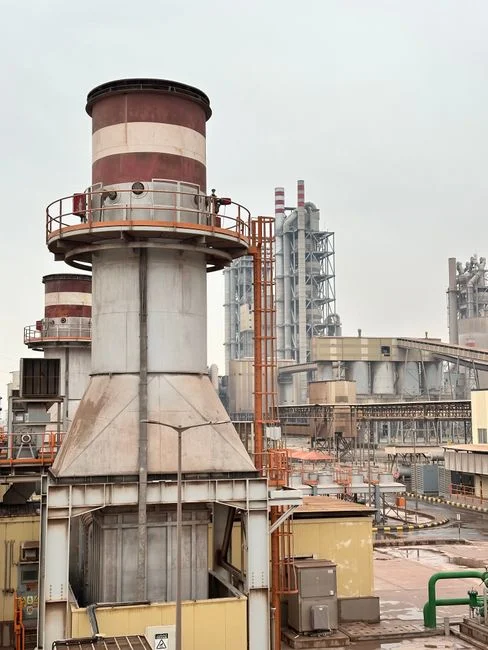
Refinery process wastewater is a blend of desalter brine, spent caustic, sour-water stripper bottoms, tank draw, loading-rack and ballast water, and oily utility water. Each stream contributes a different pollutant signature: desalters carry emulsified oil, salts, and trace metals; spent caustic carries sulfides and phenols at high pH; sour water carries dissolved H₂S and ammonia; tank draw contributes free oil and bottom sludge.
Liberal-area operations sit on the edge of the Hugoton basin and often co-process sour gas and gas-plant condensates, which biases the spent-caustic and sour-water load toward higher sulfides and ammonia than a coastal refinery would see. A spent-caustic slug at this facility is not the same pollutant profile as one at a Gulf Coast plant, and the EQ basin HRT and the biotreater's mixed-liquor temperature setpoint both have to reflect that.
The pollutant mix the POTW actually sees is set by how streams are sewered — segregated, combined, or batched — and by slug-prevention discipline at the unit. Cold winter ambient conditions at this latitude depress DAF hydraulics and slow biological kinetics, and should be reflected in the EQ basin design (8–24 hours of HRT) and the biotreater's mixed-liquor temperature setpoint. A DAF sized for August performance will underperform in February unless the air-to-solids ratio is re-tuned for the higher viscosity and the saturator water is kept above 10 °C.
The 5-Stage Pretreatment Train Liberal Refineries Run to the Sewer
The five-stage train is the engineering side of the contract. Each stage either strips a pass-through risk (oil, TSS, BTEX, ammonia) or an interference risk (sulfides, phenols, pH swings, slug flows) defined in 40 CFR Part 403, and the order is not negotiable — put biology before oil removal and the membranes foul in a week.
Stage 1 — API separator or corrugated-plate interceptor (CPI). Free oil is removed by gravity because it is the cheapest and most forgiving operation, and because everything downstream suffers if free oil is not taken out first. A well-operated API separator typically leaves 100–200 mg/L oil & grease in the water phase; a CPI hits a similar band in a much smaller footprint (HydropureWater field data, 2026). This stage sets the floor for emulsified-oil load on Stage 2.
Stage 2 — Dissolved air flotation (DAF) or induced gas flotation (IGF). Micro-bubble flotation strips the emulsified oil, FOG, and colloidal TSS that the API unit cannot catch, and brings oil & grease down to roughly 15–30 mg/L. Operating bands: air-to-solids 0.02–0.06, HRT 15–30 min, saturator recycle 20–50% of forward flow; capacity 4–300 m³/h on a refinery-scale refinery-grade DAF unit. The outlet of this stage has to clear the 50–100 mg/L POTW oil & grease ceiling on its own, with margin, before any biological polishing is asked to clean up oil. For basis-of-design context, the DAF vs API separator cost comparison and the DAF vs IAF flotation comparison are useful references.
Stage 3 — equalization and neutralization. Flow and pH swings from spent-caustic pushes, desalter upsets, and tank transitions are smoothed in an EQ basin sized for 8–24 hours of hydraulic retention, and pH is adjusted to 6–9 before the biological stage. This is the single most important control point for preventing interference events at the POTW; a slug of high-pH, high-sulfide spent caustic is the textbook case of a discharge that would inhibit the POTW's biomass and trigger a violation downstream.
Stage 4 — biological polishing. An MBBR or MBR reduces phenols, sulfides, benzene, and ammonia-nitrogen. MBBRs tolerate the 200–800 mg/L COD that survives the front of the train. MBRs add a 0.1 μm flat-sheet PVDF membrane barrier that holds MLSS at 8,000–12,000 mg/L and produces <5 mg/L TSS and <1 NTU turbidity in roughly 60% of the CAS footprint — which is why MBR is the default for space-constrained refinery retrofits. A refinery MBR package in this duty typically integrates the aeration basin, the membrane cassette, and the backflush/CIP systems into a single skid.
Stage 5 — polishing and monitoring. A multimedia filter catches any TSS breakthrough, an online fluorescence-based oil-in-water analyzer alarms on a 10–20 mg/L setpoint, and pH/conductivity probes feed the control room with an interlock to a sewer shutoff valve on high-pH or high-sulfide excursions. For the final barrier before the sewer, a PVDF flat-sheet MBR module is increasingly used as a containment step rather than a free-standing removal claim.
Refinery Pollutant Map: From Process Sewer to Sewer Manhole
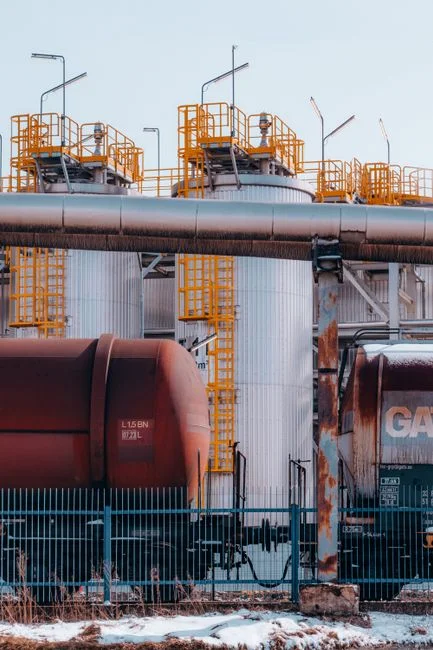
The table below maps the refinery-side pollutant to a typical inlet range, a typical Liberal-area POTW local limit, the stage that does the primary removal, and the polishing step that protects the permit. Numbers describe engineering bands seen in practice; the specific number in your permit is set by the local control authority and may be more stringent than 40 CFR Part 403 alone (per EPA, 2025).
| Pollutant | Typical refinery influent to pretreatment | Typical Liberal-area POTW local limit | Primary removal stage | Polishing / compliance step |
|---|---|---|---|---|
| Oil & grease | Several hundred mg/L | 50–100 mg/L | API/CPI then DAF | Online oil-in-water analyzer at 10–20 mg/L setpoint |
| Sulfides (dissolved and total) | Tens of mg/L on spent-caustic slugs | 1–10 mg/L | EQ + biological sulfide oxidation | MBBR/MBR with online S²⁻ probe |
| Phenols | Several mg/L | 0.5–5 mg/L | Biological oxidation | Activated carbon or advanced oxidation if required |
| BTEX (benzene, toluene, ethylbenzene, xylene) | 0.1–1 mg/L (GC/MS quarterly) | SIU permit schedule | Air stripping / biological oxidation | GAC polishing; quarterly compliance sampling |
| Ammonia-nitrogen | Tens of mg/L | SIU permit schedule | Biological nitrification | MBR flat-sheet modules with online NH₃ probe |
| pH | Operating window 6–9 | 6–9 (standard) | EQ with online trim | Online pH trim interlocked to sewer shutoff |
| Hexavalent chromium | From cooling-tower blowdown and historical contamination | SIU permit metals schedule | Reduction to Cr(III) + precipitation | Sand/multimedia filter; quarterly metals sampling |
| COD | 200–800 mg/L surviving the front of the train | SIU permit cap (where applicable) | Biological oxidation | Multimedia filter; online COD analyzer if required |
Slugs, Spills, and the 24-Hour Clock: Slug-Control Logic for a Liberal Refinery
EPA enforcement actions under 40 CFR Part 403.8(b)(4) and SIU permit language repeatedly target the slug-control plan; the plan must be written, current, and trained out, covering loading racks, tank transitions, and batch discharges. Define what counts as a slug: any discharge that could cause interference at the POTW, plus any loss of normal containment — a spent-caustic overflow, a desalter upset, a tank-bottom-water release.
As a rule of thumb, any discharge that could cause interference must be reported within 24 hours, and the follow-up written report must describe the cause, corrective action, and revised prevention measures (per EPA 40 CFR Part 403.8(b)(4), 2025 enforcement summary). Slug plans that exist on paper but were not followed are the most common root cause in consent decrees; the operator-training record is the artifact that separates a defensible plan from a paper plan.
| Trigger | Sensor | Action | Notification window |
|---|---|---|---|
| pH excursion outside 6–9 | Online pH probe on combined sewer | Close sewer shutoff valve; divert to EQ; alarm to control room | Within 24 hours to POTW; state hazardous-waste authority as required |
| S²⁻ excursion above setpoint | Online sulfide probe (ion-selective or amperometric) | Close sewer shutoff; route to sulfide-oxidation basin or EQ | Within 24 hours to POTW |
| Oil-in-water alarm above 20 mg/L | Fluorescence OIW analyzer on final effluent | Close sewer shutoff; recycle to DAF influent; alarm to control room | Within 24 hours to POTW if discharge occurred |
| Flow spike above EQ capacity | Magnetic flow meter on combined sewer | Divert excess to surge tank; throttle upstream sources; alarm to control room | Within 24 hours if interference likely |
| Loss of containment (tank, loading rack, desalter) | Level switches, sight glasses, operator rounds | Stop source; contain with spill equipment; notify EHS | Within 24 hours; state hazardous-waste authority per RCRA |
From Equipment to Permit: The 5 Documentation Steps That Win an Audit
The treatment train is the engineering side; the documentation side is where most EPA and state enforcement actions actually land. A refinery's pass-through/interference defense runs through five repeatable steps.
Step 1 — Get classified as a Significant Industrial User (SIU) and obtain a control mechanism from the POTW control authority. The SIU trigger is ≥25,000 gpd of process wastewater (excluding sanitary, contact cooling, and boiler blowdown), or designation on the basis of reasonable potential to adversely affect the collection system or POTW (per 40 CFR Part 403.3, Madison County definitions file, 2025). The control mechanism lists the local numerical limits, the monitoring schedule, and the reporting cadence that the refinery will be judged against.
Step 2 — Self-monitoring. Most POTWs require 24-hour flow-weighted composite sampling on a defined cadence — typically monthly for oil & grease, TSS, sulfides, phenols, and ammonia, and quarterly for metals, BTEX, and hexavalent chromium. Results are reported on a DMR or its local equivalent, and exceedances trigger accelerated monitoring.
Step 3 — Slug-control plan (covered in the section above; cross-reference here).
Step 4 — Accidental-discharge reporting. When a slug escapes, the refinery must notify the POTW and the relevant hazardous-waste authorities within the EPA-prescribed window and follow up with a written report describing the cause, the corrective action, and the revised prevention measures.
Step 5 — Maintain auditable records of BMPs, chemical inventory (the SIU permit lists restricted chemicals), and operator training. Keep chain of custody for every composite sample, calibration logs for the online analyzers, and training records for the operators who run the DAF, EQ basin, and biotreater. The paper trail is what turns a "no pass-through" claim into a defensible one. For flotation selection logic that pairs with this documentation chain, the DAF vs IAF flotation comparison walks through the audit-relevant trade-offs.
Frequently Asked Questions
What federal rules govern refinery discharges to a POTW like Liberal's?
Refinery discharges to a POTW are governed by 40 CFR Part 403, with the petroleum refining category at 40 CFR Part 419 setting the technology-based categorical standards and 40 CFR Part 403.5(a) imposing the general pass-through and interference prohibition that applies whether or not a local control mechanism has been issued (per EPA, 2025).
What counts as pass-through or interference under 40 CFR Part 403?
Pass-through (40 CFR Part 403.3(p)) is a discharge that exits the POTW into waters of the U.S. and causes, alone or with other sources, a violation of the POTW's NPDES permit. Interference (40 CFR Part 403.3(k)) is a discharge that inhibits or disrupts the POTW, its treatment processes, or its sludge use/disposal and therefore causes an NPDES or RCRA violation. A slug that knocks a municipal biobasin off-line triggers 403.3(k) even if the refinery's own internal numbers look clean.
What are typical POTW local limits for oil & grease, sulfides, and phenols near Liberal?
Typical Liberal-area POTW local-limit bands sit at 50–100 mg/L for oil & grease, 1–10 mg/L for sulfides, and 0.5–5 mg/L for phenols, with metals and BTEX often pulled in as quarterly monitoring parameters (per EPA pretreatment program guidance, 2025). The specific number in a given permit is set by the local control authority and can be more stringent than the federal categorical standard.
How fast does a refinery have to report a slug to the POTW?
As a rule of thumb, any discharge that could cause interference must be reported within 24 hours, and the follow-up written report must describe the cause, the corrective action, and the revised prevention measures (per EPA 40 CFR Part 403.8(b)(4), 2025 enforcement summary). The 24-hour clock starts at the slug, not at the DMR.
What is the role of MBR flat-sheet modules in refinery pretreatment?
For tight-footprint refinery retrofits, the MBR flat-sheet module (0.1 μm PVDF) is increasingly used as the final barrier before the sewer rather than as a sole biological stage. The role is containment of biomass and solids — typically holding MLSS at 8,000–12,000 mg/L and producing <5 mg/L TSS and <1 NTU turbidity — not a free-standing removal claim (HydropureWater field data, 2026).