Karachi Project Context: Why Containerized MBR Fits
Karachi's housing and labor-camp developments sit on a triple constraint: a documented water shortfall, active NEQS enforcement under PEPA 1997, and limited site space. The IDA Water Security Handbook frames reuse as the primary hedge against urban water scarcity, and the S5 (V Aqua) society-STP dataset reports that treated-sewage reuse for flushing, gardening, and housekeeping cuts freshwater demand by 30–50% in residential complexes — a figure that translates directly to Karachi housing societies and DHA camp projects facing recurring tanker costs.
Regulatory exposure is real. Sindh EPA administers the Pakistan Environment Protection Act 1997 and the National Environmental Quality Standards (NEQS) 2000, and enforcement actions against untreated discharge are routine across South Asia; the S5 source documents NGT/CPCB fines in India ranging from ₹50,000 to ₹5,00,000 for non-compliance, which is the same enforcement posture Sindh EPA applies to inland and marine outfalls. Containerized MBR sidesteps the long civil-build path: a pre-fitted skid deploys in 8–12 weeks versus 6–9 months for cast-in-place concrete, an important variable for EPC schedules tied to a housing hand-over date.
Logistics favor the format. Karachi Port and Port Qasim both accept standard ISO containers, and the local fabricator base can deliver containerized skids already wired and plumbed — eliminating on-site welding in 35–45°C summer heat. For project teams working on a 500-resident scheme near Hawksbay or a labor colony at Korangi Industrial, this combination of fast deployment, regulatory defensibility, and reuse economics is what makes containerized MBR the practical default over a conventional activated-sludge plant.
Step 1: Calculate Design Flow with Karachi Peak Factors
The defensible flow calculation that goes into a Karachi design-basis document starts with per-capita sewage generation. The S5 residential-STP dataset uses a 135 L/person/day figure, consistent with CPCB practice in South Asia and broadly applicable to Karachi residential schemes and labor camps where domestic fixtures (showers, washing machines, kitchen) drive output rather than industrial process water.
Peak factors must reflect local usage patterns. Residential towers and gated communities in DHA and Bahria Town show synchronized morning (06:30–08:30) and evening (19:00–22:00) peaks, which justifies a 2.5–3.0 peak factor over average dry-weather flow. Labor camps with shift-change bathing and laundry blocks push the factor to 3.0 because the morning peak is compressed into a 60–90 minute window. For a 500-resident Hawksbay housing scheme, the calculation runs:
- Average daily flow: 500 × 135 L = 67,500 L/day = 67.5 m³/day
- Peak design flow: 67.5 × 2.8 = 189 m³/day
- Infiltration allowance (10% for retrofit into older Karachi sewer networks): ~19 m³/day
- Total design flow: ≈ 208 m³/day → round up and select a unit rated ≥ 200 m³/day
The 1.5–2.0 peak factor used for commercial offices is inappropriate here; under-applying it is the most common cause of membrane overflow during morning peaks in Karachi residential installations. Camp projects should also confirm shift-rotation schedules with the client before locking the factor, because a 1,000-person labor camp at Port Qasim with two shifts can produce a 4× momentary peak that an MBR buffer tank must absorb.
| Parameter | Residential (DHA, Bahria) | Labor Camp (Port Qasim, Korangi) | Notes |
|---|---|---|---|
| Per-capita generation | 135 L/person/day | 135 L/person/day | S5 / CPCB convention |
| Peak factor (× ADF) | 2.5–3.0 | 3.0–3.5 | Synchronized morning peak |
| Infiltration allowance | 10% (retrofit) | 10% (retrofit) | Confirm sewer condition |
| 500-resident design flow | ≈ 190 m³/day | ≈ 210 m³/day | Select ≥ 200 m³/day unit |
Step 2: Map NEQS 2000 Limits to MBR Performance Guarantees
NEQS 2000 sets two discharge tiers that Karachi projects must distinguish: inland surface-water limits for facilities discharging into Lyari or Malir nullahs, and marine limits for facilities with a Karachi-coast outfall. The S1 commercial source and the standard Pakistan Gazette notification set the inland surface-water parameters at BOD ≤ 30, COD ≤ 150, TSS ≤ 30, and NH₃-N ≤ 40 mg/L, with pH 6–9. Marine discharge under NEQS is more permissive: BOD ≤ 80, COD ≤ 400, TSS ≤ 150, Oil & Grease ≤ 10 mg/L. Confirm the receiving-water classification with Sindh EPA before finalizing the spec, because a project marketed as "marine outfall" that actually discharges to a stormwater drain will be evaluated against the inland numbers during inspection.
MBR's documented effluent quality substantially undercuts NEQS inland limits, which is what allows the EPC contractor to offer a performance guarantee with a defensible safety factor. Per the S1 (Skyview) product literature, ultrafiltration at < 1 μm delivers BOD < 5, COD < 30, TSS < 1, and NH₃-N < 2 mg/L when the biological stage is properly nitrified. This means the contractor can guarantee compliance at 50–80% of NEQS limits, leaving headroom for upset conditions (peak flow, cold start, slug loads). Phosphorus is the parameter to watch — biological uptake alone will not meet a 2 mg/L TP target if the regulator applies it, and the S1 source confirms that enhanced phosphorus removal requires a chemical dosing stage (coagulant + air flotation) added to the A2O+MBR train, not a biological-only configuration.
When drafting the procurement spec, request a performance guarantee table that quotes each NEQS parameter alongside the MBR's typical output and a safety factor, and require membrane-integrity test data (pressure-decay > 0.2 bar) at commissioning to prove TSS performance. For a worked MBR train with biological nutrient removal, the MBR Integrated Wastewater Treatment System (10–2,000 m³/day) covers this capacity band.
| Parameter | NEQS 2000 Inland | MBR Typical Effluent | Safety Factor | Compliance Risk |
|---|---|---|---|---|
| BOD (mg/L) | ≤ 30 | < 5 | 6× | Low |
| COD (mg/L) | ≤ 150 | < 30 | 5× | Low |
| TSS (mg/L) | ≤ 30 | < 1 | 30× | Low (verify membrane integrity) |
| NH₃-N (mg/L) | ≤ 40 | < 2 (nitrified) | 20× | Medium (requires SRT > 12 d) |
| Oil & Grease (mg/L) | ≤ 10 | < 2 (with pre-treatment) | 5× | Medium (camps with food waste) |
| Total Phosphorus (if applied) | ≤ 2 | 1–2 (biological only) | 1–2× | High — add chemical dosing |
Step 3: Temperature-Correct Membrane Sizing for Karachi Summers
Karachi's mixed-liquor temperature runs 28–32°C for most of the year and 35–45°C in May–August, which directly derates MBR flux. Membrane flux drops roughly 1.5% per °C above the 25°C reference rating because higher-temperature water is less viscous and fouls the membrane surface faster, but the practical limit is biofilm and bound-water effects that compress the sustainable flux window. At a design MLSS of 35°C, plan for 15–20% flux derating; at 40°C, plan for 20–30%.
The sizing arithmetic is straightforward. A typical PVDF flat-sheet module rated at 15–20 LMH at 25°C delivers 10.5–14 LMH at 40°C. For the 200 m³/day Hawksbay design flow on a continuous 24-hour cycle, the required membrane area is:
- Daily permeate: 200 m³/day
- Operating flux at 40°C: 12 LMH
- Required area: 200,000 L ÷ (12 L/m²·h × 24 h) ≈ 694 m²
For comparison with the product catalog's 80–225 m² DF Series modules, a smaller per-module 24-hour output of 32–135 m³/day translates to 4–6 modules operating plus one standby. The DF Series PVDF flat sheet membrane modules integrate a coarse-bubble aeration box beneath each panel for continuous scouring, which is the practical way to hold flux at Karachi summer temperatures without doubling the membrane area. The integrated scouring uses 10–20× less energy than cross-flow circulation and is the reason submerged flat-sheet has displaced hollow-fiber in most South Asian MBR tenders.
Two design disciplines follow from the temperature correction. First, oversize the membrane tank by at least 20% of calculated area to keep the plant within flux limits during a heat-wave week; do not rely on the 25°C rating. Second, derate the air scour at 40°C because warmer dissolved oxygen saturation drops and the biomass oxygen demand rises — blowers sized for 25°C operation will be under-sized in July. Confirm the blower's standard m³/h rating at site conditions, not at sea-level 20°C.
| Design Temperature | Flux (LMH) | Derating vs. 25°C | Membrane Area for 200 m³/day | Module Count (DF-225) |
|---|---|---|---|---|
| 25°C (reference) | 15–20 | 0% | 417–556 m² | 2 + 1 standby |
| 35°C (Karachi summer) | 12.75–17 | 15% | 490–654 m² | 3 + 1 standby |
| 40°C (heat-wave) | 11.25–15 | 25% | 556–741 m² | 3–4 + 1 standby |
Step 4: Container Fit-Out — 20ft vs 40ft High-Cube Selection
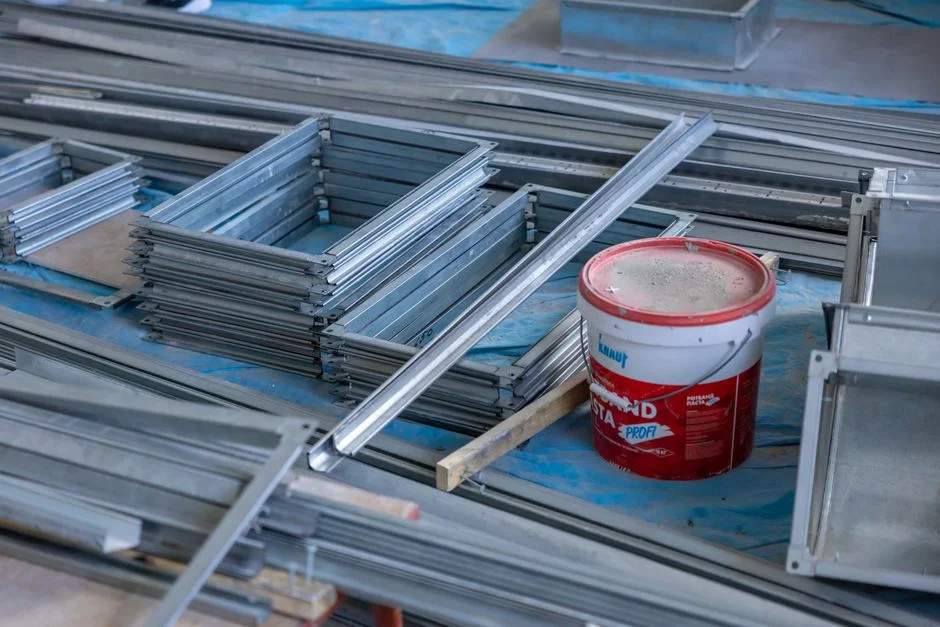
The shipping container is the EPC contractor's basic unit, and the choice between 20ft GP and 40ft HC is driven by the process-train footprint, not by the daily flow number. A 40ft HC (12.03 m L × 2.35 m W × 2.70 m H) is the standard envelope for an aerobic + membrane + blower/PLC containerized MBR in the 100–500 m³/day range. It fits a partitioned bioreactor (anoxic + aerobic zones), a membrane cassette tank, the blower skid, the permeate pump, the chemical dosing panel, and the PLC cabinet in a single ISO frame that clears Karachi Port and Port Qasim without an out-of-gauge surcharge. The 20ft GP (5.90 m L × 2.35 m W × 2.39 m H) is restricted to ≤ 50 m³/day package units, which corresponds to the WSZ underground-package range documented in the S1 product catalog (1–80 m³/h, equivalent to 24–1,920 m³/day on a continuous basis, but practically constrained to small flow rates by the tank volume).
Weight and stuffing strategy matter at the port. A 40ft HC has a max payload of roughly 28 t, which is more than enough for a process container, but the membrane cassettes must ship inside the container without water and be hydraulically tested on site after placement — this is standard practice because shipping a water-filled tank adds 8–10 t of dead weight and risks sloshing damage. Karachi Port's main berths take 13.5 m draft; Port Qasim's Liquid Terminal and general-cargo berths take 12.5 m, so standard 2.59 m and 2.90 m HC heights are both within the lashing envelope. The plant is normally delivered as two 40ft HC units for a 200 m³/day train: a process container (bioreactor + membrane tank) and an equipment container (blowers, dosing, PLC, MCC), both pre-commissioned in the factory for a 14-day site commissioning window.
Coordinate with the freight forwarder on the bill of lading and HS code 8421.21 (filtering or purifying machinery for water) for Sindh EPA and customs duty assessment; an incorrect HS code triggers re-assessment delays at Port Qasim. For the chemical-dosing subsystem that pairs with the MBR, the automatic chemical dosing system is sized to fit inside the 40ft HC equipment container with a footprint of roughly 1.2 m × 0.8 m for a 200 m³/day plant.
| Container Type | Dimensions (L × W × H) | Max Payload | Capacity Range | Karachi Deployment |
|---|---|---|---|---|
| 20ft GP | 5.90 × 2.35 × 2.39 m | ~21 t | ≤ 50 m³/day | Small camps, pilot |
| 40ft GP | 12.03 × 2.35 × 2.59 m | ~26 t | 50–200 m³/day | Residential mid-rise |
| 40ft HC | 12.03 × 2.35 × 2.70 m | ~28 t | 100–500 m³/day | Housing scheme, labor colony (recommended) |
| Split shipment (2× 40ft HC) | Process + equipment | ~28 t each | 200 m³/day | Hawksbay 500-resident worked example |
Step 5: Equipment Shortlist — Matching Models to Your Load
For the 200 m³/day Hawksbay calculation, the equipment train resolves to a small number of catalog items. The main process block is the MBR Integrated Wastewater Treatment System (10–2,000 m³/day), which covers the 200 m³/day rating directly and is delivered as a 40ft HC pre-fitted train. The membrane stage uses three DF Series PVDF flat sheet membrane modules operating with one standby, sized for the 35–40°C derated flux window. Headworks requires a rotary mechanical bar screen (GX Series) to protect the membranes from rags and plastics, which is the single most common cause of premature MBR fouling in Karachi camps. Disinfection is handled by a chlorine dioxide generator (50–20,000 g/h), which is preferred over chlorine gas in dense residential settings because of the lower hazard classification and the residual stability in long reuse pipelines. Sludge is dewatered by a plate-frame filter press to a 25–30% dry-solids cake for off-site disposal.
Automation is the difference between a defensible Karachi installation and one that fails on day 30. The S1 product literature confirms a fully automatic PLC control system with remote monitoring, which is what allows the EPC contractor to offer a 24-month performance warranty backed by daily operating logs. The PLC should log inlet flow, MLSS, DO, transmembrane pressure, and effluent turbidity with alarm thresholds tied to the NEQS parameter table. If the site is below-grade constrained, the WSZ underground package STP (1–80 m³/h) serves as a space-saving alternative for the smaller camp-load case, but it does not match the 200 m³/day Hawksbay flow on its own and would need to be paralleled.
| Item | Model / Series | Capacity Match (200 m³/day) | Qty | Function |
|---|---|---|---|---|
| Main MBR train | MBR Integrated | 10–2,000 m³/day | 1 | Bioreactor + membrane + blower + PLC |
| Membrane modules | DF Series flat sheet | 32–135 m³/day per module | 3 + 1 standby | Solid-liquid separation |
| Headworks screen | GX rotary bar screen | Match inflow | 1 | Solids removal |
| Disinfection | ClO₂ generator | 50–20,000 g/h | 1 | Pathogen kill |
| Sludge dewatering | Plate-frame filter press | Match WAS | 1 | Cake to 25–30% DS |
| Chemical dosing | Automatic dosing system | Per flow | 1 | pH / P removal / coagulant |
Procurement & Compliance Checklist for Karachi Deployment
The technical sizing converts to a procurement sequence with hard regulatory and logistics gates. First, submit the Sindh EPA NOC application with the process design, the NEQS compliance matrix from Step 2, the site layout, and the membrane-integrity test protocol; the standard review window is 30–45 days, and missing the NEQS parameter table is the most common cause of a returned application. Second, engage a Karachi Port or Port Qasim clearing agent with the bill of lading, packing list, and certificate of origin under HS 8421.21 for duty assessment; both ports clear standard ISO containers but out-of-gauge equipment triggers special-handling surcharges. Third, confirm the K-Electric three-phase 400V connection at the planned load (blowers, permeate pumps, dosing pumps, PLC, and lighting typically aggregate 150–200 kW for a 200 m³/day MBR); application lead time is 4–6 weeks, which should run in parallel with manufacturing.
Commissioning is a fixed two-week window. Week one covers biological seeding with activated sludge from KW&SB or a neighboring operating STP, MLSS ramp to 8,000–10,000 mg/L, and DO setpoint tuning on the blowers. Week two covers membrane integrity test (pressure hold > 0.2 bar, no decay over 15 minutes), NEQS parameter sampling at an SEPA-accredited lab, and operator handover with the O&M manual. The O&M contract should specify membrane cleaning frequency (maintenance clean weekly, recovery clean quarterly), sludge hauling to the KW&SB landfill, and quarterly NEQS sampling with results filed to Sindh EPA. For a comparable regional reference, the Yangon containerized MBR sizing guide covers similar tropical-climate membrane sizing, and the Maputo containerized MBR sizing guide addresses comparable port-logistics constraints.
Frequently Asked Questions
What is the all-in cost per m³/day for a containerized MBR in Karachi?
The research data does not include Pakistan-specific equipment pricing, and duty assessment under HS 8421.21 varies with certificate-of-origin status. The CAPEX drivers that buyers must obtain firm quotes on are: membrane modules (DF Series flat sheet, qty 3+1 standby), 40ft HC container modification and skids, PLC/SCADA package, blower and permeate pump set, dosing system, freight Karachi Port or Port Qasim, and local civil works (inlet chamber, interconnecting piping, electrical connection). Request a line-itemized BOQ from the supplier with each of these as a separate row before signing.
How long from order to operational plant in Karachi?
For a 200 m³/day containerized MBR, the typical sequence is 8–12 weeks for factory manufacturing and FAT, 4–6 weeks for sea freight and Karachi Port/Port Qasim clearance, and 2 weeks for site commissioning including biological seeding and membrane integrity testing — a total of 14–20 weeks from purchase order to treated water on the line. This is the principal schedule advantage of containerized MBR over civil-built STPs, which run 6–9 months on site in Karachi.
Can the MBR handle Karachi's high TDS groundwater infiltration?
MBR removes suspended solids, BOD, COD, bacteria, and (with nitrification) ammonia, but it does not remove dissolved salts. If TDS in the sewage exceeds the reuse target (typically < 1,000 mg/L for gardening/flushing), a post-MBR reverse osmosis stage is required; RO/UF membrane filter elements are available as an add-on skid. For the Hawksbay 500-resident base case, assume a TDS test of the inlet sewage before sizing the reuse pipeline.
What NEQS parameters are hardest to meet in Karachi?
NH₃-N ≤ 40 mg/L (inland) is the most common failure mode in summer because warmer mixed liquor accelerates nitrification kinetics but also raises oxygen demand and can starve the biofilm if the blower is under-sized. Specify aerobic SRT > 12 days at 35°C, DO setpoint 1.5–2.0 mg/L in the aerobic zone, and confirm the blower's m³/h rating at site temperature rather than at sea-level 20°C reference conditions.