Why a Containerized MBR Fits a Maputo Residential or Camp Project
A containerized membrane bioreactor (MBR) is a wastewater treatment process that combines biological treatment with membrane filtration, replacing the secondary clarifier of a conventional activated-sludge plant with a submerged ultrafiltration (UF) membrane module (HUBER MENA-Water, 2026). Because the membrane retains biomass and suspended solids, the bioreactor can be run at a higher mixed-liquor suspended solids (MLSS) than a conventional aeration tank, the clarifier is eliminated, and the effluent is essentially solids-free clarified water suitable for reuse (HUBER MENA-Water, 2026). When the entire process train — drum screen, bioreactor, membrane tank, blowers, pumps, and control panel — is built inside an ISO container, the unit ships as one pre-assembled package plant that can be transported, craned into place, and started up far faster than a site-built concrete tank farm (HUBER MENA-Water, 2026).
For a Maputo residential estate, university campus, lodge, or worker camp, that delivery model is the differentiator. Pure Aqua's MBR-C system is offered in 20' or 40' high-cube (HC) containers with insulated walls, zero water-leakage structure, and a seaworthy container shell (Pure Aqua, 2026). Inside the container, the Pure Aqua MBR-C includes a 1.5 mm drum screen for pre-treatment, an aeration tank with fine-bubble diffusers for biomass growth, and a membrane tank with coarse-bubble diffusers for continuous air-scour of the submerged PVDF hollow-fiber membrane (Pure Aqua, 2026). An integrated MBR package such as the one available from HydropureWater's integrated MBR membrane bioreactor system covers a 10–2,000 m³/day envelope and uses submerged PVDF membrane filtration delivering sub-micron effluent. For a Maputo site where civils access is constrained and the schedule is short, that envelope is the sizing window you work inside.
Step 1 — Convert Occupancy into a Design Flow
The first calculation turns people into cubic metres per day. Pure Aqua's MBR-C containerized system uses 50 gallons per day per capita (≈190 L/c/d) as its sizing benchmark, and ties the system capacity directly to "approximate population (50 gpd per capita)" (Pure Aqua, 2026). That figure is your initial per-capita demand, but you should treat it as a starting value rather than a finished answer, and ask the supplier whether it includes or excludes infiltration/inflow and whether it is already combined with a peaking factor.
Apply a residential peaking factor (commonly 1.5–2.0 for domestic flows) to the average daily flow to capture morning and evening peak demand; the exact factor must be confirmed against the local utility's basis of design or the project engineer's basis-of-design report, because the MBR's hydraulic capacity, equalization, and pump sizing all depend on it. For worker camps and lodges, adjust the per-capita figure for shift showers, kitchen, and laundry peaks, and document the duty profile in writing so the supplier can size the equalization tank accordingly.
For a 200-resident estate, taking Pure Aqua's 50 gpd/capita benchmark (≈190 L/c/d) gives an average daily flow of about 38 m³/day before peaking. With a residential peaking factor in the 1.5–2.0 range, the peak design flow rises to roughly 57–76 m³/day, which sits inside the lower end of the 10–2,000 m³/day integrated MBR envelope (HydropureWater catalog, 2026). What the supplier must confirm in writing: the per-capita basis (with/without I&I), the peaking factor used, and whether the quoted m³/day is an average or a peak figure.
Step 2 — Set Influent Load and Effluent Target
Flow alone does not size an MBR — influent load and the discharge target do. Domestic sewage in residential and camp applications typically carries BOD and COD in a similar order of magnitude, with BOD often quoted in a 250–400 mg/L range for normal domestic strength, but the exact site value must come from influent sampling of the actual Maputo catchment and must be confirmed before sizing, because influent strength directly drives biological tank volume, aeration demand, and sludge production. Treat the concentration as a project input, not a published constant.
The biological stage of Pure Aqua's MBR-C carries an anoxic zone to achieve denitrification (NO₃ removal), so nitrogen reduction is built into the package rather than added on afterwards (Pure Aqua, 2026). After the bioreactor, water overflows to a membrane tank where the submerged UF hollow-fiber membranes — nominal pore size 0.04 µm in TIPS PVDF — achieve complete retention of bacterial flocs, suspended solids, small colloids, and viruses (Pure Aqua, 2026). HUBER MENA-Water describes the same principle: membrane filtration replaces the secondary clarifier and produces clarified effluent that is free of solids, enabling higher biomass concentration and smaller bioreactor volume (HUBER MENA-Water, 2026).
The Maputo discharge decision — municipal sewer, irrigation reuse, or surface-water body — fixes the effluent envelope the MBR must hit, and therefore fixes the biological and membrane sizing. If the design includes a submerged PVDF flat-sheet MBR module, confirm the membrane cut-off, expected log-removal for coliforms and viruses, and whether a downstream UV or chlorination polish is required for the reuse or discharge target. Lock the target before the supplier's engineer starts the line-sizing.
Step 3 — Size Bioreactor Volume and Membrane Area
Once flow and load are fixed, the engineering quantities fall out: hydraulic retention time (HRT) in the bioreactor, MLSS in the aeration tank, and net membrane flux driving membrane area. HRT is sized from design flow against the chosen bioreactor volume; typical MBR HRTs run in the order of several hours, but the exact value must be confirmed with the manufacturer against the actual Maputo influent characteristics. The membrane step lets you push MLSS higher than a conventional activated-sludge plant, which is why an MBR's reactor volume per m³/day is smaller than a CAS plant of the same capacity (HUBER MENA-Water, 2026).
Inside Pure Aqua's MBR-C, the aeration tank uses fine-bubble diffusers to grow the biomass, and the membrane tank uses coarse-bubble diffusers for continuous air-scour of the membrane surface (Pure Aqua, 2026). Membrane area is driven by net flux, which is a function of the membrane module design, relaxation cycle, and cleaning-recovery assumptions. The supplier must give you, in writing, the net flux (L/m²·h), the relaxation/backwash cycle, and the chemical-cleaning recovery expected for your specific influent — not a generic brochure figure.
Cleaning reagents matter for a Maputo camp. HUBER MENA-Water notes that the membrane surface is cleaned by air-scour, and the membrane is also backwashed or subjected to chemical cleaning as required (HUBER MENA-Water, 2026). Confirm with the supplier which chemical-cleaning reagents (typically NaOCl and citric acid) are needed, whether they can be sourced locally in Maputo, and what the recommended cleaning interval is at your design flux. The answer drives both the operating cost and the spare-parts list you carry on site.
Step 4 — Pick the Container Configuration and Footprint
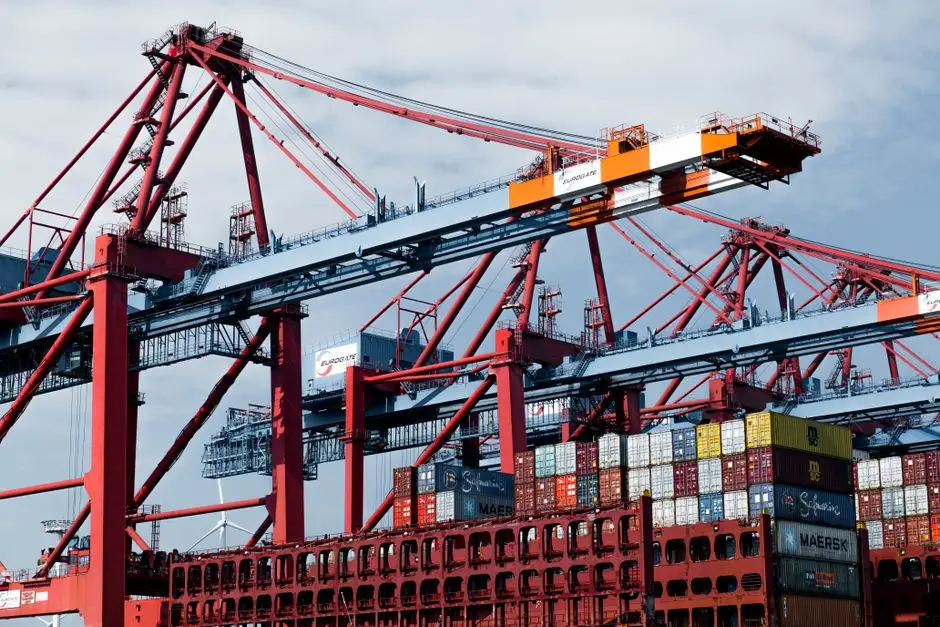
The sized flow translates into a 20' or 40' HC container count, which is the most visible output your project team needs to plan site space, crane access, and logistics. Pure Aqua's MBR-C ships in 20' or 40' high-cube containers depending on capacity (Pure Aqua, 2026), and HUBER MENA-Water confirms that complete MBR package plants are pre-assembled in ISO container sizes for easy transportation, fast availability, and straight start-up (HUBER MENA-Water, 2026). For small residential and camp projects in the 10–50 m³/day range, a single 20' or 40' HC container housing the drum screen, bioreactor, and membrane tank is a typical layout — confirm with the supplier based on your design flow and load.
HydropureWater's integrated MBR catalog covers 10–2,000 m³/day with a footprint materially smaller than a conventional activated-sludge plant of the same capacity (HydropureWater catalog, 2026), which gives a planning benchmark when you set the site pad size. A rotary mechanical fine bar screen or the Pure Aqua drum screen (1.5 mm perforation) should sit inside the same container or immediately upstream, so the skid remains one shipping unit and avoids a separate civil screen chamber. The table below summarises the configuration choices a Maputo project lead should walk into the supplier meeting with.
| Parameter | Typical value / option | Source / note |
|---|---|---|
| Design flow envelope | 10–2,000 m³/day (integrated MBR) | HydropureWater catalog, 2026 |
| Container size | 20' or 40' high-cube (HC) | Pure Aqua MBR-C, 2026 |
| Pre-treatment | Drum screen, 1.5 mm perforation | Pure Aqua MBR-C, 2026 |
| Membrane | Submerged PVDF hollow-fiber UF, 0.04 µm nominal pore | Pure Aqua MBR-C, 2026 |
| Aeration | Fine-bubble (bioreactor) + coarse-bubble (membrane tank) | Pure Aqua MBR-C, 2026 |
| Denitrification | Anoxic zone included for NO₃ removal | Pure Aqua MBR-C, 2026 |
| Power supply | 460V / 3Ph / 60Hz (standard) | Pure Aqua MBR-C, 2026 |
| Operating temperature | 20–30 °C (design 20 °C) | Pure Aqua MBR-C, 2026 |
Step 5 — Maputo Site Pre-Checks Before You Order
Before you sign the purchase order, walk through four site checks that the top generic pages skip. First, climate fit: Pure Aqua's MBR-C is rated for an operating temperature of 20–30 °C with a design temperature of 20 °C (Pure Aqua, 2026). Maputo's tropical climate sits inside that range, but container ventilation, shading, and any solar heat gain on a black-painted container roof should be confirmed with the supplier, especially if the unit will sit in direct sun on a bare site.
Second, power fit: the Pure Aqua MBR-C standard supply is 460V/3Ph/60Hz (Pure Aqua, 2026). Maputo's grid is 220V/50Hz in practice for many sites, so confirm with the supplier whether a site-specific variant, a step-down transformer, generator backup, or a solar-hybrid arrangement is needed. Mismatched voltage is the single most common reason a packaged plant is dead-on-arrival.
Third, sludge handling. The MBR's surplus activated sludge still leaves the reactor and must be dewatered. Size a sludge handling path alongside the MBR — a plate and frame filter press for waste activated sludge is a common pairing — and confirm the sludge storage volume for the camp's desludging interval. Fourth, remote monitoring and discharge polish. HUBER MENA-Water offers remote monitoring from its back office and can consult anytime during operation (HUBER MENA-Water, 2026), which is a practical substitute for full-time on-site operators at a remote Maputo camp. If the discharge target is irrigation reuse, plan a UV sterilizer for water treatment downstream of the MBR to meet the reuse envelope, and align the MBR's effluent numbers to the local regulator's discharge standard before purchase. For comparable design workflows in different climates, the containerized MBR sizing guide for Amman and the hotel and resort wastewater treatment guide for southern Africa walk through the same checks under different utility and discharge assumptions, and the MBR vs conventional activated sludge comparison documents the footprint and effluent-quality difference you are buying into.
Frequently Asked Questions
What per-capita flow and peaking factor should I size a Maputo residential MBR on?
Use Pure Aqua's 50 gpd per capita (≈190 L/c/d) benchmark as the starting point for a containerized MBR (Pure Aqua, 2026), then apply a residential peaking factor in the 1.5–2.0 range for morning and evening peaks. The exact peaking factor and whether infiltration is included must be confirmed with the supplier in writing against the project basis of design before the quotation is locked.
How many ISO containers do I need for a 50 m³/day camp MBR?
A 50 m³/day camp MBR typically fits in a single 20' or 40' high-cube (HC) container, with the drum screen, bioreactor, and membrane tank inside the same shipping unit (Pure Aqua, 2026; HUBER MENA-Water, 2026). The final count depends on the hydraulic retention time, MLSS, and membrane area the supplier sizes, so ask the supplier to confirm container count against the 10–2,000 m³/day product envelope (HydropureWater catalog, 2026) rather than estimating it from brochures.
Does a containerized MBR work in Maputo's climate and on Maputo's power supply?
Yes, with verification. Pure Aqua's MBR-C is rated for 20–30 °C operation, which covers Maputo's tropical range, but the standard 460V/3Ph/60Hz supply (Pure Aqua, 2026) must be checked against the actual site voltage, and generator or solar-hybrid backup should be specified if the local grid is unreliable. Enclosure ventilation and shading on a black container roof in direct sun should also be confirmed with the supplier.
What should I ask a supplier about price, lead time, and remote support before I buy?
Ask for an itemised quotation that breaks out the container, membrane modules, blowers, control panel, and any pre- or post-treatment skids, and ask for the lead time in writing because containerized MBR delivery is typically driven by membrane and panel-fabrication slots rather than shipping. Confirm remote-monitoring scope, start-up commissioning support, and what spares and chemical-cleaning reagents the supplier recommends carrying on site for a Maputo delivery, since HUBER MENA-Water offers remote monitoring and on-call support specifically to reduce the need for full-time on-site operators at remote plants (HUBER MENA-Water, 2026). The inputs a buyer must request, not a published price, are: itemised scope, lead time, remote-monitoring terms, and a recommended spares list for the specific influent.